 Nurturing Marriages, Enriching Families!
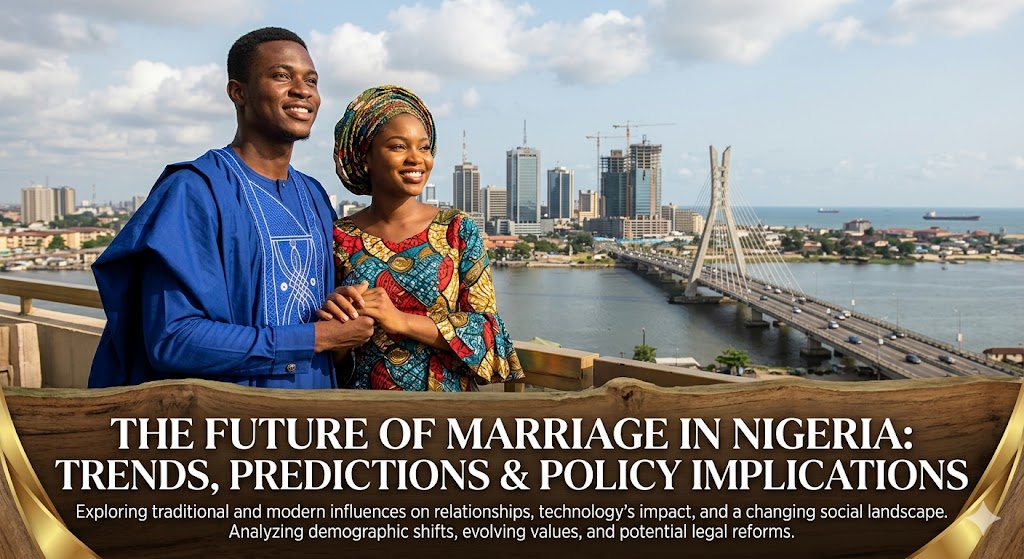
The Future of Marriage in Nigeria: Trends, Predictions & Policy Implications
Marriage in Nigeria is undergoing one of the most significant transformations in its history. Once seen as a near-universal life milestone rooted in tradition, religion, and family expectations, marriage is now being reshaped by economic realities, education, globalization, and technology. Across cities like Lagos, Abuja, and Enugu, as well as rural communities, the meaning, timing, and structure of marriage are evolving.
The future of marriage in Nigeria will not be defined by a single trend but by a complex interaction of cultural continuity and modern disruption. This article explores the emerging trends, future predictions, and policy implications shaping marriage in Nigeria, supported by data, case studies, and real-life insights.
The Changing Foundation of Marriage in Nigeria
Historically, marriage in Nigeria has been more than a union between two individuals. It has been a social contract between families, emphasizing lineage, community cohesion, and cultural continuity. However, this foundation is shifting.
Modern Nigerian marriages are increasingly based on personal choice, emotional compatibility, and individual fulfillment rather than purely family arrangements. Research shows that younger generations now prioritize love, compatibility, and shared values over traditional expectations.
At the same time, the influence of arranged marriages is declining, while “love marriages” and self-selected partnerships are becoming more common.
This shift signals a fundamental transformation in how Nigerians perceive marriage—not just as a duty, but as a choice.
Key Trends Shaping the Future of Marriage
One of the most visible trends is the delay in marriage. Economic challenges, rising education levels, and career aspirations are pushing many Nigerians to marry later in life. In fact, many men now marry in their late twenties or thirties, reflecting changing priorities and financial realities.
Closely linked to this is the rise of cohabitation and informal unions. Many couples choose to live together before formalizing their relationship, often due to high wedding costs and the desire to test compatibility.
Another major trend is the growing independence of women. Increased access to education and employment has empowered women to make independent marital decisions. Women are now more likely to delay marriage, choose partners based on compatibility, and exit unhealthy relationships.
Technology is also reshaping relationships. Online dating, social media, and digital communication have transformed how people meet and interact. Relationships are increasingly formed and maintained in digital spaces, creating new opportunities and challenges.
Perhaps most significantly, marriage is no longer seen as compulsory. Among younger Nigerians, particularly Gen Z, marriage is increasingly viewed as optional rather than a necessary life milestone.
Demographic and Social Shifts
Demographic trends are playing a crucial role in shaping the future of marriage in Nigeria. One key issue is early marriage, particularly in northern Nigeria. Despite progress, about 33.4% of young women still marry before age 18, with even higher rates in some regions.
However, there has been notable progress. Recent data shows that child marriage rates have declined from 44% to 28.6%, indicating gradual improvement.
These changes suggest a dual reality: while early marriage remains a challenge, long-term trends point toward delayed and more intentional unions.
Urbanization is another major factor. As more Nigerians move to cities, traditional family structures weaken, and individuals gain greater autonomy in choosing partners. Urban living also introduces new pressures, including high living costs and demanding careers, which influence marriage decisions.
Case Studies and Real-Life Insights
In Lagos, the economic capital of Nigeria, marriage is increasingly influenced by financial considerations. Many young professionals delay marriage until they achieve financial stability. Some couples opt for smaller weddings or cohabitation due to the high cost of traditional ceremonies.
In Abuja, a phenomenon sometimes referred to as “Abuja marriage” reflects changing relationship dynamics. These unions often emphasize convenience, lifestyle compatibility, and social status rather than traditional family expectations.
In southeastern Nigeria, migration plays a major role. Many couples maintain long-distance relationships due to work or study abroad. Digital communication helps sustain these relationships, but it also introduces challenges related to trust and emotional connection.
Public sentiment also reflects these changes. Discussions among Nigerians highlight growing skepticism about marriage, particularly among younger generations.
“People get married just to say they are married… no compatibility.”
This perspective underscores a shift from societal pressure toward personal readiness and intentionality.
The Rise of Alternative Relationship Models
The future of marriage in Nigeria will likely include a wider range of relationship structures. Cohabitation, long-term partnerships without formal marriage, and even unconventional arrangements are becoming more visible.
While these models are still controversial, especially in conservative communities, they reflect changing attitudes toward commitment and family life.
Polygamy, which has long been part of Nigerian culture, is also evolving. While it remains common in some regions, its acceptance is declining in urban areas where monogamy and equality are more strongly emphasized.
Economic Pressures and Marriage Stability
Economic realities are perhaps the most powerful force shaping the future of marriage in Nigeria. Rising inflation, unemployment, and income inequality make it increasingly difficult for couples to sustain households.
The high cost of weddings is another major factor. Traditional ceremonies often involve significant expenses, which can discourage marriage or delay it.
Financial stress also affects marital stability. Couples facing economic challenges are more likely to experience conflict, which can lead to separation or divorce.
At the same time, economic independence—especially among women—is changing power dynamics within marriages. This shift is leading to more balanced relationships but also new sources of tension as traditional roles evolve.
Technology and the Digital Transformation of Marriage
Technology is redefining how relationships are formed and maintained. Online dating platforms have expanded the pool of potential partners, allowing Nigerians to connect across regions and even countries.
Social media also plays a significant role in shaping expectations. Couples are exposed to curated images of relationships, which can create unrealistic standards and pressure.
At the same time, technology offers opportunities for relationship education. Couples can access counselling resources, communication tools, and support networks online.
The digital transformation of marriage is likely to accelerate in the coming years, making technology a central factor in relationship dynamics.
Predictions: What the Future Holds
Looking ahead, several key predictions can be made about the future of marriage in Nigeria.
Marriage rates may decline slightly as more individuals delay or reconsider marriage. However, marriage will remain a central institution, especially in cultural and religious contexts.
The age of first marriage will continue to rise, reflecting increased education and economic considerations.
Gender roles will become more balanced, with greater emphasis on partnership and equality.
Divorce rates may increase in the short term as societal acceptance grows, but this could lead to healthier marriages in the long term as individuals make more informed choices.
Alternative relationship models will gain visibility, though they may coexist with traditional forms rather than replace them.
Technology will continue to shape relationships, influencing how people meet, communicate, and sustain marriages.
Policy Implications for Nigeria
The evolving nature of marriage in Nigeria has important implications for policymakers.
One key area is education. Investing in girls’ education has been shown to significantly reduce early marriage and improve economic outcomes.
Legal reforms are also essential. Strengthening laws against child marriage and ensuring their enforcement can protect vulnerable populations.
Economic policies that address unemployment and income inequality can help reduce financial stress within marriages, improving stability.
Family support systems, including counselling services and social welfare programs, can help couples navigate challenges and reduce divorce rates.
There is also a need for public awareness campaigns that promote healthy relationships, gender equality, and conflict resolution.
Finally, policymakers must recognize the role of technology in shaping relationships and develop strategies to address its risks and opportunities.
Balancing Tradition and Modernity
One of the biggest challenges facing Nigeria is balancing tradition with modernity. Marriage is deeply embedded in cultural and religious values, and any changes must respect these foundations while adapting to new realities.
Communities, religious institutions, and families will play a crucial role in this process. By embracing positive aspects of modernity—such as gender equality and emotional well-being—while preserving cultural heritage, Nigeria can build a more sustainable model of marriage.
Conclusion
The future of marriage in Nigeria is dynamic and multifaceted. It is shaped by economic pressures, technological advancements, cultural shifts, and changing individual aspirations. While traditional values remain strong, modern influences are redefining what marriage means and how it is practiced.
Rather than disappearing, marriage in Nigeria is evolving. It is becoming more intentional, more flexible, and more reflective of individual choices.
For policymakers, families, and individuals, the challenge is to navigate these changes in a way that promotes stability, equality, and well-being. By understanding the trends and preparing for the future, Nigeria can ensure that marriage remains a meaningful and sustainable institution for generations to come.
Users can join groups/tribes on https://www.marriagehub.ng/all-groups or create groups on https://www.marriagehub.ng/create-tribes-group. Users can also purchase products, services and downloadable on https://www.marriagehub.ng/marketplace.
Follow us on
WhatsApp - https://whatsapp.com/channel/0029VbCav9MCcW4pw3GSM72w
X - https://x.com/MarriageHubNG
Facebook - https://web.facebook.com/MarriageHubNigeria
Instagram - https://www.instagram.com/marriagehubng3









.jpg)




Sign in to comment