 Nurturing Marriages, Enriching Families!
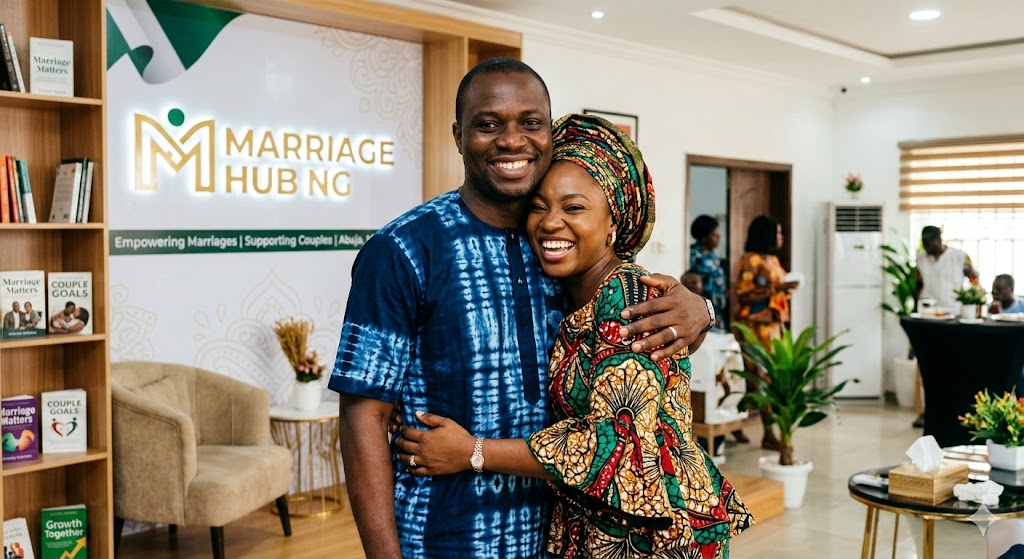
Ultimate Personal Growth Guide for Married Couples
Table of Contents
1. Introduction: Why Personal Growth Is the Heartbeat of a Thriving Marriage
2. The Personal Growth Crisis in Nigerian Marriages — Key Statistics
3. What Personal Growth Means for Married Couples
4. Emotional Intelligence: The Foundation of Growth in Marriage
5. Individual Growth Without Growing Apart
6. Developing Patience, Forgiveness, and Resilience
7. Mental Health and Wellbeing for Nigerian Married Couples
8. Spiritual Growth as a Couple
9. Communication and Conflict Resolution as Personal Growth Tools
10. Self-Care and Physical Wellbeing in Marriage
11. Setting Goals Together — and Individually
12. Overcoming Ego, Pride, and Toxic Patterns
13. Personal Development Through Books, Mentors, and Counselling
14. Growing Through Difficult Seasons Together
15. Frequently Asked Questions (FAQs)
16. Internal Links: Related Resources on MarriageHub.ng
17. Conclusion
1. Introduction: Why Personal Growth Is the Heartbeat of a Thriving Marriage
Ask any Nigerian marriage counsellor what separates couples who thrive from those who merely survive, and most will give you a common answer: personal growth. The willingness — and discipline — of both partners to continually develop themselves emotionally, spiritually, intellectually, and relationally is what determines whether a marriage deepens over decades or gradually withers into a shell of obligation and routine.
In Nigeria, where marriage is deeply embedded in culture, community, and faith, the pressure to appear successful in marriage is enormous. Yet beneath the matching aso-ebi and smiling wedding photos lies a more complex and often unspoken reality: millions of Nigerian couples are stuck. They are stuck in patterns of unresolved conflict, emotional immaturity, mental health neglect, and personal stagnation — not because they lack love, but because they have never been equipped with the tools for deliberate personal growth within the context of marriage.
This guide is for every Nigerian couple who wants more — more depth, more joy, more resilience, and more meaning from their union. Whether you are newly married or celebrating your 20th anniversary, personal growth is not a luxury. It is the single most powerful investment you can make in your marriage. And it begins, not with fixing your spouse, but with developing yourself.
|
Key Insight: Research by the American Psychological Association — echoed by local findings in Nigeria — shows that couples in which both partners actively pursue personal development report 60% higher relationship satisfaction than those who do not. Growth is not just good for the individual; it is medicine for the marriage. |
2. The Personal Growth Crisis in Nigerian Marriages — Key Statistics
Understanding the current state of personal development and mental wellness in Nigerian marriages helps frame the urgency and opportunity of this guide. The numbers reveal both a challenge and a profound opportunity.
|
40% |
Percentage of Nigerian adults who report experiencing significant emotional burnout in their marriage, according to a 2023 survey by the Association of Psychiatrists in Nigeria (APN). |
|
1 in 5 |
Nigerian adults living with a diagnosable mental health condition — yet only about 3% access professional mental health services, per the WHO Nigeria Country Report (2023). |
|
73% |
Nigerian couples who cite 'poor communication' as a major source of marital dissatisfaction, based on a 2024 EFInA couples' wellbeing survey. |
|
68% |
Percentage of Nigerian men who have never attended any form of personal development or marriage enrichment programme, according to the Nigerian Institute of Social and Economic Research (NISER). |
|
₦500B+ |
Estimated annual economic cost of untreated mental health conditions in Nigeria, including lost productivity in homes and workplaces — Federal Ministry of Health, 2023. |
|
27% |
Reduction in marital conflict reported by couples who participated in joint personal development programmes in a Lagos-based couples' enrichment study (2022). |
These statistics make a compelling case: personal growth is not a self-indulgent pursuit. It is a critical component of marital health, family stability, and even national productivity. When Nigerian couples invest in themselves, everyone benefits.
3. What Personal Growth Means for Married Couples
Personal growth — also called self-development, self-improvement, or personal development — refers to the ongoing process of expanding your self-awareness, improving your capabilities, managing your emotions more effectively, and becoming a more intentional, mature, and compassionate human being. For married couples, personal growth takes on an added dimension: it must also serve the relationship.
3.1 The Three Dimensions of Personal Growth in Marriage
Individual Growth
Each spouse growing as an individual — pursuing career development, emotional healing, spiritual deepening, skill acquisition, or educational advancement — creates a richer, more whole person who brings more to the marriage.
Relational Growth
Growth that happens in the space between two people — how you communicate, how you handle conflict, how you show love, how you build shared vision. This is the dimension most directly experienced day-to-day in the home.
Shared Growth
Growth that happens when couples pursue something together — reading the same books, attending counselling, joining a marriage enrichment group, building a business together, or serving in a shared cause. Shared experiences of growth create deep bonding.
|
Marriage Principle: The strongest Nigerian marriages are those in which two growing individuals choose to grow toward each other — not away from each other. Growth that pulls partners apart is not true development; it is drift dressed in the language of self-improvement. |
3.2 Why Nigerian Cultural Norms Can Inhibit Personal Growth
Several cultural norms common in Nigeria can inadvertently block personal growth in marriage:
• The belief that marriage itself is the destination, rather than the beginning of a lifelong journey of becoming
• Gender expectations that discourage men from expressing vulnerability or seeking help, and women from asserting their professional or personal ambitions
• The stigma around therapy and professional counselling — still widely seen as a sign of weakness or shame in many Nigerian communities
• Excessive focus on outward appearances — church attendance, family events, social media presentations — while inward growth is neglected
• Viewing personal struggles in marriage as private matters that must be endured rather than addressed and healed
4. Emotional Intelligence: The Foundation of Growth in Marriage
Emotional Intelligence (EI) — the ability to recognise, understand, manage, and effectively express emotions — is perhaps the single most important personal development skill for married couples. Dr. John Gottman's decades of marriage research identified emotional intelligence as a stronger predictor of marital success than IQ, income, or educational level.
4.1 The Five Pillars of Emotional Intelligence for Nigerian Couples
Self-Awareness
Knowing your emotional triggers, understanding your emotional history, and recognising how your upbringing in Nigeria — including childhood experiences with family, religion, and community — shapes how you respond in your marriage today. Many Nigerians grew up in homes where emotional expression was discouraged ('Don't cry, you are a man'; 'A good wife suffers silently') — healing these patterns begins with awareness.
Self-Regulation
The ability to pause before reacting — especially in moments of conflict, disappointment, or frustration. In Nigerian households, where stress levels are elevated by economic pressure, traffic, power outages, and extended family tensions, self-regulation prevents daily friction from escalating into lasting damage.
Empathy
The capacity to genuinely step into your spouse's emotional world and understand their experience without judgment. Empathy in a Nigerian marriage context means understanding that your spouse's emotional needs may differ significantly from what you were raised to expect — and choosing to meet them where they are.
Motivation
Choosing to invest in the relationship even when it is difficult — doing the emotional work, having the hard conversations, pursuing counselling, and persisting through seasons of difficulty because you are committed to something greater than temporary comfort.
Social Skills
The ability to navigate relationships with grace — including extended family dynamics, which are a significant source of emotional complexity in Nigerian marriages. Healthy boundary-setting, respectful communication with in-laws, and managing community expectations all require developed social and emotional skills.
|
Did You Know? A 2021 study published in the Journal of African Psychology found that couples with higher emotional intelligence scores reported 45% fewer serious conflicts, 52% higher satisfaction with intimacy, and significantly lower rates of separation — even during economically stressful periods. |
5. Individual Growth Without Growing Apart
One of the most common fears Nigerian couples express is: 'What if my partner grows and leaves me behind?' This fear is real, valid, and increasingly common in urban Nigeria, where education and career opportunities are creating rapidly diverging growth trajectories between spouses — particularly when one partner advances significantly while the other stagnates.
5.1 The Individual-Relational Growth Balance
The key to navigating individual growth without growing apart lies in intentional connection. Couples must maintain a shared vision that transcends individual achievements. Some practical strategies include:
• Celebrate each other's wins and milestones actively — not just tolerating your spouse's growth but genuinely cheering for it
• Share your learning — if you read a book, attend a seminar, or gain a new insight, bring it into the conversation with your spouse
• Maintain shared rituals — weekly date nights, morning prayers, evening walks — that anchor the relationship even as both partners evolve
• Regularly revisit your shared vision and goals as a couple to ensure you are growing in a compatible direction
• Be honest about feelings of being left behind — communicate them without blame, and create a supportive growth plan together
5.2 The Danger of Stagnation
Equally dangerous to growing apart is one partner refusing to grow at all. Stagnation — clinging to old patterns, refusing accountability, resisting change — is corrosive to marriage over time. The partner who grows will inevitably feel increasingly alone, frustrated, and resentful. A stagnant spouse must understand that growth is not optional; it is a marital responsibility.
In Nigerian marriages, stagnation is often protected by cultural scripts: 'This is how it has always been'; 'My father did it this way'; 'I am the husband — I don't need to change.' These scripts must be gently but firmly challenged. Every human being can grow. Every marriage deserves that growth.
6. Developing Patience, Forgiveness, and Resilience
Three character qualities — patience, forgiveness, and resilience — function as the scaffolding of personal growth in marriage. Without them, even the most self-aware couple will crack under pressure.
6.1 Patience: The Unseen Muscle
Patience in marriage is not passive waiting — it is an active, disciplined choice to give your spouse space to grow at their own pace, to endure frustrating seasons without catastrophising, and to trust the long arc of your shared journey. In Nigeria's fast-paced, hustle-driven culture — particularly in cities like Lagos where everything feels urgent — patience is countercultural. And that makes it even more powerful.
Practical patience builders include: mindfulness and breathing practices, journalling to process frustration rather than venting it destructively, and regular spiritual disciplines that anchor perspective.
6.2 Forgiveness: The Most Radical Act of Personal Growth
No marriage in Nigeria — or anywhere in the world — survives without forgiveness. The question is not whether you will be hurt by your spouse; you will. The question is whether you will choose to release that hurt or allow it to calcify into bitterness.
Forgiveness research by Dr. Fred Luskin at Stanford University shows that people who forgive report lower blood pressure, better sleep, reduced anxiety, and stronger relationships. In a Nigerian context where marital offences can range from financial betrayal to infidelity to extended family interference, the capacity to forgive — not just once, but repeatedly — is a life skill that must be deliberately cultivated.
|
Key Distinction: Forgiveness does not mean excusing bad behaviour or erasing accountability. It means releasing the emotional toxin of resentment from your own system — because carrying it hurts you more than the person who wronged you. |
6.3 Resilience: Bouncing Forward Together
Resilient couples in Nigeria are not those who avoid hardship — they are those who face hardship together and emerge stronger. Economic downturns, job losses, family bereavements, health crises, and fertility challenges are realities that test marriages every day across Nigeria. Couples who invest in their personal growth build the emotional reserves needed to survive and grow through these seasons.
Resilience is built through: maintaining open communication during crises, drawing on spiritual faith, leaning on trusted community support networks, and maintaining basic self-care routines even when life is hardest.
7. Mental Health and Wellbeing for Nigerian Married Couples
Mental health is one of the most critically under-discussed dimensions of personal growth in Nigerian marriages. The stigma around mental illness remains powerful in many Nigerian communities — mental health challenges are frequently attributed to spiritual causes, dismissed as 'weakness,' or handled through prayer alone, without the inclusion of professional support.
7.1 Common Mental Health Challenges Affecting Nigerian Marriages
• Depression: The World Health Organization estimates that over 7 million Nigerians suffer from depression — a condition that profoundly affects marital intimacy, communication, and parenting
• Anxiety disorders: Chronic anxiety — driven by economic instability, family pressure, and urban stress — manifests in marriages as irritability, withdrawal, and emotional unavailability
• Post-Traumatic Stress Disorder (PTSD): Unprocessed childhood trauma, domestic violence, and grief are common in Nigerian homes and, when untreated, perpetuate destructive cycles in marriage
• Burnout: Increasing among Nigerian professionals, particularly working mothers who carry both career and home management burdens, leading to emotional exhaustion and marital disconnection
• Substance use: Alcohol misuse among Nigerian men, particularly as a coping mechanism for stress, is a significant but often silent threat to marital wellbeing
7.2 Removing the Mental Health Stigma in Your Marriage
One of the most powerful acts of personal growth a Nigerian couple can undertake is to normalise mental health conversations within their home. This means:
• Speaking openly about emotional and psychological struggles without shame or judgment
• Viewing therapy and counselling as wisdom, not weakness — the same way you would see a doctor for physical pain
• Educating yourselves about common mental health conditions so you can recognise signs in each other
• Budgeting for mental health support — individual therapy, couples counselling, and marriage enrichment programmes
• Creating a home environment where both partners feel emotionally safe to be vulnerable
7.3 Mental Health Resources in Nigeria
Key resources for Nigerian couples seeking mental health support include the Federal Neuro-Psychiatric Hospital (Yaba, Lagos), NIMR (Nigerian Institute of Medical Research) mental health division, private counselling practices in major cities, and platforms like MarriageHub that connect couples with licensed marriage therapists and counsellors across Nigeria.
8. Spiritual Growth as a Couple
In Nigeria — where an estimated 85% of the population actively practices Christianity or Islam — spirituality is not a peripheral aspect of marriage. It is central to how most Nigerians understand love, commitment, purpose, and resilience. Spiritual growth as a couple is not merely attending church or mosque together; it is the active, intentional pursuit of deeper faith, shared values, and a sense of divine partnership in the marriage.
8.1 How Spiritual Growth Strengthens Marriage
• Shared spiritual practice creates a third anchor — beyond personalities and circumstances — that holds the marriage steady during difficult seasons
• Prayer together reduces the emotional distance that accumulates from daily stress and conflict
• Shared moral and ethical values provide a common framework for decision-making, parenting, and financial choices
• Spiritual disciplines like gratitude, humility, and service actively counter the ego and pride that erode marriages over time
• Faith communities — churches, mosques, couples' fellowship groups — provide accountability, mentorship, and social support for married couples
8.2 When Spiritual Differences Become a Source of Conflict
Interfaith marriages are increasingly common in urban Nigeria, and even within the same faith, differences in spiritual intensity, denominational practices, or theological views can create tension. The key to navigating spiritual differences without damaging the marriage is mutual respect — honouring your spouse's faith journey even when it differs from yours, finding shared spiritual values that transcend denominational differences, and maintaining open, non-judgmental conversation about spirituality.
9. Communication and Conflict Resolution as Personal Growth Tools
Poor communication is the number one complaint in Nigerian marriages, according to multiple counsellors and surveys. Yet communication is also one of the most learnable skills available to married couples. Every conversation in your marriage is an opportunity for growth — or regression. Choosing deliberate, skillful communication is itself an act of personal development.
9.1 The Communication Habits That Transform Marriages
Active Listening
Most Nigerians listen to respond rather than listening to understand. Active listening means giving your full attention, suspending your own perspective temporarily, reflecting back what you heard, and validating your spouse's emotions before offering your own viewpoint. This single habit, practised consistently, transforms the emotional climate of a marriage.
Non-Violent Communication (NVC)
Developed by Dr. Marshall Rosenberg, NVC offers a four-part framework — Observations, Feelings, Needs, Requests — that removes blame, criticism, and defensiveness from conversation. For Nigerian couples accustomed to more direct or confrontational communication styles, NVC takes practice but delivers extraordinary results.
The Repair Attempt
Dr. Gottman's research identifies 'repair attempts' — any gesture, word, or action that de-escalates conflict before it becomes destructive — as a hallmark of successful marriages. Learning to make and receive repair attempts (a gentle touch, a touch of humour, an 'I'm sorry, let me start again') is a crucial communication growth skill.
9.2 Conflict as a Curriculum
Every conflict in your marriage contains a lesson. The couples who grow the most are those who approach disagreements with curiosity — 'What is this conflict revealing about our needs, values, or unhealed wounds?' — rather than with the goal of winning. Conflict resolution is not the absence of disagreement; it is the ability to disagree without destroying each other.
10. Self-Care and Physical Wellbeing in Marriage
The most overlooked dimension of personal growth in Nigerian marriages is physical and holistic self-care. Many Nigerian spouses — particularly mothers — exist in a state of chronic self-neglect, giving everything to spouse, children, work, and extended family while reserving nothing for their own physical, emotional, and recreational restoration. This is not virtue. It is a path to burnout, resentment, and diminished capacity to love well.
10.1 What Self-Care Looks Like for Nigerian Couples
• Physical health: Regular medical check-ups, exercise routines (even a daily 30-minute walk), adequate sleep, and healthy nutrition
• Emotional restoration: Time alone for reflection, journalling, prayer, or meditation
• Social self-care: Maintaining friendships outside the marriage that provide perspective, laughter, and support
• Intellectual stimulation: Reading, listening to podcasts, attending seminars, pursuing hobbies that light you up
• Recreational joy: Activities that bring pure pleasure — music, cooking, gardening, creative arts, travel within Nigeria
10.2 Supporting Your Spouse's Self-Care
In Nigerian marriages, self-care is sometimes mistakenly viewed as selfishness. Spouses — particularly husbands — may interpret a wife's desire for personal time as neglect, or wives may guilt-trip husbands for pursuing hobbies. Reframing self-care as a marital investment — 'when I take care of myself, I show up better for you and our children' — helps both partners understand and support each other's restoration needs.
|
Research Insight: The Nigerian Healthy Living Institute (2023) found that married couples who exercise together at least twice a week report 34% higher emotional intimacy scores and significantly lower rates of depression. Physical wellbeing is relational wellbeing. |
11. Setting Goals Together — and Individually
One of the most powerful personal growth practices available to Nigerian couples is goal-setting — both as individuals and as a unit. Goals give direction, create shared purpose, and provide a framework for measuring growth and celebrating progress.
11.1 The Annual Growth Review
We recommend that Nigerian couples conduct an annual 'growth review' — a dedicated session (perhaps at the beginning of each year or on your anniversary) to assess the past year and set intentions for the year ahead. This review should cover:
• Personal growth: What did each partner learn about themselves this year? What patterns are you proud of breaking? What still needs work?
• Relational growth: How has your communication improved? What conflicts remain unresolved? How has your intimacy — emotional and physical — evolved?
• Shared goals: What did you accomplish together? What fell short? What are your shared priorities for the coming year?
• Spiritual growth: How has your faith deepened? How are you serving your community and family?
• Health and wellbeing: How are each of you doing physically and mentally? What support do you need?
11.2 SMART Growth Goals for Nigerian Couples
Examples of effective personal growth goals for Nigerian married couples:
• Read one personal development book together per quarter and discuss it over a shared meal
• Attend one couples' counselling or enrichment session per month for the next six months
• Each spouse commits to one new skill or course (online or in-person) per year
• Establish a weekly 'state of us' conversation — a 30-minute check-in dedicated to the health of the relationship
• Each partner identifies one emotional pattern to work on — with support from a therapist, mentor, or accountability partner
12. Overcoming Ego, Pride, and Toxic Patterns
Of all the obstacles to personal growth in Nigerian marriages, ego and pride are perhaps the most deeply entrenched. Nigerian culture — influenced by patriarchal structures, social competition, and deeply felt concepts of honour and face — can make humility in marriage extraordinarily difficult, particularly for men.
12.1 How Ego Destroys Nigerian Marriages
Ego in marriage manifests in multiple destructive ways:
• Refusing to apologise, even when clearly wrong — because 'I cannot go and kneel for somebody'
• Competing with your spouse rather than partnering with them — especially when the wife earns more or achieves greater professional success
• Emotional stonewalling — withdrawing emotionally as a power play rather than engaging vulnerably
• Needing to 'win' every argument rather than seeking understanding and resolution
• Using cultural or religious authority to avoid accountability — 'As the head of this house, I decide'
12.2 Practical Strategies for Taming the Ego
• Practise saying 'I was wrong' — out loud, sincerely, and without qualifications — at least once a week
• Cultivate gratitude deliberately: a daily gratitude practice physically rewires the brain away from entitlement and toward appreciation
• Seek accountability from a trusted mentor, pastor, imam, or counsellor who will honestly call out your blind spots
• Read and discuss books on humility in relationships — works by John Gottman, Gary Chapman, and Nigerian relationship educators are excellent starting points
• Pray or meditate on the qualities of a servant-hearted partner — one who leads through love rather than control
13. Personal Development Through Books, Mentors, and Counselling
The growth of any individual — and any marriage — is deeply shaped by the inputs it receives. Nigerian couples who invest in quality information, wisdom from experienced mentors, and professional counselling build dramatically stronger foundations for lifelong growth.
13.1 Recommended Personal Development Reading for Nigerian Couples
• The 5 Love Languages by Gary Chapman — understanding how you and your spouse give and receive love
• Hold Me Tight by Dr. Sue Johnson — on emotional bonding and attachment in adult relationships
• The 7 Habits of Highly Effective People by Stephen Covey — timeless principles applicable to marriage and family
• Boundaries by Dr. Henry Cloud and Dr. John Townsend — essential for managing extended family and personal responsibility
• Men Are from Mars, Women Are from Venus by John Gray — helpful for understanding gender-based communication differences
• Nigerian-authored works by marriage educators, pastors, and relationship coaches increasingly available through MarriageHub's marketplace
13.2 The Role of Marriage Counselling in Nigeria
Despite growing awareness, marriage counselling is still accessed by a very small percentage of Nigerian couples — primarily those already in crisis, rather than those investing proactively. This reactive approach means that by the time couples seek help, significant damage has often already been done.
The most growth-oriented couples in Nigeria approach counselling proactively — as a regular wellness practice rather than a crisis intervention. Sessions every few months with a qualified marriage therapist provide an objective space to work through patterns, build skills, and maintain intentional focus on the health of the relationship.
MarriageHub Nigeria connects couples with licensed therapists and counsellors across the country — visit the therapist directory at marriagehub.ng/find-therapist to find qualified support near you.
14. Growing Through Difficult Seasons Together
Every Nigerian marriage will face seasons of profound difficulty. Economic hardship, infertility challenges, grief, career failure, health crises, betrayal, and extended family conflicts are not exceptions — they are part of the normal landscape of married life in Nigeria. The question is not whether difficulty will come, but how you will face it when it does.
14.1 Reframing Difficulty as a Growth Catalyst
The most emotionally and spiritually mature Nigerian couples are those who have learned to view adversity not as a punishment or a sign of failure, but as a curriculum. Every difficult season carries within it the seeds of deeper intimacy, stronger character, and more profound wisdom — for those willing to mine it.
Practical ways to grow through difficult seasons together:
• Agree to face the difficulty as a team — using language like 'we have a problem' rather than 'you are the problem'
• Maintain honest, compassionate communication even when it is painful — silence during crises creates distance that is hard to recover from
• Seek outside support early — from counsellors, trusted mentors, or faith leaders — before the pressure damages your connection
• Create small, stabilising rituals during chaotic seasons — a daily prayer together, a weekly check-in, a shared meal — to maintain relational continuity
• Celebrate small wins and moments of connection even in the middle of hardship
14.2 When Professional Help Is Non-Negotiable
There are seasons when professional intervention is not optional but essential. These include: persistent patterns of emotional or physical abuse, severe depression or suicidal ideation in either spouse, infidelity, addiction, or protracted unresolved conflict that is affecting children. In these situations, seeking immediate help from a qualified mental health professional or marriage therapist is an act of courage — and of love.
|
Final Word on Difficult Seasons: The couples who grow the most are rarely those who faced the least hardship. They are those who refused to face hardship alone. |
15. Frequently Asked Questions (FAQs)
Q1: Can personal growth damage a marriage if one spouse grows faster than the other?
Personal growth only damages a marriage when it becomes selfish — pursued with no regard for the relationship. When growth is shared transparently, celebrated jointly, and directed toward making you a better partner, it strengthens rather than threatens marriage. The key is maintaining open communication about your individual development and actively inviting your spouse into your journey.
Q2: My Nigerian husband thinks therapy is for weak people. How do I encourage him to get help?
This is one of the most common challenges Nigerian wives face. The most effective approach is not confrontation but invitation. Share what you personally hope to gain from counselling (not what he needs to fix). Frame it as a proactive investment in your future together, not a crisis response. Testimonials from respected male leaders or pastors who have benefited from counselling can also help shift perception. Start with books or podcasts on personal development, which often create openness to further support.
Q3: How do we balance individual growth with couple time when we are both very busy?
Busyness is Nigeria's most popular excuse for neglecting marriage. The solution is ruthless intentionality: schedule couple time the same way you schedule work meetings — in the diary, non-negotiable. Even 30 minutes of fully present, distraction-free connection daily is more valuable than hours of physically proximate but emotionally absent co-existence. Shared growth activities — reading the same book, attending a seminar together, taking evening walks — efficiently combine individual and relational development.
Q4: What if my spouse refuses to grow or change?
You cannot force another person to grow. What you can control is your own development. Focus on becoming the best version of yourself, which often creates an organic invitation for your spouse to grow too. Be honest and compassionate about the impact of stagnation on the marriage. Set clear expectations through respectful conversation. If the pattern continues and is causing significant harm, seek counselling — individually if your spouse won't come, and eventually as a couple. Sometimes the growth of one partner creates enough positive shift to inspire the other.
Q5: Is it too late to start personal growth work if we have been married for 15+ years?
Absolutely not. Many of the most transformative personal growth breakthroughs happen in midlife and beyond. It is never too late to develop emotional intelligence, to heal old wounds, to learn new communication skills, or to deepen your spiritual life. Couples who commit to growth later in their marriages often describe it as a 'second honeymoon' — rediscovering each other with fresh eyes and greater wisdom.
Q6: How does personal growth affect intimacy in marriage?
Personal growth and intimacy are directly connected. As you become more emotionally aware, more honest, more vulnerable, and more compassionate, the emotional safety in your marriage increases — and emotional safety is the prerequisite for deep intimacy. Couples who actively pursue personal growth consistently report higher levels of both emotional and physical intimacy. Growth removes the walls that familiarity, resentment, and emotional neglect build over time.
Q7: What practical first steps can we take today to start growing together?
Start small and sustainable. Have one honest 30-minute conversation this week about each other's personal growth needs and aspirations. Choose one book to read together this month. Commit to one shared activity that nourishes both of you — a walk, a devotional, a podcast. Identify one counsellor or mentor couple you would like to connect with in the next 30 days. Small, consistent steps compound into extraordinary transformation over time.
16. Related Resources on MarriageHub.ng
Deepen your personal and relational growth journey with these carefully selected articles from MarriageHub.ng. Each resource expands on key themes explored throughout this guide.
Emotional Intelligence & Communication
1. Building Emotional Intelligence for a Stronger Marriage — A practical guide to developing the five pillars of emotional intelligence within the context of your Nigerian marriage. Directly expands on Section 4.
2. Daily Habits That Strengthen Emotional Connection in Marriage — Simple, actionable daily practices that Nigerian couples can use to build and sustain deep emotional connection.
3. How to Handle Criticism from Your Partner Positively — Transforming feedback from your spouse into a powerful growth tool rather than a source of defensiveness and conflict.
Individual Growth & Self-Development
4. How to Grow Individually Without Growing Apart in Marriage — Navigating the balance between personal development and relational unity — one of the most important challenges for ambitious Nigerian couples. Expands on Section 5.
5. Becoming the Best Version of Yourself for Your Marriage — Why self-improvement is not selfish but is in fact one of the greatest gifts you can give to your spouse and marriage.
6. How Personal Development Books Can Transform Your Marriage — A curated guide to the most impactful personal development books for married couples, with advice on how to use them effectively together.
7. Men: Make Your Mental Health a Priority — Directly addressing the mental health crisis among Nigerian men and why prioritising emotional wellbeing makes you a better husband and father.
Patience, Forgiveness & Resilience
8. Developing Patience in Marriage — Practical strategies for building the patience muscle — the most underrated quality in any long-term Nigerian marriage. Directly expands on Section 6.
9. The Power of Forgiveness in Long-Term Relationships — A deep, compassionate exploration of forgiveness as a personal growth practice that protects both your health and your marriage.
10. How Couples Can Grow Through Difficult Seasons Together — Real strategies for turning life's hardest chapters into the most growth-rich seasons of your marriage.
Goal-Setting, Ego & Character Growth
11. How Couples Can Set Personal and Relationship Goals Together — A step-by-step framework for setting and pursuing meaningful individual and shared goals that strengthen your marriage.
12. Overcoming Ego and Pride in Marriage — Confronting the most dangerous enemy of marital growth — the unchecked ego. Practical and culturally relevant for Nigerian couples.
Mental Health, Self-Care & Spiritual Growth
13. The Importance of Self-Care for Married Couples — Reframing self-care as a marital duty rather than a selfish indulgence — essential reading for over-committed Nigerian spouses.
14. Managing Stress Without Taking It Out on Your Spouse — Practical stress management strategies for Nigerian couples navigating economic pressure, family obligations, and daily urban life.
15. How Spiritual Growth Can Improve Your Marriage — Exploring the powerful connection between spiritual maturity and marital strength in the Nigerian context.
17. Conclusion: The Growing Marriage Is the Thriving Marriage
Personal growth is not a destination you arrive at — it is a direction you choose every day. For Nigerian couples, that daily choice is perhaps the most consequential one you will make: the choice to become more emotionally aware, more patient, more forgiving, more spiritually alive, and more intentionally present to each other and to yourselves.
The marriages that last in Nigeria — not just endure, but genuinely flourish — are not those between perfect people. They are between two imperfect people who refuse to stop growing, refuse to stop trying, and refuse to give up on the person they chose and on the life they are building together. That marriage is available to you. It begins with a single, humble, courageous step: the decision to grow.
Start today. Read one article. Have one honest conversation. Book one counselling session. Take one walk together. Whisper one prayer. The journey of a thousand miles — and a lifetime of thriving marriage — begins with that single step.
|
Remember: A marriage between two growing people is not just good for the couple — it is a gift to their children, their community, and their nation. Nigeria needs growing marriages. Your marriage matters. |
Join the MarriageHub Community
Your personal growth journey is richer when shared with a community that understands your journey. MarriageHub Nigeria is the premier online platform for Nigerian married and engaged couples — a space where you can connect, learn, share, and grow together.
• Join groups and tribes of like-minded couples who are actively investing in their marriages
• Access expert articles, Q&A sessions, and resources from qualified marriage counsellors
• Share your growth wins and challenges in a safe, supportive environment
• Purchase curated resources, programmes, and tools designed for Nigerian couples
Join existing groups and tribes: marriagehub.ng/all-groups
Create your own group or tribe: marriagehub.ng/create-tribes-group
Browse products, services & downloadables: marriagehub.ng/marketplace
Follow MarriageHub Nigeria
Stay connected for daily growth tips, inspiring stories, expert advice, and community updates:
WhatsApp Channel: Join us on WhatsApp
X (Twitter): @MarriageHubNG
Facebook: MarriageHub Nigeria
Instagram: @marriagehubng3





.jpg)
Sign in to comment