 Nurturing Marriages, Enriching Families!
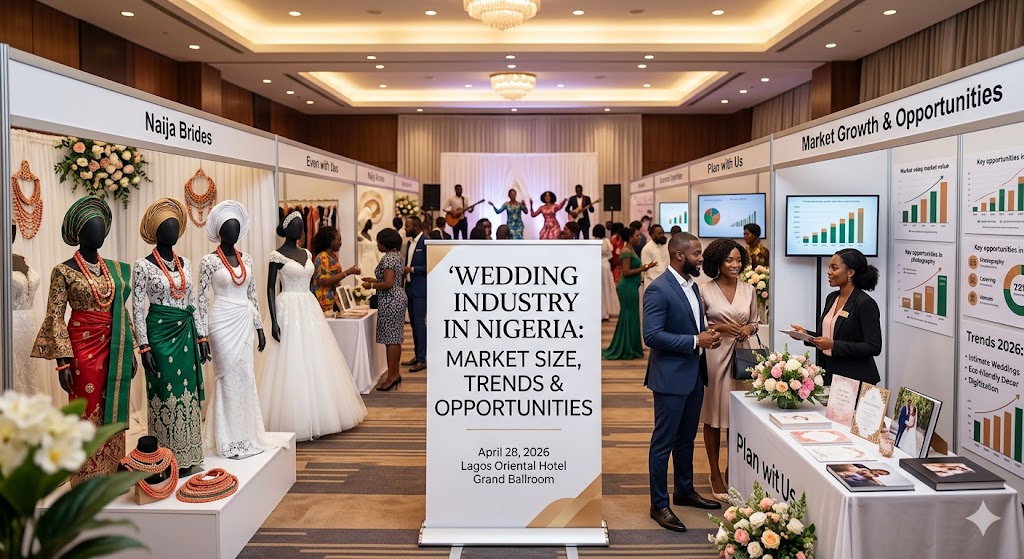
Wedding Industry in Nigeria: Market Size, Trends & Opportunities
The wedding industry in Nigeria is one of the most vibrant and economically significant yet under-acknowledged sectors of the economy. Far beyond just celebrations of love, Nigerian weddings function as a powerful economic engine involving fashion, hospitality, entertainment, logistics, photography, catering, beauty services, and digital media. Every weekend across Lagos, Abuja, Port Harcourt, Enugu, and other cities, thousands of weddings take place—each one generating ripple effects across multiple industries.
As cultural expectations evolve and middle-class spending grows, the Nigerian wedding industry continues to expand in both value and complexity. This article explores its market size, key trends, and emerging opportunities using data, real-life insights, and case studies.
Market Size of the Wedding Industry in Nigeria
Nigeria’s wedding industry is widely regarded as one of the largest in Africa. Estimates suggest that the sector contributes significantly to the informal economy, with billions of naira circulating annually through wedding-related services.
According to industry analysis, Nigeria’s creative and event services sector—which includes weddings—contributes about 2.3% of national GDP, valued at nearly ₦5 trillion annually, with weddings accounting for a substantial portion of this figure.
When the full value chain is considered, weddings alone are estimated to generate over ₦1 trillion yearly, driven by spending on venues, fashion, catering, photography, entertainment, and logistics.
On average, a mid-scale Nigerian wedding in major cities costs between ₦15 million and ₦25 million, while luxury weddings can exceed ₦80 million or more depending on guest size and expectations.
Even smaller weddings in secondary cities typically range from ₦1 million to ₦5 million, showing how deeply embedded wedding spending is across income levels.
Globally, the wedding services industry is also expanding, projected to grow steadily due to rising consumer spending and personalization trends, reinforcing Nigeria’s position within a growing global market.
Why the Nigerian Wedding Industry Is So Big
Several cultural and economic factors drive the size of Nigeria’s wedding industry.
First is the cultural importance of marriage. Weddings are not private events but public celebrations involving extended families, communities, and social networks. Guest lists often run into hundreds or even thousands of people.
Second is the multi-ceremony structure of Nigerian weddings. Most couples hold at least three events: traditional marriage, church or mosque wedding, and white wedding. This structure multiplies costs significantly.
Third is the social expectation of display. Weddings are seen as status-defining events where families showcase success, wealth, and cultural pride.
Finally, Nigeria’s young and fast-growing population ensures a steady demand for weddings every year.
Key Segments of the Wedding Industry
The Nigerian wedding industry is not a single market but a network of interconnected sub-sectors.
Fashion is one of the biggest contributors, driven by bridal wear, aso-ebi, and groom outfits. Tailors, designers, and fabric sellers benefit heavily from wedding demand.
Catering and hospitality represent another major segment. Food service providers, event caterers, and beverage suppliers earn substantial revenue from large guest lists.
Event planning and decoration is a rapidly professionalizing industry, with planners managing logistics, aesthetics, and coordination.
Photography and videography have become premium services, as couples increasingly document weddings for social media.
Entertainment—including DJs, live bands, MCs, and cultural performers—adds another layer of economic activity.
Finally, transportation, logistics, makeup artistry, and souvenir production complete the ecosystem.
Together, these segments form a highly interconnected value chain that supports thousands of small and medium enterprises.
Major Trends in the Nigerian Wedding Industry
1. Rising Cost and Premiumization
One of the most noticeable trends is the rising cost of weddings. Inflation, increased expectations, and lifestyle changes have pushed couples to spend more than ever before.
Luxury weddings are becoming more common, especially in Lagos and Abuja, where high-income professionals seek premium experiences. Some weddings now include celebrity performances, luxury décor, and destination-style setups.
2. Social Media Influence
Social media has completely transformed the wedding industry. Platforms like Instagram and TikTok now serve as marketing tools for vendors and inspiration boards for couples.
Weddings are increasingly designed for online visibility, with aesthetics playing a major role in planning decisions. Viral wedding content has also increased competition among vendors.
3. Professionalization of Vendors
The industry is becoming more structured, with professional event companies replacing informal arrangements.
Wedding planners now offer full-service packages including budgeting, vendor coordination, design, and execution. This has raised standards but also increased costs.
4. Technology Integration
Digital tools are reshaping wedding planning in Nigeria. From virtual consultations to online mood boards and digital guest management, technology is improving efficiency and coordination.
Some planners now use hybrid systems combining online planning tools with on-ground execution.
5. Shift Toward Smaller Guest Lists
Although large weddings remain popular, there is a growing trend toward more intimate ceremonies due to rising costs and economic pressure.
Couples are increasingly prioritizing quality over quantity, focusing on experience rather than crowd size.
6. Growth of Wedding Tech and Startups
New startups are emerging to serve the wedding ecosystem, including platforms for vendor booking, budgeting tools, and digital wedding planning services.
This reflects a broader global trend where technology is entering traditionally informal industries.
Case Study 1: Lagos Luxury Wedding
A high-profile wedding in Lagos involving two corporate executives illustrates the premium segment of the industry.
The couple hosted over 500 guests at a luxury venue, with costs exceeding ₦30 million. Expenses included designer outfits, imported décor, live band entertainment, and professional photography teams.
Despite the high cost, the wedding generated significant media attention and boosted vendors’ reputations, leading to increased bookings for planners and decorators.
This case shows how weddings function not just as social events but also marketing platforms for vendors.
Case Study 2: Middle-Class Abuja Wedding
In Abuja, a dual-income couple spent approximately ₦8–10 million on their wedding.
Their budget was heavily influenced by guest expectations and family contributions. Despite trying to reduce costs, venue and catering expenses escalated due to a large guest list.
This reflects the challenge middle-class couples face in balancing financial planning with social expectations.
Case Study 3: Enugu Traditional Ceremony
In southeastern Nigeria, a traditional wedding in Enugu cost significantly less in monetary terms but still involved substantial cultural obligations.
Bride price negotiations, family hosting, food preparation, and traditional attire created financial pressure despite lower formal costs.
This demonstrates that even in less commercialized regions, weddings still represent a major financial commitment.
Real-Life Insight: Vendor Perspective
A wedding photographer in Lagos reports booking multiple events every weekend, earning steady income from a single wedding season.
Similarly, caterers and decorators often rely heavily on wedding season income, with some generating up to 60–70% of annual revenue from weddings alone.
This highlights how dependent many small businesses are on the wedding economy.
Opportunities in the Nigerian Wedding Industry
Despite challenges, the industry presents enormous opportunities.
One major opportunity is digital transformation. Platforms that connect couples to vendors can scale quickly due to fragmented supply chains.
Another opportunity lies in affordable wedding solutions. Many couples are actively seeking budget-friendly options without compromising quality.
Destination weddings within Nigeria are also growing, with interest in resort-style venues and unique locations.
Content creation and wedding media is another fast-growing niche, as couples invest more in storytelling and social media presence.
Finally, financial services such as wedding savings plans and micro-loans are emerging as important support systems.
Challenges Facing the Industry
The industry also faces several challenges.
Inflation and economic instability continue to increase costs for couples and vendors alike.
Lack of regulation in many segments means inconsistent pricing and service quality.
Overdependence on informal networks limits scalability and transparency.
Additionally, social pressure often leads couples to overspend beyond their means.
The Future of Wedding Industry in Nigeria
The Nigerian wedding industry is expected to continue growing, driven by population growth, urbanization, and rising consumer expectations.
However, the future will likely be defined by a balance between luxury and affordability.
Technology will play a bigger role in planning, coordination, and marketing.
Smaller, more personalized weddings may become more common due to economic realities.
At the same time, high-end weddings will continue to thrive as status symbols in urban centers.
The industry will also become more structured, with increased professionalization and digital integration.
Conclusion
The wedding industry in Nigeria is a multi-billion-naira ecosystem that goes far beyond celebration. It is a complex economic network that supports thousands of businesses and livelihoods while reflecting deep cultural values.
From luxury Lagos weddings to traditional ceremonies in rural communities, the industry shows remarkable diversity and resilience.
As trends evolve, opportunities will continue to emerge in technology, affordability solutions, and creative services. However, balancing cultural expectations with economic realities will remain the central challenge.
Ultimately, the Nigerian wedding industry is not just about love—it is about culture, economy, identity, and innovation all intertwined.
Users can join groups/tribes on https://www.marriagehub.ng/all-groups or create groups on https://www.marriagehub.ng/create-tribes-group. Users can also purchase products, services and downloadable on https://www.marriagehub.ng/marketplace.
Follow us on
WhatsApp - https://whatsapp.com/channel/0029VbCav9MCcW4pw3GSM72w
X - https://x.com/MarriageHubNG
Facebook - https://web.facebook.com/MarriageHubNigeria
Instagram - https://www.instagram.com/marriagehubng3










.jpg)



Sign in to comment