 Nurturing Marriages, Enriching Families!
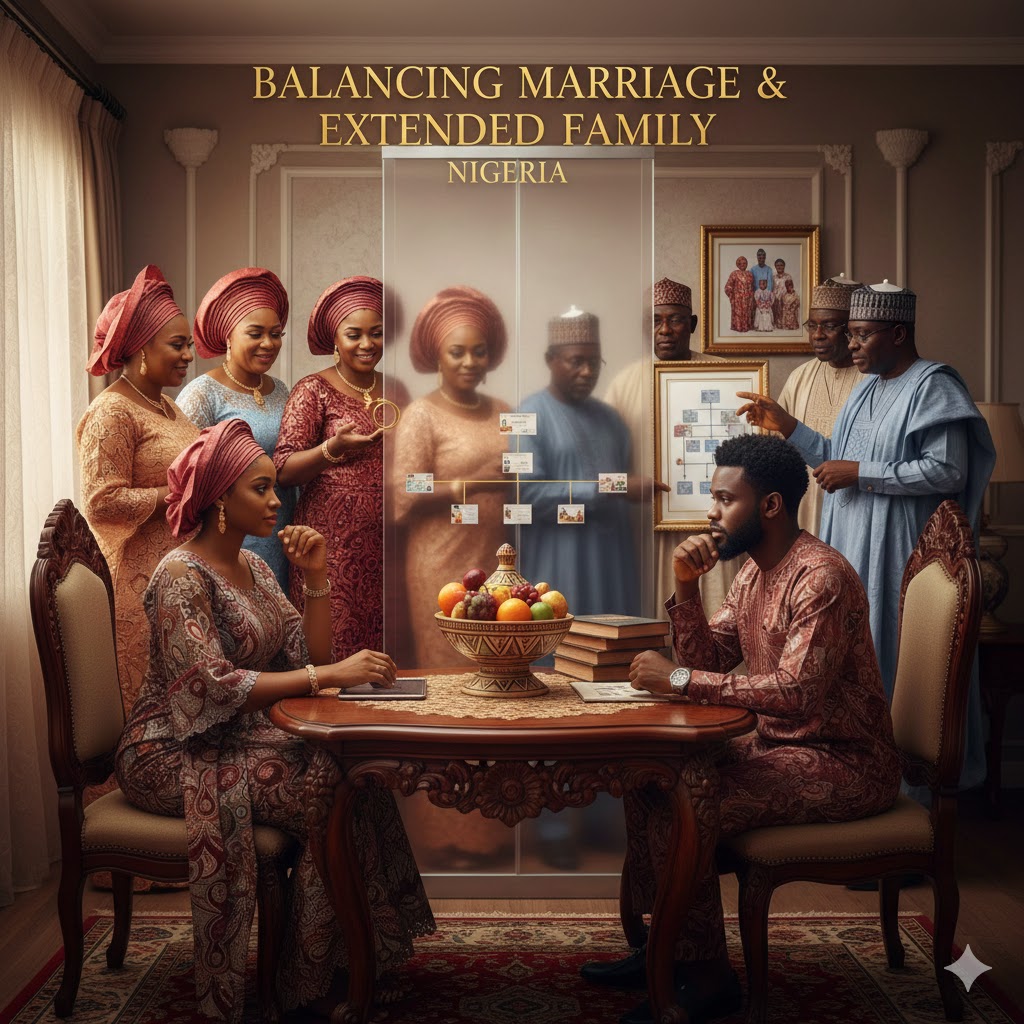
Balancing Marriage and Extended Family Expectations in Nigeria: How Couples Can Protect Love, Peace, and Unity
Marriage in Nigeria is not merely a union between two individuals; it is a complex blending of families, traditions, expectations, and long-standing cultural norms. From the very first introduction ceremonies to child-rearing decisions decades later, extended family involvement is deeply woven into the fabric of Nigerian marriages. While this communal system can offer support, protection, and guidance, it can also become a major source of pressure, conflict, and emotional strain if not properly managed.
Many Nigerian couples enter marriage with genuine love and good intentions, only to discover that the real test of their union begins after the wedding. Expectations from parents, siblings, uncles, aunts, and even distant relatives often come quickly and persistently. These expectations may relate to finances, living arrangements, parenting choices, religious practices, cultural customs, or decision-making authority. When couples are unprepared to navigate these pressures together, the marriage itself can suffer.
Balancing marriage and extended family expectations in Nigeria requires more than patience. It demands emotional intelligence, strong communication skills, clear boundaries, and, most importantly, unity between spouses.
Understanding the Nigerian Extended Family Structure
To understand why extended family expectations carry so much weight in Nigeria, one must appreciate the cultural context. Nigerian society is largely collectivist rather than individualistic. Family identity often takes precedence over personal preference. Elders are highly respected, and obedience to parental authority is considered a moral duty, even after marriage.
In many homes, parents believe they have lifelong rights over their children’s decisions. Advice is freely given, often without invitation, and questioning an elder’s opinion may be seen as disrespectful or rebellious. In-laws may feel entitled to influence where a couple lives, how they spend money, how many children they have, and even how spouses relate to each other.
While these expectations are usually rooted in concern and tradition, problems arise when they override the independence and emotional safety of the marriage.
The Silent Struggle Within Many Nigerian Marriages
One of the most painful realities of extended family pressure is that many couples suffer in silence. A wife may feel constantly judged by her in-laws but hesitate to speak up for fear of being labeled disrespectful. A husband may feel torn between pleasing his parents and defending his wife, choosing silence as a coping mechanism. Over time, this silence breeds resentment.
When one spouse consistently sides with extended family members or avoids difficult conversations, the other spouse often feels abandoned. Emotional distance sets in, intimacy weakens, and trust begins to erode. Many marital conflicts in Nigeria are not truly between husband and wife but are fueled by unresolved family interference.
Why Unity Between Spouses Is Non-Negotiable
The strongest defense against unhealthy extended family pressure is spousal unity. When a couple is emotionally aligned, external voices lose their power to divide. Unity does not mean cutting off family members or disrespecting elders; it means that major decisions are first discussed and agreed upon privately between husband and wife.
In Nigerian marriages, lack of unity often shows up in subtle ways. A husband may say, “Let me ask my mother first,” before consulting his wife. A wife may complain about her husband to her siblings instead of addressing issues at home. These small cracks can widen over time.
When couples consistently present a united front, extended family members gradually learn where boundaries lie. Unity sends a clear message that the marriage is a priority and not an open forum for external control.
Setting Boundaries Without Disrespect
Boundary-setting in Nigeria is delicate. Direct confrontation or blunt refusals can escalate tensions quickly. However, avoiding boundaries altogether invites chaos. Healthy boundaries are communicated with respect, clarity, and consistency.
For example, when parents insist on controlling financial decisions, a couple can express appreciation for concern while firmly stating what works for their household. When relatives demand constant visits or involvement, couples can set reasonable limits without hostility.
The key is consistency. Boundaries that are set today but ignored tomorrow lose credibility. When couples send mixed signals, extended family members continue to push.
It is also important to note that boundaries are not punishments. They are protective measures designed to preserve peace, emotional health, and marital stability.
Financial Expectations and Their Impact on Marriage
Financial pressure from extended family is one of the most common stressors in Nigerian marriages. Many relatives expect married couples to provide regular financial support, contribute to ceremonies, pay school fees, sponsor businesses, or cover medical expenses. While generosity is a cherished cultural value, unchecked financial obligations can strain a marriage.
Problems arise when one spouse commits family resources without consulting the other. Secret financial support, hidden debts, or constant emergency demands often lead to arguments and mistrust. In some cases, couples find themselves unable to meet their own needs because of extended family expectations.
Healthy couples discuss finances openly and agree on what they can realistically afford. Supporting family should be a joint decision, not an emotional reaction to pressure or guilt.
Parenting Conflicts and Generational Differences
Parenting is another area where extended family expectations often clash with modern realities. Grandparents may insist on traditional disciplinary methods, naming conventions, or educational paths that conflict with the parents’ values. While elders bring valuable experience, parenting authority must remain with the parents.
Children exposed to conflicting instructions from parents and relatives often become confused or manipulative. When grandparents override parental decisions, discipline becomes ineffective, and respect for parental authority diminishes.
Respectful dialogue and clear communication are essential. Couples must gently but firmly establish that while advice is welcome, final decisions about their children belong to them.
Emotional Manipulation and Guilt Culture
Emotional manipulation is not always intentional, but it is common. Statements like “After all I’ve done for you,” or “In our time, we didn’t behave like this,” are often used to induce guilt and compliance. Cultural loyalty is frequently weaponized to pressure couples into decisions they are uncomfortable with.
Couples must learn to recognize guilt-based manipulation and respond thoughtfully rather than emotionally. Decisions made out of guilt rarely lead to peace. Over time, resentment builds, and emotional burnout follows.
Choosing one’s marriage does not mean abandoning family. It means redefining roles in a healthier way.
When Extended Family Becomes a Source of Division
Some marriages suffer deeply because extended family members actively interfere, spread misinformation, or take sides during conflicts. When private marital issues are shared too widely, they often become exaggerated or distorted.
Involving relatives in marital disagreements should be done cautiously. While seeking counsel is sometimes necessary, involving too many voices often complicates matters. Neutral counselors, trusted elders, or faith leaders are usually more effective than emotionally invested relatives.
A marriage thrives best when most issues are handled internally with maturity and honesty.
Turning Extended Family Into a Source of Support
Despite the challenges, extended family can be a blessing rather than a burden when properly managed. Families can offer childcare support, wisdom, emotional encouragement, and a sense of belonging. The goal is not exclusion but balance.
Regular communication, appreciation, and inclusion in appropriate ways help maintain positive relationships. When extended family members feel respected but not in control, tension often reduces naturally.
In some situations, mediation may be necessary. Involving a respected elder or counselor can help communicate boundaries in a culturally acceptable manner. Seeking help should be seen as strength, not weakness.
The Long-Term Impact of Healthy Boundaries
Balancing marriage and extended family expectations is not a one-time conversation; it is an ongoing process. Life changes such as childbirth, career shifts, relocation, or illness may require boundaries to be revisited.
Couples who consistently prioritize unity, communicate openly, and protect their emotional space tend to enjoy greater marital satisfaction. They raise children in more stable environments and model healthy relationships for future generations.
Ultimately, a strong marriage benefits not just the couple but the extended family as well. When spouses protect their bond, they create a foundation of peace that radiates outward.
Balancing marriage and extended family expectations in Nigeria is one of the most delicate yet essential skills couples must learn. Culture, tradition, and family loyalty are important, but they must not overshadow the emotional health of the marriage.
A successful Nigerian marriage is not one without family involvement but one where involvement is healthy, respectful, and balanced. When couples choose unity, set loving boundaries, and communicate with wisdom, they create marriages that are resilient, peaceful, and deeply fulfilling.
Marriage thrives best when love is protected, respect is mutual, and family remains a source of strength rather than strain.






.jpg)

Sign in to comment