 Nurturing Marriages, Enriching Families!
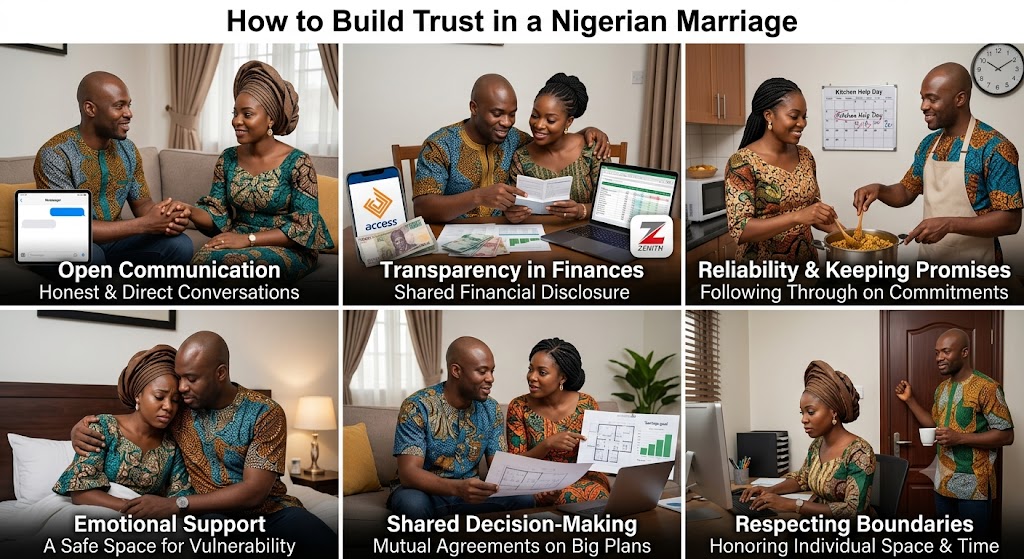
How to Build Trust in a Nigerian Marriage: Practical Strategies, Real-Life Stories and Expert Insights
Trust is the invisible foundation upon which every successful marriage is built. Love may bring two people together, but trust keeps them together through life's greatest challenges. In Nigeria, where marriage is deeply rooted in culture, religion, and family traditions, trust plays an even more significant role. Whether a couple is navigating financial pressures, raising children, managing careers, or dealing with extended family expectations, trust determines how they respond to these challenges as a team rather than as adversaries.
Unfortunately, trust is also one of the easiest aspects of a marriage to damage and one of the most difficult to rebuild. A single lie, hidden debt, emotional affair, broken promise, or repeated act of dishonesty can create emotional wounds that last for years. Marriage counsellors across Lagos, Abuja, Port Harcourt, Enugu, Kano, Ibadan, and other Nigerian cities consistently report that trust-related issues rank among the leading reasons couples seek professional counselling.
Research from relationship experts around the world has repeatedly shown that couples with high levels of trust experience greater marital satisfaction, better communication, improved emotional intimacy, and stronger long-term commitment. Nigerian family therapists have observed similar patterns, particularly as economic hardship, social media, changing gender roles, and increasing work pressures place additional strain on marriages.
The good news is that trust is not built overnight, nor is it entirely dependent on grand gestures. Instead, it grows through hundreds of consistent daily actions that communicate honesty, reliability, respect, transparency, and emotional safety. Every conversation, every promise kept, and every difficult situation handled with integrity contributes to a stronger marital bond.
Understanding What Trust Really Means
Many people assume trust simply means believing that a spouse will remain faithful. While fidelity is certainly important, trust extends much further. Trust means believing your husband or wife will tell the truth even when it is uncomfortable. It means feeling confident that financial decisions are made openly, that promises will be honoured, and that your partner will stand beside you during difficult seasons.
In many Nigerian homes, trust also involves confidence that a spouse will protect family interests, respect confidential conversations, honour shared values, and prioritise the marriage above outside influences. When this confidence exists, couples generally experience greater peace, lower anxiety, and healthier communication.
Why Trust Is Increasingly Challenged in Nigerian Marriages
Modern marriages face pressures that previous generations rarely encountered. Rising inflation, unemployment, increasing housing costs, school fees, and financial responsibilities towards extended family members create daily stress. At the same time, smartphones and social media have introduced entirely new opportunities for secrecy, emotional affairs, and misunderstandings.
Many Nigerian couples also struggle with demanding careers that leave little time for meaningful conversations. Long-distance employment, overseas work assignments, and frequent business travel may further test marital confidence. In addition, unrealistic portrayals of marriage on social media often create unnecessary suspicion and unhealthy comparisons.
Marriage counsellors increasingly report that many trust issues do not begin with infidelity but with repeated dishonesty about smaller matters such as spending habits, online friendships, business losses, family obligations, or hidden financial commitments.
Honesty Creates Emotional Security
Trust begins with consistent honesty. Couples who are truthful about both major and minor issues create an atmosphere where emotional security can flourish. Honesty includes admitting mistakes, discussing financial difficulties openly, acknowledging weaknesses, and resisting the temptation to hide uncomfortable truths.
Consider the experience of Chinedu and Amaka, a young couple living in Lagos. Chinedu lost a major business contract but decided not to tell his wife because he wanted to protect her from worry. Instead, he secretly borrowed money to maintain their lifestyle. Months later, loan recovery agents began contacting family members, exposing the financial crisis. Amaka later explained that she was not angry about the business loss itself but about the dishonesty that followed. The hidden debt created greater damage than the original setback.
Their experience illustrates an important lesson shared by many marriage therapists: difficult truths strengthen relationships more than comforting lies.
Financial Transparency Builds Confidence
Money remains one of the leading causes of conflict in Nigerian marriages. Hidden bank accounts, undisclosed loans, secret investments, gambling losses, or excessive financial support to relatives often create deep mistrust between spouses.
Building financial trust requires openness regarding income, debts, savings, investments, and long-term financial goals. This does not necessarily mean every account must be jointly owned, but both spouses should clearly understand the family's financial position.
Successful Nigerian couples often schedule regular financial discussions where they review household expenses, future plans, children's education, emergency savings, and investment opportunities together. These conversations reduce misunderstandings while reinforcing teamwork.
Keeping Promises Strengthens Reliability
Trust grows whenever promises are consistently fulfilled. Every commitment, regardless of how small, communicates reliability. Whether promising to return home early, attend a child's school event, complete a household responsibility, or pay an agreed expense, following through demonstrates dependability.
Repeatedly breaking promises—even seemingly insignificant ones—gradually weakens confidence in the relationship. Over time, spouses begin doubting not only future promises but also each other's sincerity.
Effective Communication Prevents Suspicion
Open communication removes uncertainty before it develops into suspicion. Couples who regularly discuss their schedules, friendships, financial decisions, concerns, and expectations leave little room for assumptions.
Many marital conflicts arise because spouses create stories to explain missing information. Instead of asking questions, they assume the worst. Honest communication eliminates these unnecessary misunderstandings.
Relationship experts often encourage couples to spend uninterrupted time talking every day, even if only for thirty minutes, without television, mobile phones, or other distractions.
Respecting Boundaries with Extended Family
Nigeria's strong family culture is one of its greatest strengths, yet it sometimes presents challenges for newly married couples. Parents, siblings, and relatives may unintentionally become involved in decisions regarding finances, parenting, housing, or personal disagreements.
Building trust requires reassuring one's spouse that the marriage remains the primary relationship. Respectfully establishing healthy boundaries while maintaining close family relationships helps prevent feelings of betrayal or neglect.
A couple from Enugu experienced repeated disagreements because the husband discussed private marital issues with his siblings before speaking to his wife. Although he believed he was seeking advice, his wife interpreted the behaviour as a violation of trust. After attending counselling, they agreed that sensitive issues would first be discussed privately before involving anyone else.
Faithfulness Goes Beyond Physical Relationships
Faithfulness involves emotional commitment as well as physical loyalty. Emotional affairs conducted through social media, messaging applications, or workplace friendships often damage marriages as deeply as physical infidelity.
Maintaining appropriate boundaries with friends, colleagues, and former romantic partners protects emotional intimacy within marriage. Transparency about friendships and social interactions helps reassure both partners.
Learning to Apologise Sincerely
No marriage is free from mistakes. Every husband and wife will eventually say or do something hurtful. Trust is strengthened not by perfection but by accountability.
A genuine apology acknowledges wrongdoing without excuses or shifting blame. It communicates empathy, accepts responsibility, and demonstrates commitment to change.
In many Nigerian homes, pride prevents spouses from apologising, particularly where traditional gender expectations encourage emotional silence. However, humility often restores trust more effectively than prolonged arguments.
Forgiveness Makes Healing Possible
Forgiveness does not excuse harmful behaviour, nor does it eliminate accountability. Instead, it allows couples to move beyond past mistakes while working towards genuine reconciliation.
Where trust has been seriously damaged through dishonesty or infidelity, rebuilding the relationship requires patience, transparency, counselling, and consistent behavioural change over time.
Marriage counsellors frequently remind couples that forgiveness is not a single decision but an ongoing process requiring emotional commitment from both spouses.
Consistency Matters More Than Grand Gestures
Many people attempt to rebuild trust through expensive gifts or dramatic romantic gestures. While thoughtful acts may express love, lasting trust grows through consistent behaviour over months and years.
Arriving home when promised, communicating honestly, respecting agreed boundaries, supporting family responsibilities, and demonstrating reliability every day create stronger relationships than occasional displays of affection.
Trust is accumulated gradually through repeated positive experiences.
Technology and Social Media Require Responsibility
Technology has transformed modern marriages. Smartphones allow couples to remain connected throughout the day, yet they also introduce opportunities for secrecy and misunderstanding.
Secret passwords, hidden conversations, disappearing messages, or excessive online relationships may create unnecessary suspicion even when no wrongdoing exists.
Healthy Nigerian couples establish mutually agreed expectations regarding social media use, online privacy, and digital communication. Rather than policing each other, they focus on openness that naturally reduces suspicion.
Supporting One Another During Difficult Times
Trust deepens most during adversity. Financial setbacks, unemployment, illness, infertility, bereavement, or business failures reveal whether spouses truly stand together.
A businessman in Port Harcourt experienced severe financial losses after importing goods that became trapped at the port. Instead of blaming him, his wife encouraged them to reduce expenses temporarily while rebuilding the business together. Years later, he described her unwavering support during that difficult period as the moment he trusted her most deeply.
Difficult seasons often strengthen marriages when couples choose unity instead of blame.
Seeking Professional Help Before Problems Escalate
Many Nigerian couples delay seeking counselling until trust has almost completely collapsed. Unfortunately, problems become much more difficult to resolve once resentment has accumulated over many years.
Professional marriage counselling provides neutral guidance, improves communication, identifies unhealthy patterns, and equips couples with practical conflict-resolution skills.
Seeking help should never be viewed as evidence of failure. Rather, it demonstrates commitment to preserving the marriage.
What Research Says About Trust in Marriage
Relationship researchers consistently report that trust strongly predicts marital satisfaction, emotional intimacy, relationship stability, and long-term happiness. Couples who communicate openly, resolve conflicts respectfully, maintain financial transparency, and demonstrate emotional reliability generally report significantly higher relationship quality than those characterised by secrecy and chronic suspicion.
Nigerian marriage counsellors have observed similar trends across different cultural and religious backgrounds. Although every marriage faces unique circumstances, the strongest relationships consistently display honesty, accountability, empathy, forgiveness, and mutual respect.
Real-Life Lessons from Nigerian Couples
Real-life experiences across Nigeria continue to reinforce the importance of trust. A banker in Abuja rebuilt his marriage after admitting that he had concealed investment losses from his wife. Rather than continuing the deception, he became completely transparent about future financial decisions. Although rebuilding confidence took time, honesty eventually restored emotional security.
Another couple in Ibadan nearly separated because of misunderstandings surrounding social media. Frequent late-night messaging with colleagues created suspicion, despite there being no affair. They eventually agreed on clearer communication, greater openness regarding friendships, and dedicated technology-free family time each evening. These simple changes significantly improved trust and emotional intimacy.
In Kano, a couple facing infertility found that mutual support strengthened rather than weakened their marriage. Instead of blaming each other, they attended medical appointments together, prayed together, and encouraged one another emotionally. Their experience demonstrated that trust often grows strongest during life's most painful challenges.
Trust Is a Daily Choice
Trust is not created by a wedding ceremony, a marriage certificate, or years spent together. It is built intentionally through honesty, consistency, transparency, empathy, forgiveness, and shared commitment. Every conversation, every promise kept, every act of kindness, and every moment of integrity strengthens the emotional foundation of marriage.
No relationship is perfect, and every couple will experience misunderstandings from time to time. However, marriages characterised by trust are better equipped to overcome financial difficulties, family pressures, career demands, parenting challenges, and unexpected life crises.
Building trust requires effort from both husband and wife, but the reward is a marriage marked by peace, security, emotional intimacy, and enduring companionship.
Strengthen Your Relationship with MarriageHub.ng
Whether you are single, engaged, newly married, or have been married for many years, MarriageHub.ng provides practical tools and resources to help you build healthier, stronger relationships.
Take the Marriage Readiness Test to evaluate your compatibility, communication style, emotional preparedness, and relationship strengths by visiting:
https://www.marriagehub.ng/analyzer/index.php
If you have sensitive relationship concerns that you would rather ask privately, you can Ask Anonymous Questions at:
https://www.marriagehub.ng/questions-answers
Planning your wedding, anniversary, engagement, introduction, or family celebration? Create a beautiful E-Invite at:
https://www.marriagehub.ng/annouce-my-event/
If you're searching for a life partner, discover compatible matches through the MarriageHub Matchmaking Platform:
https://www.marriagehub.ng/match-making/frontend/discover.php
Planning your wedding? Browse trusted Wedding Vendors offering venues, photographers, decorators, caterers, planners, makeup artists, fashion designers, DJs, MCs, and more at:
https://www.marriagehub.ng/vendors
Become part of Nigeria's growing relationship community by joining existing Groups and Tribes at:
https://www.marriagehub.ng/all-groups
You can also create your own Group or Tribe where members can discuss marriage, relationships, parenting, faith, finance, or any topic that matters to your community by visiting:
https://www.marriagehub.ng/create-tribes-group
Looking for relationship books, counselling services, wedding products, digital downloads, event services, or other helpful resources? Visit the MarriageHub Marketplace:
https://www.marriagehub.ng/marketplace
Follow MarriageHub Nigeria
Stay connected for relationship advice, marriage tips, expert interviews, inspiring stories, and community discussions.
WhatsApp: https://whatsapp.com/channel/0029VbCav9MCcW4pw3GSM72w
X: https://x.com/MarriageHubNG
Facebook: https://web.facebook.com/MarriageHubNigeria
Instagram: https://www.instagram.com/marriagehubng3









.jpg)




Sign in to comment