 Nurturing Marriages, Enriching Families!

Traditional Marriage Requirements by Tribe in Nigeria: A Complete Guide for Couples and Families
Nigeria is home to more than 250 ethnic groups, each with its own unique customs, language, and marriage traditions. While love may bring two people together, traditional marriage remains one of the most important cultural institutions across the country. It is more than a wedding ceremony—it is the formal union of two families, the preservation of cultural heritage, and a public affirmation of commitment.
Whether you are planning to marry someone from your own tribe or entering an inter-tribal marriage, understanding the traditional marriage requirements by tribe is essential. Every ethnic group has specific customs regarding bride price, family introductions, engagement ceremonies, gifts, and traditional rites. Although many of these customs have evolved with modern society, they continue to play a significant role in Nigerian marriages.
This comprehensive guide explores the traditional marriage requirements among Nigeria's major tribes, highlighting similarities, differences, and practical advice for couples preparing for marriage.
Why Traditional Marriage Matters in Nigeria
Traditional marriage is legally and culturally recognized under Nigerian customary law. For many families, it is considered just as important as a court wedding or church wedding because it formally introduces the bride and groom to each other's extended families.
Traditional marriage serves several important purposes. It symbolizes respect for family traditions, strengthens relationships between two families, confirms the consent of both families, provides cultural legitimacy to the union, and preserves customs that have been passed down for generations.
Even among highly educated and urban families, traditional marriage ceremonies remain widely celebrated because they reflect identity, ancestry, and family values.
General Traditional Marriage Requirements Across Nigeria
Although every tribe has its own customs, several requirements are common across most Nigerian communities.
The process usually begins with a formal introduction, where the groom's family visits the bride's family to express their intention to marry their daughter. During this visit, both families become acquainted, discuss expectations, and agree on the next steps.
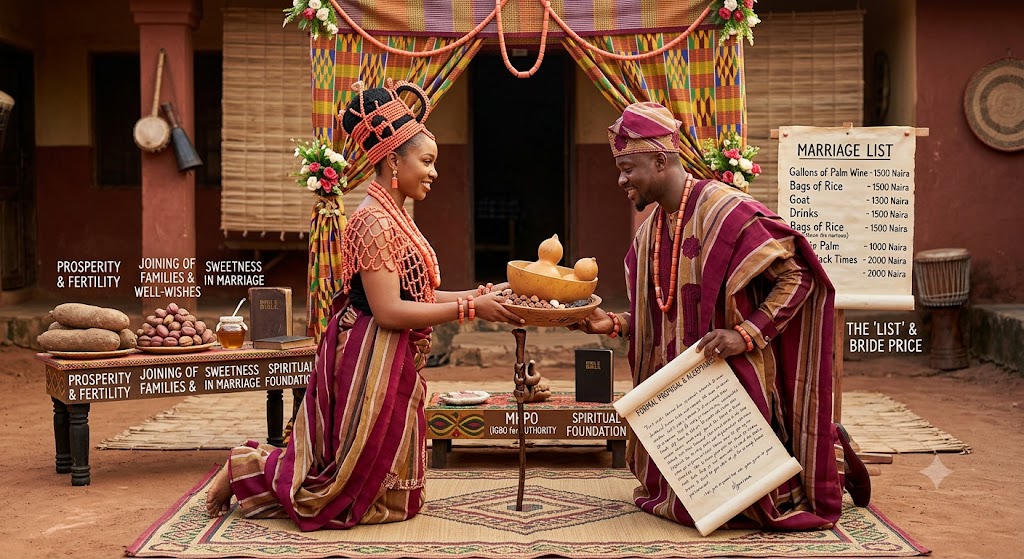
Following the introduction, the bride's family often provides an official marriage list. This list typically contains items required for the traditional marriage ceremony. While the contents differ from one tribe to another, they usually include traditional drinks, food items, clothing, gifts for parents and elders, symbolic items, and the agreed bride price.
Payment of the bride price is another important aspect of customary marriage. Contrary to popular misconceptions, the bride price is not the purchase of a wife but rather a symbolic gesture of appreciation and respect to the bride's family.
Most traditional weddings also include prayers, blessings from elders, exchange of gifts, cultural dances, public presentation of the bride and groom, and communal celebrations involving relatives, friends, and members of the community.
Igbo Traditional Marriage Requirements
Among the Igbo people of southeastern Nigeria, traditional marriage is often a multi-stage process involving several ceremonies before the final wedding.
The journey commonly starts with the "Iku Aka" or knocking ceremony, during which the groom's family officially visits the bride's family to declare their intentions. This initial visit is usually simple but highly symbolic.
After both families agree to proceed, the bride's family prepares a marriage list. The list varies from one community to another but generally includes cartons of drinks, bags of rice, tubers of yam, goats, wrappers, clothing materials, wine, kola nuts, palm wine, salt, beverages, and gifts for parents, elders, and extended family members.
Bride price negotiations follow, involving respected elders from both families. In many Igbo communities today, the bride price itself is relatively modest, while ceremonial gifts constitute a larger portion of the marriage expenses.
During the traditional wedding ceremony, one of the most celebrated moments occurs when the bride, dressed in traditional attire, searches for her groom among the guests while carrying a cup of palm wine. Once she finds him and presents the drink, the marriage receives public recognition before both families and invited guests.
Yoruba Traditional Marriage Requirements
Traditional marriage among the Yoruba people is known for its colourful ceremonies, elaborate cultural displays, and deep respect for elders.
The process usually begins with a formal introduction known as the "Mo Mi Mo E" ceremony, where both families officially meet.
The bride's family provides a marriage list containing items such as kola nuts, alligator pepper, honey, sugar, bitter kola, fruits, yam, bags of rice, drinks, assorted gifts, and clothing materials for family members.
The groom and his entourage traditionally prostrate before the bride's parents and elders as a sign of humility and respect. The bride also kneels before her parents to receive prayers and blessings before being formally handed over to her husband.
Bride price among the Yoruba is generally symbolic, with greater emphasis placed on honouring the bride's family through gifts and respect rather than the monetary value itself.
Traditional music, drumming, dancing, prayers, and colourful Aso-Oke attire make Yoruba weddings among the most vibrant cultural celebrations in Nigeria.
Hausa-Fulani Traditional Marriage Requirements
Marriage among the Hausa-Fulani is strongly influenced by Islamic traditions while preserving important cultural customs.
The marriage process begins with formal family discussions, followed by the payment of the bride's dowry, known as "Sadaki." Unlike some southern Nigerian traditions, Islamic teachings encourage modest dowries to make marriage accessible.
Family consent remains extremely important. Once agreements are reached, Islamic marriage rites are performed by an Imam in the presence of witnesses.
Traditional gifts, clothing, jewellery, perfumes, and household items are commonly exchanged between families. Wedding celebrations often feature cultural music, traditional attire, henna decorations, and elaborate feasting.
Depending on local customs and family preferences, some ceremonies are conducted separately for men and women.
Efik and Ibibio Traditional Marriage Requirements
The Efik and Ibibio people of Akwa Ibom and Cross River States maintain some of Nigeria's richest marriage traditions.
Following family introductions, the bride's family presents a detailed marriage list, often including drinks, food items, wrappers, traditional fabrics, goats, beverages, cosmetics, kitchen utensils, and symbolic gifts.
Bride price negotiations are usually conducted by respected elders representing both families.
One distinctive feature of Efik and Ibibio marriages is the public presentation of gifts and the elaborate display of traditional attire. Cultural dances, local cuisine, and blessings from family elders play central roles throughout the ceremony.
Edo Traditional Marriage Requirements
Among the Edo people, marriage customs emphasize respect, family unity, and ancestral blessings.
Following introductions, the bride's family provides a marriage list that typically contains drinks, kola nuts, clothing materials, wrappers, food items, and ceremonial gifts.
During the wedding ceremony, prayers are offered for fertility, prosperity, peace, and long life. Traditional attire, music, and cultural performances form an important part of the celebration.
Tiv Traditional Marriage Requirements
Traditional marriage among the Tiv people of Benue State places strong emphasis on community participation and family approval.
Marriage discussions involve elders from both families who negotiate customary requirements.
Depending on local traditions, gifts may include livestock, food items, clothing, drinks, and symbolic bride wealth.
Traditional dances, music, storytelling, and blessings from elders remain important components of Tiv wedding ceremonies.
Ijaw Traditional Marriage Requirements
Among the Ijaw communities of the Niger Delta, marriage ceremonies celebrate family heritage and community identity.
Marriage requirements typically include drinks, wrappers, traditional fabrics, food items, fish, livestock, beverages, and gifts requested by the bride's family.
Traditional prayers invoke blessings for prosperity, fertility, unity, and peaceful coexistence.
Music, masquerade performances in some communities, and cultural dances often accompany the celebrations.
Kanuri Traditional Marriage Requirements
The Kanuri people of northeastern Nigeria combine Islamic teachings with longstanding cultural traditions.
Marriage negotiations involve family elders and religious leaders. The groom pays the agreed dowry while gifts of clothing, jewellery, perfumes, household items, and food are exchanged between both families.
Wedding ceremonies are characterised by colourful attire, cultural music, community celebrations, and prayers led by Islamic scholars.
Nupe Traditional Marriage Requirements
Traditional marriages among the Nupe people emphasize modesty, respect, and family cooperation.
Following family meetings, customary gifts are presented to the bride's family alongside the agreed bride price.
Traditional clothing, food items, beverages, and prayers from elders remain integral parts of the ceremony.
Common Items Found on Nigerian Marriage Lists
Although every community has unique customs, certain items frequently appear on traditional marriage lists across Nigeria. These often include kola nuts, alligator pepper, palm wine, assorted alcoholic and non-alcoholic drinks, bags of rice, tubers of yam, goats, wrappers, clothing materials, jewellery, beverages, sugar, honey, salt, fruits, cooking ingredients, cosmetics, footwear, and gifts for parents, elders, and extended family members.
Many families also request Bibles or Qur'ans, depending on their religious beliefs, alongside symbolic items that reflect local traditions.
How Much Does a Traditional Marriage Cost in Nigeria?
The cost of a traditional marriage varies significantly depending on tribe, family expectations, location, and the scale of the celebration.
A modest traditional marriage in many communities may cost between ₦500,000 and ₦2 million, while elaborate ceremonies involving hundreds of guests can exceed ₦10 million. Expenses usually include bride price, marriage list items, catering, event venue, decorations, photography, videography, entertainment, attire, transportation, accommodation for guests, and souvenirs.
It is worth noting that many Nigerian families today intentionally simplify traditional marriage requirements to reduce financial pressure on young couples while preserving the cultural significance of the ceremony.
Inter-Tribal Marriages in Nigeria
Inter-tribal marriages are becoming increasingly common as Nigerians study, work, and live across different regions of the country. These unions promote national unity and expose families to diverse cultural traditions.
However, couples should understand the expectations of both families early in the relationship. Differences in language, religion, customs, inheritance practices, family roles, and wedding traditions can create misunderstandings if not discussed openly.
Many successful inter-tribal couples combine elements from both cultures during their wedding ceremonies, creating memorable celebrations that honour both family backgrounds.
Practical Tips for Couples
Preparing for a traditional marriage requires more than gathering money for the marriage list. Couples should invest time in understanding each other's culture, attending family meetings, discussing expectations honestly, and seeking guidance from elders where necessary. Open communication about finances, religion, career goals, children, and family responsibilities helps prevent misunderstandings after marriage.
Rather than viewing traditional marriage requirements as financial obligations alone, couples should appreciate them as opportunities to build relationships with their future in-laws and preserve cultural heritage.
Preserving Nigeria's Rich Marriage Traditions
Nigeria's cultural diversity is one of its greatest strengths, and traditional marriage ceremonies beautifully reflect this richness. While customs may differ among the Igbo, Yoruba, Hausa-Fulani, Efik, Ibibio, Edo, Tiv, Ijaw, Kanuri, Nupe, and numerous other ethnic groups, the underlying values remain remarkably similar. Respect for elders, family unity, community involvement, blessings for fertility and prosperity, and the public celebration of love continue to define traditional marriage across the country.
As society evolves, many families are adapting ancient customs to suit modern realities while preserving the essence of their traditions. The result is a beautiful blend of heritage and contemporary values that continues to make Nigerian traditional weddings among the most admired cultural celebrations in Africa.
Explore More Marriage Resources on MarriageHub.ng
Whether you are preparing for your traditional marriage, planning a wedding, or building a lasting relationship, MarriageHub.ng provides valuable resources for every stage of your journey.
Take the Marriage Readiness Test to assess your compatibility and preparedness for marriage by visiting https://www.marriagehub.ng/analyzer/index.php.
If you have confidential relationship concerns, ask anonymous questions and receive helpful insights from the MarriageHub community at https://www.marriagehub.ng/questions-answers.
Planning your traditional wedding or engagement ceremony? Create a beautiful digital invitation through https://www.marriagehub.ng/annouce-my-event/.
If you are still searching for your life partner, explore the matchmaking platform at https://www.marriagehub.ng/match-making/frontend/discover.php.
You can also browse trusted wedding vendors for catering, decoration, photography, event planning, bridal wear, makeup, cakes, music, and more at https://www.marriagehub.ng/vendors.
Join vibrant relationship communities by visiting https://www.marriagehub.ng/all-groups, where you can participate in existing groups and tribes. If you would like to build your own community, create a new group or tribe at https://www.marriagehub.ng/create-tribes-group.
Looking for relationship books, digital resources, counselling services, wedding products, or downloadable materials? Visit the MarriageHub Marketplace at https://www.marriagehub.ng/marketplace.
Stay connected with MarriageHub Nigeria for more relationship tips and wedding inspiration.
WhatsApp: https://whatsapp.com/channel/0029VbCav9MCcW4pw3GSM72w
X: https://x.com/MarriageHubNG
Facebook: https://web.facebook.com/MarriageHubNigeria
Instagram: https://www.instagram.com/marriagehubng3









.jpg)



Sign in to comment