 Nurturing Marriages, Enriching Families!
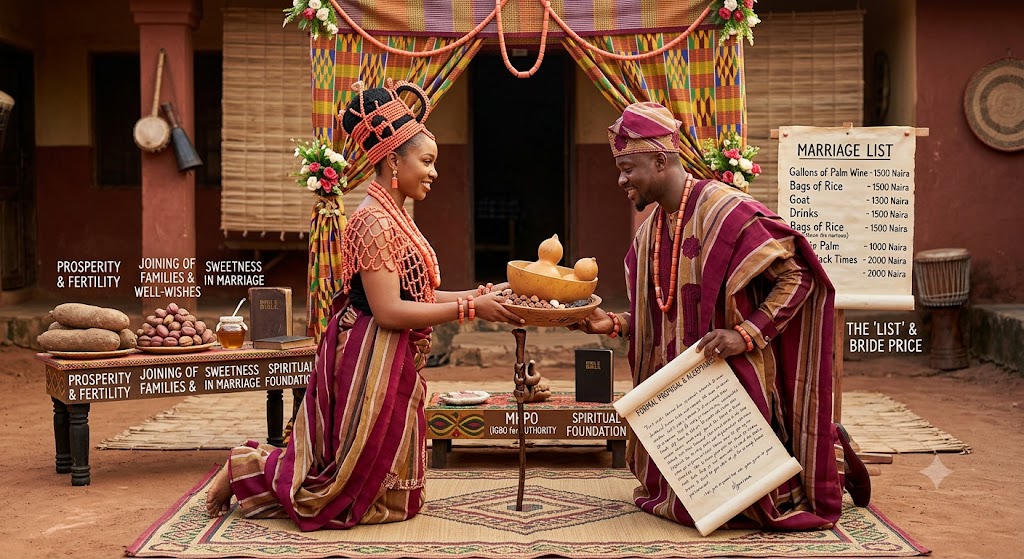
Nigerian Traditional Marriage Ceremony Explained: A Complete Guide for Couples and Families
A Nigerian traditional marriage ceremony is far more than an elaborate wedding celebration. It is a deeply rooted cultural institution that represents the coming together of two individuals, two families, and often two entire communities. Across Nigeria's more than 250 ethnic groups, traditional marriage ceremonies remain one of the most important rites of passage. They symbolize love, commitment, respect for family values, and the continuation of cultural heritage.
Whether it is an Igbo Igba Nkwu, a Yoruba traditional engagement, a Hausa-Fulani marriage ceremony, or the customary marriage rites of the Efik, Tiv, Edo, Ijaw, Ibibio, Urhobo, Kanuri, Nupe, or other ethnic groups, every Nigerian traditional marriage reflects centuries of customs that have been preserved and passed down from generation to generation.
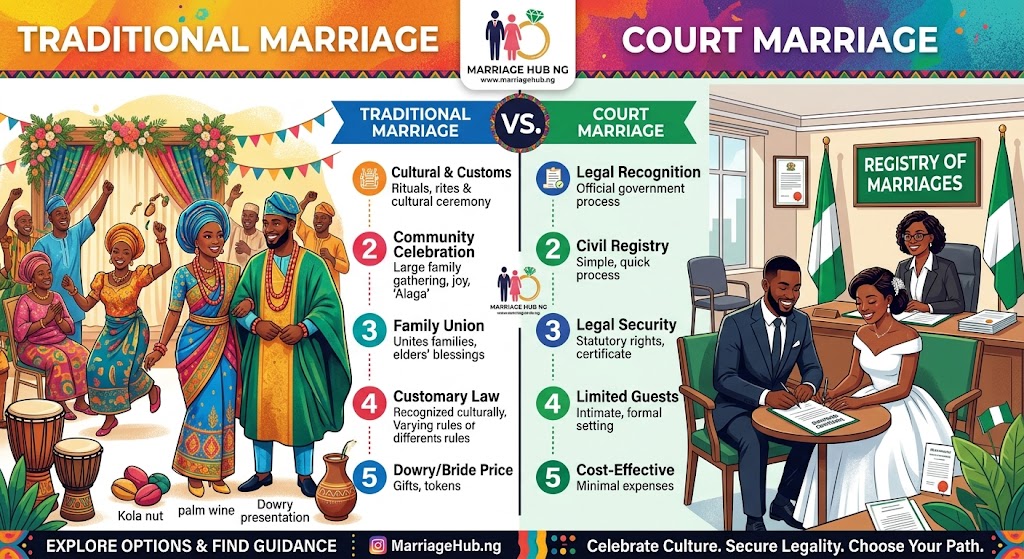
Although many modern couples also conduct court weddings and church or Islamic wedding ceremonies, traditional marriage remains the foundation of marriage in many Nigerian communities. For countless families, no marriage is considered culturally complete until the customary rites have been performed and both families have formally given their blessings.
Understanding how Nigerian traditional marriages work helps couples prepare for one of the most memorable and meaningful events of their lives.
What is a Nigerian Traditional Marriage?
A traditional marriage is a customary marriage conducted according to the customs and traditions of the bride's and groom's ethnic communities. Unlike a statutory marriage conducted under the Marriage Act or a religious wedding performed in a church or mosque, a traditional marriage follows the customs that have existed within each community for generations.
The ceremony officially introduces both families, recognizes the union before relatives and community members, and establishes a lifelong relationship between two extended families. It is as much about family unity as it is about the couple themselves.
Across Nigeria, the details may differ, but the purpose remains remarkably similar. Every traditional marriage emphasizes respect, honour, commitment, family acceptance, and communal celebration.
The Cultural Importance of Traditional Marriage
Traditional marriage continues to occupy a central place in Nigerian society because it preserves identity and reinforces family values. Every ceremony tells a story about the culture from which the couple comes. Through traditional attire, local languages, music, food, dance, and symbolic rituals, families celebrate not only the union of the couple but also their shared history and heritage.
For parents and grandparents, witnessing a traditional marriage is often one of life's proudest moments. Elders use the occasion to offer prayers, blessings, and words of wisdom that remind the newly married couple that marriage requires patience, respect, sacrifice, and mutual understanding.
Traditional marriage also strengthens relationships between families. Long after the wedding ceremony ends, the bond created between both families continues through festivals, celebrations, births, and family gatherings.
How a Traditional Marriage Begins
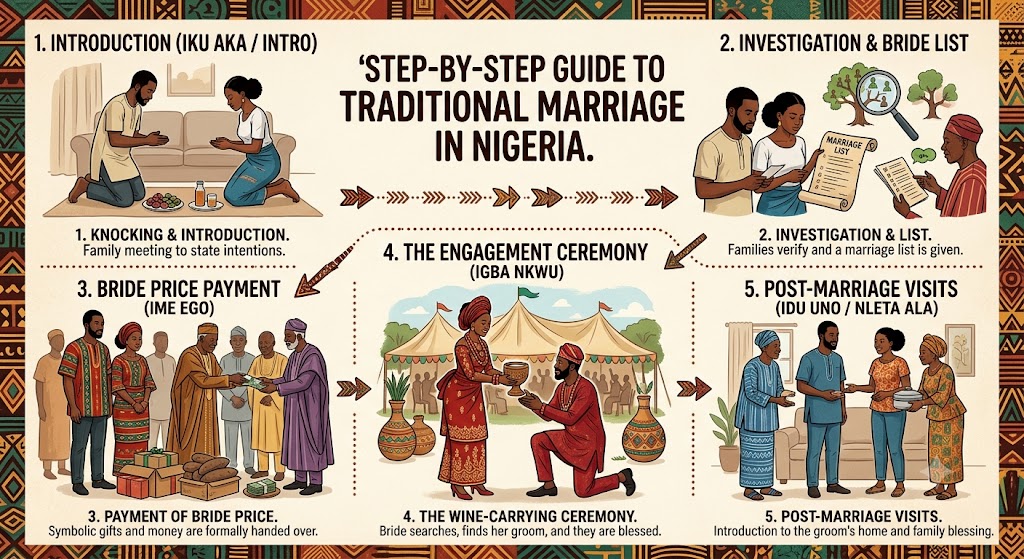
The journey toward a traditional marriage usually starts long before the wedding day. Once a couple has decided to marry, the groom formally informs his family of his intentions. His family then arranges a visit to the bride's family in what many communities refer to as the introduction ceremony or "knocking."
This first meeting is usually warm and respectful. It provides an opportunity for both families to become acquainted, discuss the relationship, and determine whether they are comfortable proceeding toward marriage. Although the atmosphere is often relaxed, the meeting carries significant cultural importance because it marks the beginning of formal family involvement in the relationship.
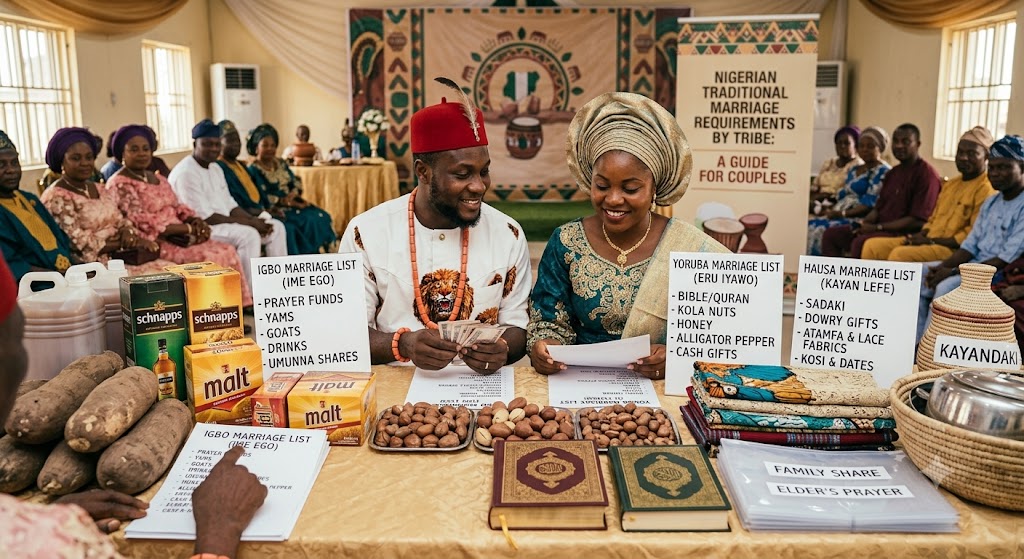
If the bride's family accepts the proposal, discussions continue regarding the traditional marriage requirements. These discussions usually cover ceremonial items, cultural expectations, wedding arrangements, and the symbolic bride price.
Understanding the Bride Price
Few aspects of Nigerian traditional marriage generate as much discussion as the bride price. Unfortunately, it is also one of the most misunderstood traditions.
The bride price is not a payment made to purchase a woman. Rather, it is a symbolic expression of gratitude and appreciation to the bride's family for raising and nurturing their daughter. Across many Nigerian communities, the amount itself is less important than the respect and goodwill it represents.
The exact requirements vary from one ethnic group to another and even from one family to another. Some communities request only a modest symbolic amount, while others include culturally significant gifts such as drinks, food items, clothing, wrappers, jewellery, kola nuts, yams, palm oil, livestock, or other ceremonial items. Increasingly, many Nigerian families discourage excessive demands that may create unnecessary financial hardship for young couples, recognising that the success of a marriage depends far more on love and responsibility than on expensive ceremonies.
Traditional Marriage Ceremonies Across Nigeria
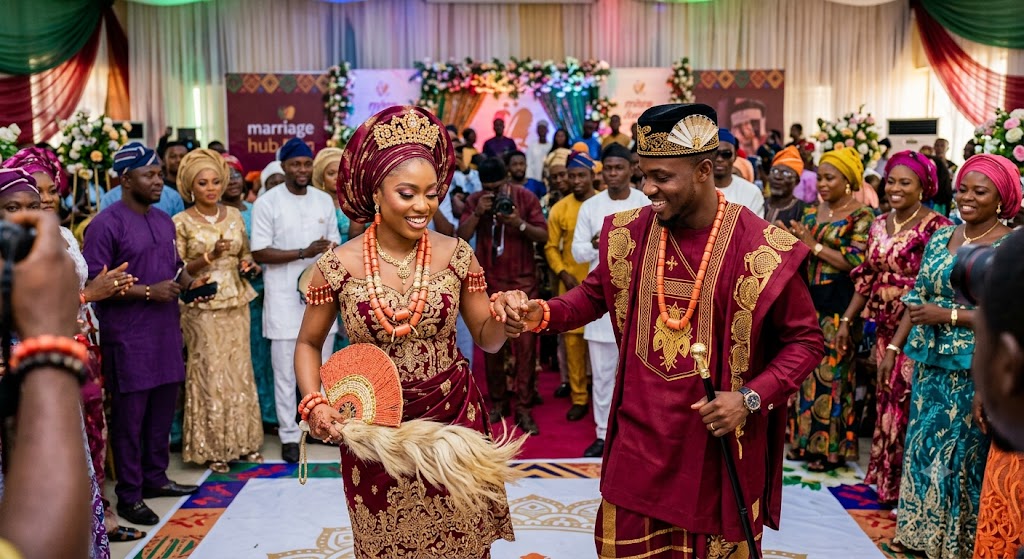
Nigeria's cultural diversity is beautifully reflected in its marriage traditions. Among the Igbo people, the traditional marriage ceremony, popularly known as Igba Nkwu or Igbankwu, is renowned for its elegance and symbolism. One of its most memorable moments occurs when the bride, dressed in magnificent traditional attire, searches for her groom among the guests before presenting him with palm wine. This symbolic act publicly confirms her acceptance of the marriage and is often greeted with cheers, music, and celebration.
The Yoruba traditional engagement ceremony is equally rich in cultural symbolism. It is characterised by elaborate greetings, respectful prostration by the groom and his family, prayers from elders, formal introductions, and the exchange of gifts between both families. The colourful display of aso-oke fabrics and beautifully coordinated aso-ebi outfits adds elegance to the celebration while reinforcing the unity of both families.
Among the Hausa and Fulani communities, marriage traditions are closely connected with Islamic teachings while preserving important cultural customs. Family consent, community involvement, religious guidance, and traditional celebrations all contribute to a marriage ceremony that reflects both faith and cultural identity.
Across other ethnic groups such as the Efik, Ibibio, Edo, Tiv, Ijaw, Urhobo, and Kanuri, traditional marriage ceremonies also feature unique customs that distinguish each community while maintaining the shared values of family acceptance, respect, and lifelong commitment.
Traditional Marriage Attire
One of the most striking features of Nigerian traditional weddings is the breathtaking display of cultural fashion. Every ethnic group proudly showcases its heritage through clothing that reflects centuries of artistic tradition.
Igbo brides often appear in richly embroidered George wrappers adorned with coral beads, elegant blouses, and beautifully crafted headpieces. Yoruba brides typically wear luxurious aso-oke complemented by beautifully tied gele and intricate jewellery, while Hausa brides often wear exquisitely embroidered gowns enhanced with elegant accessories.
The groom's attire is equally significant. Depending on his ethnic background, he may appear in Isi Agu attire, agbada, kaftan, embroidered traditional caps, walking sticks, beads, or other garments that celebrate his cultural identity. Many modern couples creatively blend traditional styles with contemporary fashion, producing wedding photographs that honour the past while embracing modern elegance.
Food, Music and Celebration
Hospitality lies at the heart of every Nigerian traditional marriage. Families spare no effort in ensuring that guests are warmly welcomed and generously entertained. Traditional meals are carefully prepared to reflect the customs of the host community and often include local delicacies that bring relatives and friends together around shared tables.
Music fills the atmosphere throughout the ceremony. Traditional drummers, cultural dancers, praise singers, live bands, and local entertainers transform the occasion into a joyous celebration. Guests dance with the couple, families exchange goodwill, and every stage of the ceremony reflects the communal nature of Nigerian life. The atmosphere is one of celebration, gratitude, and optimism as everyone gathers to witness the beginning of a new family.
The Cost of a Traditional Marriage
The cost of a Nigerian traditional marriage depends on several factors, including the location, size of the ceremony, family expectations, and the couple's personal preferences. While some families organise modest ceremonies within their communities, others host lavish celebrations in major cities such as Lagos, Abuja, Port Harcourt, Enugu, Kano, and Ibadan.
Expenses typically arise from venue decoration, catering, traditional attire, photography, videography, entertainment, transportation, accommodation, ceremonial gifts, and cultural requirements. In recent years, social media has encouraged increasingly elaborate weddings, prompting many couples to spend beyond their financial means. Relationship experts consistently advise couples to prioritise their future together over the desire to impress guests for a single day.
Challenges Couples May Encounter
Planning a traditional marriage is often exciting, but it may also present challenges. Families sometimes have different expectations regarding ceremonial requirements, wedding dates, or cultural practices. Inter-tribal marriages may require additional discussions as both families work together to blend different traditions into one harmonious celebration.
Financial pressure can also become a source of stress when wedding budgets exceed available resources. Successful couples usually overcome these challenges through patience, respectful communication, and a willingness to compromise while preserving the traditions that matter most to both families.
Traditional Marriage in Modern Nigeria
Traditional marriage continues to evolve alongside modern technology and changing lifestyles. Many Nigerian couples now livestream their ceremonies so relatives living abroad can participate virtually. Digital invitations have become increasingly popular, while professional wedding planners help families coordinate increasingly sophisticated celebrations.
Social media has also encouraged renewed interest in Nigerian cultural heritage. Couples proudly showcase traditional attire, local dances, indigenous languages, and cultural rituals to audiences around the world. Rather than replacing tradition, technology has provided new opportunities to celebrate and preserve Nigeria's rich cultural identity.
Despite these modern developments, the heart of the traditional marriage ceremony remains unchanged. It continues to celebrate family unity, mutual respect, cultural heritage, and lifelong commitment.
The Enduring Value of Traditional Marriage
The Nigerian traditional marriage ceremony remains one of Africa's most beautiful expressions of culture and family life. Beyond the colourful attire, lively music, and festive atmosphere lies a profound institution built upon respect, love, responsibility, and communal support. Every prayer offered by parents, every blessing spoken by elders, and every symbolic ritual performed during the ceremony reflects generations of wisdom about the importance of building strong families.
For couples, traditional marriage is not merely the beginning of married life. It is the beginning of a lifelong partnership supported by two families who come together in celebration and hope. As Nigerian society continues to evolve, traditional marriage remains a powerful reminder that while fashions may change, the values of commitment, family, and cultural identity continue to endure.
Begin Your Marriage Journey with MarriageHub.ng
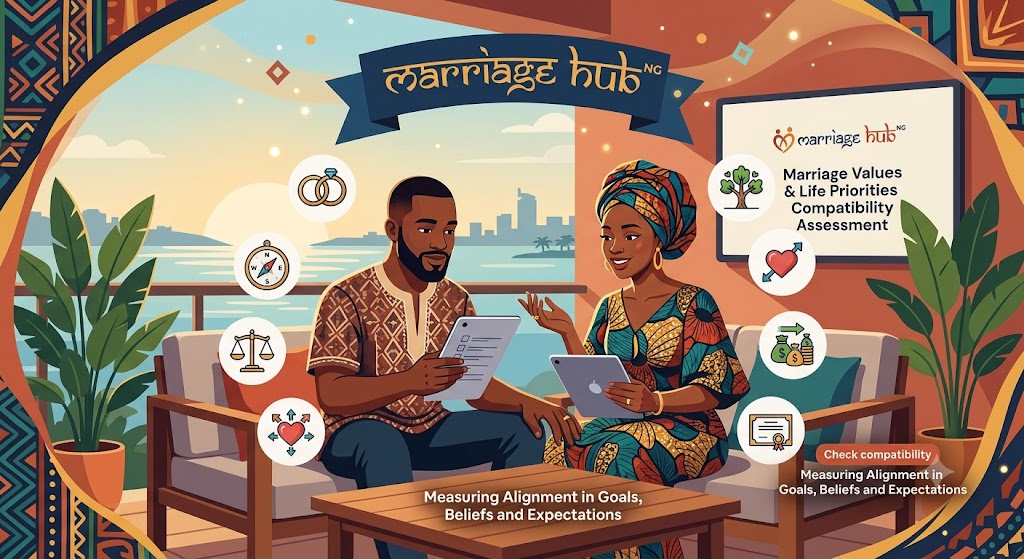
Whether you are preparing for your traditional marriage, planning your wedding, or building a stronger relationship, MarriageHub.ng provides practical resources designed for Nigerian singles, couples, and families.
Take the Marriage Readiness Test to evaluate how prepared you are for marriage by visiting https://www.marriagehub.ng/analyzer/index.php. If you have personal relationship concerns that you would rather discuss privately, you can ask anonymous questions through https://www.marriagehub.ng/questions-answers and receive guidance from the MarriageHub community.
Planning your wedding? Create a beautiful digital invitation through https://www.marriagehub.ng/annouce-my-event/. If you are searching for a life partner, explore the matchmaking platform at https://www.marriagehub.ng/match-making/frontend/discover.php. Couples can also browse trusted wedding vendors at https://www.marriagehub.ng/vendors for photographers, decorators, caterers, planners, fashion designers, and many other wedding professionals.
MarriageHub.ng also offers thriving communities where you can connect with people who share your interests and experiences. Join existing groups and tribes by visiting https://www.marriagehub.ng/all-groups or create your own community at https://www.marriagehub.ng/create-tribes-group. You can also purchase relationship resources, professional services, digital downloads, wedding products, and other useful materials through the MarriageHub Marketplace at https://www.marriagehub.ng/marketplace.
Stay connected with MarriageHub Nigeria on WhatsApp at https://whatsapp.com/channel/0029VbCav9MCcW4pw3GSM72w, on X at https://x.com/MarriageHubNG, on Facebook at https://web.facebook.com/MarriageHubNigeria, and on Instagram at https://www.instagram.com/marriagehubng3 for expert relationship advice, wedding inspiration, cultural insights, and updates from the MarriageHub community.



.jpg)

Sign in to comment