 Nurturing Marriages, Enriching Families!
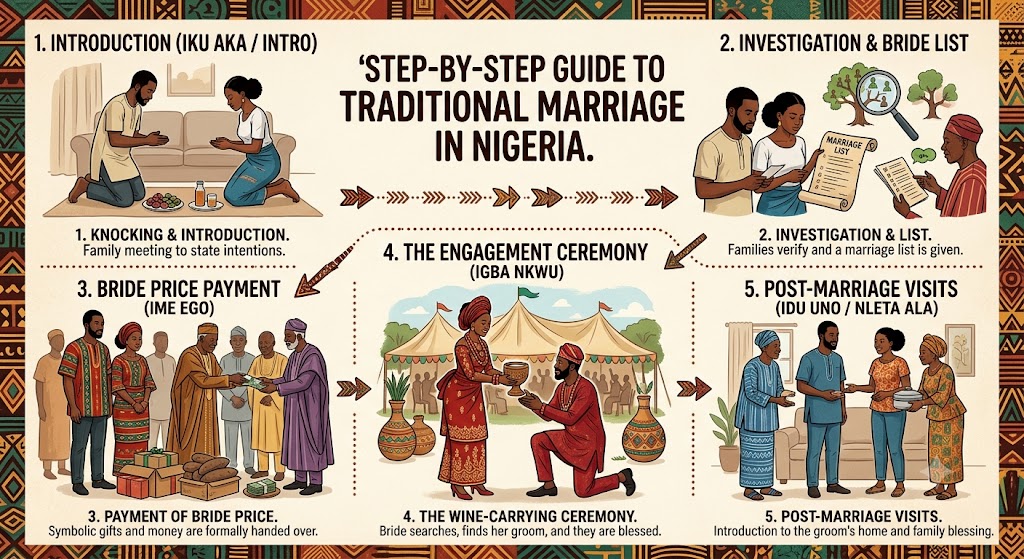
Step-by-Step Guide to Traditional Marriage in Nigeria: Everything Couples Need to Know
Traditional marriage remains one of the most cherished and respected institutions in Nigeria. Long before the introduction of church weddings, court marriages, and modern wedding receptions, Nigerian communities had well-established customs and ceremonies that united couples and their families. Today, traditional marriage continues to play a significant role across the country's over 250 ethnic groups, serving not only as a union between a man and a woman but also as the coming together of two families, lineages, and communities.
Whether you are planning an Igbo, Yoruba, Hausa, Ibibio, Efik, Tiv, Edo, Ijaw, Urhobo, Nupe, or any other Nigerian traditional marriage, the customs may differ, but the underlying principles remain remarkably similar. Respect for family, cultural identity, community participation, and the formal recognition of the marriage are central to the process.
If you are preparing for your traditional wedding or simply want to understand how the process works, this comprehensive guide explains each stage of a traditional marriage in Nigeria, the cultural significance of every step, estimated costs, planning tips, and practical advice for couples.
What is a Traditional Marriage?
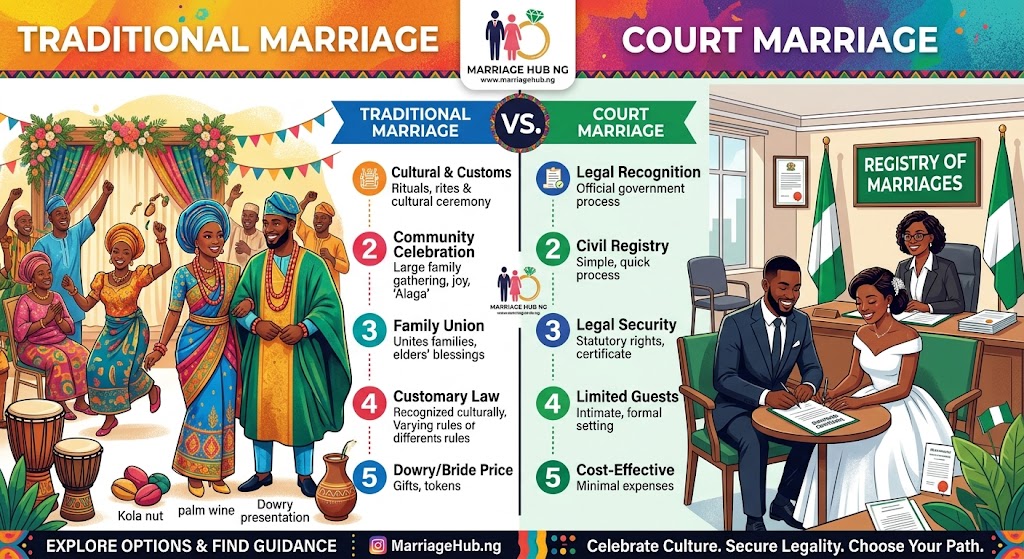
A traditional marriage is a culturally recognized union conducted according to the customs and traditions of a particular Nigerian ethnic group. It usually involves both families negotiating the marriage, payment of the bride price where applicable, presentation of traditional gifts, exchange of blessings, and public recognition of the couple as husband and wife according to customary law.
In many Nigerian communities, a traditional marriage is regarded as the foundation upon which church weddings or court marriages are later built. Even couples who intend to marry in church or register their marriage at a registry often complete the traditional rites first because of the cultural importance attached to them.
Traditional marriages are recognized under Nigerian Customary Law, provided the customary requirements of the respective community are fulfilled.
Why Traditional Marriage is Important in Nigeria
Traditional marriage goes beyond colourful attire and cultural dances. It symbolizes respect for family values, preserves cultural heritage, strengthens relationships between families, and gives community recognition to the union. Parents, elders, and extended family members play active roles in guiding the process, ensuring that both families understand their responsibilities and expectations.
For many Nigerians, traditional marriage also provides a sense of identity. Every cultural practice, whether it is the Igbo wine-carrying ceremony, the Yoruba engagement rites, or the Hausa Kamu ceremony, tells a story about the people's history and values.
Step 1: The Introduction (Knocking on the Door)
The first formal stage of a traditional marriage is often referred to as the introduction or "knocking." During this visit, the groom's family formally informs the bride's family of their son's intention to marry their daughter.
This meeting is usually informal and allows both families to become acquainted. Discussions centre on family backgrounds, values, occupations, educational achievements, and future intentions. Depending on the culture, light refreshments may be served, and elders exchange pleasantries before discussing the purpose of the visit.
In many Igbo communities, this stage is called "Iku Aka" or the introductory visit, while among the Yoruba, it is commonly known as the family introduction before the engagement ceremony.
Step 2: Family Investigation
Although modern relationships often begin through dating, Nigerian families still place considerable importance on understanding the background of both families before approving a marriage.
Traditionally, families make discreet enquiries about each other's reputation, character, health history, religious beliefs, occupation, and family values. While this process has become less formal in urban areas, many families still consider it essential.
The objective is not to invade privacy but to ensure compatibility and avoid future misunderstandings.
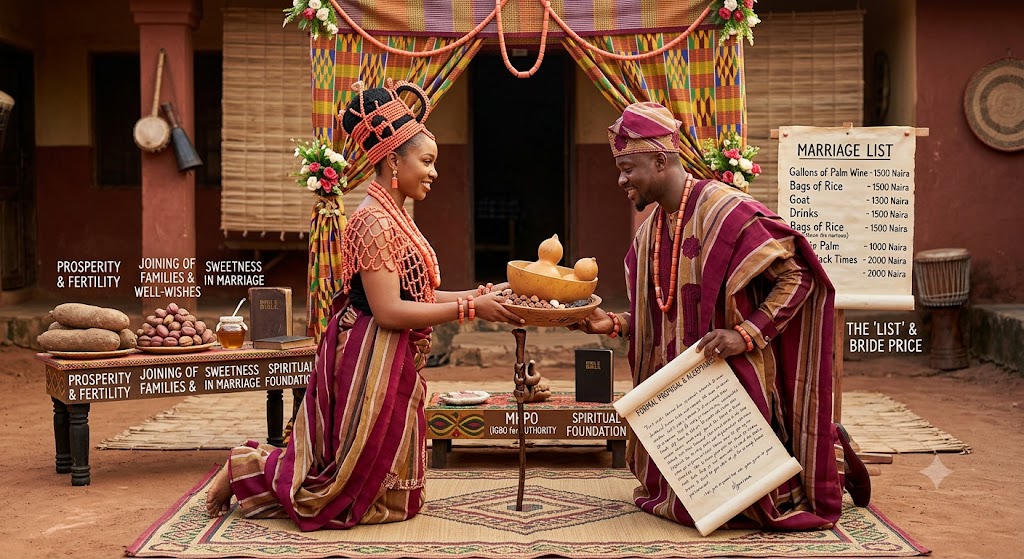
Step 3: Collection of the Bride Price List
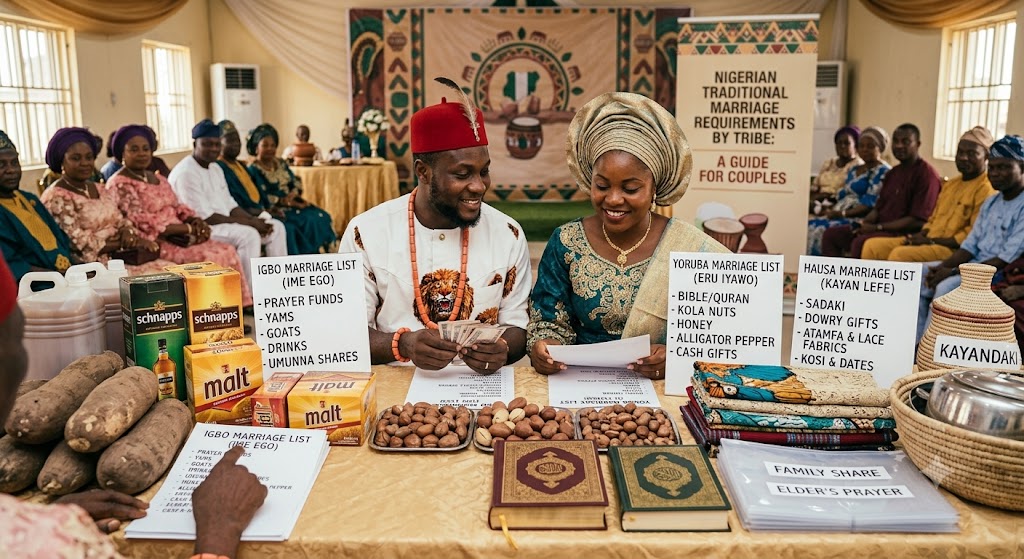
Once both families agree to proceed, the bride's family presents the traditional marriage list. This list varies considerably across ethnic groups and communities.
The list typically includes items such as drinks, kola nuts, alligator pepper, palm wine, wrappers, yams, livestock in some communities, food items, cash gifts, symbolic cultural items, and the agreed bride price.
Contrary to popular misconceptions, the bride price itself is usually modest in many communities. The larger expenses often come from purchasing the required traditional items requested by the bride's family.
Couples are encouraged to discuss the list openly with both families to ensure that expectations remain reasonable and affordable.
Step 4: Payment of the Bride Price
Bride price remains one of the most discussed aspects of Nigerian traditional marriage. Rather than representing the purchase of a bride, it serves as a symbolic appreciation to the bride's family for raising their daughter.
The amount varies significantly across Nigeria. In some communities, the official bride price may be as little as a few hundred naira, while in others it may be several thousand naira. The symbolic value often matters more than the monetary amount.
Many families intentionally keep the bride price affordable to encourage marriage rather than discourage it through excessive financial demands.
Step 5: Purchase of Traditional Marriage Items
After receiving the marriage list, preparations begin in earnest. Families purchase the requested items, ensuring they meet cultural specifications.
Depending on the ethnic group, these may include drinks, food items, clothing materials, traditional fabrics, jewellery, baskets of fruits, livestock, cooking ingredients, or ceremonial gifts.
Many couples now combine traditional requirements with modern convenience by sourcing quality items through reputable wedding vendors and event planners.
Step 6: Planning the Traditional Marriage Ceremony
Planning typically begins several months before the ceremony. Couples agree on the venue, guest list, catering, decorations, photography, entertainment, security, transportation, and accommodation for visiting relatives.
Traditional weddings in Nigeria have become elaborate celebrations that blend culture with contemporary event planning. Nevertheless, the cultural rites remain the heart of the ceremony regardless of the size of the celebration.
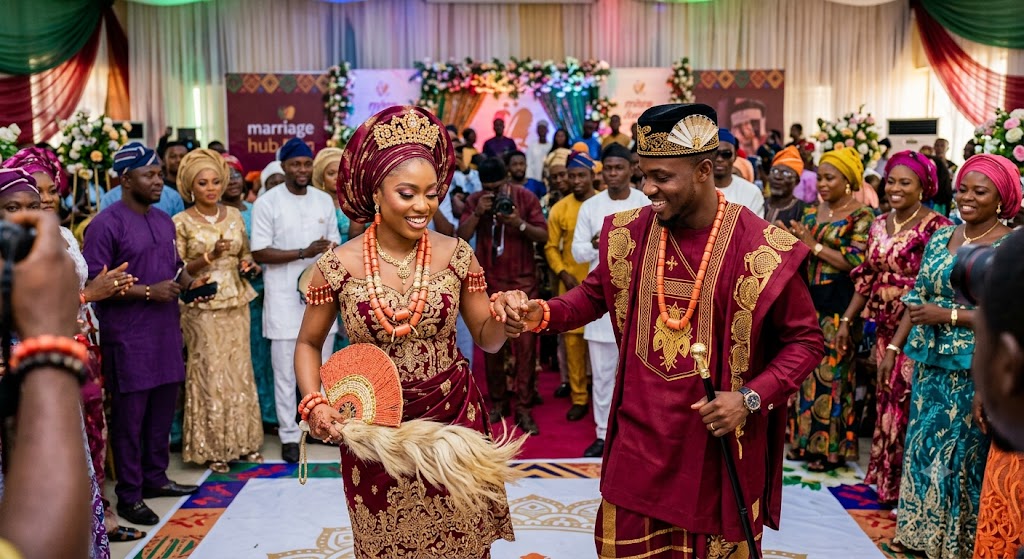
Step 7: The Traditional Wedding Ceremony
The traditional marriage ceremony is the highlight of the entire process.
The event usually begins with prayers, welcoming speeches, introductions of both families, and presentation of gifts. Elders oversee the proceedings while traditional spokespersons or masters of ceremony explain each cultural rite to guests.
Although the exact sequence varies across cultures, every traditional marriage emphasizes respect, family unity, and community witness.
Step 8: The Bride Search Ceremony
One of the most entertaining aspects of many Nigerian traditional weddings is the symbolic search for the bride.
During this cultural display, several ladies may be presented to the groom before the actual bride appears. The groom must identify his intended wife correctly before proceeding with the marriage rites.
The exercise symbolizes the groom's certainty and commitment to marrying his chosen partner.
Step 9: Wine Carrying or Presentation Ceremony
Among the Igbo, the wine-carrying ceremony represents one of the most important moments of the traditional marriage.
The bride receives a cup or calabash of palm wine and searches for her husband among the guests. Once she locates him, she kneels and offers him the drink. After drinking, he helps her stand before escorting her to greet her parents and elders.
This simple yet symbolic act publicly confirms the marriage according to Igbo custom.
Similar symbolic rituals exist among many other Nigerian ethnic groups, although the specific traditions differ.
Step 10: Blessings from Parents and Elders
Parents, grandparents, traditional rulers where applicable, and respected elders offer prayers and blessings for the newly married couple.
These blessings often focus on fertility, prosperity, good health, wisdom, peace, long life, successful careers, and enduring love.
Many Nigerians consider this stage one of the most spiritually significant moments of the ceremony.
Step 11: Exchange of Gifts
Both families exchange gifts as symbols of goodwill, appreciation, and friendship.
The exchange demonstrates that marriage is not simply the union of two individuals but the beginning of a lasting relationship between families.
Step 12: Celebration and Reception
Following the completion of the customary rites, guests celebrate with music, dancing, traditional cuisine, cultural performances, and entertainment.
Popular Nigerian dishes served at traditional weddings include jollof rice, fried rice, pounded yam, egusi soup, bitterleaf soup, afang soup, isi ewu, nkwobi, amala, ewedu, tuwo, miyan kuka, pepper soup, grilled fish, and assorted local delicacies depending on the region.
Traditional attire also adds colour and elegance to the celebration, with couples proudly wearing outfits that reflect their cultural heritage.
Estimated Cost of a Traditional Marriage in Nigeria
The cost of a traditional marriage varies depending on location, family expectations, guest size, and cultural practices.
A modest traditional marriage in a rural community may cost between ₦500,000 and ₦2 million. A medium-sized celebration often ranges from ₦2 million to ₦5 million, while elaborate ceremonies in major cities such as Lagos or Abuja can exceed ₦10 million.
Major expenses typically include venue decoration, catering, traditional attire, photography, videography, entertainment, gifts, bride price items, logistics, accommodation, and event coordination.
Couples should prepare realistic budgets and avoid unnecessary financial pressure.
Common Mistakes Couples Should Avoid
Many couples focus almost entirely on the wedding ceremony while neglecting the marriage itself. A successful traditional marriage begins with proper preparation rather than expensive celebrations.
Poor communication between families can create avoidable misunderstandings. Waiting until the last minute to purchase traditional items often leads to unnecessary stress and higher costs. Some couples also ignore important cultural requirements, assuming they are no longer relevant. Taking time to understand family traditions helps create smoother ceremonies and demonstrates respect for cultural heritage.
Financial planning is equally important. Couples should avoid borrowing excessively simply to impress guests. The quality of a marriage is never determined by the amount spent on the wedding day.
Modern Trends in Nigerian Traditional Marriages
Traditional weddings continue to evolve while preserving their cultural significance. Many couples now livestream ceremonies for relatives abroad, create personalised wedding websites, send digital invitations, hire professional event planners, and incorporate modern photography and drone videography into their celebrations.
Inter-tribal marriages have also become increasingly common, leading many families to blend customs from different ethnic groups into one harmonious ceremony that celebrates both cultures.
Despite these modern innovations, respect for parents, elders, and customary rites remains central to Nigerian traditional marriage.
Final Thoughts
Traditional marriage in Nigeria is far more than a colourful cultural event. It is a celebration of love, family, heritage, and lifelong commitment. Every stage—from the introduction and family meetings to the payment of the bride price, exchange of gifts, traditional rites, and parental blessings—reflects values that have strengthened Nigerian families for generations.
While customs vary across ethnic groups, the underlying message remains the same: marriage is a sacred institution that deserves careful preparation, mutual respect, and community support. Couples who approach the process with understanding, patience, and open communication are better positioned to build successful and lasting marriages.
Whether you are planning your own traditional wedding or supporting a loved one, understanding these steps will help you appreciate the beauty and significance of one of Nigeria's richest cultural traditions.
Strengthen Your Marriage Journey with MarriageHub.ng
Whether you are preparing for marriage, searching for a compatible life partner, or planning your wedding, MarriageHub.ng provides practical tools and resources to support you every step of the way.
Take the Marriage Readiness Test to assess your preparedness for marriage: https://www.marriagehub.ng/analyzer/index.php
Have relationship concerns? Ask anonymous questions and receive helpful guidance from the community at: https://www.marriagehub.ng/questions-answers
Planning your ceremony? Create a beautiful E-Invite for your traditional wedding or other special events at: https://www.marriagehub.ng/annouce-my-event/
Looking for love? Find a life partner through MarriageHub's matchmaking platform: https://www.marriagehub.ng/match-making/frontend/discover.php
Need trusted professionals for your big day? Browse wedding vendors including photographers, decorators, caterers, makeup artists, fashion designers, event planners, DJs, MCs, and more at: https://www.marriagehub.ng/vendors
Join vibrant communities by exploring existing Groups and Tribes at https://www.marriagehub.ng/all-groups or create your own community at https://www.marriagehub.ng/create-tribes-group.
You can also purchase wedding resources, relationship guides, products, professional services, and downloadable materials through the MarriageHub Marketplace at https://www.marriagehub.ng/marketplace.
Follow MarriageHub Nigeria
Stay connected for relationship tips, wedding inspiration, expert advice, and community discussions.
WhatsApp: https://whatsapp.com/channel/0029VbCav9MCcW4pw3GSM72w
X: https://x.com/MarriageHubNG
Facebook: https://web.facebook.com/MarriageHubNigeria
Instagram: https://www.instagram.com/marriagehubng3




.jpg)
Sign in to comment