 Nurturing Marriages, Enriching Families!
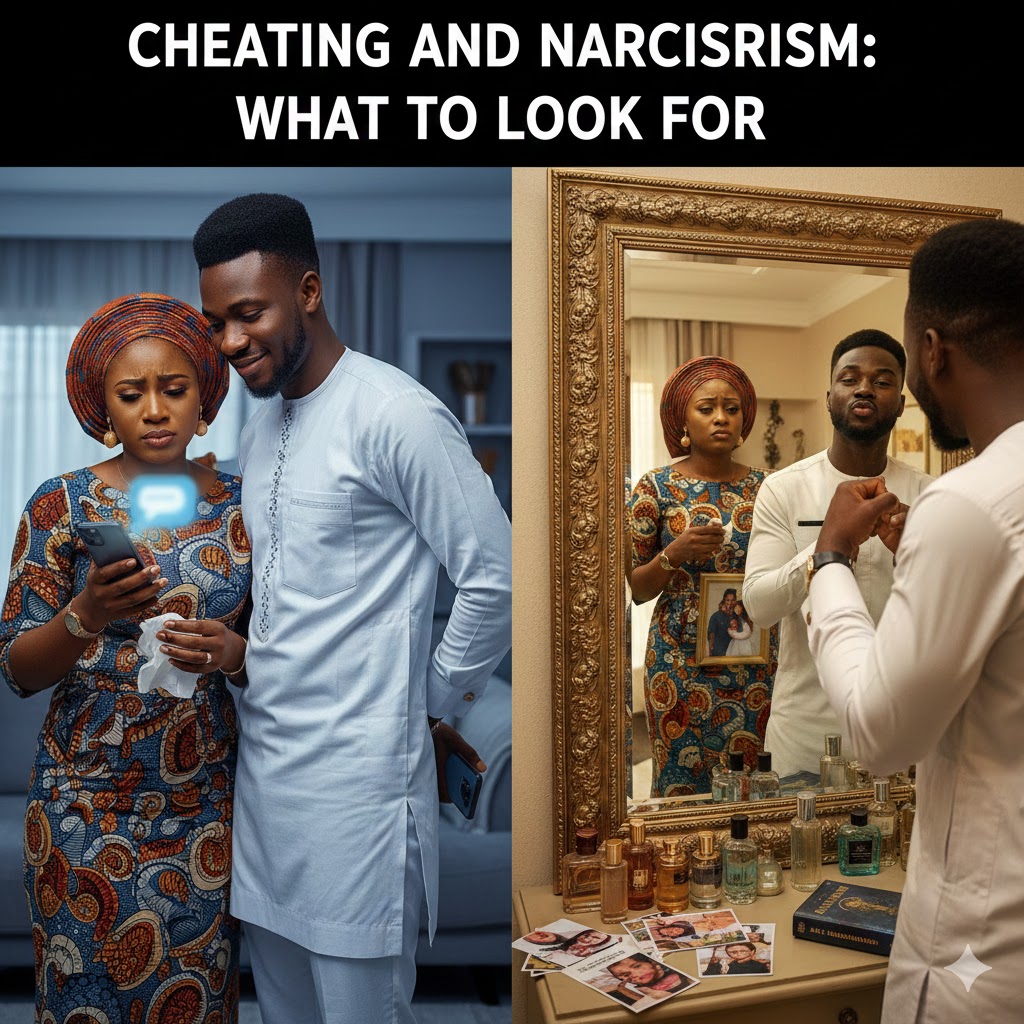
Cheating and Narcissism: What to Look For in Your Nigerian Relationship
Infidelity is one of the most devastating challenges in a marriage, and when combined with narcissistic tendencies, it can leave a spouse emotionally battered, confused, and struggling to make sense of their partner’s behavior. In Nigeria, where family expectations, cultural norms, and social perceptions intensify the stakes of marital betrayal, understanding the connection between cheating and narcissism is critical for protecting yourself and your relationship.
Narcissistic individuals often cheat not only for physical gratification but to reinforce their ego, gain attention, or assert control. Recognizing these traits early can help Nigerian spouses identify risks, set boundaries, and navigate the aftermath of betrayal with clarity and strategy. This article explores the link between narcissism and infidelity, the warning signs to watch for, and practical guidance for managing such relationships, illustrated with real-life Nigerian scenarios.
Understanding Narcissism in Relationships
Narcissism is a personality trait characterized by an inflated sense of self-importance, a need for admiration, and a lack of empathy for others. While everyone may display narcissistic tendencies occasionally, a person with strong narcissistic traits often exhibits patterns of behavior that are consistent and damaging in intimate relationships.
In the context of Nigerian marriages, narcissistic behavior may be amplified by cultural and societal factors. For instance, the emphasis on social status, material success, and public perception can feed a narcissistic spouse’s ego, encouraging manipulative or self-serving behavior. Narcissistic partners may cheat as a way to reinforce their perceived superiority, maintain control, or seek validation outside the marriage.
Scenario:
In Lagos, Tobi noticed that his wife, Sade, displayed excessive need for admiration from friends and colleagues. When Tobi confronted her about emotional closeness with a male colleague, she dismissed his concerns, framing her behavior as harmless. Over time, the lack of empathy and consistent boundary-crossing pointed to narcissistic tendencies influencing her actions.
How Narcissism Drives Infidelity
Narcissistic individuals often cheat for reasons beyond sexual desire. Their behavior is usually motivated by emotional gratification, ego reinforcement, and power dynamics. Common patterns include:
-
Validation Seeking: Narcissists crave admiration and attention, sometimes from multiple partners, to feel valued and powerful.
-
Entitlement: They may feel entitled to pursue whatever satisfies them, disregarding the emotional impact on their spouse.
-
Manipulation: Narcissistic cheaters often manipulate the truth, deflect blame, or gaslight their partner to maintain control.
-
Lack of Empathy: The emotional pain inflicted on a spouse is often minimized or ignored entirely.
Scenario:
Amaka discovered that her husband, Chidi, had been secretly messaging multiple women online. When confronted, he insisted that his actions were justified because she didn’t appreciate him enough. This entitlement and lack of empathy highlighted the connection between his narcissism and infidelity.
Warning Signs of Narcissism in a Cheating Partner
Recognizing narcissistic tendencies early can help Nigerian spouses protect themselves and their marriages. Common signs include:
-
Excessive Charm and Flattery: Initially, a narcissistic partner may overwhelm you with attention and affection, often masking selfish motives.
-
Lack of Accountability: They rarely admit wrongdoing and often blame the victim for relationship issues.
-
Manipulative Behavior: Gaslighting, twisting facts, or creating confusion to avoid responsibility is common.
-
Pattern of Infidelity: Repeated cheating, often justified by entitlement or dissatisfaction, signals deeper narcissistic tendencies.
-
Superficial Relationships: Emotional intimacy may be lacking, with connections often centered on admiration or personal gain.
-
Disregard for Partner’s Emotions: Narcissists typically minimize or ignore your pain and focus on their own needs.
Scenario:
Chika observed that her husband, Emeka, consistently dismissed her feelings when she questioned his late-night interactions with colleagues. His charm and manipulative explanations initially confused her, but over time, the patterns revealed narcissistic traits contributing to his infidelity.
Psychological Impact of Cheating by a Narcissistic Partner
Cheating by a narcissistic spouse is particularly damaging because it often combines betrayal with manipulation and emotional abuse. The victim may experience:
-
Emotional Confusion: Gaslighting can make the betrayed spouse question their reality and judgment.
-
Erosion of Self-Esteem: Narcissistic partners often undermine their spouse’s confidence, creating dependency.
-
Prolonged Guilt and Shame: Victims may feel responsible for the narcissist’s behavior.
-
Isolation: Narcissistic cheaters may manipulate social dynamics to isolate their partner.
Scenario:
In Abuja, Amaka felt responsible for Chidi’s repeated flirtations online. His consistent dismissal of her concerns and emphasis on his own needs left her emotionally drained and questioning her worth.
Why Some Nigerian Spouses Stay with Narcissistic Cheaters
Despite the emotional damage, many Nigerian spouses remain with narcissistic partners after infidelity. Several factors contribute to this:
-
Cultural and Family Pressure: Divorce is often stigmatized, especially for women, making reconciliation socially preferable.
-
Shared Children and Responsibilities: Concern for children’s wellbeing and household stability may influence decisions.
-
Emotional Attachment: Love, history, and hope for change can keep spouses invested in the relationship.
-
Financial Dependency: Economic realities may make leaving difficult.
-
Fear of Regret: Some spouses stay to avoid the what-ifs or potential social consequences of separation.
Scenario:
Chika stayed with Emeka despite discovering his repeated infidelity because of family pressure, the emotional bond with their children, and the fear of being judged by her community.
Steps to Protect Yourself from a Narcissistic Cheating Partner
Navigating a relationship with a narcissistic cheater requires strategy, emotional awareness, and sometimes professional support.
Acknowledge the Behavior
Recognizing narcissistic tendencies and their role in the infidelity is crucial. Avoid minimizing manipulative behavior or excusing repeated betrayals.
Scenario:
Tobi finally acknowledged Sade’s emotional manipulation and entitlement as contributing factors to her betrayal, rather than blaming himself entirely.
Set Firm Boundaries
Narcissistic partners often test limits. Clear, consistent boundaries protect emotional wellbeing and create consequences for destructive behavior.
Scenario:
Amaka informed Chidi that all online interactions with other women would be disclosed, and any breaches would be addressed immediately through counseling.
Seek Counseling
Professional guidance provides a safe space to understand dynamics, repair trust, and develop coping strategies. Counseling is particularly effective in helping couples navigate narcissistic behaviors.
Scenario:
Chika and Emeka attended marriage counseling to address patterns of manipulation, rebuild trust, and manage narcissistic traits constructively.
Prioritize Emotional Health
Protect your self-esteem and mental wellbeing. Engage in supportive communities, spiritual guidance, or therapy to reduce isolation and emotional damage.
Scenario:
Amaka joined a women’s support group where she could share experiences and gain perspective, helping her navigate Chidi’s narcissistic behaviors.
Evaluate the Relationship
Not all marriages can be repaired when narcissistic cheating is present. Assess whether the partner is willing to change, take accountability, and invest in rebuilding trust.
Scenario:
Tobi eventually realized that Sade’s repeated emotional affairs and dismissal of accountability were patterns unlikely to change, prompting him to consider counseling and separation.
Real-Life Nigerian Scenarios
Case Study 1: Tobi and Sade, Lagos
-
Challenge: Emotional affair and manipulative behavior.
-
Action: Acknowledgment of narcissistic traits, counseling, and setting boundaries.
-
Outcome: Partial trust restored, but ongoing vigilance required.
Case Study 2: Amaka and Chidi, Abuja
-
Challenge: Online flirtation driven by entitlement and lack of empathy.
-
Action: Counseling, support groups, and transparent communication.
-
Outcome: Rebuilt self-esteem, managed narcissistic behavior, and strengthened marriage.
Case Study 3: Chika and Emeka, Port Harcourt
-
Challenge: Repeated emotional cheating and gaslighting.
-
Action: Counseling, firm boundaries, and evaluation of relationship viability.
-
Outcome: Informed decision-making, improved emotional clarity, and potential for recovery.
Conclusion: Navigating Cheating and Narcissism in Nigerian Marriages
Understanding the link between narcissism and infidelity is essential for Nigerian spouses seeking clarity and protection in their relationships. Narcissistic cheaters often manipulate, exploit, and prioritize their own needs over emotional intimacy and loyalty. Recognizing these traits, setting firm boundaries, seeking counseling, and prioritizing emotional wellbeing are critical steps for protecting yourself and making informed decisions.
While cultural, religious, and familial pressures may encourage staying in the marriage, awareness of narcissistic patterns empowers Nigerian spouses to respond effectively, rebuild trust when possible, or exit unhealthy dynamics safely. By acknowledging the psychological drivers behind cheating, couples can navigate betrayal with insight, preserve self-respect, and make deliberate choices about the future of their marriage.









.jpg)




Sign in to comment