 Nurturing Marriages, Enriching Families!
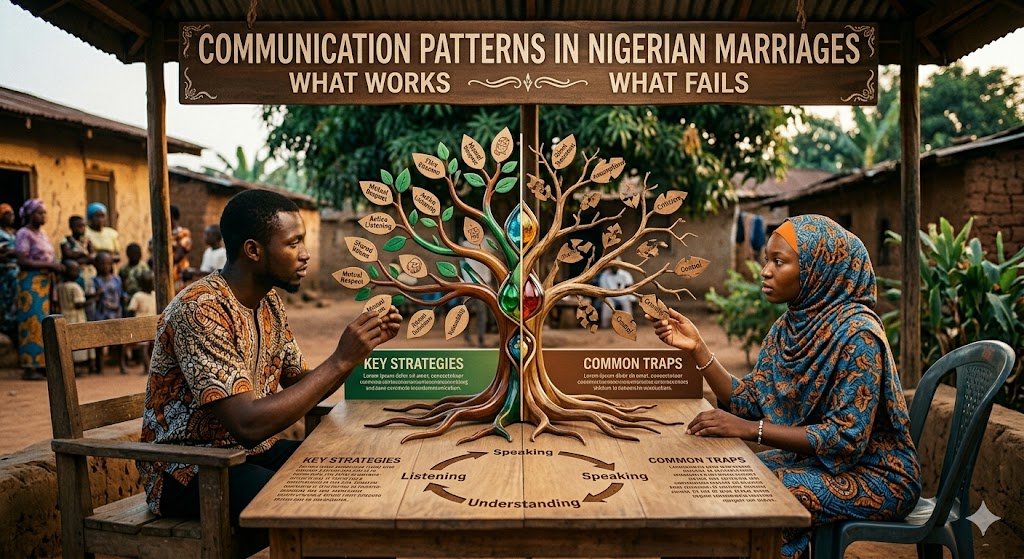
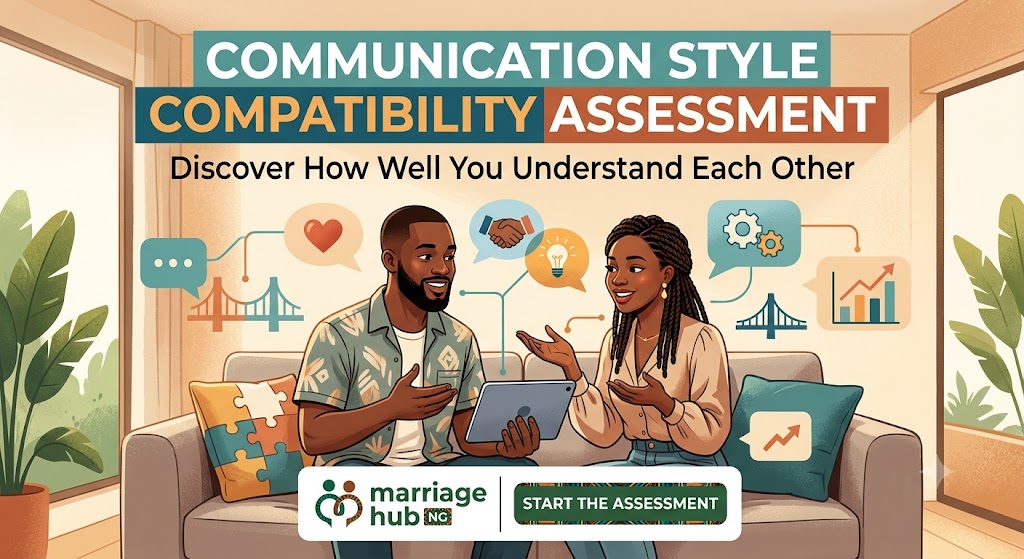
Communication Patterns in Nigerian Marriages: What Works & What Fails
Communication is the backbone of every successful marriage, yet it is also one of the most common sources of conflict in Nigerian homes. Across the country—from Lagos to Enugu, Abuja to Port Harcourt, and across rural communities—many marital challenges are not caused by lack of love, but by poor communication patterns.
In Nigeria’s diverse cultural landscape, communication in marriage is shaped by upbringing, gender expectations, religion, education, and even regional norms. Some couples thrive because they have learned how to express themselves clearly and respectfully, while others struggle because of silence, assumptions, or culturally reinforced communication barriers.
This article explores communication patterns in Nigerian marriages, what works, what fails, and how couples can build stronger emotional connections using better communication habits.
Understanding Communication in Nigerian Marriages
Communication in marriage goes beyond speaking. It includes listening, emotional expression, conflict resolution, tone, timing, and even non-verbal cues. In Nigeria, communication styles are heavily influenced by culture and gender roles.
Traditionally, many Nigerian homes were structured in a hierarchical way, where men were expected to lead and women were expected to be more reserved. This structure often shaped how couples communicated. In many cases, wives were expected to be quiet and submissive, while husbands were seen as decision-makers who did not need to explain themselves in detail.
However, modern Nigerian marriages are increasingly moving toward more open and equal communication patterns. Education, urbanization, exposure to global cultures, and social media have all contributed to changing expectations.
Despite this shift, many couples still struggle with balancing traditional communication styles and modern relationship expectations.
What Data and Trends Suggest About Communication in Nigerian Marriages
While specific national communication studies are limited, broader relationship research and surveys in Nigeria reveal consistent patterns.
Studies on marital satisfaction in Nigeria show that poor communication is one of the leading causes of marital dissatisfaction and conflict, alongside financial stress and infidelity. Many counseling reports from churches and family courts also highlight communication breakdown as a recurring issue in marital disputes.
Urban couples tend to report more verbal communication but also higher emotional stress due to fast-paced lifestyles and financial pressure. Rural couples, on the other hand, may communicate less verbally but rely more on family structures and non-verbal understanding.
These patterns suggest that communication challenges are widespread but take different forms depending on location and lifestyle.
Common Communication Patterns That Work in Nigerian Marriages
Some communication habits consistently strengthen marriages in Nigeria, regardless of background or location.
One of the most effective patterns is open and respectful dialogue. Couples who make time to talk regularly about their feelings, expectations, and challenges tend to experience stronger emotional bonds. This is especially important in urban marriages where work stress and distance can reduce quality time.
Another effective pattern is active listening. In many successful Nigerian marriages, partners who listen without immediately reacting or interrupting tend to resolve conflicts more effectively. This helps reduce misunderstandings and builds trust over time.
Emotional honesty is also a key factor. Couples who are able to express their feelings without fear of judgment or criticism often report higher levels of satisfaction. In many Nigerian homes, where emotional expression was traditionally limited, this shift is becoming increasingly important in modern marriages.
In addition, the use of calm tone and timing plays a significant role. Many successful couples understand when to discuss sensitive issues and when to wait until emotions have settled. This prevents unnecessary escalation of conflicts.
Communication Patterns That Fail in Nigerian Marriages
While some communication habits strengthen relationships, others consistently create problems.
One of the most common failures is silence or emotional withdrawal. In many Nigerian marriages, one partner—often the husband or wife depending on upbringing—may choose to remain silent during conflict. This silence is often mistaken for peace, but in reality, it creates emotional distance and unresolved tension.
Another failing pattern is aggressive communication. Raising voices, insults, or emotional outbursts during disagreements can damage trust and make it harder to resolve issues. In some cases, couples normalize shouting as a form of expression, but this often weakens emotional connection over time.
Assumptions also play a major role in communication failure. Many couples assume their partner should “already know” what they are thinking or feeling without saying it clearly. This is especially common in marriages where emotional expression was not encouraged during upbringing.
Misinterpretation of gender roles can also create communication breakdown. For example, some men may believe that discussing emotions is unnecessary, while some women may feel their concerns are not being taken seriously. These mismatched expectations often lead to frustration.
Finally, external interference from extended family members can complicate communication. In many Nigerian marriages, relatives play an active role in resolving disputes. While this can sometimes help, it can also reduce direct communication between couples, leading to dependency on third parties.
Case Studies: Real-Life Communication Experiences in Nigeria
In Lagos, a young professional couple shared how communication improved their marriage after a difficult first year. Initially, both partners avoided discussing financial stress, which led to repeated arguments. Over time, they introduced weekly “talk time” sessions where they openly discussed their challenges. This simple practice significantly improved their relationship.
In Enugu, a couple in their early thirties struggled with communication due to differences in upbringing. The husband grew up in a household where emotions were rarely discussed, while the wife came from a more expressive background. Misunderstandings were frequent until they attended premarital counseling that taught them how to communicate more openly.
In Kano, a traditional household highlighted a different dynamic. The wife rarely expressed disagreement directly, instead using indirect communication methods. Over time, this created confusion in decision-making. After intervention from a religious counselor, the couple began adopting clearer communication practices while still respecting cultural norms.
These examples show that communication challenges are not limited to one region or class—they exist across Nigeria but can be improved with awareness and effort.
The Role of Culture and Upbringing in Communication Styles
Cultural background plays a significant role in shaping how Nigerians communicate in marriage. In many traditional settings, respect for elders and authority figures influences communication patterns within the home.
For example, in some cultures, questioning a spouse’s decision may be seen as disrespectful, while in others, open discussion is encouraged. These differences can create misunderstandings when two people from different backgrounds come together in marriage.
Upbringing also shapes emotional expression. Individuals raised in strict households may struggle with verbalizing emotions, while those from more expressive environments may expect constant verbal communication.
Understanding these differences is important for building healthy communication patterns in marriage.
Technology and Modern Communication in Marriage
Technology has also changed how Nigerian couples communicate. Mobile phones, WhatsApp, and social media have made it easier for couples to stay in touch throughout the day, especially in long-distance or busy urban marriages.
However, technology has also introduced new challenges. Misunderstandings often occur through text messages where tone and emotion are unclear. Some couples also experience conflict due to social media interactions or misinterpretation of online behavior.
Despite these challenges, technology can strengthen communication when used intentionally. Many couples now use messaging platforms to check in during the day, share updates, and maintain emotional connection.
How Couples Can Improve Communication in Nigerian Marriages
Successful communication in marriage often requires intentional effort. Couples who build habits of regular conversation, emotional honesty, and active listening tend to experience stronger relationships.
Creating time for discussion, even in busy schedules, is essential. Many Nigerian couples find that setting aside specific moments to talk helps prevent misunderstandings from building up.
Learning to express feelings without blame is also important. Instead of accusing or criticizing, couples who focus on expressing how they feel tend to resolve conflicts more effectively.
Another important factor is emotional patience. Not all issues need immediate resolution, and sometimes allowing time for reflection can lead to better outcomes.
The Future of Communication in Nigerian Marriages
As Nigerian society continues to evolve, communication patterns in marriage are also changing. Younger generations are more open to emotional expression, therapy, and relationship counseling than previous generations.
Urbanization, education, and exposure to global relationship models are encouraging more balanced communication styles. However, traditional influences remain strong, creating a unique blend of old and new communication patterns in Nigerian marriages.
The future will likely see more couples adopting intentional communication practices while still respecting cultural values.
Communication is one of the most important factors determining the success or failure of marriages in Nigeria. While love and cultural compatibility are important, the ability to communicate effectively often determines whether a marriage thrives or struggles.
Across Nigeria, couples face different communication challenges shaped by culture, upbringing, and environment. However, the most successful marriages share common traits: openness, respect, emotional honesty, and active listening.
As Nigerian marriages continue to evolve, improving communication will remain essential for building stronger, healthier, and more fulfilling relationships.
Join the MarriageHub Community
Looking to connect, learn, or grow in your relationship journey?
👉 Join groups/tribes: https://www.marriagehub.ng/all-groups
👉 Create your own group: https://www.marriagehub.ng/create-tribes-group
👉 Explore products, services & downloads: https://www.marriagehub.ng/marketplace
Follow Us
📱 WhatsApp: https://whatsapp.com/channel/0029VbCav9MCcW4pw3GSM72w
🐦 X (Twitter): https://x.com/MarriageHubNG
📘 Facebook: https://web.facebook.com/MarriageHubNigeria
📸 Instagram: https://www.instagram.com/marriagehubng3





.jpg)
Sign in to comment