 Nurturing Marriages, Enriching Families!
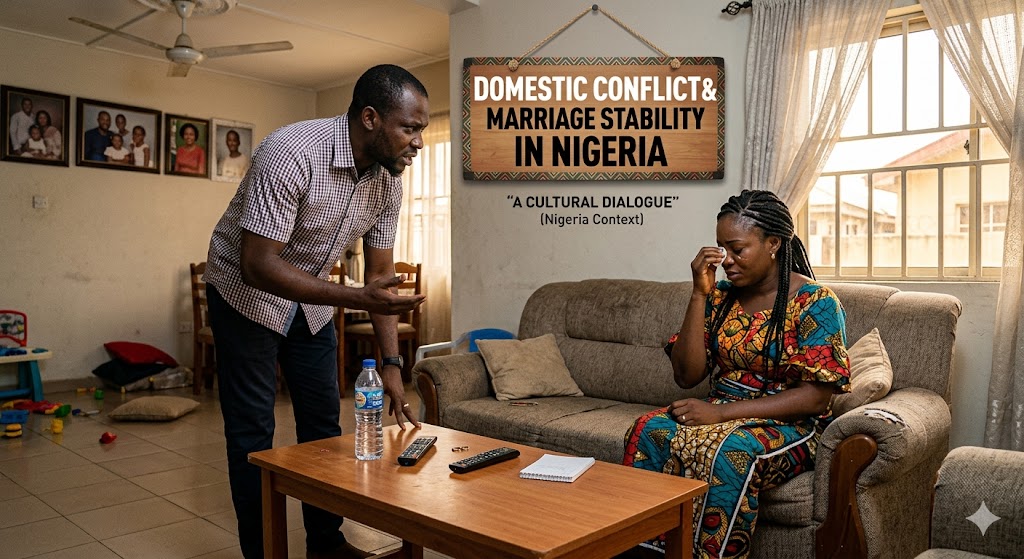
Domestic Conflict & Marriage Stability in Nigeria
Domestic conflict is an unavoidable reality in marriages across the world, but in Nigeria, it carries unique cultural, economic, and social dimensions that directly affect marital stability. From minor disagreements to serious disputes, the way couples handle conflict often determines whether a marriage thrives or collapses. In recent years, increasing reports of domestic tension, intimate partner violence, and marital breakdown have brought renewed attention to the relationship between conflict and stability in Nigerian homes.
Understanding domestic conflict in Nigeria requires a deep look at its causes, patterns, and consequences, as well as how families, communities, and institutions respond to it. As Nigeria continues to urbanize and modernize, the dynamics of marriage are evolving, and so are the pressures that couples face.
Understanding Domestic Conflict in the Nigerian Context
Domestic conflict refers to disagreements, tension, or disputes between partners in a marriage or intimate relationship. It can range from verbal disagreements and emotional withdrawal to more serious forms such as psychological, financial, or physical abuse.
Research in Nigeria shows that domestic conflict often manifests in multiple forms, including verbal abuse, emotional neglect, physical violence, and even sexual coercion. These patterns are not limited to any one group; they occur across different socio-economic classes, regions, and educational levels.
While some level of conflict is normal in any relationship, the intensity, frequency, and method of resolution determine whether it becomes destructive. In Nigeria, where marriage is deeply tied to family and community identity, unresolved conflict can have far-reaching implications beyond the couple involved.
Prevalence of Domestic Conflict and Violence
Domestic conflict in Nigeria is widespread, though often underreported due to cultural stigma and fear of social judgment. Studies based on the Nigeria Demographic and Health Survey (NDHS) show that a significant proportion of women have experienced some form of intimate partner violence.
One study found that about 23.5% of couples reported emotional violence, 18% physical violence, and 13.5% sexual violence within relationships. These figures highlight the scale of conflict that extends beyond simple disagreements into harmful behaviors.
Another key insight is that domestic conflict cuts across all social classes. Research confirms that women in both low-income and high-income households experience domestic violence, indicating that the issue is systemic rather than isolated.
However, the real numbers are likely higher. Many cases go unreported due to fear, shame, or pressure from family members to “endure” and preserve the marriage.
Major Causes of Domestic Conflict in Nigerian Marriages
Domestic conflict in Nigeria is rarely caused by a single issue. It is usually the result of multiple overlapping pressures that accumulate over time.
Economic stress is one of the most significant triggers. Rising inflation, unemployment, and financial instability create tension within households. Studies in places like Kwara State identify inability to meet daily needs and job dissatisfaction as key drivers of domestic disputes.
Communication breakdown is another major factor. Many couples struggle to express their needs, frustrations, and expectations effectively. Over time, unresolved issues can escalate into recurring conflicts.
Gender roles and expectations also play a critical role. Traditional norms often place men as decision-makers and women as submissive partners. As more women become educated and financially independent, clashes can arise when expectations no longer align.
Infidelity is another major contributor to domestic conflict. Suspicion or confirmation of cheating often leads to emotional distress, arguments, and in some cases, violence.
Substance abuse, particularly alcohol, is also linked to increased conflict in relationships. It can lower inhibitions, impair judgment, and escalate minor disagreements into serious confrontations.
Early and forced marriages contribute to instability as well. Young couples may lack the emotional maturity and life experience needed to handle marital challenges, increasing the likelihood of conflict.
Extended family interference is another unique factor in Nigeria. In-laws and relatives often play active roles in marriages, sometimes leading to disagreements over finances, childbearing, and household decisions.
Patterns of Domestic Conflict Across Nigeria
Domestic conflict does not manifest uniformly across Nigeria. Its patterns vary depending on region, culture, and socio-economic conditions.
In northern Nigeria, early marriage and economic dependency often contribute to higher levels of conflict. Young couples may struggle with financial instability and limited autonomy, increasing the likelihood of disputes.
In southern Nigeria, particularly in urban areas like Lagos and Abuja, conflict is often linked to career pressures, lifestyle differences, and changing gender roles. Couples may face stress from demanding jobs, long commutes, and high living costs.
In rural communities, conflict may be influenced by traditional norms and economic hardship. Issues such as polygamy, land ownership, and family expectations can create tension within households.
Research also shows that the length of marriage and level of education influence conflict patterns. Couples with higher education levels may have better communication skills but also higher expectations, which can lead to different types of conflict.
Case Studies and Real-Life Insights
Real-life experiences provide a clearer picture of how domestic conflict affects Nigerian marriages.
In Lagos, a common scenario involves dual-income couples struggling to balance work and family life. Long hours, traffic, and financial responsibilities can create stress, leading to frequent arguments. In many cases, unresolved issues escalate over time, resulting in separation.
In Ilorin, research among married adults reveals that verbal abuse and emotional neglect are among the most common forms of conflict. These issues often go unnoticed until they develop into more serious problems affecting marital stability.
In northern Nigeria, early marriages often face challenges related to immaturity and economic dependence. Young couples may lack the skills needed to manage conflict effectively, increasing the risk of divorce or remarriage.
Public discussions also highlight the role of societal pressure. Many individuals remain in conflict-ridden marriages due to fear of stigma, especially women who may face criticism for leaving their homes.
Impact of Domestic Conflict on Marriage Stability
Domestic conflict has profound implications for the stability of marriages in Nigeria. While some couples are able to resolve disagreements and grow stronger, others experience long-term damage that leads to separation or divorce.
One of the most immediate effects is emotional strain. Constant conflict can create an environment of tension, resentment, and distrust, making it difficult for couples to maintain a healthy relationship.
Domestic conflict is also a major contributor to divorce in Nigeria. Many marital breakdowns can be traced back to unresolved disputes, lack of communication, and escalating tensions.
Children are often the most affected. Exposure to parental conflict can impact their emotional well-being, behavior, and academic performance. In some cases, children raised in high-conflict households may struggle with relationships later in life.
Economic consequences are also significant. Divorce or separation can lead to financial instability, particularly for women who may have limited access to resources.
At a broader level, domestic conflict affects social cohesion. It challenges traditional family structures and raises concerns about the future of marriage as a stable institution in Nigeria.
Domestic Violence and Escalation of Conflict
In some cases, domestic conflict escalates into violence, which represents the most severe breakdown of marital stability. Domestic violence remains a major issue in Nigeria, with activists warning of rising cases and inadequate response systems.
Reports indicate that homes can be among the most dangerous places for women, with increasing cases of gender-based violence recorded in recent years.
Violence not only endangers lives but also destroys trust and emotional bonds within relationships. It often leads to long-term psychological trauma and, in extreme cases, loss of life.
It is important to distinguish between normal conflict and abusive behavior. While disagreements are part of any relationship, violence and coercion are unacceptable and require immediate intervention.
The Role of Culture and Religion
Culture and religion play significant roles in shaping how domestic conflict is perceived and managed in Nigeria. In many communities, marriage is seen as a lifelong commitment, and couples are encouraged to resolve conflicts internally rather than seek external help.
Religious institutions often promote reconciliation and forgiveness, sometimes discouraging divorce even in difficult circumstances. While this can help preserve marriages, it can also lead to situations where individuals remain in unhealthy or abusive relationships.
Traditional practices also emphasize family involvement in conflict resolution. Elders and relatives may intervene to mediate disputes, providing support but sometimes also reinforcing outdated norms.
Modern Influences and Changing Dynamics
Modernization is reshaping how Nigerians approach conflict in marriage. Increased access to education, exposure to global ideas, and the rise of social media have changed expectations around relationships.
Younger generations are more likely to prioritize emotional well-being and personal fulfillment. As a result, they may be less willing to tolerate unresolved conflict or abusive situations.
Urbanization has also reduced the influence of extended family systems, giving couples more autonomy but also fewer support structures for conflict resolution.
Professional counselling and therapy are gradually gaining acceptance, although access remains limited and stigma still exists.
Strengthening Marriage Stability in Nigeria
Addressing domestic conflict requires a multi-dimensional approach that involves individuals, families, and institutions.
Improving communication is one of the most effective ways to reduce conflict. Couples who openly discuss their expectations and concerns are better equipped to resolve disagreements.
Economic stability also plays a crucial role. Financial planning and shared responsibilities can reduce stress and prevent conflicts related to money.
Education and awareness are equally important. Programs that teach conflict resolution, emotional intelligence, and relationship skills can help couples build healthier marriages.
Legal and institutional support systems must also be strengthened to protect victims of domestic violence and provide avenues for justice and support.
Conclusion
Domestic conflict and marriage stability in Nigeria are deeply interconnected. While conflict is a natural part of any relationship, its management determines whether a marriage survives or collapses. Economic pressures, cultural expectations, gender dynamics, and modern influences all contribute to the complexity of marital relationships in Nigeria.
As society continues to evolve, so too must the approaches to managing conflict within marriages. Promoting communication, equality, and emotional well-being will be key to building stronger and more stable families.
Ultimately, the future of marriage in Nigeria will depend on how individuals and communities navigate the challenges of conflict while preserving the values that sustain long-term relationships.
Users can join groups/tribes on https://www.marriagehub.ng/all-groups or create groups on https://www.marriagehub.ng/create-tribes-group. Users can also purchase products, services and downloadable on https://www.marriagehub.ng/marketplace.
Follow us on
WhatsApp - https://whatsapp.com/channel/0029VbCav9MCcW4pw3GSM72w
X - https://x.com/MarriageHubNG
Facebook - https://web.facebook.com/MarriageHubNigeria
Instagram - https://www.instagram.com/marriagehubng3









.jpg)




Sign in to comment