 Nurturing Marriages, Enriching Families!
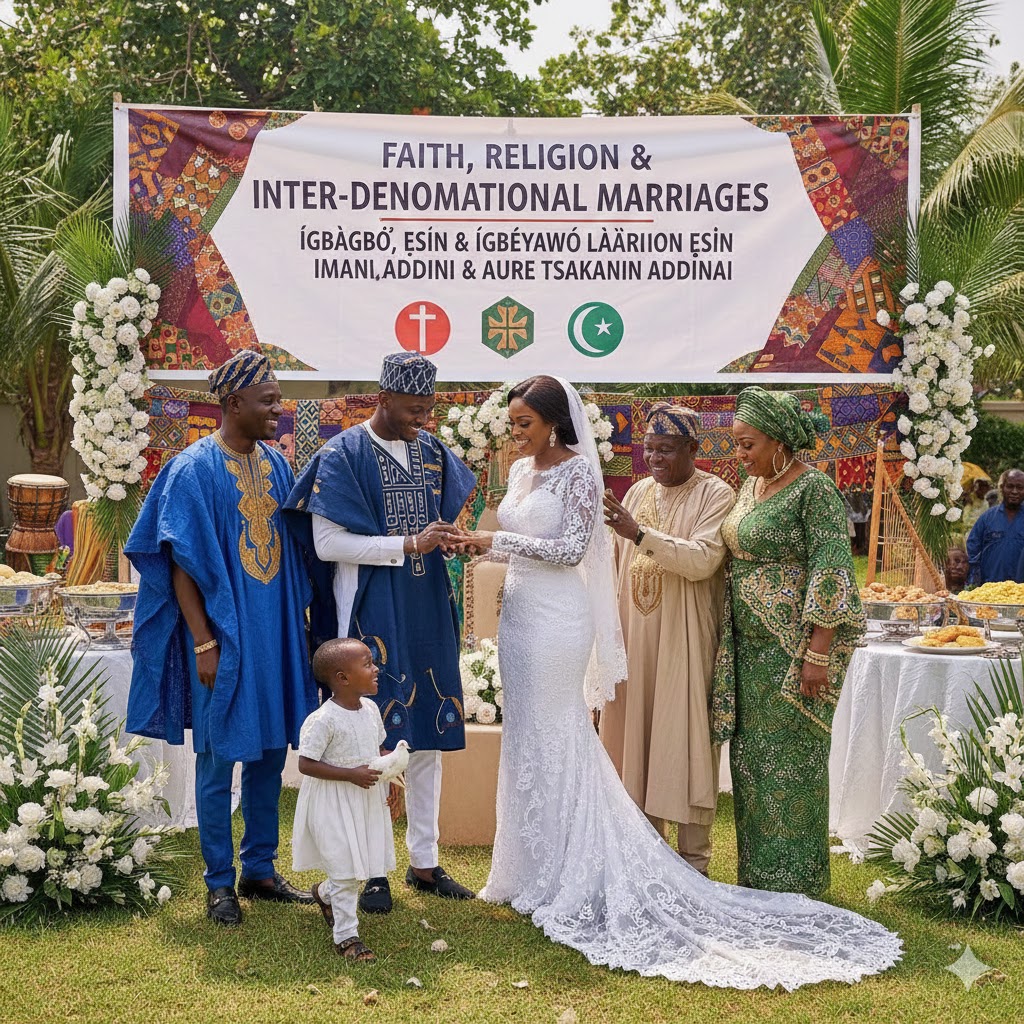
Faith, Religion & Inter-Denominational Marriages
Faith and religion play a central role in many Nigerian marriages. For a large percentage of couples, religious beliefs influence daily living, moral values, parenting decisions, and even extended family relationships. As society becomes more diverse and interconnected, inter-denominational and interfaith marriages are becoming increasingly common. While such unions can be deeply fulfilling, they also present unique challenges that require understanding, maturity, and intentional preparation.
In Nigeria, religion is often more than personal belief; it is a way of life. Families, communities, and social identity are frequently tied to religious affiliation. As a result, marriage decisions are rarely viewed as private choices alone. When partners come from different denominations or faith traditions, the differences may initially seem minor but can become significant over time if not addressed thoughtfully.
Inter-denominational marriages, such as unions between Christians of different churches or traditions, are especially common. At the beginning of a relationship, couples may focus on shared beliefs and overlook differences in doctrine, worship style, leadership structure, or spiritual expectations. Over time, questions arise about where to worship, whose church traditions to follow, and how spiritual authority is defined within the home. These issues can become sources of tension if both partners are strongly attached to their denominational identities.
Interfaith marriages, such as between Christians and Muslims, often face even greater complexity. Differences in belief systems, religious practices, and cultural expectations can affect nearly every aspect of married life. Decisions about prayer, fasting, holidays, dress codes, and social interactions may require constant negotiation. In some cases, couples underestimate the depth of these differences, believing love alone will bridge the gap.
Family influence plays a major role in faith-related marital challenges. Parents and relatives may strongly oppose inter-denominational or interfaith unions out of fear, tradition, or concern for spiritual continuity. This opposition can place immense pressure on couples, forcing them to constantly defend their choices. In Nigeria, where respect for elders is deeply ingrained, navigating this tension requires wisdom and emotional strength.
One of the most sensitive areas in faith-based marriages is the upbringing of children. Questions about which faith children will follow, where they will worship, and how religious education will be handled can become major sources of conflict. When these discussions are postponed or avoided before marriage, they often resurface later with greater intensity. Children thrive best in environments of clarity and unity, not confusion or spiritual competition.
Spiritual leadership within the home is another area where differences may arise. In some religious traditions, one partner is expected to lead spiritually, while others emphasize shared leadership. When expectations differ, misunderstandings can occur. A lack of agreement on spiritual roles can lead to frustration, feelings of neglect, or power struggles.
Despite these challenges, faith-based differences do not automatically doom a marriage. Many inter-denominational and interfaith marriages succeed because partners approach their differences with respect, humility, and open communication. Successful couples recognize that faith should be a source of peace, not division. They prioritize mutual respect over superiority and unity over control.
Communication is essential in navigating faith-related differences. Couples must be willing to have honest conversations about beliefs, boundaries, and expectations without fear of judgment. Suppressing concerns or pretending differences do not exist often leads to resentment later. Healthy dialogue allows couples to find common ground while respecting individual convictions.
Compromise is also critical. Compromise does not mean abandoning deeply held beliefs, but it does mean making room for understanding and flexibility. Couples who thrive learn how to honor each other’s faith journeys without forcing conformity. This balance requires patience, empathy, and emotional maturity.
Another important factor is intentional planning. Couples who take time before marriage to discuss worship preferences, family expectations, children’s religious upbringing, and conflict resolution are better prepared for the realities ahead. Premarital counseling, especially with leaders experienced in inter-denominational or interfaith unions, can provide valuable guidance and clarity.
Faith can also be a powerful source of strength in marriage when handled wisely. Shared values such as love, honesty, forgiveness, commitment, and compassion often transcend denominational differences. When couples focus on these shared principles, faith becomes a unifying force rather than a dividing line.
It is also important for couples to protect their marriage from external spiritual pressure. Friends, religious leaders, and family members may attempt to influence decisions in ways that create division. Couples must learn to present a united front and make decisions together. Marriage requires loyalty to one another above all external voices.
Ultimately, faith, religion, and inter-denominational differences test a couple’s ability to respect individuality while building unity. These marriages require intentional effort, deep understanding, and a commitment to growth. Love may bring people together, but wisdom sustains the union.
In conclusion, faith and religion are powerful influences in Nigerian marriages, shaping identity, values, and daily living. Inter-denominational and interfaith marriages can succeed when partners approach their differences with honesty, respect, and intentional preparation. Marriage is not about erasing differences but learning how to live with them in harmony. When faith is handled with maturity and love, it can strengthen marriage rather than divide it.









.jpg)




Sign in to comment