 Nurturing Marriages, Enriching Families!
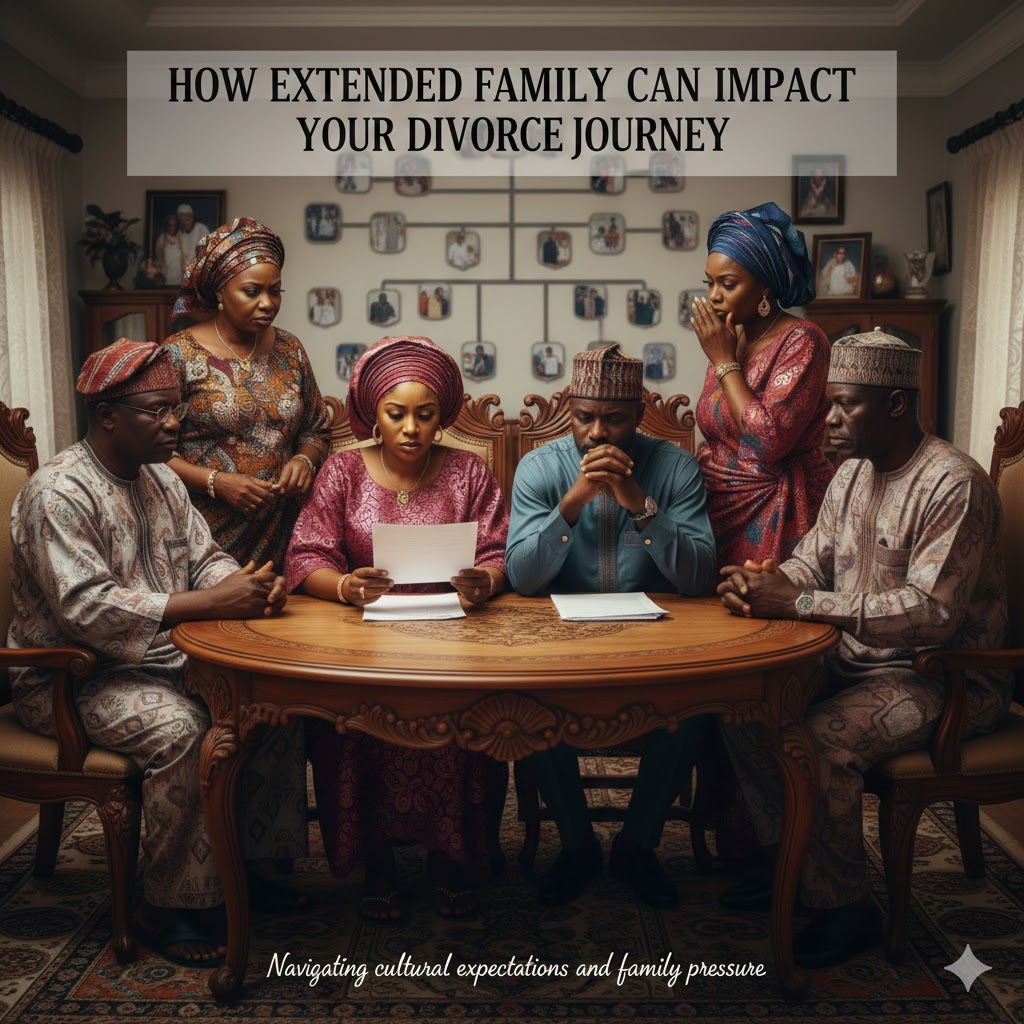
How Extended Family Can Impact Your Divorce Journey: Navigating Influence, Support, and Conflict
Divorce is already an emotionally, mentally, and logistically challenging process. In many cultures, especially in Nigeria, extended family plays a significant role in shaping marital relationships—and often continues to influence the process even after separation begins. While some family members provide essential support, others can inadvertently complicate or intensify conflict.
Understanding how extended family impacts your divorce journey is crucial for maintaining focus, protecting your well-being, and ensuring a smoother transition.
The Dual Role of Extended Family
Extended family can have both positive and negative effects on a divorce:
-
Positive Support: Loving relatives may provide emotional comfort, financial assistance, and guidance during difficult decisions. They can act as mediators, offer counsel, and help with childcare or household responsibilities.
-
Negative Influence: Conversely, some family members may take sides, impose opinions, or interfere in ways that exacerbate conflict. This can increase stress, fuel resentment, and prolong disputes.
Recognizing the dual potential of extended family involvement allows you to navigate relationships intentionally rather than reactively.
Cultural Expectations and Pressure
In Nigerian society, marriage is often viewed as a union not just between two individuals but between families. Consequently, extended family may feel entitled to offer advice—or exert pressure—to influence decisions.
This can manifest as:
-
Encouragement to stay in the marriage despite challenges.
-
Pressure to expedite divorce proceedings.
-
Gossip, judgment, or attempts to sway opinions of children or friends.
While well-meaning, these pressures can create emotional stress and cloud judgment. Being aware of these influences is key to maintaining autonomy in decision-making.
Impact on Emotional Well-Being
Extended family involvement can amplify emotional turbulence during divorce. Constant interference, unsolicited advice, or taking sides may:
-
Increase feelings of guilt or shame.
-
Heighten anxiety about outcomes.
-
Create conflicts with your spouse or within your family.
-
Strain relationships with children if they feel caught in divided loyalties.
Protecting emotional health involves setting boundaries while acknowledging that family influence cannot always be completely avoided.
Practical Support From Family
On the positive side, extended family can be a source of tangible support during divorce:
-
Providing temporary housing or financial help.
-
Assisting with childcare, transportation, or daily logistics.
-
Offering mentorship or advice based on their own experiences.
This support can lighten the burden and provide stability, allowing individuals to focus on legal matters, personal growth, and emotional healing.
Setting Boundaries
To navigate extended family influence effectively, establishing boundaries is essential:
-
Define What’s Appropriate: Decide which aspects of your divorce are open for discussion and which are private.
-
Communicate Clearly: Politely inform relatives if their involvement is overstepping or causing stress.
-
Limit Access When Needed: Take temporary breaks from conversations or social settings if extended family involvement becomes overwhelming.
Healthy boundaries ensure that family support remains constructive rather than disruptive.
Managing Children and Family Expectations
Extended family often have strong opinions regarding children, custody, and visitation. This can create pressure or conflict.
To protect children’s emotional well-being:
-
Keep discussions about custody and parenting between parents primarily.
-
Avoid involving children in extended family disagreements.
-
Politely manage family advice, prioritizing the child’s best interests rather than appeasing relatives.
This ensures children remain shielded from tension and reinforces stability during the transition.
Real-Life Scenario: Balancing Family Influence
Uche and Kemi were undergoing divorce after 15 years of marriage. Both sets of parents had strong opinions about who was “right” and what decisions should be made regarding the children. Initially, their families’ interference caused heightened conflict and delayed agreements.
By setting clear boundaries—agreeing to handle discussions about finances and custody privately, limiting relatives’ influence, and seeking professional mediation—they regained control over the process. They also maintained essential family support, like emotional encouragement and assistance with childcare, without letting it dominate decisions.
Leveraging Family for Healing
While boundaries are important, it’s equally valuable to lean on family for emotional support. Trusted relatives can:
-
Provide perspective and reassurance.
-
Help you process feelings of grief, loss, or anger.
-
Encourage self-care, growth, and resilience.
Balanced involvement from family strengthens confidence and reduces isolation during a difficult period.
Conclusion: Navigating Extended Family Influence
Extended family can significantly impact your divorce journey, for better or worse. By understanding cultural dynamics, recognizing potential pressure points, and establishing boundaries, you can protect your emotional well-being while benefiting from supportive relatives.
The key is balance: engage family for encouragement and assistance, but maintain autonomy over personal, financial, and parenting decisions. Managing family influence effectively allows you to navigate divorce with clarity, dignity, and focus, ultimately safeguarding both your interests and those of your children.









.jpg)




Sign in to comment