 Nurturing Marriages, Enriching Families!
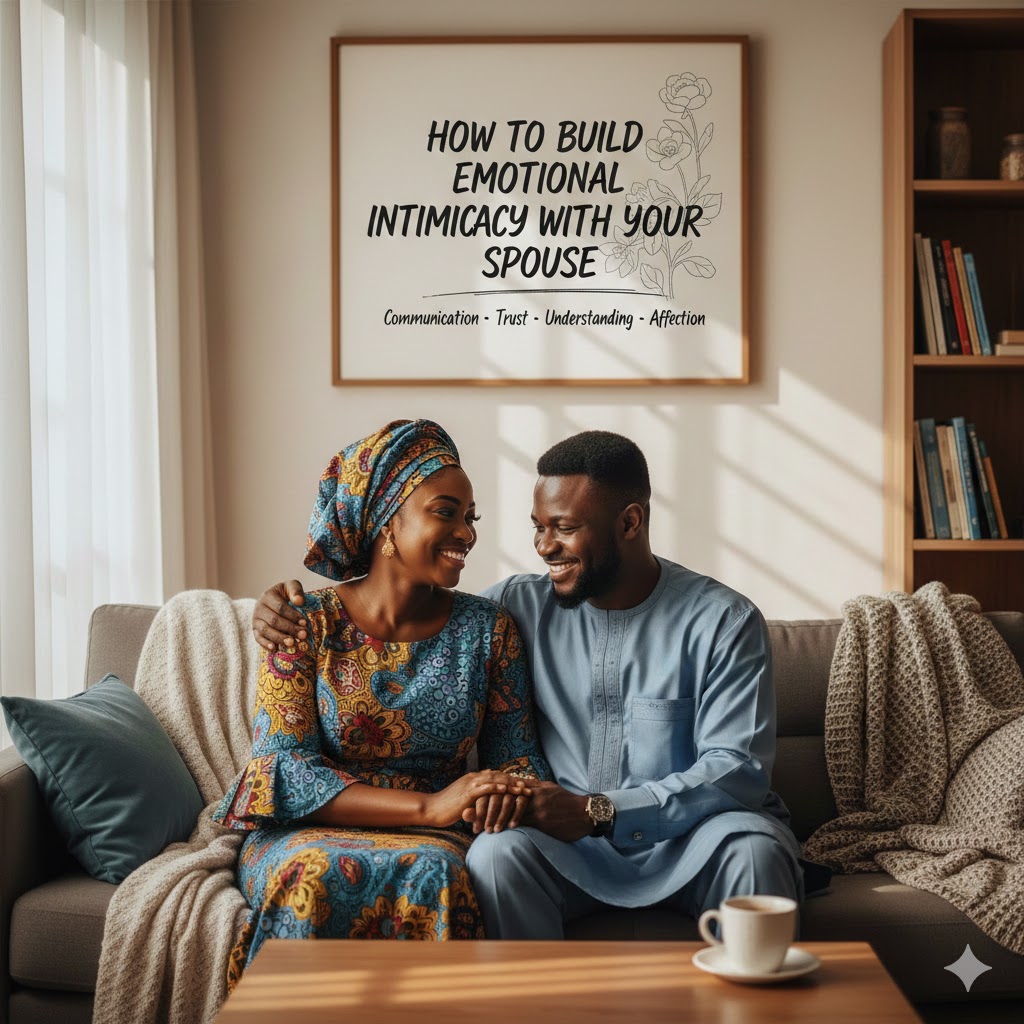
How to Build Emotional Intimacy With Your Spouse
Emotional intimacy is one of the most important yet most misunderstood aspects of marriage. Many couples assume intimacy means physical closeness alone, while others believe it should come naturally once love exists. In reality, emotional intimacy is something that must be intentionally built, nurtured, and protected over time.
In many Nigerian marriages, emotional intimacy is often sacrificed on the altar of responsibility, culture, and survival. Couples become busy providing, parenting, managing extended family expectations, and navigating financial pressure. Over time, they may still live together but feel emotionally distant, unheard, or misunderstood.
This article explores what emotional intimacy truly means, why it fades in marriage, and how couples can rebuild and deepen emotional connection—using real-life Nigerian scenarios and practical approaches that work in everyday life.
What Emotional Intimacy Really Means
Emotional intimacy is the ability to be emotionally open, safe, and connected with your spouse. It means feeling free to express your thoughts, fears, dreams, disappointments, and needs without fear of judgment, ridicule, or rejection.
When emotional intimacy exists, spouses feel emotionally “seen.” They feel understood, valued, and accepted for who they are, not just for what they provide or do. Emotional intimacy creates a deep sense of companionship that goes beyond romance or sexual attraction.
In emotionally intimate marriages, couples do not just share a home; they share their inner world.
Why Emotional Intimacy Is Missing in Many Marriages
Emotional distance does not usually happen overnight. It develops gradually as couples adapt to life’s pressures and stop prioritizing connection.
In Nigeria, several factors contribute to emotional disconnection in marriage. Cultural norms often discourage emotional expression, especially for men. Many husbands were raised to believe vulnerability is weakness, while many wives were taught to endure silently rather than express dissatisfaction.
Economic stress is another major factor. When survival becomes the focus, emotional needs are pushed aside. Long working hours, financial pressure, and the responsibility of supporting extended family can leave little emotional energy for marriage.
Unresolved conflicts also play a major role. When hurt feelings are ignored, minimized, or repeatedly dismissed, emotional walls begin to form. Over time, couples stop trying to connect because it feels safer to stay distant than to be hurt again.
A Real-Life Nigerian Scenario: When Emotional Intimacy Fades
Tunde and Aisha have been married for nine years and live in Ibadan. Tunde works long hours as a civil servant, while Aisha runs a small business and manages the home. They rarely fight, but they also rarely talk about anything meaningful.
Their conversations revolve around bills, children, and daily logistics. Aisha feels emotionally lonely and believes Tunde no longer cares. Tunde believes he is being a good husband because he provides and avoids conflict.
Neither of them feels truly understood, yet neither knows how to bridge the emotional gap.
This situation is common in many Nigerian homes—marriages that are functional but emotionally empty.
Why Emotional Intimacy Matters in Marriage
Emotional intimacy is the glue that holds marriage together during difficult seasons. Without it, couples may stay married but feel disconnected, resentful, or vulnerable to emotional affairs.
When emotional intimacy is strong, couples handle conflict better, communicate more effectively, and feel more satisfied in their relationship. Emotional connection also strengthens physical intimacy, because closeness becomes rooted in trust and affection rather than obligation.
Marriage without emotional intimacy feels like cohabitation. Marriage with emotional intimacy feels like partnership.
Building Emotional Intimacy Starts With Emotional Safety
The foundation of emotional intimacy is emotional safety. A spouse cannot open up emotionally if they fear criticism, mockery, anger, or dismissal.
Emotional safety is created when spouses respond with empathy rather than defensiveness. It means listening without interrupting, validating feelings even when you disagree, and avoiding insults or sarcasm during conversations.
In many marriages, emotional intimacy fails because one or both partners do not feel safe expressing vulnerability. Past experiences of being ignored or shut down teach spouses to protect themselves by withdrawing emotionally.
To rebuild intimacy, couples must intentionally create a safe emotional environment.
Learning to Communicate Beyond Logistics
Many married couples talk constantly but rarely connect emotionally. Communication becomes transactional rather than relational.
Emotional intimacy grows when couples talk about how they feel, not just what they need to do. This requires slowing down conversations and asking deeper questions.
Instead of asking only “How was work?” emotional intimacy grows when spouses ask, “How did work make you feel today?” or “What stressed you the most this week?”
When couples show genuine curiosity about each other’s inner experiences, emotional closeness deepens naturally.
Vulnerability: The Heart of Emotional Intimacy
Vulnerability is the willingness to be emotionally seen. It involves sharing fears, disappointments, insecurities, and unmet needs honestly.
In Nigerian culture, vulnerability is often discouraged, especially for men. Many husbands believe expressing emotions will make them appear weak. However, emotional strength is not the absence of vulnerability—it is the courage to be honest.
When one spouse takes the risk to open up emotionally and is met with empathy, intimacy grows. When vulnerability is met with criticism or silence, emotional walls grow higher.
A Nigerian Scenario: Rebuilding Emotional Connection
Ngozi and Chinedu live in Enugu. After years of emotional distance, Ngozi finally tells Chinedu that she feels lonely in the marriage. Instead of listening, Chinedu initially becomes defensive and accuses her of being ungrateful.
Days later, after reflection, Chinedu approaches Ngozi and apologizes. He admits he was raised to believe men should not talk about emotions. This honest admission opens a new chapter in their marriage.
They begin setting aside time weekly to talk—not about children or money, but about feelings. Slowly, trust and emotional closeness return.
Spending Intentional Time Together
Emotional intimacy cannot grow without time. Many couples assume living together is enough, but proximity does not guarantee connection.
Intentional time means being emotionally present, not distracted by phones, television, or stress. It means creating space for conversation, laughter, and shared experiences.
In Nigerian homes where responsibilities are many, couples must deliberately carve out moments for connection—even if it is a short walk, a quiet evening conversation, or shared prayer.
Healing Emotional Wounds From the Past
Unhealed emotional wounds block intimacy. Past betrayals, neglect, harsh words, or unresolved conflicts create emotional barriers that prevent closeness.
Building emotional intimacy often requires addressing these wounds honestly. This may involve apologies, forgiveness, accountability, and sometimes professional counseling.
Forgiveness does not mean forgetting or excusing hurtful behavior. It means choosing healing over resentment and creating space for renewed connection.
Emotional Intimacy and Physical Intimacy
Emotional and physical intimacy are deeply connected. Many couples struggle with sexual intimacy not because of lack of attraction, but because emotional connection is weak.
When spouses feel emotionally distant, physical closeness can feel forced or transactional. As emotional intimacy grows, physical intimacy often improves naturally.
In emotionally connected marriages, intimacy becomes an expression of love, trust, and affection—not obligation.
Dealing With Gender Differences in Emotional Expression
Men and women often express emotions differently, shaped by upbringing and social expectations. Understanding these differences helps couples avoid misunderstanding.
Some spouses process emotions internally, while others express them verbally. Emotional intimacy grows when couples respect these differences without dismissing each other’s needs.
Rather than expecting your spouse to communicate exactly like you, learn how they express emotions and meet them with patience.
Faith, Emotional Intimacy, and Marriage
For many Nigerian couples, faith plays a central role in marriage. Spiritual intimacy—praying together, sharing beliefs, and supporting each other’s faith journey—can strengthen emotional connection.
Faith encourages humility, forgiveness, patience, and love—all essential for emotional intimacy. Couples who grow spiritually together often find it easier to connect emotionally.
When Emotional Intimacy Feels One-Sided
Sometimes one spouse desires emotional closeness more than the other. This imbalance can cause frustration and loneliness.
In such situations, patience and consistency are important. Emotional intimacy cannot be forced. Gentle communication, modeling vulnerability, and creating safety over time can soften emotional resistance.
However, persistent emotional neglect should not be ignored. Honest conversations and professional support may be necessary.
Emotional Intimacy Requires Ongoing Effort
Emotional intimacy is not a one-time achievement. It must be maintained through life transitions such as childbirth, career changes, illness, relocation, or financial stress.
Couples who prioritize emotional connection during calm seasons are better equipped to survive storms together.
Conclusion: Choosing Emotional Intimacy Every Day
Building emotional intimacy with your spouse is a daily choice. It requires patience, courage, humility, and intentional effort. It involves listening more, defending less, expressing love openly, and creating emotional safety.
In Nigerian marriages, where external pressures are many, emotional intimacy becomes even more important. It is the difference between merely staying married and truly enjoying marriage.
When couples choose emotional intimacy, marriage transforms from a duty into a deep, fulfilling partnership.







.jpg)
Sign in to comment