 Nurturing Marriages, Enriching Families!
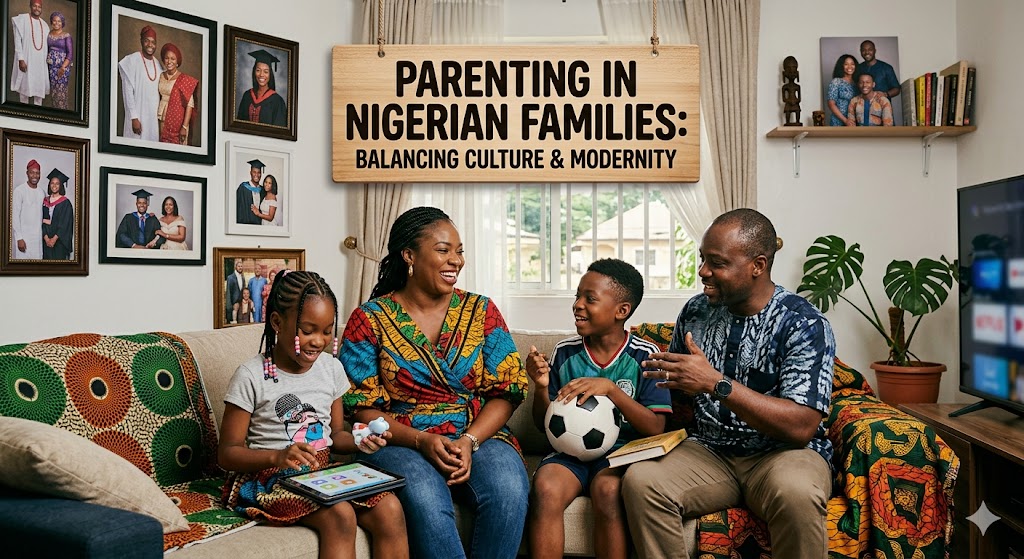
Parenting in Nigerian Families: Balancing Culture and Modernity
Parenting in Nigeria is undergoing a quiet but profound transformation. For generations, child-rearing practices were rooted in strong cultural traditions, communal living, and clearly defined values. Today, however, modern influences such as education, technology, urbanization, and global exposure are reshaping how Nigerian parents raise their children.
Across homes in Lagos, Enugu, Abuja, Kano, and rural communities nationwide, parents are increasingly navigating a delicate balance between preserving cultural identity and embracing modern parenting approaches. This balancing act is not always easy. It often involves difficult decisions about discipline, education, communication, and values.
This article explores parenting in Nigerian families, focusing on how parents are blending tradition with modern realities, supported by data, real-life case studies, and insights grounded in everyday Nigerian experiences.
The Foundation of Traditional Parenting in Nigeria
Traditional Nigerian parenting is deeply rooted in communal values and cultural expectations. Children are not raised by parents alone but by the extended family and, in many cases, the entire community. The popular saying “it takes a village to raise a child” reflects this reality.
Respect is a central value in traditional parenting. Children are taught from an early age to respect elders, authority figures, and societal norms. Discipline is often strict, with emphasis on obedience and moral behavior.
Roles within the family are clearly defined. Fathers are typically seen as authority figures and providers, while mothers are responsible for nurturing, caregiving, and daily upbringing. Grandparents, aunts, and uncles also play active roles in shaping a child’s behavior and values.
These traditional systems were effective in maintaining social order and cultural continuity, especially in close-knit communities where shared values were reinforced daily.
The Rise of Modern Parenting Influences
In recent decades, Nigeria has experienced significant social and economic change. Urbanization has led to smaller family units, while education and exposure to global cultures have introduced new parenting philosophies.
Modern Nigerian parents are increasingly adopting approaches that emphasize communication, emotional intelligence, and child development. Instead of strict obedience alone, there is growing focus on understanding a child’s feelings, encouraging self-expression, and building confidence.
Technology has also become a major influence. Access to the internet, social media, and global content exposes both parents and children to new ideas about parenting, discipline, and education.
Research and demographic data show that urban households in Nigeria are more likely to adopt modern parenting styles, influenced by education and exposure, while rural households tend to maintain traditional practices.
Education as a Key Driver of Change
Education is one of the most important factors shaping parenting in Nigeria. Educated parents are more likely to adopt modern parenting practices, including open communication, critical thinking, and child-centered approaches.
Parents who have experienced formal education often place a strong emphasis on their children’s academic success. This can lead to increased investment in private schooling, extracurricular activities, and educational resources.
However, this focus on education can also create pressure. Many Nigerian children, especially in urban areas, face high expectations to excel academically, sometimes at the expense of emotional well-being.
A Lagos-based family shared how they enrolled their children in multiple after-school programs to ensure academic success. While this provided opportunities, it also reduced family bonding time, highlighting the trade-offs involved in modern parenting.
Discipline: Tradition vs Modern Approaches
Discipline remains one of the most debated aspects of parenting in Nigeria.
Traditionally, discipline was strict and often involved corporal punishment. The belief was that firm discipline was necessary to instill respect and prevent misconduct. Many parents still hold this view today.
Modern parenting, however, is shifting toward non-violent discipline methods. These include communication, explanation, and setting clear boundaries without physical punishment.
Studies on child welfare in Nigeria indicate a gradual decline in the acceptance of corporal punishment in urban areas, although it remains common in many rural settings.
A case study from Abuja highlights a couple who chose to adopt non-violent discipline methods after attending a parenting seminar. Initially, they faced criticism from relatives who believed they were being too lenient. Over time, however, they observed improved communication and trust with their children.
Case Study 1: Urban Parenting in Lagos
In Lagos, a dual-income family with two children represents the challenges of modern parenting. Both parents work long hours, leaving limited time for direct involvement in their children’s daily activities.
To manage this, they rely on structured schedules, digital communication, and occasional support from domestic staff. They emphasize open communication and encourage their children to express their thoughts and feelings.
However, they also struggle with maintaining cultural values such as respect for elders and traditional practices. This reflects a common urban challenge—balancing modern lifestyles with cultural identity.
Case Study 2: Rural Parenting in Ebonyi State
In a rural community in Ebonyi State, parenting remains largely traditional. Children are actively involved in household and farming activities from a young age. Discipline is firm, and respect for elders is strictly enforced.
Education is valued, but access to resources is limited. Parenting focuses more on survival skills, moral upbringing, and community integration.
This case highlights how traditional parenting remains effective in certain contexts, particularly where community structures are strong.
Case Study 3: Hybrid Parenting in Abuja
In Abuja, a middle-class family demonstrates a hybrid approach. The parents combine traditional values such as respect and discipline with modern practices like open communication and emotional support.
They celebrate cultural festivals, teach their children native languages, and involve extended family members, while also encouraging independence and critical thinking.
This balanced approach reflects a growing trend among Nigerian families seeking to integrate the best of both worlds.
The Role of Extended Family in Parenting
Extended family continues to play a significant role in Nigerian parenting, even as nuclear families become more common.
Grandparents, aunts, and uncles often provide support, guidance, and childcare. In many cases, children spend time living with relatives for education or upbringing.
While this system provides strong support networks, it can also create challenges. Differences in parenting styles between parents and extended family members can lead to conflict or confusion for children.
Technology and Digital Parenting
Technology has introduced new opportunities and challenges for Nigerian parents.
On one hand, digital tools provide access to educational resources, parenting advice, and global perspectives. Children can learn new skills and access information easily.
On the other hand, excessive screen time, exposure to inappropriate content, and social media influence are growing concerns. Many parents struggle to set boundaries and monitor their children’s digital activities.
A parent in Port Harcourt shared how they introduced screen time limits and family discussions about online behavior to manage these challenges effectively.
Cultural Identity and Language Preservation
One of the key challenges in modern Nigerian parenting is preserving cultural identity. As children grow up in urban environments or are exposed to global cultures, there is a risk of losing connection with traditional values and languages.
Many parents are making conscious efforts to teach their children native languages, cultural practices, and family history. This helps maintain a sense of identity and belonging.
However, balancing this with modern education and global exposure requires intentional effort.
Challenges Facing Nigerian Parents Today
Parenting in Nigeria today comes with several challenges.
Economic pressure is a major factor. Rising costs of living, education, and healthcare make it difficult for parents to meet their children’s needs.
Time constraints also affect parenting quality, especially in urban areas where work demands are high.
There is also the challenge of navigating conflicting advice from traditional norms, modern practices, and digital sources.
Additionally, societal expectations can place pressure on parents to raise “successful” children, often measured by academic or financial achievements.
The Future of Parenting in Nigeria
The future of parenting in Nigeria will likely involve continued blending of tradition and modernity.
Younger parents are more open to adopting new approaches while still valuing cultural heritage. Education, technology, and global exposure will continue to shape parenting practices.
At the same time, traditional values such as respect, community, and family unity will remain important.
The most successful parenting approaches will likely be those that adapt to changing realities while preserving core cultural values.
Parenting in Nigerian families is evolving. While traditional methods provided a strong foundation of discipline and cultural identity, modern influences are introducing new ways of raising children.
Balancing these two worlds is not always easy, but it offers an opportunity to create well-rounded, confident, and culturally grounded children.
Ultimately, effective parenting in Nigeria today requires flexibility, awareness, and a willingness to adapt. By combining the strengths of tradition with the insights of modernity, Nigerian parents can build a future that honors the past while embracing change.
Join the MarriageHub Community
Looking to connect, learn, or grow in your relationship journey?
👉 Join groups/tribes: https://www.marriagehub.ng/all-groups
👉 Create your own group: https://www.marriagehub.ng/create-tribes-group
👉 Explore products, services & downloads: https://www.marriagehub.ng/marketplace
Follow Us
📱 WhatsApp: https://whatsapp.com/channel/0029VbCav9MCcW4pw3GSM72w
🐦 X (Twitter): https://x.com/MarriageHubNG
📘 Facebook: https://web.facebook.com/MarriageHubNigeria
📸 Instagram: https://www.instagram.com/marriagehubng3




.jpg)

Sign in to comment