 Nurturing Marriages, Enriching Families!
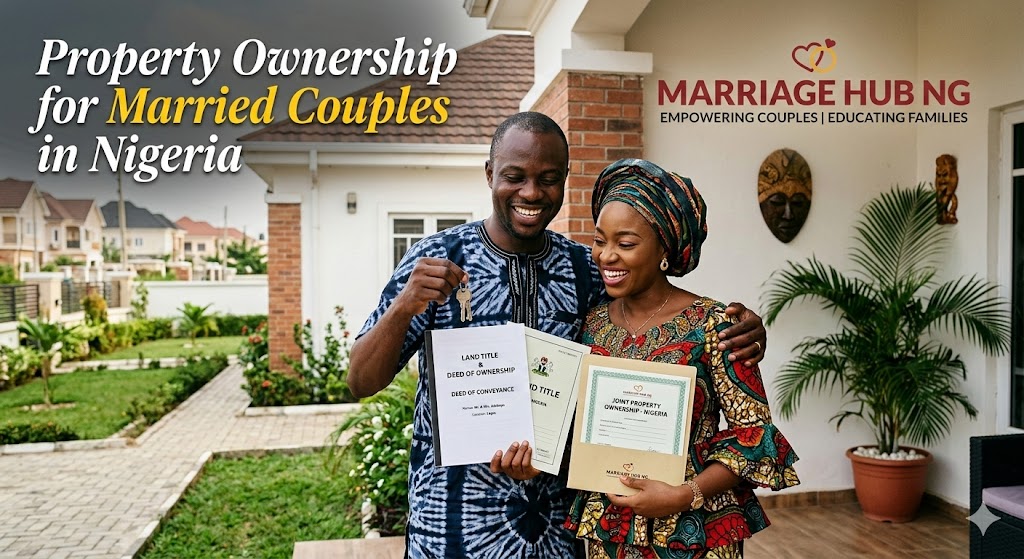
Property Ownership for Married Couples in Nigeria
Property ownership is a vital aspect of married life, impacting financial security, inheritance rights, and marital harmony. In Nigeria, married couples must navigate complex legal frameworks, including statutory law, customary law, and Islamic law, to manage property effectively. Understanding how property ownership works before, during, and after marriage ensures that assets are protected, disputes are minimized, and wealth is preserved for both spouses and future generations.
This article provides a comprehensive guide to property ownership for married couples in Nigeria, covering legal frameworks, ownership types, marital property rights, disputes, and practical strategies for managing and protecting property.
Understanding Property Ownership in Nigeria
Property in Nigeria can be classified broadly into:
-
Real Property: Land and buildings.
-
Personal Property: Movable assets such as vehicles, jewelry, and investments.
-
Joint Property: Assets acquired together by both spouses during marriage.
-
Individual Property: Assets owned by one spouse before marriage or acquired individually after marriage.
The rules governing property ownership depend on the type of marriage, the origin of the property, and applicable laws.
Types of Marriage and Their Impact on Property Ownership
1. Statutory Marriage (Civil Marriage)
Civil marriages are regulated under the Marriage Act. Key points regarding property include:
-
Property acquired during the marriage is considered joint or marital property.
-
Property acquired before the marriage typically remains individual property unless explicitly shared.
-
Joint property may be divided equitably in the event of divorce, based on contribution and needs.
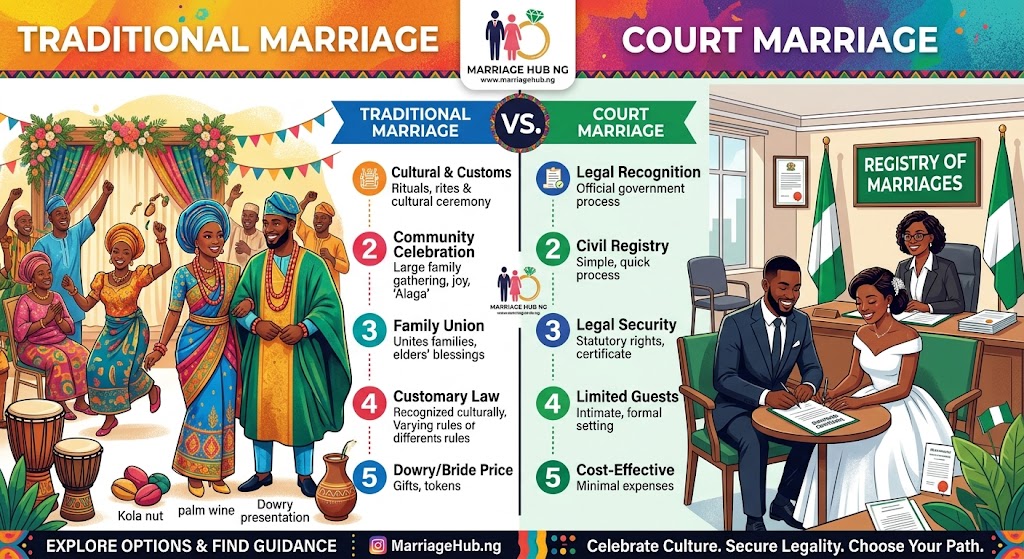
2. Customary Marriage
Customary marriages are governed by local customs, which vary by ethnic group. Property rights depend on the traditions observed:
-
In some cultures, property acquired during marriage is jointly owned.
-
In others, the husband may retain ownership of most assets, while the wife may have usage rights.
-
Property inherited from family may remain outside the marital estate.
3. Islamic Marriage (Sharia Law)
Sharia law applies to Muslim marriages in many Nigerian states. Key considerations include:
-
Property rights are guided by Islamic inheritance and marital laws.
-
A wife may retain ownership of personal property brought into the marriage.
-
Property acquired jointly may be shared equitably according to Islamic principles in case of divorce.
Common Property Ownership Structures for Married Couples
1. Joint Tenancy
-
Both spouses hold equal ownership shares.
-
Upon the death of one spouse, the surviving spouse automatically inherits the deceased’s share.
-
Suitable for couples seeking automatic succession rights.
2. Tenancy in Common
-
Ownership shares may be unequal.
-
Each spouse can independently dispose of their share.
-
Upon death, the deceased’s share is passed to heirs or as stated in a will.
3. Sole Ownership
-
One spouse retains full ownership of a property.
-
The other spouse may have usage rights but not ownership rights.
-
Common for pre-marriage assets or individual business property.
4. Trusts and Estate Planning
-
Couples may place property in a trust to protect it from disputes, creditors, or divorce settlements.
-
Trusts ensure the property is managed according to agreed terms and can protect children’s inheritance.
Legal Considerations for Married Couples
1. Property Acquired Before Marriage
-
Pre-marriage property usually remains individual property.
-
Spouses may choose to make it joint property through agreements or co-ownership arrangements.
-
Documenting pre-marriage assets prevents disputes in case of divorce.
2. Property Acquired During Marriage
-
Property acquired jointly is considered marital property and may be subject to equitable distribution upon divorce.
-
Contributions of each spouse, both financial and non-financial (such as homemaking), may be considered by courts in property division.
3. Property Inherited or Gifted
-
Property inherited or gifted to one spouse typically remains their individual property unless explicitly shared.
-
Clear documentation is important to avoid misunderstandings.
4. Land Ownership and Registration
-
Land in Nigeria is regulated under the Land Use Act.
-
Couples should ensure proper land title registration to secure ownership and prevent disputes.
-
Both spouses’ names can be included on the title for joint ownership recognition.
Property Ownership Agreements
To protect assets and clarify ownership, couples may use legal agreements:
1. Prenuptial Agreements
-
Outline how property will be managed and divided in case of divorce or separation.
-
Protects pre-marriage assets, business interests, and family inheritances.
-
Ensures clarity and fairness for both spouses.
2. Postnuptial Agreements
-
Similar to prenuptial agreements but executed after marriage.
-
Useful for couples acquiring significant property during marriage or entering new business ventures.
3. Property Transfer and Co-Ownership Agreements
-
Clearly defines rights, responsibilities, and usage of jointly owned property.
-
Reduces disputes in divorce, inheritance, or family disagreements.
Challenges in Property Ownership for Married Couples
-
Disputes During Divorce: Property division can lead to lengthy court battles if ownership is unclear.
-
Cultural and Religious Differences: Customary and Islamic practices may conflict with statutory laws, causing confusion.
-
Lack of Documentation: Unregistered land or undocumented property leads to ownership disputes.
-
Hidden or Unshared Assets: One spouse failing to disclose assets can create mistrust and legal complications.
-
Financial Mismanagement: Poor financial planning may reduce the value of jointly owned property or investments.
Tips for Managing Property Ownership Effectively
1. Maintain Documentation
-
Keep records of property ownership, purchase receipts, and land titles.
-
Document contributions to household expenses and property improvements.
2. Communicate Openly
-
Discuss financial goals, property plans, and ownership expectations regularly.
-
Make joint decisions for acquisitions, investments, and major expenditures.
3. Consider Legal Agreements
-
Draft prenuptial or postnuptial agreements to outline property rights.
-
Use co-ownership agreements for joint property.
4. Register Property Properly
-
Ensure land and property titles are properly registered under both spouses’ names if desired.
-
Compliance with the Land Use Act and local laws reduces legal risks.
5. Plan for Succession
-
Prepare wills or estate plans to secure inheritance rights for the spouse and children.
-
Clearly define who inherits property in the event of death to prevent disputes.
6. Seek Professional Advice
-
Engage lawyers, estate planners, and financial advisors for guidance.
-
Professional input ensures compliance with Nigerian laws and protection of assets.
Benefits of Proper Property Ownership Planning
-
Reduces Disputes: Clear ownership prevents conflict during divorce, separation, or inheritance.
-
Protects Individual Assets: Safeguards property acquired before marriage or through inheritance.
-
Enhances Marital Harmony: Open communication and agreements build trust and transparency.
-
Supports Financial Security: Joint planning ensures long-term wealth preservation and investment growth.
-
Legal Compliance: Proper registration and documentation prevent legal challenges in the future.
Conclusion
Property ownership for married couples in Nigeria requires careful planning, clear communication, and understanding of legal frameworks. Whether under statutory, customary, or Islamic law, couples must protect their assets, clarify ownership, and document agreements to prevent disputes.
By combining legal agreements, proper registration, and proactive planning, couples can secure their individual and joint property, strengthen marital trust, and create a stable foundation for their family’s financial future. Property ownership is not just about wealth—it is about safeguarding your marriage, protecting your children, and planning for generations to come.
Join the MarriageHub Community
MarriageHub supports couples in navigating property, legal, and financial matters in marriage. Strengthen your relationship with guidance, communities, and resources.
👉 Join groups or tribes here: https://www.marriagehub.ng/all-groups
👉 Create your own relationship group or tribe here: https://www.marriagehub.ng/create-tribes-group
Explore helpful products, services, and downloadable resources designed to support married couples in our marketplace:





.jpg)


Sign in to comment