 Nurturing Marriages, Enriching Families!

Setting Boundaries With Nigerian In-Laws Without Causing Offense
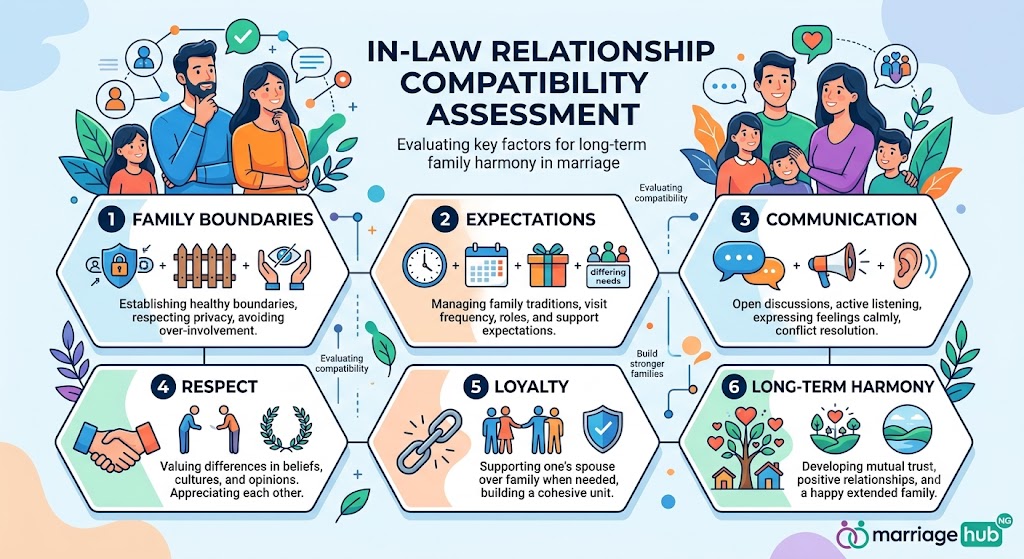
In Nigeria, marriage is rarely just a union of two individuals; it is also a merging of families. In-laws play a significant role in marital life, often offering support, guidance, and care. However, without clear boundaries, in-law involvement can become intrusive, stressful, and even disruptive to the marriage.
Setting boundaries with Nigerian in-laws is essential to maintain marital harmony while preserving respect and family ties. Done correctly, boundaries strengthen the marriage, improve communication, and prevent resentment.
This article provides practical strategies, real-life examples, and cultural insights to help couples navigate this delicate balance.
Why Boundaries Are Important
Boundaries are limits that define acceptable behavior. They protect your emotional, financial, and personal space. In Nigerian marriages, boundaries are crucial because:
-
They prevent interference in marital decisions. Without boundaries, in-laws may influence finances, child-rearing, or household management.
-
They reduce stress and conflict. Ambiguous expectations can cause tension and arguments between spouses and with in-laws.
-
They protect emotional well-being. Constant intrusion can lead to resentment, guilt, or emotional withdrawal.
-
They reinforce marital unity. When couples establish and enforce boundaries together, it demonstrates partnership and mutual respect.
Example: A couple in Lagos struggled with the wife’s mother constantly giving unsolicited advice on parenting. By setting boundaries respectfully, they maintained family ties while protecting their decisions as parents.
Common Scenarios That Require Boundaries
-
Financial interference: Requests for money, contributions to family events, or pressure to support extended family without consultation.
-
Parenting and child-rearing advice: In-laws imposing their methods on childcare, feeding, discipline, or education.
-
Household management: Criticism or directives about home organization, meals, or daily routines.
-
Lifestyle choices: Opinions on careers, religious practices, social activities, or where to live.
-
Social media and public scrutiny: In-laws sharing private marital matters online or with friends and extended family.
Principles for Setting Boundaries Without Causing Offense
1. Approach With Respect
Nigerian culture highly values respect for elders. Begin conversations with politeness and acknowledgment of their role in your life.
Example Phrase: “We truly appreciate all your guidance and support. We want to share how we plan to handle some matters as a couple.”
2. Communicate as a United Front
Before addressing in-laws, spouses should agree on the boundaries together. Presenting a joint stance prevents mixed messages and reinforces the partnership.
Tip: Hold private discussions to identify your non-negotiables, compromises, and areas open for input.
3. Use “I” Statements Instead of “You” Statements
Frame concerns around your feelings rather than accusations. This reduces defensiveness and fosters understanding.
Example: “I feel overwhelmed when decisions are made without us. We would love to consult you, but ultimately we want to make final choices as a couple.”
4. Be Specific About Your Needs
Vague requests are often ignored. Clearly explain what behavior is acceptable and what is not.
Example: “We would like to visit every other weekend instead of every week so we can balance family time and personal responsibilities.”
5. Acknowledge Their Role and Experience
Show appreciation for their experience and contributions. This softens the message and demonstrates that boundaries are not rejection.
Example: “We value your experience in raising children, and we hope to learn from it. We also need space to try our own methods as parents.”
6. Pick the Right Timing and Setting
Discuss sensitive topics privately and calmly, avoiding moments of tension or large family gatherings. This allows for thoughtful, respectful dialogue.
7. Offer Compromise Where Possible
Boundaries do not mean rigid refusal. Identify areas where flexibility is acceptable to maintain family harmony.
Example: Allowing in-laws to offer advice occasionally, but agreeing on final decisions together.
8. Be Consistent
Consistency reinforces boundaries. Avoid mixed signals or bending rules repeatedly, as this can create confusion and resentment.
Real-Life Nigerian Scenarios
Scenario 1: A couple in Abuja faced pressure from the husband’s mother to host every holiday with extended family.
They communicated their need for space, proposed quarterly gatherings, and acknowledged the mother’s desire to be involved. Result: Reduced stress and better planning for family visits.
Scenario 2: A Lagos-based wife’s parents frequently criticized her cooking and home management. She respectfully communicated her feelings to both her husband and parents, requesting that feedback be limited to specific moments. Result: Emotional relief and improved marital cohesion.
Scenario 3: A newlywed couple faced in-laws intervening in financial decisions. They created a transparent financial plan and shared it with family, making it clear that all final decisions would be made jointly. Result: Reduced financial pressure and preserved respect for in-laws.
Strategies for Maintaining Respectful Boundaries
-
Regular Check-ins With Your Spouse: Discuss family interactions weekly to assess challenges and successes.
-
Set Digital Boundaries: Limit what in-laws can see on social media and avoid sharing private matters without consent.
-
Seek Mediation if Needed: Neutral third parties, such as religious leaders or respected family elders, can help when conflicts escalate.
-
Encourage Positive Involvement: Invite family members to participate in areas that do not compromise marital decisions.
-
Educate Younger Generations: Teach children to respect privacy and boundaries in culturally sensitive ways.
Reflection Exercises for Couples
-
Identify the top three areas where in-laws frequently interfere. Discuss why these areas matter most.
-
Role-play boundary-setting conversations to reduce anxiety before actual discussions.
-
Reflect on cultural values that influence your approach and decide which ones enhance marriage without causing offense.
-
Write a “family engagement plan” that balances respect for elders with marital autonomy.
Common Mistakes to Avoid
-
Being passive: Avoiding conversations allows conflicts to escalate.
-
Being confrontational: Aggressive statements can damage family relationships.
-
Inconsistency: Frequently bending rules confuses in-laws and undermines boundaries.
-
Neglecting your spouse’s input: Unilateral decisions about boundaries can cause marital tension.
Setting boundaries with Nigerian in-laws requires deliberate effort, respect, and communication. Boundaries are not rejection; they are a healthy mechanism to protect your marriage, emotional well-being, and family harmony.
By approaching discussions with respect, clarity, and consistency, couples can prevent resentment, maintain family ties, and strengthen their marital bond. In Nigeria, where family structures are deeply valued, setting boundaries thoughtfully ensures both cultural respect and marital autonomy.
A successful marriage is built not by avoiding family conflicts, but by navigating them together as a unified couple. Boundaries are the bridge between love for your spouse and respect for family—a balance that every couple can achieve with patience, empathy, and intentionality.








.jpg)



Sign in to comment