 Nurturing Marriages, Enriching Families!
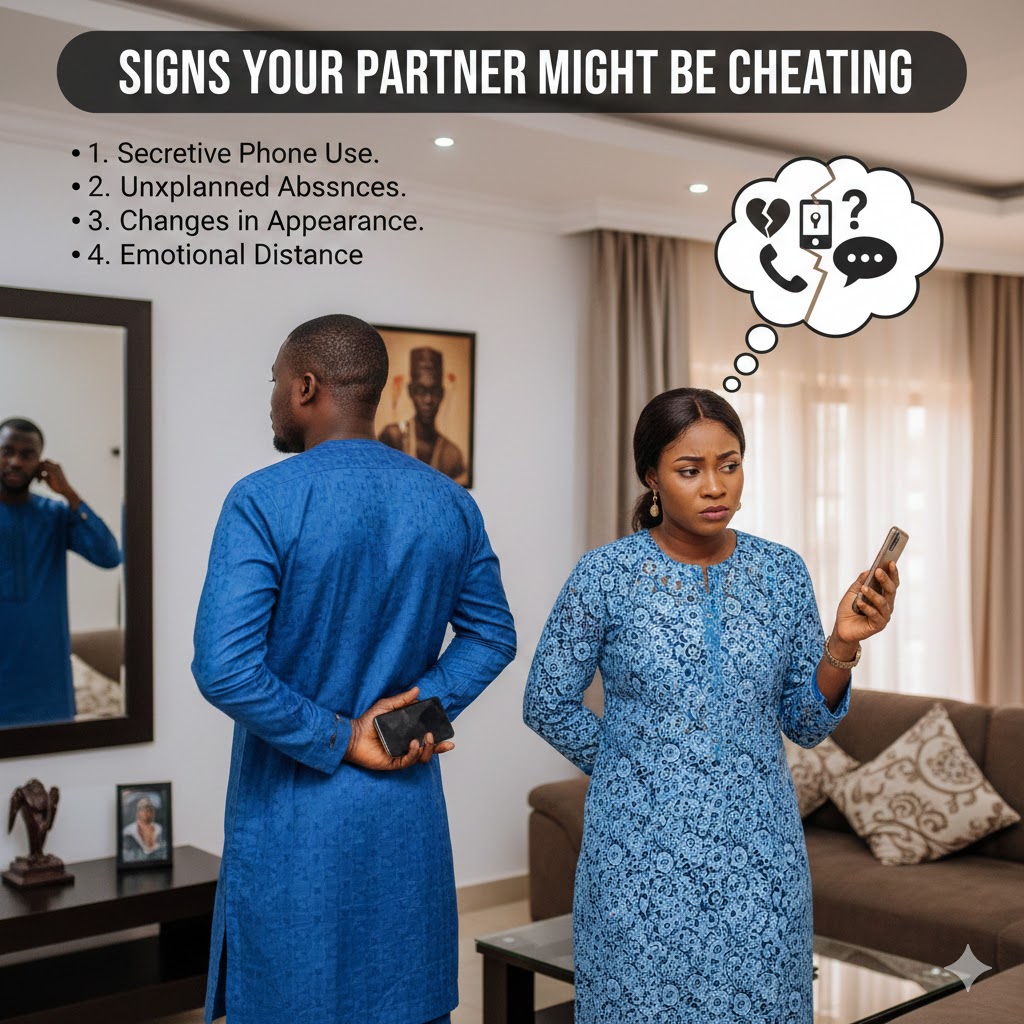
Signs Your Partner Might Be Cheating: A Nigerian Perspective
Infidelity is one of the most painful experiences a person can face in a relationship. In Nigeria, where cultural norms, social expectations, and family involvement often shape romantic partnerships, the discovery of a partner’s betrayal can be emotionally devastating. While not every change in behavior signals cheating, being aware of common signs and patterns can help you understand your relationship and protect yourself emotionally and financially.
This article explores the common signs of cheating, how to interpret them in a Nigerian context, and practical advice for navigating suspicion and confrontation while preserving self-respect and emotional well-being. Real-life Nigerian scenarios are included to illustrate how these signs manifest in everyday relationships.
Understanding Infidelity
What Infidelity Looks Like
Infidelity can take many forms:
-
Physical cheating: Engaging in sexual activity with someone outside the relationship.
-
Emotional cheating: Developing a deep, intimate connection with another person, sometimes without physical contact.
-
Online infidelity: Sexting, messaging, or interacting inappropriately on social media or dating apps.
In Nigeria, infidelity is often complicated by societal expectations, religious norms, and family involvement. It can affect marriage, co-parenting, and social reputation, making awareness and careful handling critical.
Why People Cheat
Common reasons for infidelity include:
-
Emotional dissatisfaction
-
Lack of intimacy or attention
-
Financial stress or power dynamics
-
Cultural norms tolerating extramarital relationships
-
Personal insecurities or desire for validation
Example: In Lagos, a man engaged in emotional infidelity with a colleague because he felt neglected at home, highlighting the importance of communication and attention in relationships.
Sign 1: Sudden Changes in Behavior
One of the most common early signs of cheating is a noticeable change in your partner’s behavior. This can include:
-
Increased secrecy about their schedule
-
Unexplained absences
-
Uncharacteristic irritability or defensiveness
Nigerian Scenario:
A woman in Abuja noticed her husband leaving early for “work meetings” that never existed. His defensive responses when asked raised red flags, prompting further investigation.
Sign 2: Increased Attention to Appearance
While self-care is normal, a sudden obsession with grooming, dressing better, or changing personal style can indicate someone is trying to impress another person.
Example:
A Lagos man started spending more time at the gym and dressing sharply, claiming it was for himself. However, his partner noticed he was secretive about where he was going, which suggested infidelity.
Sign 3: Secrecy With Technology
In Nigeria, mobile phones and social media play a central role in communication. Signs of digital secrecy may include:
-
Password-protecting devices suddenly
-
Deleting messages or call logs
-
Spending excessive time online without sharing activity
Scenario:
A woman in Port Harcourt discovered her husband frequently hiding his phone screen or texting late at night. Investigating further revealed an emotional affair with a colleague.
Sign 4: Emotional Distance
Cheating often results in emotional withdrawal. A partner may:
-
Seem distracted or preoccupied
-
Avoid conversations about feelings or the relationship
-
Display less affection
Example:
In Lagos, a couple had been emotionally close, but the wife noticed her husband became distant, less communicative, and less intimate. Counseling revealed he had developed feelings for someone else at work.
Sign 5: Changes in Sexual Behavior
Sexual dynamics often shift when a partner is cheating:
-
Reduced interest in intimacy
-
Unusual enthusiasm or experimentation outside normal preferences
-
Complaints about sexual frequency or satisfaction
Nigerian Context:
Cultural sensitivity around discussing sex may make these signs harder to notice. Partners may avoid confrontation, creating confusion until behaviors become more apparent.
Sign 6: Defensiveness and Guilt Responses
Cheaters often exhibit defensive behaviors or guilt responses when questioned:
-
Quick irritation or anger
-
Avoiding eye contact
-
Shifting blame onto the partner
Scenario:
A Lagos woman noticed her husband becoming overly defensive whenever she asked about his whereabouts. While she initially dismissed it as stress, consistent patterns suggested potential infidelity.
Sign 7: Unexplained Financial Activity
In Nigeria, financial secrecy can indicate infidelity:
-
Unexplained withdrawals or expenses
-
Secretive gifts or payments
-
Sudden increase in personal spending
Example:
A husband in Abuja frequently withdrew cash without explanation. Investigation revealed he was funding secret dates with another woman, highlighting the importance of monitoring financial transparency.
Sign 8: Changes in Social Circles
A cheating partner may:
-
Suddenly spend time with new friends or colleagues
-
Avoid social gatherings where the partner is present
-
Show reluctance to share details about new acquaintances
Nigerian Scenario:
A Lagos woman noticed her husband increasingly attending after-work “meetings” with friends she had never met. Over time, she discovered he was spending time with someone else, demonstrating how social behavior can indicate infidelity.
Sign 9: Overcompensation and Excessive Attention
Some cheaters overcompensate for guilt by being unusually attentive or generous, trying to mask their actions.
Example:
In Port Harcourt, a man who had been emotionally distant began buying lavish gifts for his wife and suddenly showering her with attention. While initially flattering, it coincided with secret interactions with another woman, revealing an overcompensation pattern.
Sign 10: Intuition and Gut Feeling
Sometimes, your instincts can alert you to infidelity. While not definitive proof, repeated unease or suspicion warrants attention.
Nigerian Context:
Many Nigerian women trust their intuition based on subtle cues like tone of voice, body language, or minor inconsistencies in stories. Listening to these instincts while seeking evidence can prevent prolonged deceit.
How to Confirm Suspicions Without Invading Privacy
-
Observe Patterns: Track behavior changes over time, not isolated incidents.
-
Communicate Openly: Ask questions calmly and non-confrontationally.
-
Seek Evidence Carefully: Avoid illegal surveillance; rely on honest conversations.
-
Consult Professional Help: Marriage counselors can help mediate suspicions and investigate underlying issues.
-
Protect Yourself Financially: Ensure shared assets and finances are monitored, especially if cheating is suspected.
Nigerian Cultural Considerations
-
Family Involvement: Extended family may influence how infidelity is addressed. Some couples involve elders in mediation, while others prefer privacy.
-
Social Reputation: Cheating can affect standing within the community. Handling suspicion discreetly is often advised.
-
Religious Perspectives: Counseling from religious leaders or faith-based advice may help manage infidelity concerns ethically.
-
Gender Expectations: Infidelity may be perceived differently for men and women, requiring careful navigation of cultural norms.
Steps to Take If You Suspect Infidelity
-
Stay Calm: Avoid rash decisions fueled by anger.
-
Document Behavior: Keep a record of suspicious actions, messages, or financial discrepancies.
-
Communicate: Approach your partner with facts, not accusations.
-
Seek Counseling: Professional guidance can facilitate honest dialogue.
-
Set Boundaries: Protect emotional and financial well-being.
-
Evaluate the Relationship: Decide whether reconciliation or separation is the healthiest option.
-
Engage Trusted Support: Confide in friends, family, or faith leaders for advice and emotional support.
Real-Life Nigerian Scenarios
-
Lagos Couple: A husband’s late-night messages and secretive behavior prompted his wife to seek counseling. She discovered an emotional affair, and counseling helped them navigate decisions about trust and reconciliation.
-
Abuja Couple: Financial secrecy and unexplained absences led a woman to confront her husband, revealing infidelity. They pursued legal and emotional support to manage co-parenting responsibilities.
-
Port Harcourt Couple: Overcompensation and sudden attention from a husband initially masked cheating. Observant patterns and calm confrontation helped uncover the truth before long-term damage occurred.
Moving Forward After Confirming Infidelity
-
Emotional Processing: Allow yourself to grieve, seek therapy, and avoid making impulsive decisions.
-
Decision-Making: Determine whether to attempt reconciliation or separation.
-
Rebuilding Trust: If staying together, both partners must commit to transparency, counseling, and consistent accountability.
-
Self-Care: Prioritize emotional, physical, and mental health during the process.
Preventive Measures for Nigerian Couples
-
Maintain open communication about needs and expectations.
-
Set boundaries regarding friendships, work relationships, and online activity.
-
Engage in regular emotional check-ins to address dissatisfaction early.
-
Attend couples counseling proactively, not just in crisis.
-
Foster intimacy and shared experiences to strengthen the relationship bond.
Conclusion
Recognizing signs of infidelity early is critical for protecting emotional and financial well-being. While not every behavioral change signals cheating, paying attention to patterns such as secrecy, emotional distance, financial anomalies, and social behavior can help Nigerian couples navigate suspicion responsibly.
Cultural and social contexts in Nigeria—family expectations, religious norms, and community reputation—shape how infidelity is perceived and addressed. Approaching suspicions with calmness, observation, and professional support can prevent further harm and enable informed decisions. Whether a relationship is repaired or ended, awareness and proactive measures safeguard emotional health and promote personal growth.







.jpg)

Sign in to comment