 Nurturing Marriages, Enriching Families!
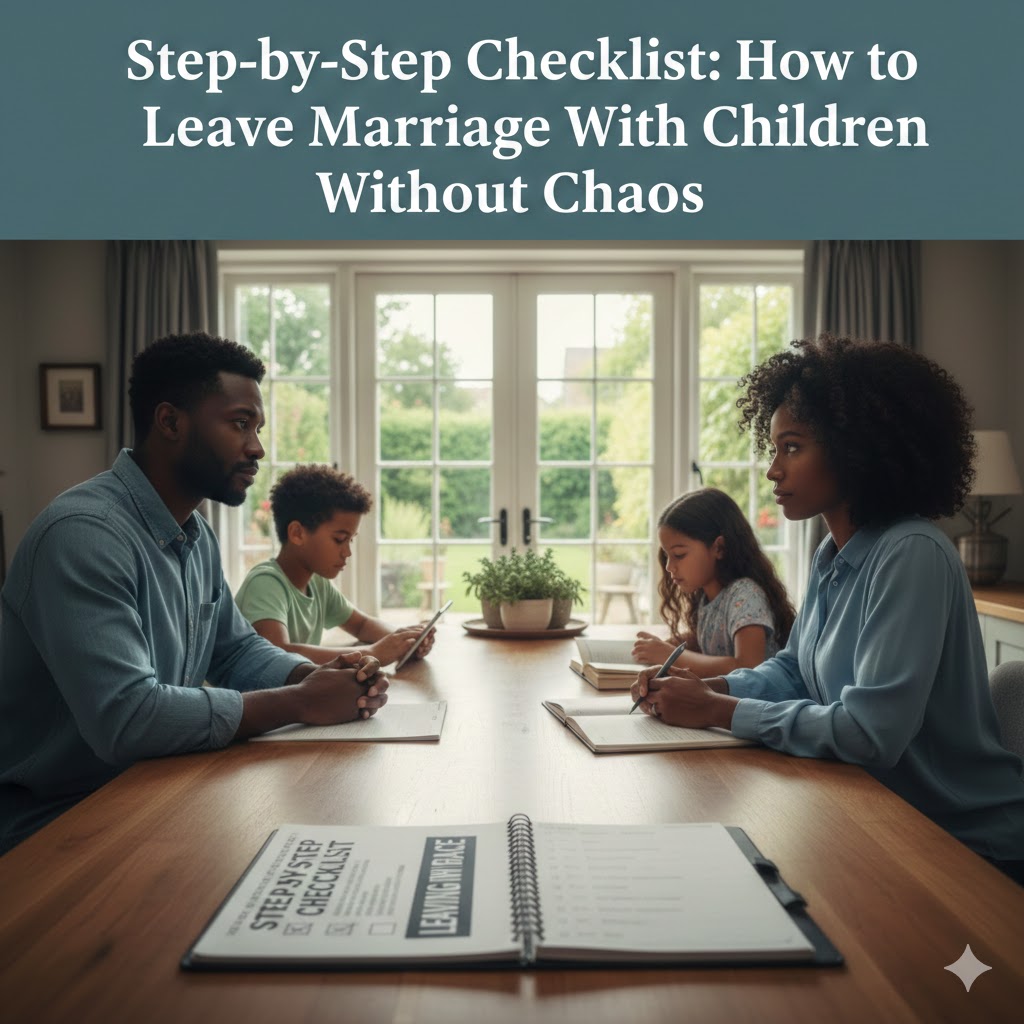
Step-by-Step Checklist: How to Leave a Marriage With Children Without Chaos
Leaving a marriage when children are involved can feel overwhelming. Beyond emotional stress, there are legal, financial, and logistical considerations that require careful planning. Acting impulsively or without preparation can increase tension and create long-lasting complications for both you and your children.
This step-by-step checklist will guide you on how to leave a marriage with children without chaos, ensuring your safety, emotional well-being, and your children’s stability throughout the process.
Step 1: Confirm Your Reasons and Prepare Mentally
Before taking any action, spend time reflecting on why you want to leave your marriage. Typical reasons may include:
-
Abuse or unsafe conditions
-
Infidelity
-
Emotional neglect
-
Irreconcilable differences
Journaling your thoughts, talking to a therapist, or confiding in a trusted friend can help clarify your feelings. A strong mental foundation will allow you to approach the process calmly and deliberately, instead of reacting impulsively.
Step 2: Ensure Safety First
Safety is paramount, especially if your marriage involves abuse. Key actions include:
-
Identify a safe place to stay (friends, family, or a shelter)
-
Keep a bag ready with essential items: documents, clothes, medications, money
-
Note emergency contacts, local hotlines, and protective services
-
Secure financial resources if possible
In abusive situations, consider consulting domestic violence organizations and legal professionals who can guide you safely through separation.
Step 3: Gather Financial and Legal Documents
Leaving a marriage with children involves navigating financial and legal complexities. Begin by collecting:
-
Bank statements and financial records
-
Pay stubs and tax returns
-
Property deeds and lease agreements
-
Insurance policies
-
Children’s birth certificates and medical records
This documentation will be crucial for custody arrangements, child support, and asset division.
Step 4: Consult a Family Law Attorney
A qualified attorney specializing in family law can help you understand:
-
Custody options (physical and legal)
-
Child support and alimony
-
Property and asset division
-
Protective measures if abuse is present
Legal guidance ensures your rights are protected and reduces uncertainty during this challenging transition.
Step 5: Develop a Safety and Exit Plan
A clear plan ensures the move is organized and minimizes conflict:
-
Decide when and where you will leave
-
Determine how to transport children safely
-
Make arrangements for temporary housing
-
Identify support from family or friends for logistics and emotional help
Planning reduces chaos and provides clarity during a stressful time.
Step 6: Communicate With Your Children Thoughtfully
Children often worry about losing one parent or their sense of stability. Approach the conversation with care:
-
Explain the situation in an age-appropriate manner
-
Reassure them that both parents love them
-
Avoid blaming your spouse or sharing adult conflicts
-
Emphasize that the separation is not their fault
Ongoing reassurance and stability will help your children adjust without feeling abandoned or guilty.
Step 7: Organize a Practical Parenting Plan
A clear parenting plan reduces future conflicts and confusion:
-
Decide custody schedules (weekdays, weekends, holidays)
-
Outline responsibilities for school, healthcare, and extracurricular activities
-
Agree on decision-making for education, medical care, and emergencies
-
Establish communication methods between parents
A structured plan helps children feel secure and ensures both parents remain actively involved.
Step 8: Prepare Financially for Two Households
Leaving a marriage often means maintaining two households. Consider:
-
Budgeting for rent/mortgage, bills, and childcare
-
Understanding child support and spousal support entitlements
-
Opening a separate bank account
-
Planning for unexpected expenses
Financial preparation reduces stress and helps you maintain stability for your children.
Step 9: Set Up Emotional Support Systems
Emotional support is critical for both you and your children:
-
Consider individual counseling for yourself
-
Enroll children in therapy if needed
-
Seek out support groups for separated parents
-
Lean on trusted friends or family for guidance and encouragement
Strong support networks help everyone cope with the emotional challenges of separation.
Step 10: Maintain Consistency for Your Children
Children thrive on routine, even during major life changes. Focus on:
-
Keeping daily routines and schedules consistent
-
Maintaining rules, discipline, and expectations across households
-
Supporting children’s activities and social lives
Consistency helps children feel secure and reduces the anxiety associated with change.
Step 11: Practice Healthy Communication With Your Ex
After separation, co-parenting will require ongoing communication. To minimize conflict:
-
Keep discussions child-focused
-
Avoid arguments in front of children
-
Use clear and respectful language
-
Set boundaries for sensitive topics
-
Use mediation when necessary
Effective co-parenting ensures children maintain strong bonds with both parents.
Step 12: Allow Time to Adjust
Leaving a marriage is a process, not an instant solution. Expect a period of emotional adjustment for you and your children. Be patient:
-
Accept that emotions like sadness, guilt, and anger are normal
-
Allow children to ask questions and express feelings
-
Seek ongoing therapy or counseling if needed
-
Celebrate small successes and milestones
Time and patience are key to transitioning smoothly.
Step 13: Avoid Impulsive Decisions
Emotions often run high during separation. Avoid decisions that may create long-term complications, such as:
-
Making major moves without a plan
-
Cutting off contact with your spouse abruptly
-
Making financial commitments without consultation
-
Using children as leverage in conflicts
Deliberate, well-thought-out steps reduce chaos and stress for the whole family.
Step 14: Focus on Long-Term Goals
While leaving a marriage is challenging, maintaining focus on the long-term goals helps guide your actions:
-
Ensure children’s emotional well-being and stability
-
Protect financial security
-
Establish a respectful co-parenting relationship
-
Prioritize personal healing and growth
Focusing on outcomes rather than immediate emotions ensures a healthier transition for everyone involved.
Step 15: Seek Ongoing Guidance and Support
Even after separation, challenges will arise. Continued support can help you navigate them:
-
Regular check-ins with a family therapist
-
Participation in support groups for single parents
-
Legal consultations for evolving custody or financial situations
Ongoing guidance reduces stress, ensures you’re making informed decisions, and protects your children’s best interests.
Final Thoughts
Leaving a marriage with children is a major life decision, but careful planning and preparation can reduce chaos and emotional strain. By following this step-by-step checklist, you can:
-
Protect your children’s emotional and physical well-being
-
Ensure financial and legal security
-
Establish healthy co-parenting arrangements
-
Navigate the transition with clarity and confidence
Separation is never easy, but when approached strategically, it can lead to healthier outcomes for both you and your children. Remember, prioritizing safety, stability, and emotional well-being is not just for you — it’s for the children who depend on you.









.jpg)


Sign in to comment