 Nurturing Marriages, Enriching Families!

Understanding Nigerian Marriage Laws: A Legal Checklist (2026 Complete Guide)
Marriage in Nigeria is not just a cultural celebration — it is a legal union regulated by statutory law, customary law, and Islamic law. Many couples focus heavily on wedding planning but overlook the legal requirements that protect their rights, property, and future children.
If you are getting married in Nigeria, this comprehensive guide will walk you through the legal framework, requirements, documentation, rights, and obligations, along with a practical legal checklist to ensure your marriage is valid and protected.
Whether you are planning a traditional, civil, church, mosque, or interfaith marriage, understanding Nigerian marriage laws is essential.
Table of Contents
-
Overview of Marriage Laws in Nigeria
-
Types of Legally Recognized Marriages
-
The Marriage Act: Key Legal Provisions
-
Legal Age for Marriage in Nigeria
-
Customary Marriage Laws Explained
-
Islamic Marriage (Sharia) Law
-
Polygamy and Its Legal Status
-
Marriage Registration Requirements
-
Legal Rights of Married Couples
-
Divorce and Dissolution Laws
-
Property and Inheritance Rights
-
Marriage Fraud and Void Marriages
-
Legal Checklist Before Getting Married
-
Frequently Asked Questions (FAQs)
-
Conclusion
Overview of Marriage Laws in Nigeria
Marriage in Nigeria operates under three major legal systems:
-
Statutory Law (Civil Marriage)
-
Customary Law
-
Islamic Law (Sharia)
Each system has different requirements and consequences. The type of marriage you contract determines your rights, especially regarding inheritance, divorce, and property.
Understanding which law governs your union is the first legal step every couple must take.
Types of Legally Recognized Marriages in Nigeria
1. Statutory (Civil) Marriage
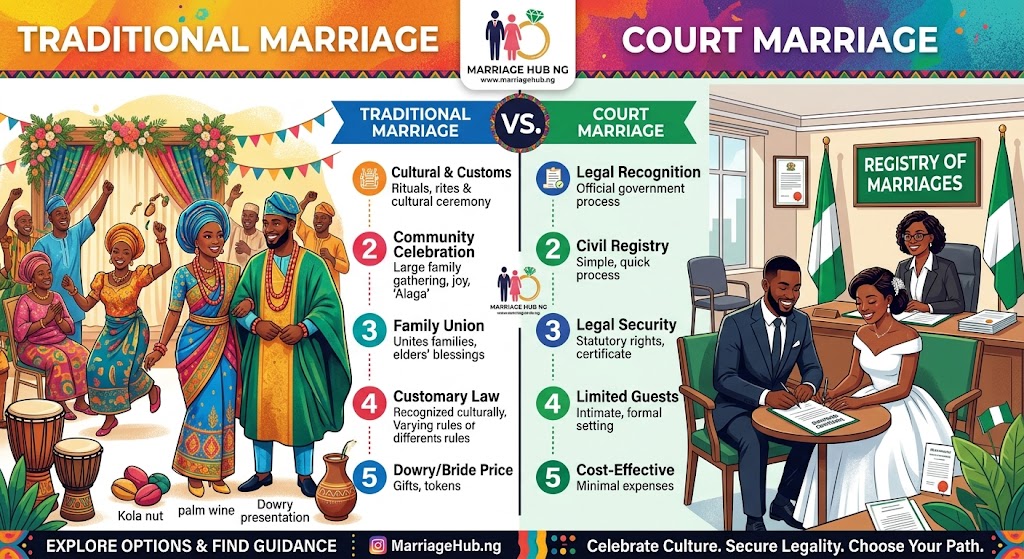
Statutory marriages are governed by the Marriage Act. This is the most secure form of marriage legally because it is recognized across Nigeria and internationally.
Key features:
-
Monogamous (one spouse only)
-
Requires registration at a marriage registry
-
Requires a marriage certificate
-
Recognized in courts nationwide
This type of marriage is often conducted at a Federal Marriage Registry or licensed place of worship.
2. Customary Marriage
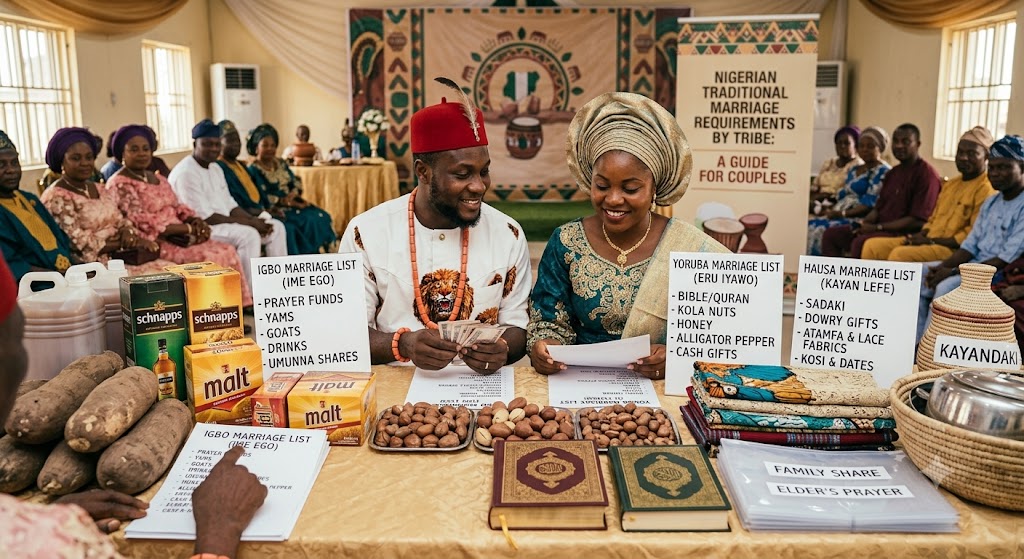
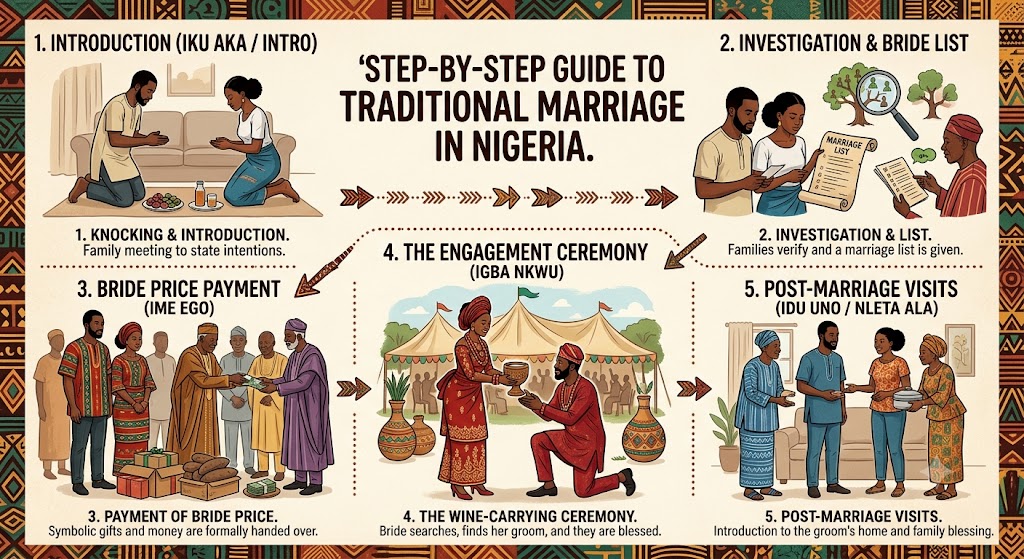
Customary marriages are conducted according to the traditions of specific ethnic groups such as Yoruba, Igbo, Hausa, Tiv, Ijaw, and others.
Features include:
-
Bride price payment
-
Family consent
-
Cultural rites
-
Witnesses from both families
Customary marriages are legally recognized but are not automatically monogamous unless specified.
3. Islamic Marriage (Nikah)
In northern Nigeria and among Muslim communities, marriage is conducted under Islamic principles and governed in some states by Sharia law.
Key features:
-
Marriage contract (Nikah)
-
Payment of Mahr (dowry to bride)
-
Can permit polygamy (up to four wives under Islamic law)
-
Governed by Sharia courts in applicable states
The Marriage Act: Key Legal Provisions
The Marriage Act regulates statutory marriages and includes important provisions:
-
Notice of marriage must be filed at the registry.
-
Notice must be displayed publicly for 21 days.
-
Parties must declare they are not already married.
-
Two witnesses must be present.
-
Marriage must be conducted by a licensed registrar or minister.
If these steps are skipped, the marriage may be declared void.
Legal Age for Marriage in Nigeria
Under the Marriage Act:
-
Minimum marriage age is 18 years.
-
Individuals under 21 may require parental consent.
Nigeria also passed the Child Rights Act, which sets 18 as the legal age of marriage. However, not all states have fully domesticated this Act, creating regional differences in enforcement.
Couples must confirm the legal status in their state before proceeding.
Customary Marriage Laws Explained
Customary law varies by ethnic group, but generally includes:
-
Payment of bride price
-
Family negotiation and consent
-
Community acknowledgment
In most communities:
-
The bride’s consent is required.
-
Marriage becomes valid once bride price is accepted.
-
Divorce is handled under customary courts.
However, customary marriage may allow polygamy unless the parties agree otherwise.
Islamic Marriage (Sharia) Law
Under Sharia:
-
Marriage is a contractual agreement.
-
The groom pays Mahr (financial gift) directly to the bride.
-
Consent of both parties is mandatory.
-
Polygamy is permitted under specific conditions.
Islamic marriages are recognized in Sharia courts in applicable states. However, for federal recognition (e.g., immigration purposes), couples may also register their marriage under civil law.
Polygamy and Its Legal Status
Polygamy in Nigeria depends on the type of marriage:
-
Statutory marriage: strictly monogamous.
-
Customary marriage: may permit polygamy.
-
Islamic marriage: permits up to four wives (subject to conditions).
If someone married under statutory law marries another person, it constitutes bigamy, which is a criminal offense under Nigerian law.
Marriage Registration Requirements
To legally register a statutory marriage, couples must provide:
-
Birth certificates or sworn age declarations
-
Passport photographs
-
Valid identification (National ID, Driver’s License, or International Passport)
-
Proof of bachelorhood/spinsterhood (if required)
-
Divorce decree (if previously married)
-
Death certificate (if widowed)
After completing notice and ceremony, a marriage certificate is issued.
Legal Rights of Married Couples
Marriage creates enforceable rights, including:
-
Right to cohabitation
-
Right to maintenance
-
Right to inheritance
-
Right to joint property claims
-
Custody rights over children
Under statutory marriage, property acquired during marriage may be considered joint property, depending on circumstances.
Divorce and Dissolution Laws
Divorce under statutory marriage is governed by the Matrimonial Causes Act.
Grounds for divorce include:
-
Irretrievable breakdown of marriage
-
Adultery
-
Desertion
-
Cruelty
-
Separation for a specified period
Divorce must be granted by a High Court.
Customary and Islamic divorces are handled in customary or Sharia courts, depending on the marriage type.
Property and Inheritance Rights
Under statutory marriage:
-
Spouses may claim property rights.
-
Wills are respected.
-
Surviving spouse may inherit estate under succession laws.
Under customary law:
-
Inheritance may follow traditional lineage systems.
-
Widows may face cultural inheritance practices depending on region.
Couples are advised to draft wills to avoid disputes.
Marriage Fraud and Void Marriages
A marriage may be declared void if:
-
Either party is already legally married.
-
Consent was obtained through fraud.
-
Parties are within prohibited blood relations.
-
Legal procedures were not followed.
Bigamy is punishable under Nigerian criminal law.
Legal Checklist Before Getting Married in Nigeria
Use this checklist to protect yourself legally:
Before the Wedding
✔ Confirm legal marriage age
✔ Verify both parties are single (or legally divorced/widowed)
✔ Decide the type of marriage (statutory, customary, Islamic)
✔ Obtain parental consent if required
✔ Conduct background verification if necessary
During the Process
✔ File notice of marriage (statutory)
✔ Ensure proper documentation
✔ Have two legal witnesses
✔ Confirm officiant is licensed
After the Wedding
✔ Collect official marriage certificate
✔ Make certified copies
✔ Update legal records (bank, passport, next-of-kin)
✔ Draft a will
✔ Consider prenuptial agreement if needed
Special Considerations for Interfaith and Inter-Ethnic Marriages
Nigeria is religiously and ethnically diverse. Interfaith couples should:
-
Decide which legal system governs their marriage.
-
Clarify children’s religious upbringing.
-
Ensure ceremony complies with chosen legal framework.
Combining customary and statutory marriage is common and offers broader recognition.
Frequently Asked Questions (FAQs)
Is a traditional marriage legally valid in Nigeria?
Yes, customary marriages are legally recognized but are governed by customary law rather than the Marriage Act.
Can I marry under customary law and later do civil marriage?
Yes. Many couples conduct customary rites first and later register statutory marriage.
Is marriage certificate compulsory?
For statutory marriage, yes. It is required for visa processing, international travel, and legal claims.
Can a married person remarry legally?
Only after obtaining a legal divorce or annulment. Otherwise, it is considered bigamy.
Do I need a lawyer before marriage?
Not mandatory, but legal advice is recommended for:
-
Prenuptial agreements
-
Property clarification
-
International marriages
Why Legal Awareness Matters
Many marital disputes in Nigeria arise because couples:
-
Do not understand which law governs their marriage.
-
Fail to register their marriage properly.
-
Do not clarify property ownership.
-
Ignore documentation procedures.
A wedding ceremony does not automatically guarantee legal protection. Compliance with legal procedures does.
Conclusion: Protect Your Marriage Legally
Marriage in Nigeria blends tradition, religion, and law. While cultural celebrations are important, understanding the legal structure of your union is even more critical.
Whether you choose statutory, customary, or Islamic marriage, ensure you follow proper documentation procedures, understand your rights, and protect your future.
A legally sound marriage provides:
-
Security
-
Recognition
-
Protection
-
Peace of mind
Before saying “I do,” make sure you are legally prepared.



.jpg)


Sign in to comment