 Nurturing Marriages, Enriching Families!
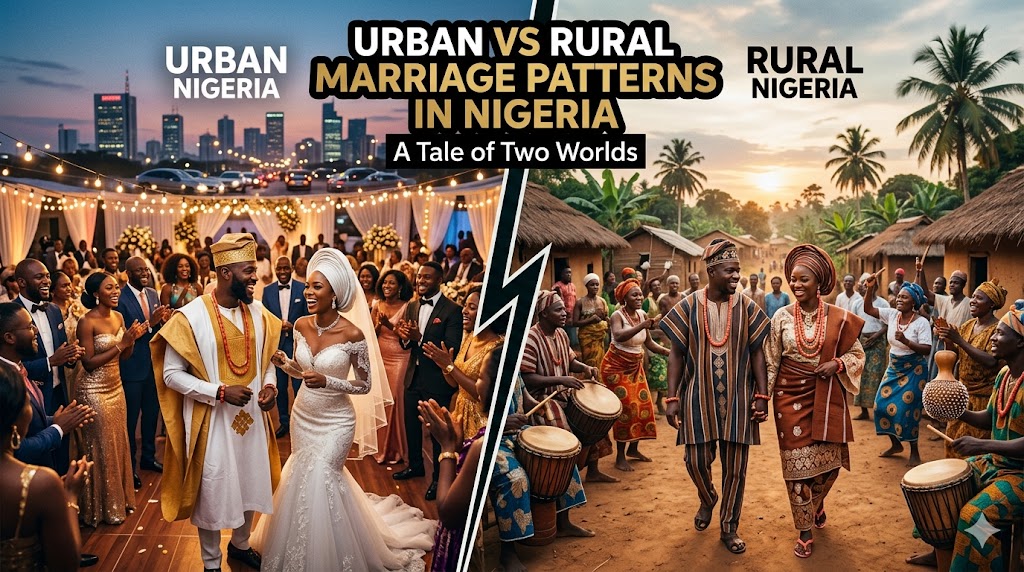
Urban vs Rural Marriage Patterns in Nigeria: A Tale of Two Worlds
Nigeria is a nation of contrasts. In the bustling cities of Lagos, Abuja, and Port Harcourt, young professionals swipe right on dating apps, cohabit for years before engagement, and often marry well into their thirties. Meanwhile, in the quiet villages of Katsina, Imo, or Benue, teenagers become brides, bride price is negotiated under mango trees, and divorce remains a cultural taboo.
These two worlds exist within the same country, yet their marriage patterns could not be more different. The urban Nigerian sees marriage as a deliberate, often delayed, partnership of equals. The rural Nigerian often views marriage as a communal obligation, an economic necessity, and a rite of passage completed before age 22.
This article dissects the chasm between urban and rural marriage patterns in Nigeria—examining causes, consequences, and the slow blurring of lines as rural youth migrate to cities and urban values trickle inward.
Data Snapshot: Urban vs Rural – The Numbers Don’t Lie
| Indicator | Urban Nigeria | Rural Nigeria |
|---|---|---|
| Median age at first marriage (Female) | 26–30 years | 17–20 years |
| Median age at first marriage (Male) | 32–36 years | 22–26 years |
| Percentage of women married by 18 | ~9% | ~43% (UNICEF, 2021) |
| Divorce rate (estimated) | ~12% | ~3–5% (underreported) |
| Prevalence of polygamy | Low (5–8%) | High (35–45%) |
| Use of dating apps/matchmaking platforms | Very high | Very low |
| Average bride price (cash & goods) | ₦3–10 million | ₦500,000 – ₦2 million |
Sources: UNICEF Nigeria Child Marriage Report 2021; Nigeria Demographic and Health Survey (NDHS) 2018; National Bureau of Statistics (NBS) 2022.
The numbers reveal a clear divide. Rural Nigerian girls are more than four times as likely to be married before 18 compared to their urban counterparts. Urban men marry nearly a decade later than rural men. And while divorce is stigmatized everywhere, it is quietly more common in cities, where women have economic independence and legal recourse.
Part 1: Marriage in Rural Nigeria – Tradition Holds Strong
The Communal Wedding
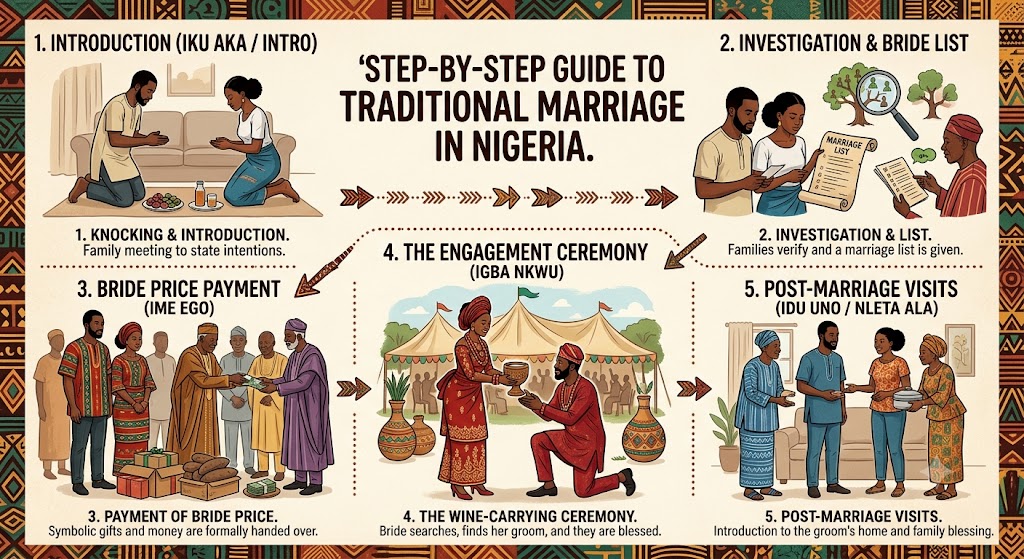
In rural settings—from the rice fields of Ebonyi to the cattle routes of Kaduna—marriage is rarely a private affair. It involves the entire village. The groom’s family visits the bride’s compound. Palm wine flows. Elders bless the union. The couple may not even have met more than a handful of times before betrothal.
Case Study – Hauwa & Idi, 19 & 24 (Rural Jigawa State)
Hauwa was 15 when her father informed her she would marry Idi, a farmer from a neighboring village. She had seen him twice. By 16, she had moved into his mud-brick home. By 18, she had two children. Today at 19, she cannot read or write. “I didn’t choose him, but he is not a bad man. He feeds us. That is marriage here,” she says softly. Idi adds, “A man must marry early. Who will cook? Who will bear my name? My father married my mother when she was 14.”
Key Features of Rural Marriage Patterns
1. Early Marriage as Default
In rural Nigeria, a girl remaining unmarried past 20 is considered a social anomaly. Parents fear “spoilage” (pregnancy out of wedlock) and welcome suitors early. The Child Rights Act (2003) is rarely enforced in these areas.
2. Bride Price – Economic Transaction, Not Romance
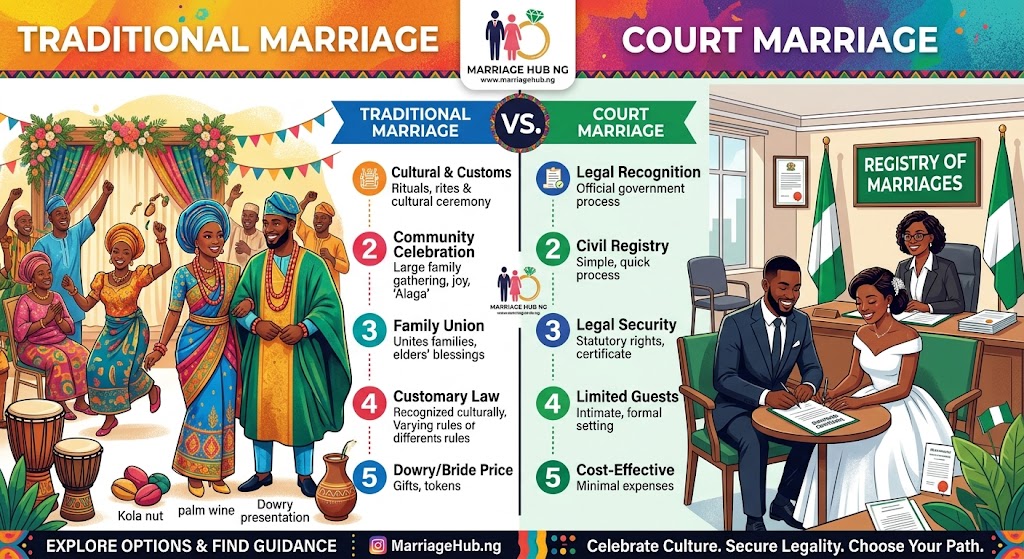
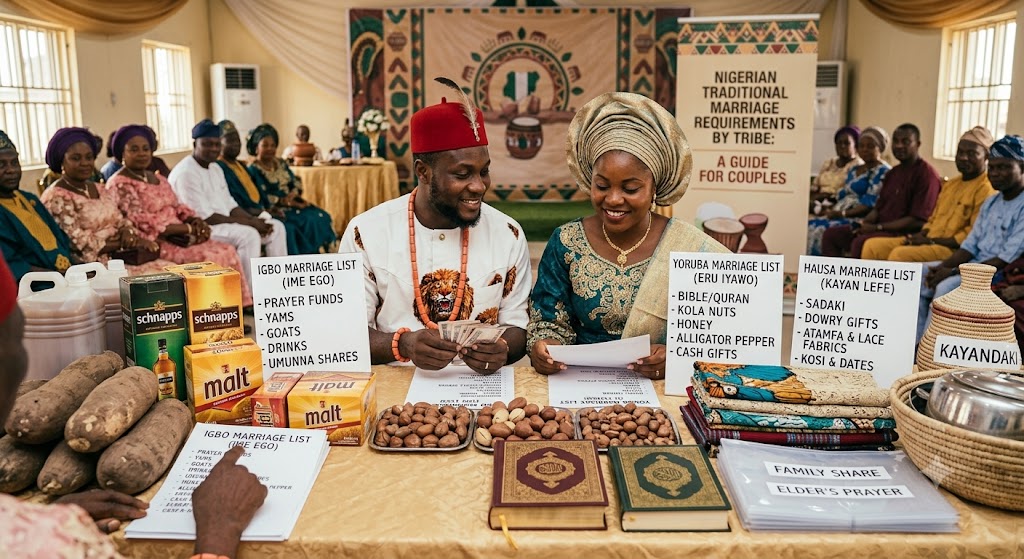
Bride price (sadaki in Hausa, Iwu aka in Igbo, oriya in Yoruba) is lower in rural areas but still significant. It often includes goats, yams, cash, and even farm tools. This payment creates a sense of ownership and reduces the wife’s likelihood of leaving.
3. Polygamy as Prestige
In rural Muslim-majority north and parts of the south-south, multiple wives are common. A man with four wives and twenty children is seen as blessed. Land is cheap, and more children mean more farm laborers.
4. Low Access to Family Planning
Rural women have minimal access to contraceptives. Consequently, they average 6–8 children, compared to 3–4 in urban areas. Early marriage plus no birth control equals rapid population growth.
Real-life Insight – Pastor Emmanuel, Rural Benue: “In my village, if a girl is not married by 20, people ask, ‘Is something wrong with her?’ We don’t understand ‘career women’ here. Women farm, cook, bear children. That is God’s design. But I admit, we see many young mothers dying in childbirth because their bodies are not ready.”
Challenges of Rural Marriage Patterns
-
High maternal mortality due to teenage pregnancy and lack of healthcare.
-
High school dropout rates for girls (only 25% of rural girls complete secondary education).
-
Domestic violence often accepted as “discipline.”
-
Limited economic mobility – women rarely own land or businesses.
Part 2: Marriage in Urban Nigeria – Modernity Redefines the Union
The Intentional, Delayed, and Expensive Wedding
Step into any urban center—Lagos Island, Garki Abuja, or GRA Port Harcourt—and the marriage story flips. Here, a 28-year-old single woman is not a tragedy but a professional. A 35-year-old bachelor is not a failure but a man “building his empire.” Weddings are Instagram-magnificent, with customized Aso-ebi, drone videography, and guest lists numbering 1,000+.
Case Study – Temi & Deji, 32 & 35 (Lagos)
Temi and Deji met at a coworking space in Yaba. They dated for three years, lived separately, attended premarital counseling, and jointly saved ₦7 million for their 2023 wedding. Temi is a marketing manager. Deji is a product designer. “We waited until we both had stable incomes and emotional maturity. My mother married at 19 and was divorced by 30. I refused to repeat her story,” Temi explains. Deji adds, “Rent in Lagos alone is a reason to delay marriage. We wanted our own apartment before saying ‘I do.’”
Key Features of Urban Marriage Patterns
1. Delayed Marriage (30+ for women, 35+ for men)
Education, career, and the high cost of living push marriage far into adulthood. Many urban women now freeze their eggs or consider adoption.
2. Dating Apps & Digital Matchmaking
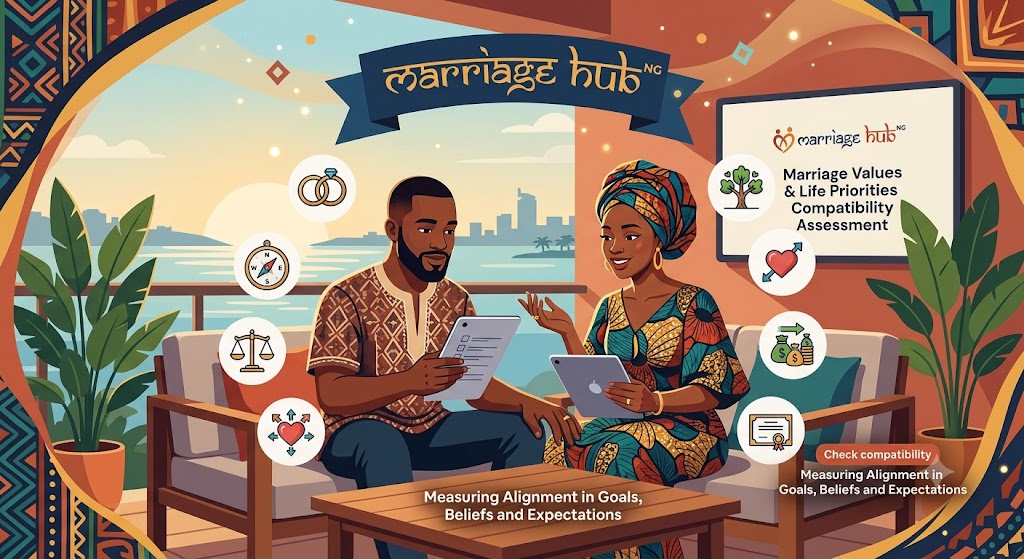
Tinder, Bumble, and local platforms like MarriageHub.ng have replaced the traditional “aunty introducer.” People filter partners by career, faith, and even net worth before a first date.
3. Dual-Income Families as Norm
Gone are the days of the single breadwinner. Urban couples pool resources for rent, school fees, and even investments. The modern Nigerian wife often out-earns her husband.
4. Rising Acceptance of Divorce
While still stigmatized, divorce in cities is no longer a life sentence. Women like Toke Makinwa and E-Money’s ex-wife have normalized leaving unhappy unions.
5. Smaller Family Sizes
Urban couples average 2–3 children due to the high cost of living, access to contraception, and women’s career ambitions.
Challenges of Urban Marriage Patterns
-
Financial pressure to host lavish weddings – many couples start marriage in debt.
-
Infidelity & “side chic” culture – anonymity of cities enables extramarital affairs.
-
Delayed childbearing – fertility issues and expensive IVF treatments.
-
Loneliness & mental health strain – nuclear family structure lacks rural communal support.
Real-life Insight – Dr. Funmi Adebayo, Psychologist, Abuja:
“Urban couples have more resources but less resilience. In the village, when a marriage shakes, the whole community intervenes. Here in the city, you suffer in silence behind soundproof walls. I see many urban professionals in their 40s who are wealthy, married, and deeply unhappy because they married for status, not compatibility.”
Part 3: Why the Gap Exists – Structural Drivers
| Factor | Rural Nigeria | Urban Nigeria |
|---|---|---|
| Education level | Low (primary or none) | High (tertiary education common) |
| Economic activity | Farming, trading | Corporate, tech, services |
| Religion & culture | Conservative, patriarchal | Liberal, individualistic |
| Access to media | Limited TV/radio | Smartphones, social media |
| Legal awareness | Low | High |
| Cost of living | Low | Very high |
The single biggest driver is education. A UNESCO 2022 report found that for every additional year of secondary schooling a Nigerian girl receives, her likelihood of marrying before 18 drops by 11%. Urban girls attend university; rural girls attend the marriage bed.
Part 4: The Blurring Line – Rural-to-Urban Migration & Reverse Influence
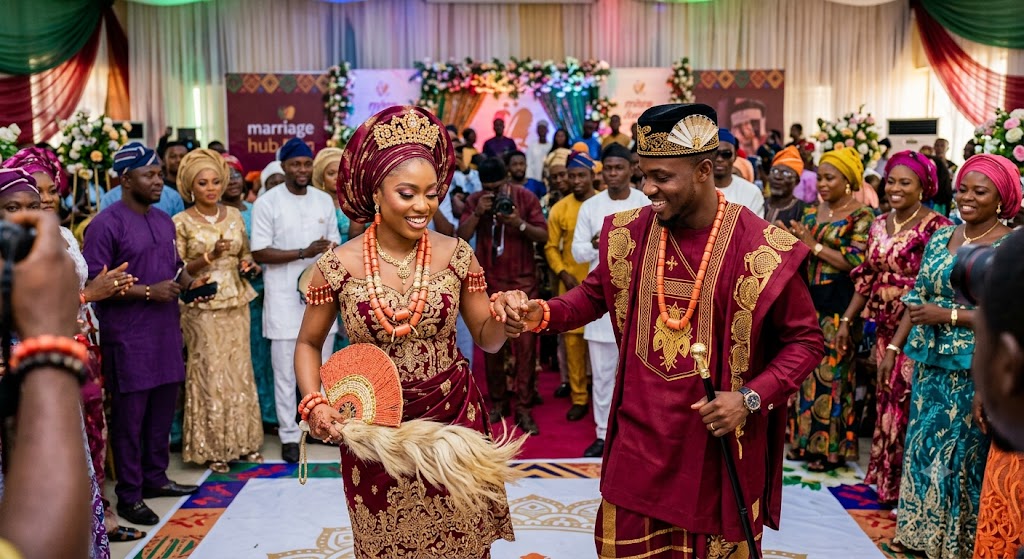
Nigeria is rapidly urbanizing. Over 54% of Nigerians will live in cities by 2030 (World Bank). As rural youth migrate to cities for work or university, they absorb urban dating norms. They return home for Christmas with city partners, expecting modern weddings. Villages now see “traditional marriages” hybridized with white gowns, cake cutting, and even bridal showers.
Case Study – Ezinne’s Hybrid Wedding (Rural Enugu + Urban Abuja)
Ezinne (29, Abuja banker) married Chukwudi (32, Lagos engineer) in her ancestral village in Enugu State. The week included a traditional Igbo wine-carrying ceremony, a white wedding in the local Anglican church, and a reception with a live DJ and Instagram photo booth. Her 70-year-old grandmother initially objected to the dancing and champagne but later joined the fun. “The youths have changed marriage,” Grandma admitted. “But at least she married an Igbo man. That is what matters.”
Emerging Trends
-
Semi-urban marriages – towns like Abeokuta, Onitsha, and Kaduna now blend both patterns.
-
Social media exposure – rural youth see urban weddings online and demand upgrades.
-
Return of “village weddings” for cost savings – some urban couples now deliberately marry in rural areas to reduce expenses.
Part 5: Implications for Nigerian Society
Positive Implications
-
Diversity of choice – Nigerians can now select marriage models that fit their values.
-
Rural adoption of family planning – slowly spreading via urban-educated daughters.
-
Economic empowerment of rural women – microloans and cooperatives are changing dynamics.
Negative Implications
-
Erosion of rural kinship structures – young people leaving villages weakens family support systems.
-
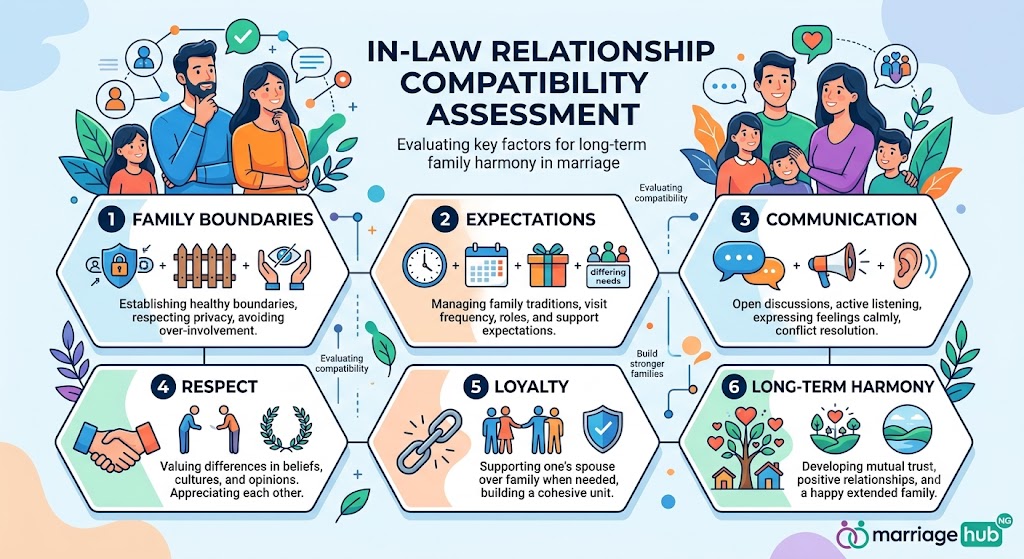
Cultural clash – urban-educated spouses struggle to adapt to rural in-law expectations.
-
Rising rural single motherhood – some rural men migrate to cities and never return, leaving wives behind.
Part 6: Real-Life Insights – Voices from Both Sides
Mrs. Grace Okonkwo, 58, Rural Anambra (Mother of eight): “In my time, marriage was simple. If a man had a farm and a roof, you married him. Today, my daughter in Lagos is 34 and still ‘searching.’ She wants a man who prays, runs a business, cooks, and looks like a movie star. I tell her, ‘My child, you will wait forever.’ But she says, ‘Mama, I would rather be single than settle.’ I don’t understand this generation.”
Mr. Michael Ogunleye, 41, Surulere, Lagos (Bachelor): “I am from Ogun State village. When I go home for Christmas, my uncles ask, ‘Where is your wife?’ Some cousins my age have four children already. But in Lagos, I am still ‘young.’ I am dating intentionally. I want a woman who understands that rent in Lagos is ₦2 million per year. My village mind says marry early. My city mind says build first. It is a war inside me.”
Urban and rural marriage patterns in Nigeria are not just different—they are pulling the nation in opposite directions. The rural model prioritizes tradition, early childbearing, and community. The urban model exalts individualism, delayed commitment, and financial parity. Neither is perfect.
Rural marriage protects against loneliness and secures lineage but often at the cost of girls’ education and health. Urban marriage offers freedom and partnership but risks loneliness, fertility struggles, and immense financial pressure.
The future likely lies in convergence. As roads, internet, and education reach the countryside, and as urban Nigerians rediscover the value of community, a blended marriage culture may emerge—one where age is flexible, love is intentional, and location no longer dictates destiny.
For now, whether you marry under a thatched roof or a chandelier-lit hall, the core ingredients remain: respect, communication, and shared vision.
Join the Conversation & Take Action
No matter where you are—city or village—you deserve a marriage built on understanding, not pressure. MarriageHub.ng is Nigeria’s fastest-growing platform for intentional singles and couples.
-
Find your tribe – Join existing groups by location, profession, or interest: 👉 Join Groups/Tribes on MarriageHub.ng
-
Lead your own community – Create a group for urban professionals, rural brides, or inter-cultural couples: 👉 Create Your Own Group
-
Get marriage-ready – Purchase e-books, wedding planners, relationship courses, and professional matchmaking services: 👉 Shop Products, Services & Downloads
Bridging the urban-rural marriage divide starts with conversation. Join today.
Follow MarriageHub Nigeria on Social Media
Stay connected for daily relationship advice, success stories, live Q&As, and updates tailored to Nigerians everywhere:
-
WhatsApp Channel: https://whatsapp.com/channel/0029VbCav9MCcW4pw3GSM72w
-
X (formerly Twitter): https://x.com/MarriageHubNG
-
Instagram: https://www.instagram.com/marriagehubng3
Join thousands of Nigerians choosing intentional love—whether in the village or the city. Your story starts here.
Marriage patterns may differ from urban skyscrapers to rural farmlands, but the hunger for genuine connection is the same. Respect your context, learn from the other, and build a love that transcends geography.




.jpg)

Sign in to comment