 Nurturing Marriages, Enriching Families!
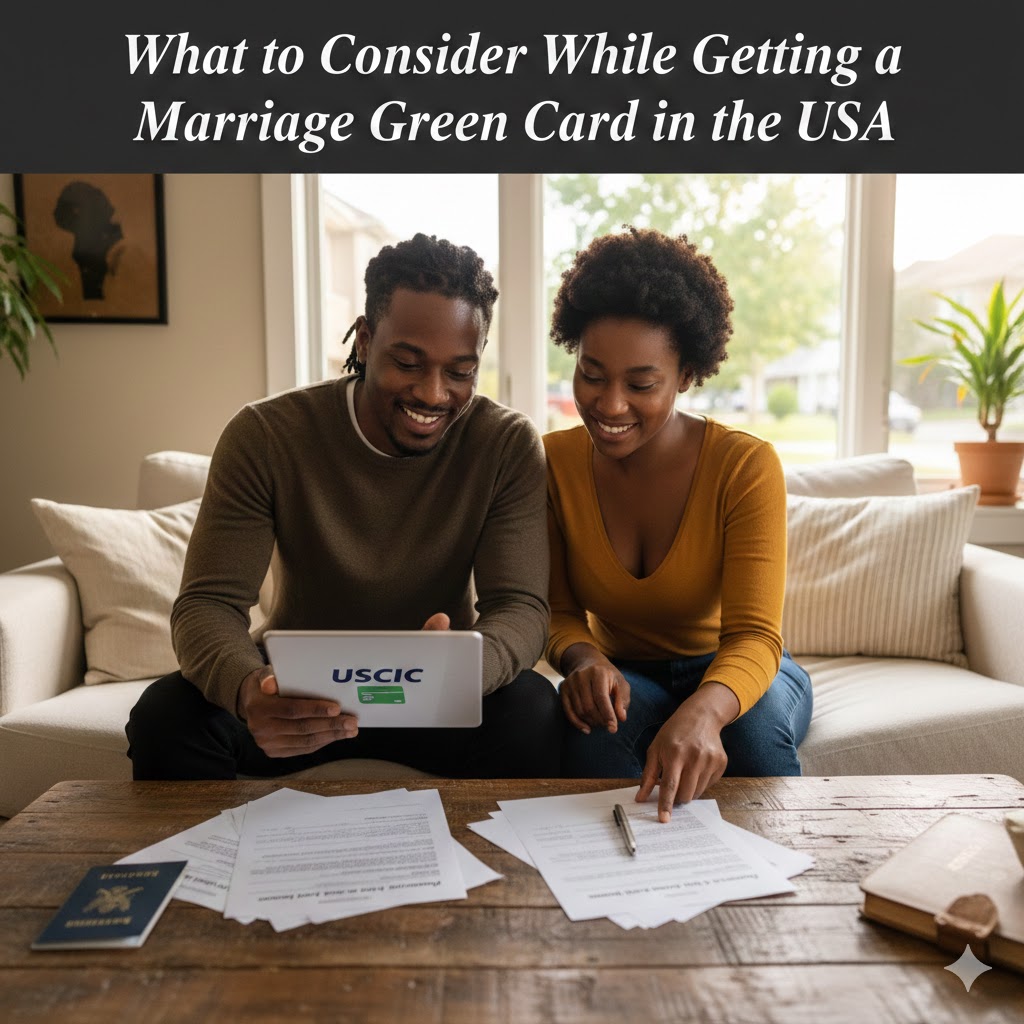
What to Consider While Getting a Marriage Green Card in the USA
Obtaining a marriage-based green card is one of the most common pathways to permanent residency in the United States. While the process may appear straightforward—marry a U.S. citizen or lawful permanent resident and apply—it involves multiple legal, financial, and procedural steps that require careful attention.
If you are planning to apply for a marriage green card, understanding the requirements, timelines, costs, and potential challenges can help you avoid costly mistakes and delays. This guide outlines everything you should consider while getting a marriage green card in the USA.
1. Understanding What a Marriage Green Card Is
A marriage green card allows the spouse of a U.S. citizen or lawful permanent resident (green card holder) to live and work permanently in the United States. Once approved, the foreign spouse becomes a lawful permanent resident.
There are two main categories:
-
Immediate Relative (IR1/CR1) – For spouses of U.S. citizens
-
Family Preference (F2A) – For spouses of lawful permanent residents
Spouses of U.S. citizens generally receive faster processing because there is no annual cap on immediate relative visas. In contrast, spouses of green card holders may experience waiting periods due to visa quotas.
2. Your Spouse’s Immigration Status Matters
One of the first things to consider is whether your spouse is:
-
A U.S. citizen
-
A lawful permanent resident
This distinction significantly affects processing time and eligibility.
For example:
-
If married to a U.S. citizen, you may be eligible to apply for adjustment of status immediately (if inside the U.S.).
-
If married to a green card holder, you may need to wait for a visa number to become available before moving forward.
Understanding your spouse’s immigration category will help you estimate timelines and determine the right application path.
3. Adjustment of Status vs. Consular Processing
There are two primary ways to obtain a marriage-based green card:
Adjustment of Status (AOS)
This option is for applicants who are already legally present in the United States. You file the necessary forms and attend your interview within the U.S.
Benefits:
-
You may apply for a work permit (EAD).
-
You may apply for advance parole (travel permission).
-
You can remain in the U.S. while your case is pending.
Consular Processing
This option applies if you are outside the United States. You will complete processing through a U.S. embassy or consulate in your home country.
Things to consider:
-
Travel restrictions
-
Interview scheduling delays
-
Potential administrative processing
Choosing the correct path depends on your current location and immigration history.
4. Proving a Bona Fide Marriage
One of the most important aspects of a marriage green card application is proving that your marriage is genuine and not entered into solely for immigration purposes.
U.S. Citizenship and Immigration Services (USCIS) requires evidence that your relationship is legitimate. Examples include:
-
Joint bank account statements
-
Lease or mortgage documents showing shared residence
-
Utility bills in both names
-
Photos together over time
-
Travel records
-
Affidavits from friends and family
-
Joint insurance policies
-
Tax returns filed together
The stronger your documentation, the smoother your interview process is likely to be.
5. The Marriage Green Card Interview
Nearly all applicants must attend an in-person interview with USCIS or a consular officer. During the interview, you and your spouse may be asked questions about:
-
How you met
-
Your daily routines
-
Important dates
-
Family members
-
Living arrangements
In some cases, couples may be separated and asked similar questions to verify consistency. This is often called a “Stokes interview.”
Preparation is key. Review your forms together and ensure your answers align with the information submitted in your application.
6. Conditional vs. Permanent Green Card
If your marriage is less than two years old at the time your green card is approved, you will receive a conditional green card, valid for two years.
Before it expires, you must file Form I-751 to remove the conditions and prove your marriage is still valid.
If your marriage is more than two years old at approval, you will receive a 10-year permanent green card.
Failing to remove conditions on time can result in loss of status, so mark important deadlines carefully.
7. Financial Requirements: The Affidavit of Support
Your spouse must demonstrate the ability to financially support you by submitting Form I-864 (Affidavit of Support).
Key considerations:
-
The sponsor must earn at least 125% of the Federal Poverty Guidelines.
-
If income is insufficient, a joint sponsor may be required.
-
Tax returns, W-2 forms, and pay stubs are typically requested.
The financial sponsorship is a legally binding commitment. Your spouse agrees to support you financially if necessary until you become a U.S. citizen, work 40 qualifying quarters, or leave the U.S. permanently.
8. Application Costs and Fees
Applying for a marriage green card can be expensive. Costs may include:
-
Form I-130 filing fee
-
Form I-485 (if adjusting status)
-
Biometrics fee
-
Medical examination fee
-
Affidavit of Support processing fee
-
Visa application fee (for consular processing)
Additional expenses may include attorney fees, translation services, and document certification costs.
Budgeting properly is important to avoid delays due to incomplete payments.
9. Processing Times and Delays
Marriage green card processing times vary widely depending on:
-
USCIS workload
-
Your location
-
Your spouse’s immigration status
-
Whether you’re adjusting status or going through consular processing
Processing can take anywhere from 8 months to over 2 years.
Factors that may cause delays include:
-
Requests for Evidence (RFEs)
-
Background checks
-
Missing documentation
-
Interview backlogs
Checking USCIS case status updates regularly can help you stay informed.
10. Immigration Violations and Past Issues
Your immigration history plays a major role in your eligibility.
Issues that could complicate your application include:
-
Overstaying a visa
-
Unauthorized employment
-
Prior deportation orders
-
Criminal records
-
Immigration fraud
Some violations may be forgiven when married to a U.S. citizen, but others may require waivers. Consulting an immigration attorney is highly recommended if you have a complex case.
11. Travel Restrictions While Your Case Is Pending
If you apply through adjustment of status and leave the U.S. without advance parole, your application could be considered abandoned.
Always apply for advance parole before traveling internationally while your green card application is pending.
If you’re using consular processing, be aware of:
-
Interview scheduling delays
-
Potential visa issuance wait times
Planning ahead reduces stress and unexpected complications.
12. Working While Waiting
Adjustment of status applicants may apply for a work permit (Employment Authorization Document or EAD).
However:
-
It can take several months to receive.
-
You cannot legally work until it is approved (unless you already have valid work authorization).
Planning financially during this waiting period is essential.
13. The Impact of Divorce or Separation
If your marriage ends before your green card is approved, your case may be denied.
If you have a conditional green card and divorce occurs before removing conditions, you may still apply for a waiver of the joint filing requirement—but you must prove the marriage was entered into in good faith.
This area is legally complex and often requires professional guidance.
14. When to Hire an Immigration Attorney
While many couples successfully apply on their own, hiring an attorney may be wise if:
-
You have prior immigration violations
-
There is a significant age difference
-
There are cultural or language barriers
-
You have criminal history
-
You’ve received a Request for Evidence
An experienced attorney can help prevent costly mistakes and reduce stress.
15. Long-Term Considerations: Citizenship
After obtaining a marriage-based green card, you may become eligible for U.S. citizenship:
-
After 3 years if married to and living with a U.S. citizen
-
After 5 years if applying under general naturalization rules
Maintaining continuous residence, physical presence, and good moral character is essential.
Final Thoughts
Getting a marriage green card in the USA is a life-changing milestone, but it requires careful preparation and honest documentation. From proving a bona fide marriage to meeting financial requirements and attending interviews, every step matters.
The most important things to consider include:
-
Your spouse’s immigration status
-
Your location (inside or outside the U.S.)
-
Proper documentation
-
Financial eligibility
-
Processing timelines
-
Potential immigration complications
By understanding the process thoroughly and staying organized, you can significantly improve your chances of a smooth approval.
If your case involves legal complexities, consulting a qualified immigration attorney can provide clarity and peace of mind.






.jpg)

Sign in to comment