 Nurturing Marriages, Enriching Families!
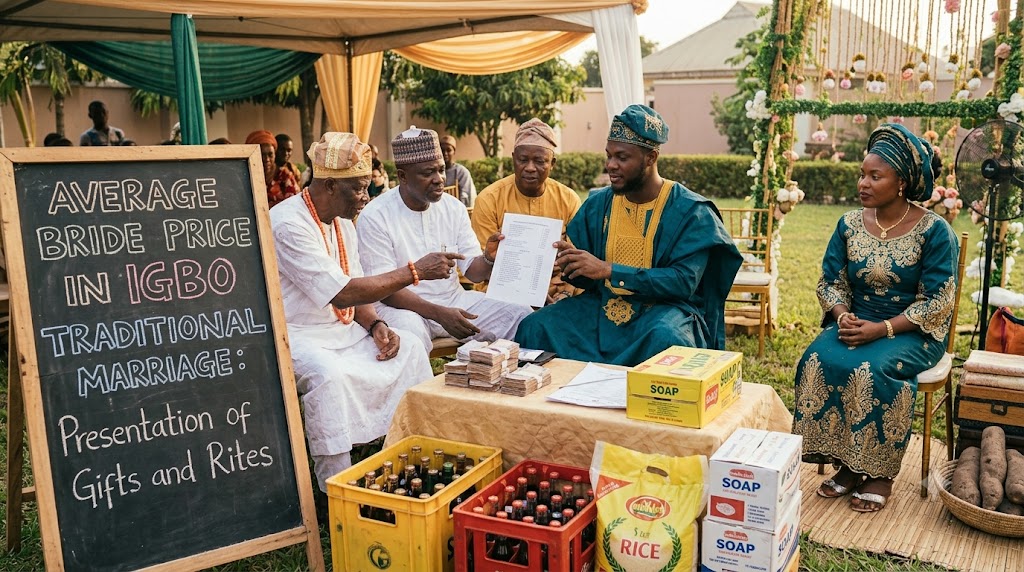
Average Bride Price in Igbo Traditional Marriage (2026): Costs, Customs, State-by-State Variations and What Couples Should Expect
One of the most frequently asked questions by intending couples in Nigeria is, "How much is the average bride price in an Igbo traditional marriage?" The answer is not as straightforward as many people expect because bride price among the Igbo is not a fixed amount. It varies from one community to another, from one family to another, and is influenced by culture, education, family traditions, and local customs.
Contrary to popular belief, the actual bride price paid to the bride's parents is often relatively modest. What usually makes an Igbo traditional marriage expensive is not the bride price itself but the numerous traditional requirements, gifts, drinks, food items, and ceremonial expenses expected during the marriage rites.
Across the five South-East states—Abia, Anambra, Ebonyi, Enugu, and Imo—as well as Igbo communities in Delta and Rivers States, bride price traditions remain an important cultural institution that symbolizes appreciation, respect, and the formal union of two families rather than the purchase of a bride.
This comprehensive guide explains the average bride price in Igbo traditional marriage, factors affecting the amount, state-by-state differences, hidden costs, practical budgeting tips, and what intending couples should realistically expect in 2026.
What Is Bride Price in Igbo Culture?
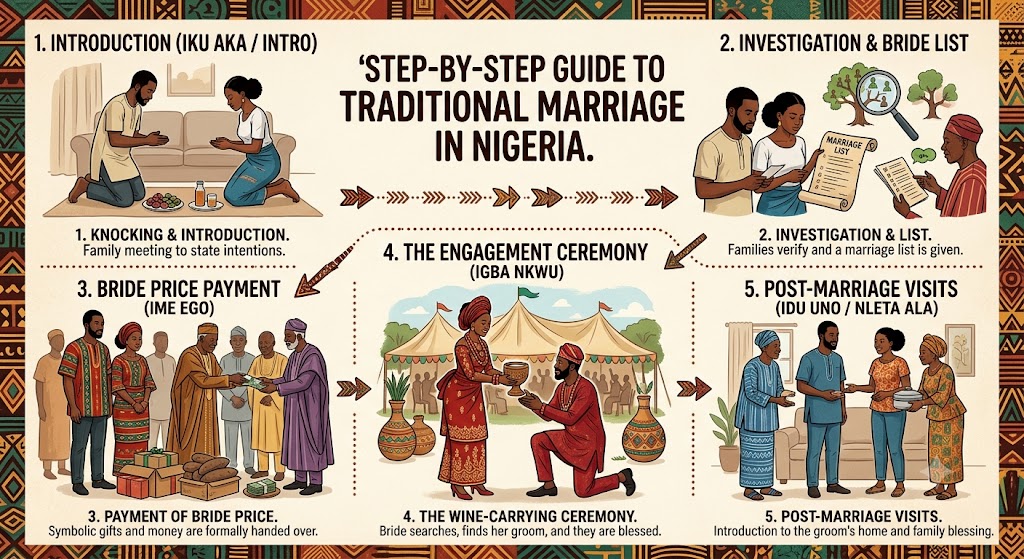
Bride price, commonly referred to as "Ime Ego," "Ime Nkwu," "Bride Wealth," or "Bride Price Payment," is the symbolic payment made by the groom's family to the bride's family during the traditional marriage ceremony.
Historically, the practice represented appreciation to the bride's parents for raising their daughter and demonstrated the groom's commitment to taking responsibility for his future wife. It also signified the formal acceptance of the marriage by both extended families.
Contrary to misconceptions, traditional Igbo culture does not regard bride price as the sale of a woman. Instead, it serves as a cultural seal that legitimizes the marriage under customary law.
Average Bride Price in Igbo Traditional Marriage
Based on interviews with traditional marriage planners, cultural associations, event vendors, and recent traditional marriage ceremonies across the South-East, the actual cash bride price paid to the bride's family generally ranges between ₦10,000 and ₦150,000.
In many communities, however, the official bride price itself is surprisingly low, sometimes as little as ₦1,000 to ₦20,000, because it is intentionally kept symbolic. Families often emphasize that the value of their daughter cannot be measured in money.
When all customary payments, gifts, drinks, ceremonial items, family lists, transportation, entertainment, and event-related obligations are included, the total traditional marriage expenditure typically ranges from ₦800,000 to over ₦5 million, depending on the family's expectations and the scale of the ceremony.
For upper-income families and elaborate traditional weddings held in major cities such as Lagos, Abuja, Enugu, Owerri, Awka, Aba, and Port Harcourt, the overall cost may exceed ₦10 million.
State-by-State Variations in Bride Price
Bride price customs differ considerably across Igbo-speaking communities.
In Anambra State, many communities maintain relatively modest official bride prices but often have extensive traditional lists containing drinks, wrappers, livestock, and gifts for extended family members.
In Imo State, traditional marriage ceremonies are known for elaborate family introductions and cultural rites. While the official bride price remains symbolic, the accompanying customary list can substantially increase the total cost.
Communities in Abia State generally follow similar traditions, although some families have simplified marriage requirements to reduce financial pressure on intending couples.
In Enugu State, customary expectations differ from one local government area to another. Some communities place greater emphasis on symbolic payments than expensive material requirements.
Among many communities in Ebonyi State, traditional marriage customs remain deeply rooted in local traditions, with bride price calculations often reflecting longstanding family practices rather than modern financial expectations.
Igbo communities living in Delta and Rivers States also preserve similar traditions while incorporating local cultural influences.
What Determines the Bride Price?
Several factors influence the amount ultimately paid during an Igbo traditional marriage.
Family tradition remains one of the strongest determinants. Some families simply inherit marriage customs from previous generations without making significant changes.
Community customs also play an important role because every village or town may maintain slightly different marriage requirements.
Educational background occasionally influences expectations, although many educated families deliberately reduce financial demands to encourage marriage rather than discourage it.
The family's social status, local economic conditions, and the scale of the intended traditional wedding may also affect the overall expenses associated with the ceremony.
Importantly, many modern Igbo families have intentionally reduced bride price demands in recognition of current economic realities affecting young Nigerians.
The Hidden Costs Beyond Bride Price
One of the biggest surprises for intending grooms is discovering that the bride price itself often represents only a small fraction of the total traditional marriage budget.
Many traditional marriage lists include cartons of malt and soft drinks, bottles of wine and spirits where culturally acceptable, tubers of yam, bags of rice, salt, palm oil, goats, wrappers for the bride's mother, clothing materials for family members, kola nuts, alligator pepper, and numerous symbolic gifts.
Additional expenses frequently include transportation for family members, traditional musicians, decoration, catering, photography, videography, souvenirs, security, canopies, chairs, master of ceremonies, cultural dancers, and accommodation for visiting relatives.
Consequently, a groom who budgets only for the bride price may find himself financially unprepared for the broader traditional marriage obligations.
Real-Life Case Study: A Marriage in Enugu
Chinedu, a software engineer based in Lagos, planned to marry his fiancée from Enugu State.
Initially, he expected the bride price to cost nearly ₦1 million because of stories he had heard online.
To his surprise, the official bride price requested by the bride's family was only ₦20,000.
However, after fulfilling the traditional list, purchasing drinks, providing wrappers, paying for transportation, organizing entertainment, and hosting guests, the total traditional marriage expenditure reached approximately ₦2.4 million.
Reflecting on the experience, Chinedu explained that the bride price itself was never the financial challenge. The surrounding cultural obligations accounted for nearly all the expenses.
Real-Life Case Study: A Simplified Traditional Marriage in Abia
Ada and Emeka wanted a modest wedding because they hoped to use their savings as the down payment for a new home.
After discussions between both families, many ceremonial requirements were simplified while preserving the essential cultural rites.
The official bride price remained symbolic, and unnecessary expenses were removed from the traditional list.
Their entire traditional marriage cost just under ₦1.1 million, allowing them to begin married life with significantly less financial pressure.
Their experience reflects a growing trend among many younger Igbo families who prefer simpler ceremonies that prioritize the marriage itself over extravagant celebrations.
Modern Trends in Igbo Bride Price
Over the past decade, several noticeable changes have emerged in traditional marriage practices.
Many educated families now intentionally reduce excessive marriage lists to encourage young people to marry rather than postpone marriage because of financial constraints.
Some communities have introduced standardized bride price guidelines to discourage exploitation.
Religious leaders, marriage counsellors, and community elders increasingly advocate symbolic bride price payments while encouraging families to avoid commercializing marriage.
Urban families are also more willing to negotiate certain traditional requirements provided that cultural respect is maintained throughout the process.
These developments have helped preserve important traditions while adapting to today's economic realities.
Common Misconceptions About Igbo Bride Price
One common misconception is that every Igbo bride costs millions of naira. In reality, the official bride price is often relatively small.
Another misconception is that highly educated women automatically attract higher bride prices. While some families may consider educational achievements during marriage discussions, many deliberately avoid linking education to monetary demands.
Some people also believe that the groom negotiates directly with the bride's father. In practice, traditional marriage negotiations usually involve representatives from both extended families who ensure that discussions remain respectful and culturally appropriate.
There is also a misconception that expensive bride prices produce happier marriages. Research and counselling experience consistently show that successful marriages depend far more on communication, respect, financial planning, emotional maturity, and shared values than on the amount paid during the traditional ceremony.
Practical Budgeting Tips for Intending Couples
Couples planning an Igbo traditional marriage should begin financial planning several months before the ceremony. Early discussions with both families help clarify expectations and prevent last-minute surprises.
Requesting the traditional marriage list early provides sufficient time to prepare financially. Couples should also distinguish between compulsory customary requirements and optional ceremonial expenses.
Many successful couples prepare a realistic budget that covers bride price, traditional items, venue decoration, feeding, photography, transportation, accommodation, and contingency expenses. Maintaining open communication between both families often helps eliminate unnecessary costs while preserving important cultural traditions.
Where financial challenges exist, respectful dialogue usually produces mutually acceptable solutions that honour tradition without placing excessive burdens on the intending couple.
Preserving Culture Without Commercialising Marriage
Bride price remains one of the most cherished aspects of Igbo cultural heritage. It symbolizes gratitude, family unity, and community recognition of marriage. However, many cultural leaders have expressed concern that excessive financial demands discourage marriage among young people.
As Nigeria continues to experience rising inflation and economic uncertainty, increasing numbers of families now recognise the importance of maintaining symbolic bride price traditions while avoiding unrealistic financial expectations.
The ultimate purpose of traditional marriage is not to enrich one family at the expense of another but to unite two families in love, mutual respect, and lifelong commitment.
Final Thoughts
The average bride price in Igbo traditional marriage is far lower than many people imagine. While the symbolic cash payment often ranges between ₦10,000 and ₦150,000—and may even be much lower in some communities—the broader traditional marriage expenses can range from ₦800,000 to over ₦5 million depending on family expectations, cultural practices, and the size of the celebration.
Rather than focusing solely on the amount to be paid, intending couples should prioritise understanding each other's family traditions, communicating openly about financial expectations, and planning responsibly. The strongest marriages are built not on extravagant ceremonies but on love, trust, respect, shared values, and a commitment to building a successful life together.
If you are preparing for marriage or planning your traditional wedding, MarriageHub.ng provides practical resources designed to help Nigerian singles and couples make informed relationship decisions.
Take the Marriage Readiness Test to assess your compatibility and preparedness for marriage by visiting https://www.marriagehub.ng/analyzer/index.php.
If you have confidential relationship concerns, you can ask anonymous questions and receive helpful guidance at https://www.marriagehub.ng/questions-answers.
Planning a wedding or traditional marriage ceremony? Create a beautiful E-Invite for your event at https://www.marriagehub.ng/annouce-my-event/.
If you're searching for your future spouse, discover compatible matches through https://www.marriagehub.ng/match-making/frontend/discover.php.
You can also browse trusted wedding vendors for photography, decoration, catering, makeup, event planning, fashion, and more at https://www.marriagehub.ng/vendors.
Become part of a thriving relationship community by joining existing groups and tribes at https://www.marriagehub.ng/all-groups, or create your own community at https://www.marriagehub.ng/create-tribes-group.
Visit the MarriageHub Marketplace at https://www.marriagehub.ng/marketplace to purchase relationship resources, wedding products, professional services, counselling materials, digital downloads, and other useful items.
Stay connected with MarriageHub Nigeria on WhatsApp: https://whatsapp.com/channel/0029VbCav9MCcW4pw3GSM72w, X: https://x.com/MarriageHubNG, Facebook: https://web.facebook.com/MarriageHubNigeria, and Instagram: https://www.instagram.com/marriagehubng3.



.jpg)
Sign in to comment