 Nurturing Marriages, Enriching Families!
Bride Price in Hausa Marriage Traditions: Meaning, Process, Cultural Significance and Modern Practices in Nigeria
Marriage is one of the most respected institutions in Hausa society, serving not only as a union between a man and a woman but also as an alliance between two families and, in many cases, entire communities. Across Northern Nigeria, where the Hausa are one of the country's largest ethnic groups, marriage ceremonies are deeply rooted in Islamic teachings, cultural traditions, and family values that have been preserved for centuries.
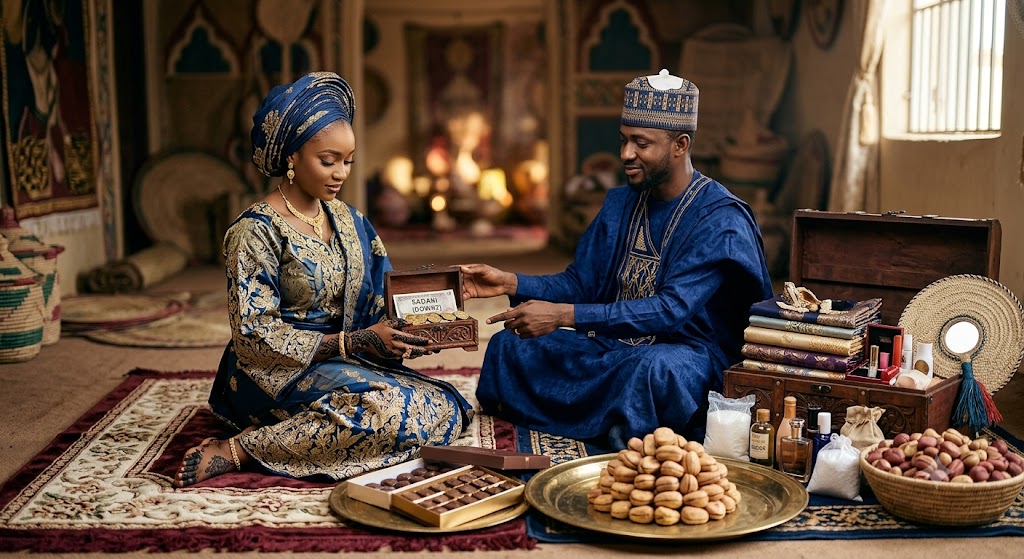
One of the most important aspects of a traditional Hausa marriage is the bride price. Commonly associated with the Islamic concept of Sadaki (Sadaq), the bride price represents far more than a financial transaction. It is a symbolic gift from the groom to the bride that signifies commitment, responsibility, respect, and readiness for married life. Unlike popular misconceptions, the bride price does not imply the purchase of a wife. Instead, it is a compulsory marital gift prescribed in Islamic law and embraced within Hausa culture as a sign of honour for the bride.
In this comprehensive guide, we explore the meaning of bride price in Hausa marriage traditions, how it is determined, what it includes, the stages involved, regional variations across Northern Nigeria, modern trends, common misconceptions, and practical advice for couples planning a Hausa wedding.
Understanding Bride Price in Hausa Culture
In Hausa culture, the bride price is commonly referred to as Sadaki, a term derived from the Arabic word Sadaq or Mahr. Under Islamic law, the Sadaki is a mandatory gift that belongs exclusively to the bride. It is not paid to her parents as compensation for raising her, nor is it intended to enrich her family. Rather, it is a personal gift from the groom that becomes the bride's property and serves as an expression of respect, sincerity, and commitment.
The Holy Qur'an instructs Muslim men to give their wives their bridal gifts willingly and with good intention. As a result, the payment of Sadaki forms an essential requirement for a valid Islamic marriage (Nikah). Hausa traditions have incorporated this Islamic principle while also preserving local customs that celebrate family unity and community participation.
The Cultural Importance of Bride Price
Within Hausa society, bride price carries deep cultural and spiritual significance. It demonstrates that the groom is prepared to assume the responsibilities of marriage, including providing for his wife and future family. It also publicly affirms the bride's dignity and value within the community.
The payment of Sadaki strengthens the relationship between both families by formalising their agreement and mutual acceptance of the marriage. It represents trust, goodwill, and the beginning of a long-term family relationship rather than a commercial exchange.
Many elders in Northern Nigeria emphasise that the true value of the bride price lies in its symbolism rather than its monetary worth. A modest but sincere Sadaki is often considered more honourable than an extravagant payment motivated by social competition.
Is Bride Price the Same as Dowry?
Many Nigerians use the terms "bride price" and "dowry" interchangeably, but they are not identical.
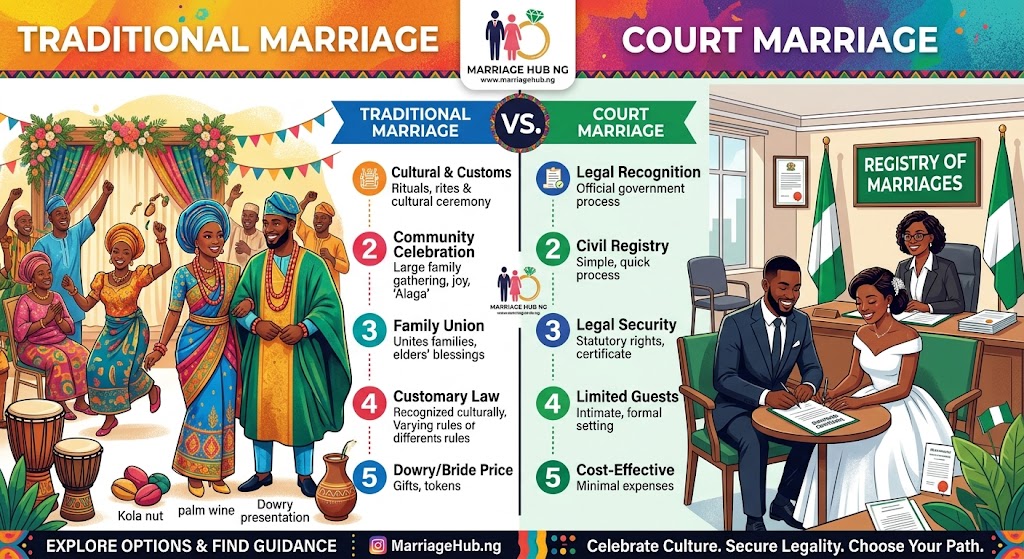
In Hausa and Islamic traditions, the Sadaki is paid by the groom directly to the bride. In contrast, in many parts of the world, a dowry refers to property, money, or gifts provided by the bride's family to the groom or the newly married couple.
Understanding this distinction helps prevent confusion, particularly when discussing marriage customs across different cultures and religions.
How Bride Price Is Determined
One of the unique characteristics of Hausa marriage traditions is that the bride price is generally modest compared to what is found in some other Nigerian cultures. Islamic scholars often encourage families not to make marriage unnecessarily expensive, citing the teachings of Prophet Muhammad (peace be upon him), who encouraged simplicity in marriage.
The amount of the Sadaki is usually determined through discussions involving the groom, the bride, their families, respected elders, and sometimes Islamic scholars. Several factors may influence the agreed amount, including local customs, the financial capacity of the groom, family preferences, educational background, and community traditions.
Importantly, the bride herself has the right under Islamic law to accept or reject the proposed Sadaki.
What Does the Bride Price Include?
The Sadaki itself is often paid in cash, although Islamic law permits it to consist of money, gold, land, jewellery, livestock, or any lawful item agreed upon by both parties.
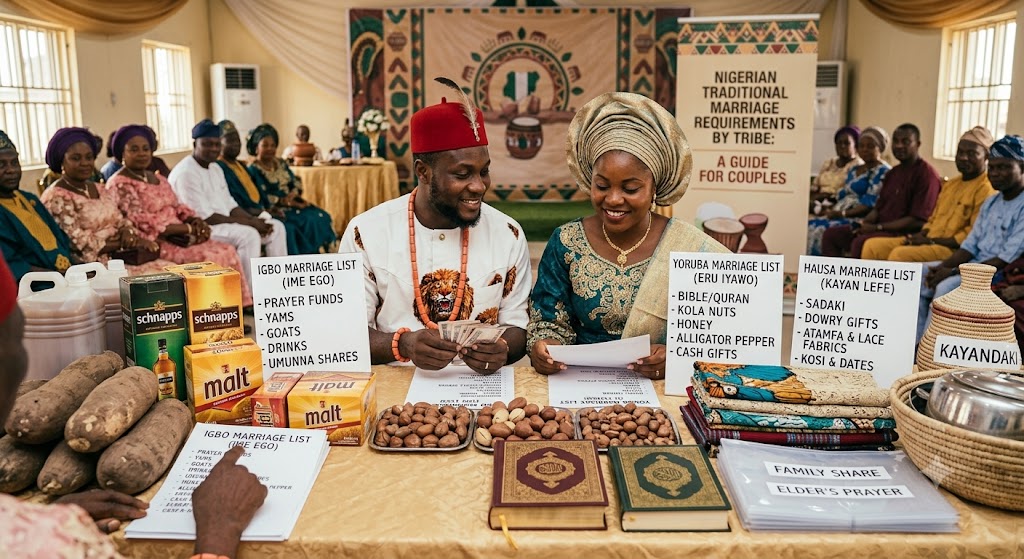
In addition to the formal bride price, Hausa marriage ceremonies frequently involve other gifts presented to the bride and her family. These may include clothing materials, perfumes, shoes, handbags, jewellery, cosmetics, food items, beverages, and traditional fabrics such as lace, Ankara, brocade, or Atampa.
It is important to distinguish these voluntary gifts from the actual Sadaki. While gift exchanges are culturally appreciated, they are not mandatory requirements for a valid Islamic marriage.
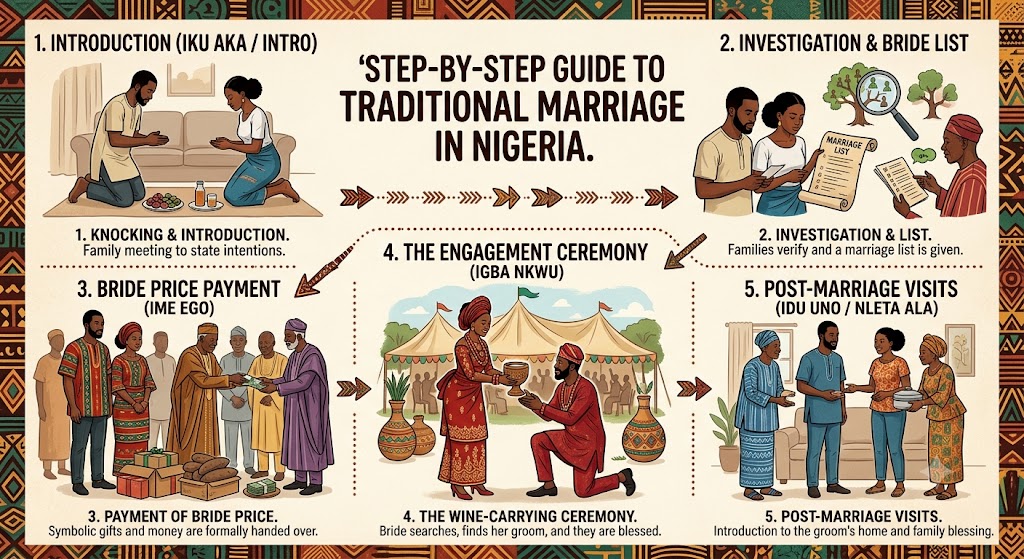
The Traditional Marriage Process
The process leading to the payment of the bride price begins long before the wedding ceremony itself.
Following the expression of interest by the prospective groom, representatives from his family formally visit the bride's family to seek permission for the marriage. This introductory meeting provides both families with an opportunity to discuss compatibility, expectations, and future plans.
If both families agree, discussions regarding the Sadaki and wedding arrangements commence. The agreed bride price is documented and later presented during the Nikah ceremony, where the marriage contract is officially concluded in the presence of witnesses and an Islamic cleric.
Unlike some elaborate traditional ceremonies found elsewhere in Nigeria, the actual payment of the Sadaki is often straightforward and conducted with dignity and simplicity.
Regional Variations Across Northern Nigeria
Although Hausa communities share common traditions, bride price practices vary across different states including Kano, Kaduna, Katsina, Sokoto, Kebbi, Jigawa, Zamfara, Bauchi, Gombe, Yobe, Borno, Niger, and parts of the Federal Capital Territory.
Urban families may adopt more modern wedding practices, while rural communities often maintain stronger adherence to long-established customs. Some families request symbolic amounts for the Sadaki, while others may include additional traditional gift exchanges depending on local customs.
Despite these differences, Islamic principles generally encourage moderation and discourage excessive financial demands that could delay marriage.
Bride Price and Islamic Teachings
Islam places great emphasis on making marriage easy rather than difficult.
Numerous Islamic scholars in Nigeria consistently advise families against setting excessively high bride prices that discourage young people from marrying. Religious leaders often remind communities that the best marriages are those that combine righteousness, mutual respect, and simplicity.
The Sadaki is intended to honour the bride, not to create unnecessary financial hardship for the groom.
Modern Trends in Hausa Bride Price
Like many cultural practices, Hausa marriage traditions continue to evolve.
Today's weddings increasingly incorporate photography, professional event planning, social media coverage, luxury venues, and elaborate receptions. While these additions have enhanced wedding celebrations, they have also increased the overall cost of marriage.
Fortunately, the Sadaki itself often remains relatively affordable, with many families intentionally maintaining modest amounts in accordance with Islamic teachings. Instead, the largest wedding expenses now frequently relate to reception venues, catering, decorations, transportation, entertainment, and accommodation for guests.
Challenges Facing Young Couples
Economic realities have made marriage more challenging for many young Nigerians. Rising inflation, unemployment, housing costs, and the increasing expectations surrounding weddings have delayed marriage for some couples.
Although the formal bride price in Hausa marriages is often modest, additional cultural expectations, voluntary gifts, and wedding celebrations can significantly increase the overall financial burden.
Many Islamic scholars encourage families to distinguish between religious obligations and optional cultural practices to make marriage more accessible for young people.
Common Misconceptions About Bride Price
Several misconceptions continue to surround bride price in Hausa marriages.
One common belief is that paying the bride price gives the husband ownership over his wife. This is inconsistent with Islamic teachings, which emphasise mutual respect, compassion, and the rights of both spouses within marriage.
Another misconception is that a higher bride price guarantees a stronger marriage. Experience has shown that successful marriages are built on love, trust, communication, faith, and mutual understanding rather than the amount paid during the wedding ceremony.
Some also believe that the bride's parents are entitled to keep the Sadaki. Under Islamic law, however, the bride herself is the rightful owner of the bridal gift unless she voluntarily decides to share it.
Practical Advice for Couples Planning a Hausa Wedding
Couples planning a Hausa marriage should focus on understanding both the cultural and religious aspects of the wedding process. Open communication between families helps prevent misunderstandings and ensures that expectations remain realistic.
Preparing a financial plan early, consulting knowledgeable elders, seeking premarital counselling, and understanding Islamic marital responsibilities can greatly reduce stress during wedding preparations.
Rather than competing with others to organise extravagant ceremonies, couples should prioritise building a strong foundation for married life based on respect, faith, trust, and shared values.
Real-Life Insight from Northern Nigeria
A young professional from Kano shared that his greatest fear before marriage was not paying the Sadaki but meeting the growing expectations surrounding modern wedding celebrations. While the agreed bride price was modest and fully in line with Islamic teachings, expenses related to event planning, clothing, photography, transportation, and entertainment significantly exceeded the actual Sadaki.
Similarly, a family in Kaduna deliberately requested a symbolic bride price to encourage early marriage for their daughter. They believed that a successful marriage depended far more on the character and religious commitment of the groom than on the amount of money exchanged during the wedding.
These experiences reflect a growing movement among many Hausa families to preserve the true purpose of the Sadaki while avoiding unnecessary financial burdens.
Preserving the Beauty of Hausa Marriage Traditions
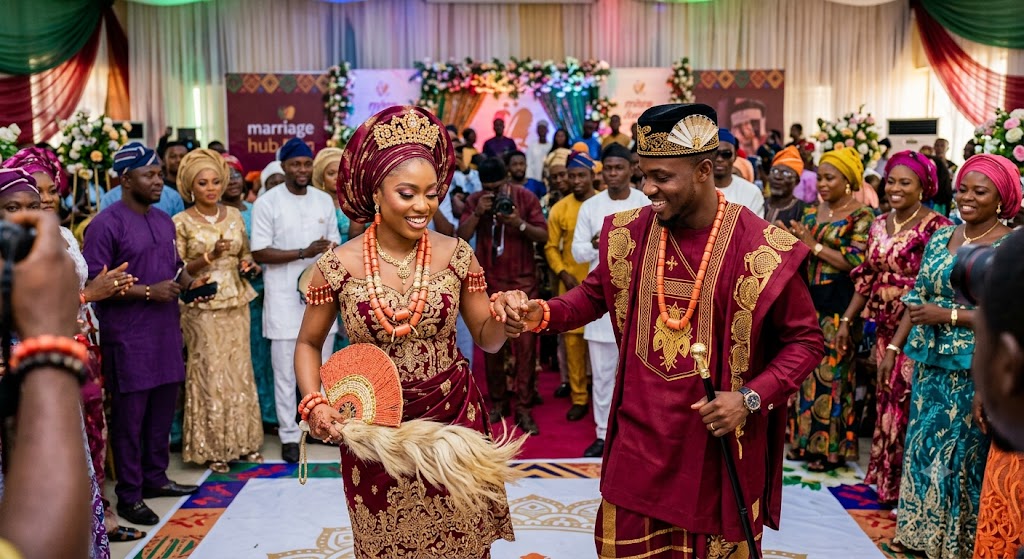
Hausa marriage traditions remain among Nigeria's richest cultural heritages. The practice of paying the bride price continues to symbolise honour, responsibility, sincerity, and respect rather than commercial exchange.
As society continues to evolve, maintaining the balance between cherished cultural customs and Islamic principles will ensure that future generations appreciate the true meaning of marriage. Simplicity, mutual understanding, and family support remain the cornerstones of successful Hausa marriages.
Ultimately, the strength of a marriage is determined not by the amount paid as bride price but by the commitment of both spouses to love, respect, support, and grow together throughout life's journey.
Strengthen Your Relationship with MarriageHub.ng
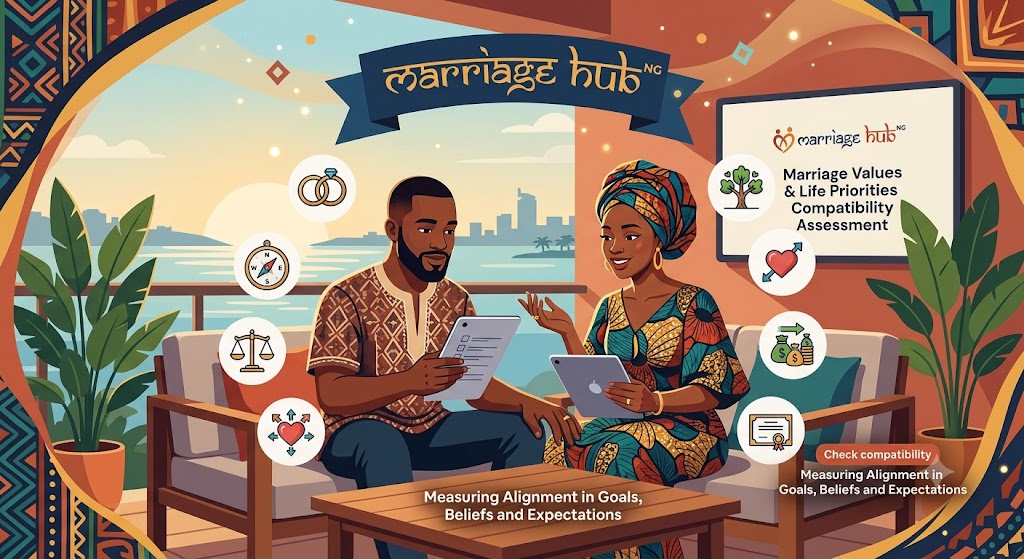
Whether you are preparing for marriage, planning your wedding, or seeking guidance for a successful relationship, MarriageHub.ng provides valuable tools and resources designed specifically for Nigerians.
Take the Marriage Readiness Test to assess your preparedness for marriage: https://www.marriagehub.ng/analyzer/index.php
Ask anonymous relationship and marriage questions in a safe community at: https://www.marriagehub.ng/questions-answers
Create beautiful digital invitations for weddings and other celebrations at: https://www.marriagehub.ng/annouce-my-event/
Find your life partner through the MarriageHub matchmaking platform: https://www.marriagehub.ng/match-making/frontend/discover.php
Browse trusted wedding vendors across Nigeria at: https://www.marriagehub.ng/vendors
Join vibrant relationship communities and connect with like-minded individuals by joining Groups and Tribes at https://www.marriagehub.ng/all-groups or create your own community at https://www.marriagehub.ng/create-tribes-group.
You can also purchase relationship resources, wedding products, professional services, digital downloads, and much more through the MarriageHub Marketplace at https://www.marriagehub.ng/marketplace.
Follow MarriageHub Nigeria
Stay connected for relationship tips, marriage advice, wedding inspiration, and community discussions.
WhatsApp: https://whatsapp.com/channel/0029VbCav9MCcW4pw3GSM72w
X: https://x.com/MarriageHubNG
Facebook: https://web.facebook.com/MarriageHubNigeria
Instagram: https://www.instagram.com/marriagehubng3





.jpg)
Sign in to comment