 Nurturing Marriages, Enriching Families!
Bride Price in Yoruba Culture Explained: Meaning, Traditions, Costs, and Modern Perspectives in Nigeria
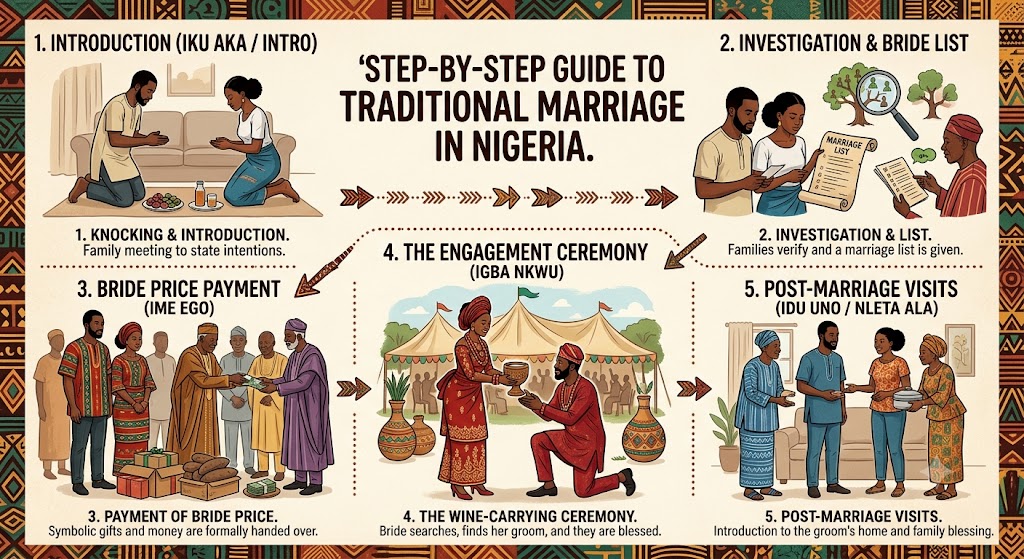
Bride price is one of the most important aspects of traditional marriage among the Yoruba people of southwestern Nigeria. It is far more than a financial transaction or a cultural obligation—it is a symbolic gesture of respect, appreciation, and commitment between two families. For centuries, Yoruba traditional marriage has been built on values of family unity, mutual respect, community participation, and cultural identity, with the payment of the bride price serving as one of the key ceremonies that formally recognizes the union.
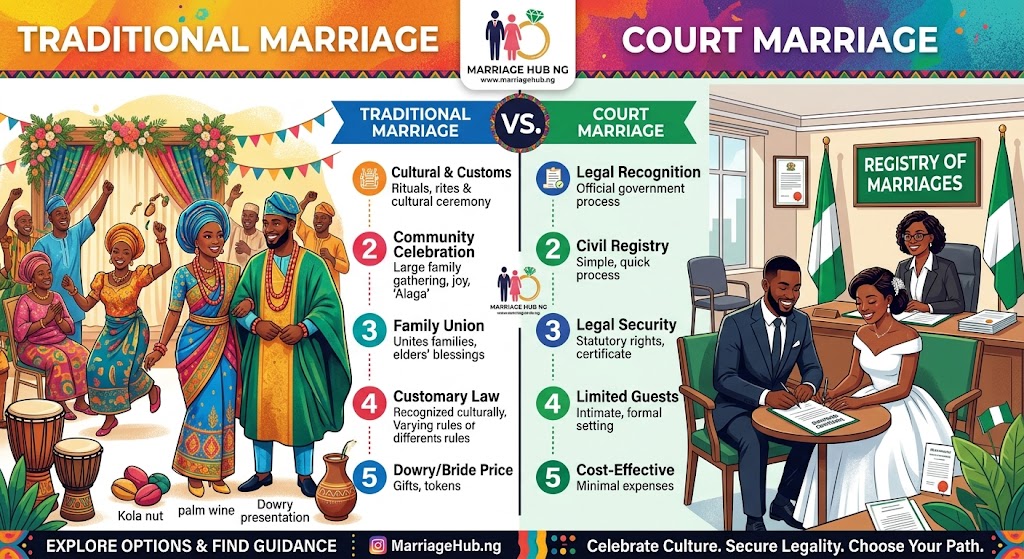
Today, despite modernization, urbanization, and the growing popularity of court and religious weddings, bride price remains an integral part of Yoruba marriage traditions. Whether a couple lives in Lagos, Ibadan, Abeokuta, Akure, Osogbo, Ilorin, or even abroad, many still return to their hometowns to complete the traditional rites before proceeding with church, mosque, or civil ceremonies.
However, many young Nigerians preparing for marriage often ask important questions. What exactly is the Yoruba bride price? How much does it cost? Why is it important? Is it compulsory? Has the tradition changed over the years? This comprehensive guide explains everything you need to know about bride price in Yoruba culture, using practical examples, real-life insights, and the modern Nigerian context.
What Is Bride Price in Yoruba Culture?
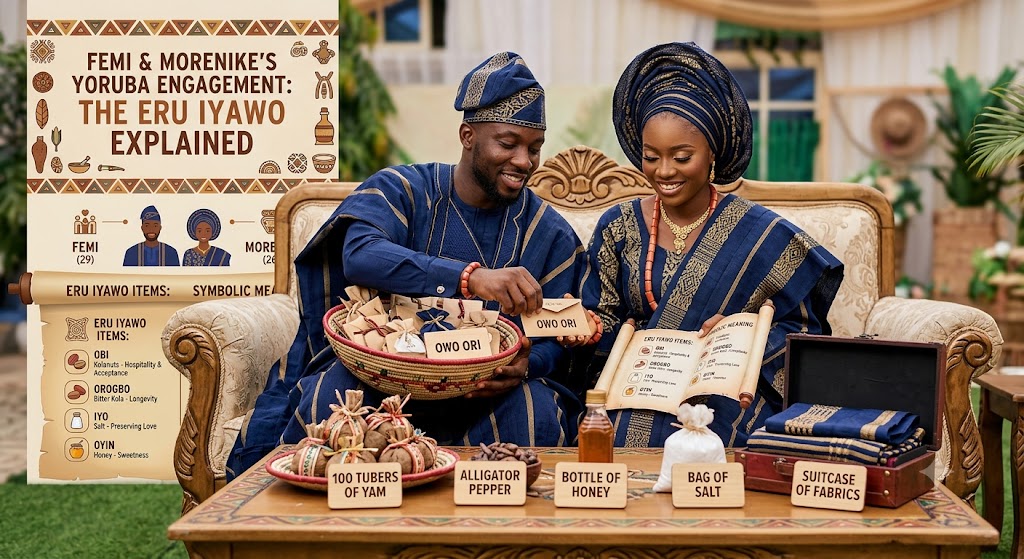
Bride price, often referred to as "Owo Ori" or simply the symbolic payment made by the groom's family, represents a formal acknowledgment of the bride's upbringing and the acceptance of the marriage by her family. Contrary to popular misconceptions, Yoruba culture does not view bride price as the purchase of a woman. Instead, it is a symbolic token that expresses gratitude to the bride's parents for raising their daughter and entrusting her future to another family.
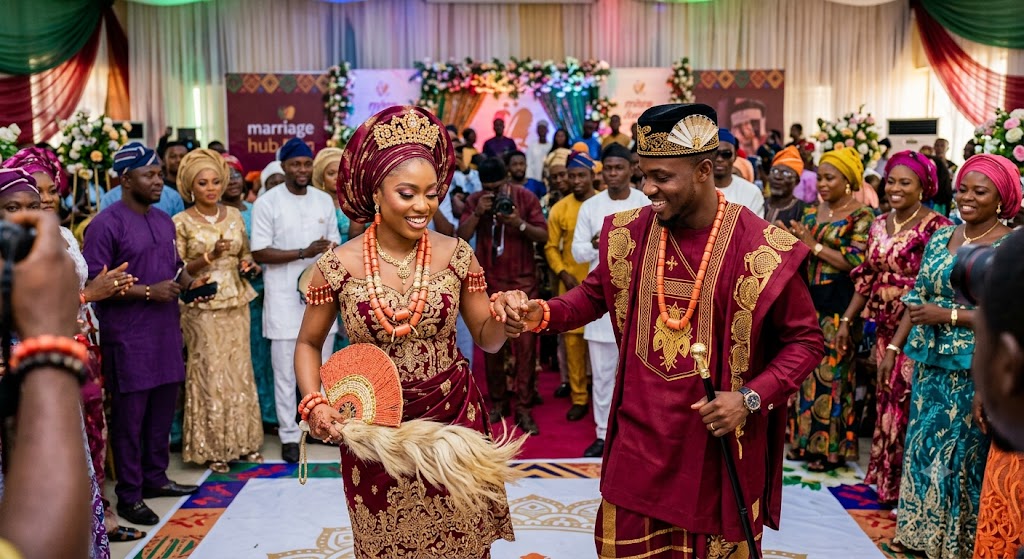
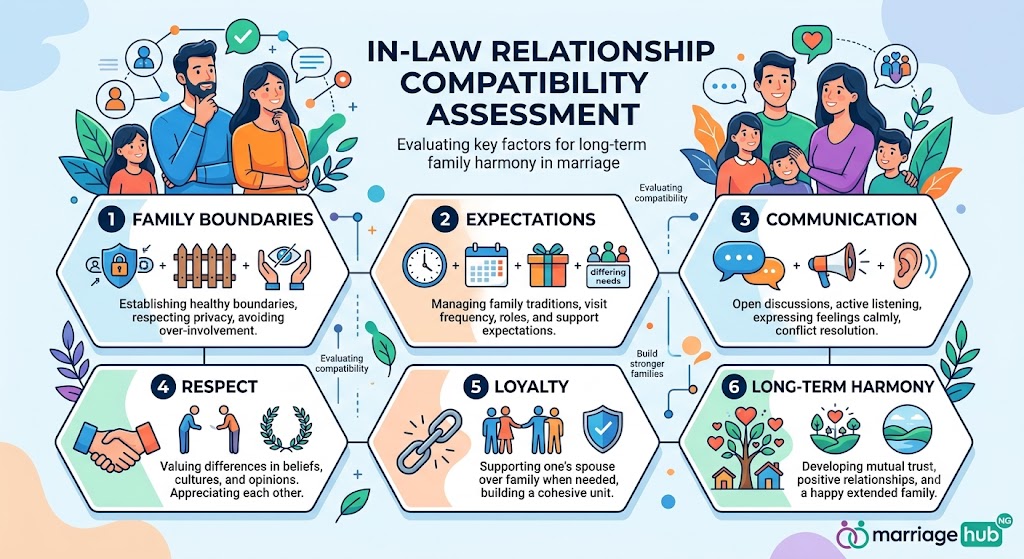
Among the Yoruba, marriage is traditionally viewed as the union of two families rather than just two individuals. Consequently, the bride price ceremony is accompanied by prayers, blessings, cultural rites, and the exchange of gifts that strengthen relationships between both families.
Many Yoruba elders emphasize that the true value of the bride price lies not in its monetary amount but in the sincerity and respect demonstrated by the groom and his family.
The Historical Significance of Bride Price
The practice of paying bride price dates back several centuries before colonial rule. Historically, Yoruba communities used the ceremony to formalize marriage agreements, establish family alliances, and ensure that both families publicly recognized the union.
In earlier times, payments were often made using cowries, kola nuts, locally woven fabrics, farm produce, livestock, palm wine, and other valuable items available within the community. As trade expanded and cash became more common, monetary payments gradually replaced many of these traditional items while retaining their symbolic meaning.
Today, although modern currencies are used, the underlying philosophy remains largely unchanged: respect, gratitude, and family unity.
Why Bride Price Is Important in Yoruba Marriage
Bride price continues to play several important cultural and social roles within Yoruba communities.
First, it demonstrates respect for the bride's parents and acknowledges the years they invested in raising their daughter. It also serves as a public declaration that the groom intends to marry honorably according to tradition.
Secondly, the ceremony strengthens relationships between both families. The negotiation process encourages dialogue, mutual understanding, and cooperation before the marriage begins.
Thirdly, bride price reinforces cultural identity. Many Yoruba families view the traditional marriage ceremony as an opportunity to preserve customs, language, attire, music, and values that have been passed down through generations.
Finally, it provides an occasion for elders to offer marriage advice, prayers, and blessings that many couples consider invaluable.
What Does a Typical Yoruba Bride Price List Include?
Although the exact requirements differ from one family to another, a typical Yoruba bride price list usually contains both symbolic and practical items.
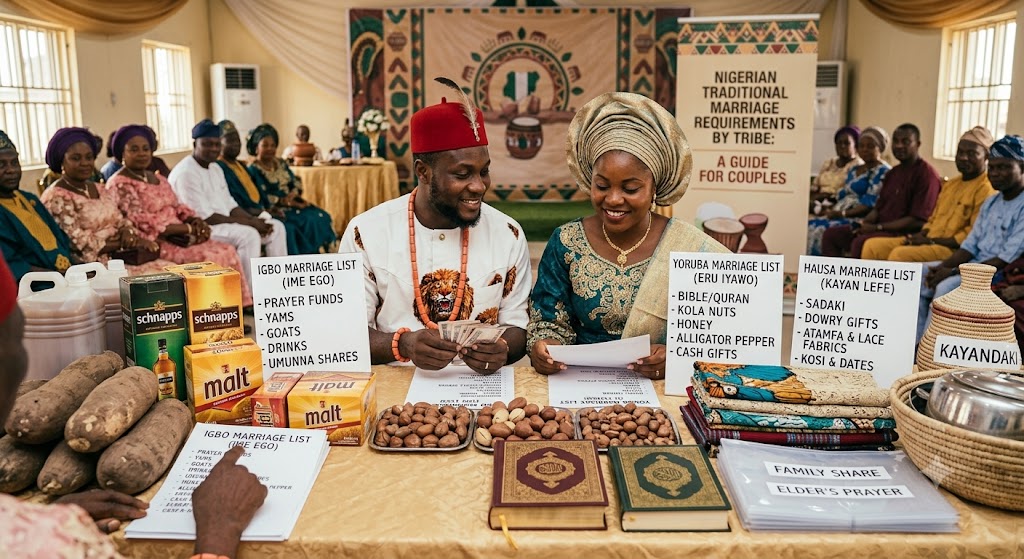
These commonly include a modest cash bride price, kola nuts, alligator pepper, bitter kola, honey, salt, yam tubers, bags of rice, drinks, assorted fruits, prayer items where applicable, suitcases containing clothing or fabrics for the bride, gifts for parents, gifts for extended family members, engagement rings, and ceremonial items used during the introduction and engagement ceremony.
Many families also request items such as Bibles or Qur'ans depending on religious beliefs, while others include wrappers, shoes, handbags, jewellery, and foodstuffs.
It is important to understand that these lists vary considerably across different Yoruba communities and even between individual families.
How Much Is Bride Price in Yoruba Culture?
One of the biggest misconceptions surrounding Yoruba marriage is that the bride price itself is extremely expensive.
In reality, the actual cash bride price is usually very modest. In many Yoruba communities, it ranges from as little as ₦500 to ₦10,000. Some families deliberately request symbolic amounts such as ₦1,000, ₦2,000, or ₦5,000 to emphasize that their daughter is not being sold.
However, the total cost of fulfilling the complete traditional marriage list may range anywhere between approximately ₦300,000 and over ₦2 million, depending on the family's expectations, the scale of the ceremony, location, and socioeconomic background.
In affluent urban areas like Lagos and Abuja, total traditional marriage expenses may be significantly higher because of elaborate celebrations, luxury gifts, and large guest lists rather than the bride price itself.
Bride Price Negotiation in Yoruba Tradition
Negotiation forms an important part of the Yoruba traditional marriage ceremony.
Representatives of the groom's family formally visit the bride's family to discuss the marriage requirements. The discussions are often conducted in a humorous, respectful, and highly ceremonial manner.
Experienced family elders usually lead the negotiations, ensuring that both families maintain mutual respect throughout the process. In many cases, the bride's family intentionally requests symbolic amounts or allows negotiations to reduce certain items, reinforcing the cultural belief that marriage should be based on love rather than financial ability.
The atmosphere is typically filled with laughter, traditional songs, prayers, and cultural expressions rather than confrontation.
Does Bride Price Mean Ownership?
One of the most persistent misconceptions is that paying bride price gives a husband ownership over his wife.
This belief is inconsistent with Yoruba cultural values.
Traditional Yoruba elders generally explain that the payment symbolizes appreciation and family acceptance rather than ownership or control. Marriage is viewed as a partnership built on mutual respect and shared responsibilities.
Modern legal systems in Nigeria equally recognize the rights of both spouses regardless of traditional bride price practices.
Modern Changes in Yoruba Bride Price Traditions
Urbanization, education, and globalization have influenced Yoruba marriage customs considerably.
Many educated couples now participate actively in preparing the traditional marriage list to ensure affordability. Families increasingly avoid excessive demands that may discourage marriage or place unnecessary financial pressure on young couples.
Technology has also transformed wedding planning. Couples now use online invitations, digital wedding planning platforms, electronic payments, and social media to organize traditional ceremonies while preserving cultural heritage.
Intertribal marriages have further encouraged flexibility, with many families adapting certain customs to accommodate spouses from different ethnic backgrounds.
Real-Life Case Study: A Lagos Couple
Tunde and Bimpe, both professionals living in Lagos, planned their traditional wedding after three years of courtship.
Initially, Tunde feared that the bride price list would exceed his budget because of stories shared by friends. However, during the family introduction, Bimpe's parents explained that the symbolic bride price would only be ₦2,000. Their primary concern was that both families maintained mutual respect throughout the process.
Although the couple spent considerably more on venue decoration, catering, photography, and guest entertainment, the actual bride price remained one of the least expensive aspects of the wedding.
According to Tunde, the experience taught him that many of the frightening stories surrounding Yoruba bride price are often exaggerated.
Real-Life Case Study: Intertribal Marriage
Another couple, Chinedu from Anambra State and Yetunde from Oyo State, experienced an interesting blend of Igbo and Yoruba traditions.
Both families held several meetings before the wedding to understand each other's customs. They eventually agreed on a simplified bride price list that respected Yoruba traditions while accommodating Igbo cultural expectations.
The successful collaboration strengthened family relationships and demonstrated that cultural diversity can enrich rather than complicate marriage.
Common Misconceptions About Yoruba Bride Price
Many misconceptions continue to circulate about Yoruba traditional marriage.
Some people wrongly believe that wealthy families always demand enormous bride prices. In reality, many affluent families intentionally keep the symbolic payment low while focusing on the cultural significance of the ceremony.
Others assume that every Yoruba community follows exactly the same customs. However, traditions differ across states such as Lagos, Ogun, Oyo, Ondo, Ekiti, Osun, Kwara, and parts of Kogi where Yoruba communities reside.
Another misconception is that expensive weddings reflect stronger marriages. Research on marital stability consistently suggests that communication, mutual respect, financial planning, emotional intimacy, and shared values contribute far more to successful marriages than extravagant ceremonies.
Data and Trends in Nigerian Traditional Marriages
Nigeria continues to witness thousands of traditional marriages every year despite changing lifestyles. Wedding industry reports estimate that the Nigerian wedding market is worth several hundreds of billions of naira annually, with traditional ceremonies accounting for a significant proportion of total wedding spending.
Relationship experts also observe that more young couples are actively discussing traditional marriage costs before engagement. Financial planning, budgeting, and open communication are becoming increasingly common as couples seek to avoid unnecessary debt associated with elaborate wedding ceremonies.
Social media has further influenced wedding expectations, encouraging some couples to pursue lavish celebrations while inspiring others to embrace simpler, culturally meaningful ceremonies.
Preparing Financially for a Yoruba Traditional Marriage
Preparing for a traditional wedding requires thoughtful financial planning. Couples are encouraged to discuss expected expenses early, involve both families in transparent conversations, establish realistic budgets, and prioritize meaningful cultural traditions over unnecessary extravagance.
Many successful couples distinguish between cultural obligations and optional luxury expenses. Rather than borrowing excessively to impress guests, they focus on beginning married life with financial stability.
Marriage counsellors frequently advise couples that investing in their future home, emergency savings, and long-term financial goals often provides greater benefits than overspending on a single day of celebration.
The Enduring Value of Yoruba Bride Price
Bride price remains one of the most cherished traditions within Yoruba culture because it represents gratitude, family unity, respect, and commitment rather than commercial exchange. While the specific customs have evolved over time, the underlying values continue to strengthen family relationships across generations.
As Nigerian society continues to modernize, many couples are successfully balancing cultural heritage with contemporary realities. They honour traditional customs while ensuring that marriage remains accessible, affordable, and focused on the lifelong partnership rather than the ceremony itself.
Ultimately, the success of a marriage depends far less on the amount paid as bride price than on the character, love, communication, trust, and commitment shared by the husband and wife. When these qualities are present, traditional customs become beautiful foundations upon which lasting families are built.
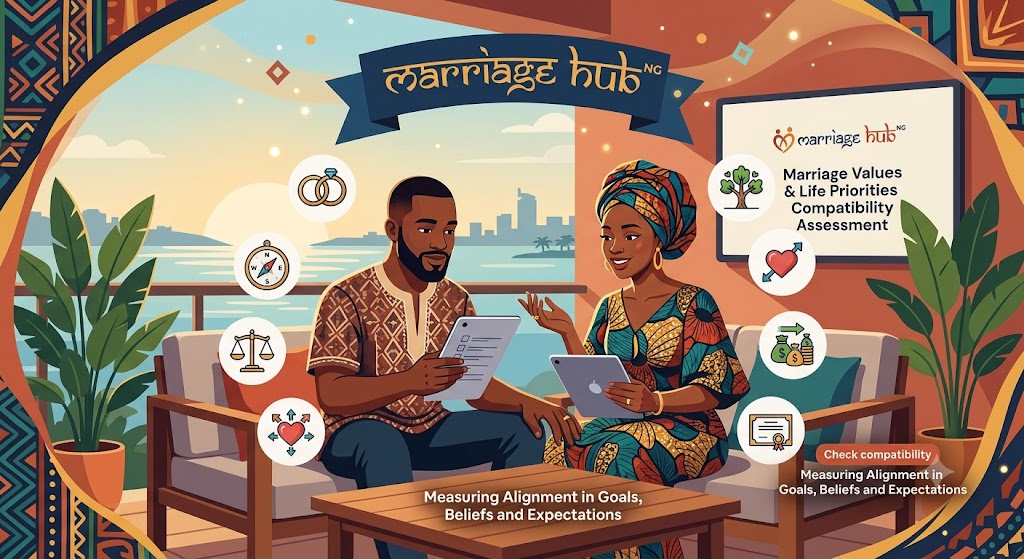
If you are planning your journey toward marriage, MarriageHub.ng provides valuable resources to help you make informed decisions. You can Take the Marriage Readiness Test by visiting https://www.marriagehub.ng/analyzer/index.php to assess your preparedness for marriage. If you have confidential relationship concerns, Ask Anonymous Questions at https://www.marriagehub.ng/questions-answers and receive guidance from the community.
Planning your engagement, traditional wedding, or other special celebration? Create an E-Invite at https://www.marriagehub.ng/annouce-my-event/. If you're searching for your future spouse, Find a Life Partner through https://www.marriagehub.ng/match-making/frontend/discover.php. You can also Browse Wedding Vendors at https://www.marriagehub.ng/vendors to connect with trusted professionals for your big day.
MarriageHub.ng is also home to vibrant communities where singles, engaged couples, and married people connect, learn, and share experiences. You can join existing Groups and Tribes by visiting https://www.marriagehub.ng/all-groups or create your own community at https://www.marriagehub.ng/create-tribes-group.
Looking for relationship resources, digital products, counselling services, wedding items, or educational materials? Visit the MarriageHub Marketplace at https://www.marriagehub.ng/marketplace.
Stay connected with MarriageHub Nigeria for relationship tips and marriage resources through WhatsApp at https://whatsapp.com/channel/0029VbCav9MCcW4pw3GSM72w, X at https://x.com/MarriageHubNG, Facebook at https://web.facebook.com/MarriageHubNigeria, and Instagram at https://www.instagram.com/marriagehubng3.





.jpg)

Sign in to comment