 Nurturing Marriages, Enriching Families!
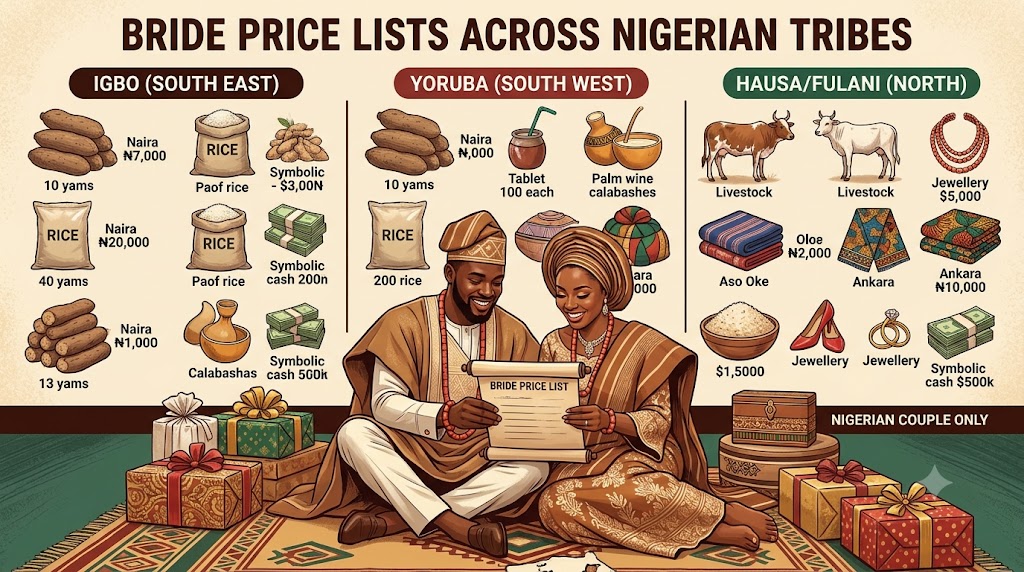
Bride Price Lists Across Nigerian Tribes: Traditions, Typical Requirements and What Every Couple Should Know
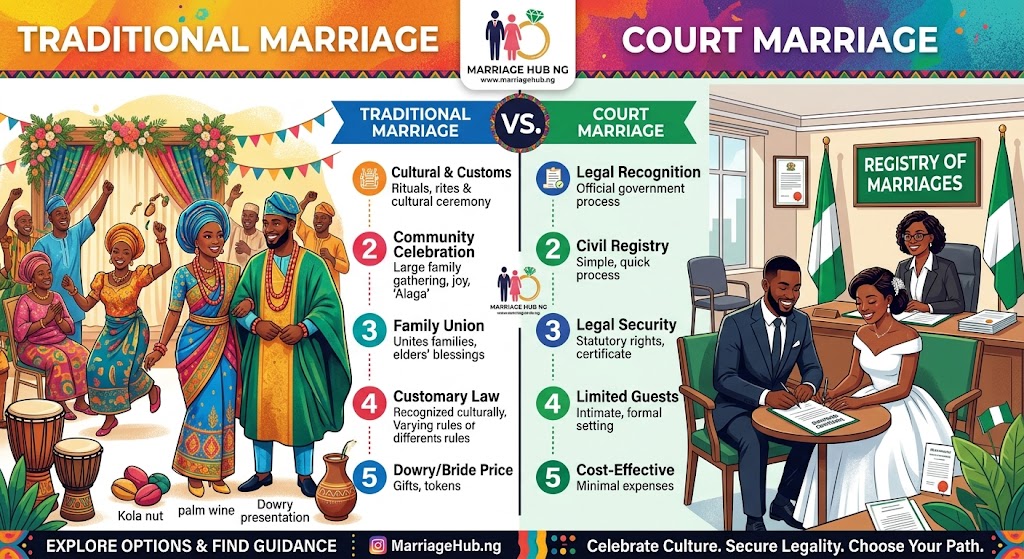
Bride price, also known as bride wealth, is one of the oldest and most respected marriage traditions in Nigeria. Across the country's more than 250 ethnic groups, the payment of a bride price symbolizes respect for the bride's family, appreciation for the care they invested in raising their daughter, and the formal acceptance of a marriage union. Contrary to popular misconceptions, bride price is not the purchase of a woman. Instead, it is a cultural and symbolic practice that strengthens relationships between two families and signifies that traditional marriage rites have been fulfilled.
Although the customs vary widely across Nigeria, almost every tribe has a traditional bride price list containing cash, food items, drinks, clothing, gifts, and ceremonial items. Some communities maintain relatively modest requirements, while others have developed lengthy lists that can cost several hundred thousand or even millions of naira when all expenses are included.
In recent years, discussions surrounding bride price have become increasingly common due to rising wedding costs, inflation, urbanization, and changing social values. Many young couples today seek a balance between preserving cultural traditions and ensuring that marriage remains financially accessible.
This comprehensive guide explores bride price traditions across major Nigerian tribes, explains what is commonly included in bride price lists, examines regional differences, and provides practical advice for intending couples and their families.
Understanding the Purpose of Bride Price
Historically, bride price served several important purposes beyond the exchange of gifts. It represented gratitude to the bride's parents for nurturing their daughter and demonstrated the groom's readiness to assume family responsibilities. It also formalized the relationship between both families and marked the completion of customary marriage rites recognized within the community.
Across Nigeria, elders generally emphasize that the symbolic value of bride price is far more important than its monetary value. In many communities, even where lengthy lists are presented, the actual cash component remains relatively modest, while the accompanying gifts reflect respect, celebration, and hospitality.
As Nigeria continues to modernize, many traditional rulers and community leaders have encouraged moderation to prevent excessive bride price demands from discouraging marriage among young people.
What Usually Appears on a Nigerian Bride Price List?
Although every ethnic group maintains its own customs, many bride price lists contain similar categories of items. These often include symbolic cash payments, kola nuts, alligator pepper, bottles of wine or spirits, malt drinks, soft drinks, bags of rice, tubers of yam, cartons of beverages, palm wine, salt, wrappers or lace fabrics for the bride's mother, traditional clothing for family members, footwear, jewellery, cosmetics, cooking ingredients, livestock such as goats or chickens in some communities, and gifts specifically designated for various extended family members.
Certain communities also request Bible or Quran presentation, depending on religious traditions, while others include ceremonial walking sticks, umbrellas, suitcases, or household items. It is important to understand that many of these requirements are deeply rooted in symbolism rather than financial value.
Bride Price Among the Igbo
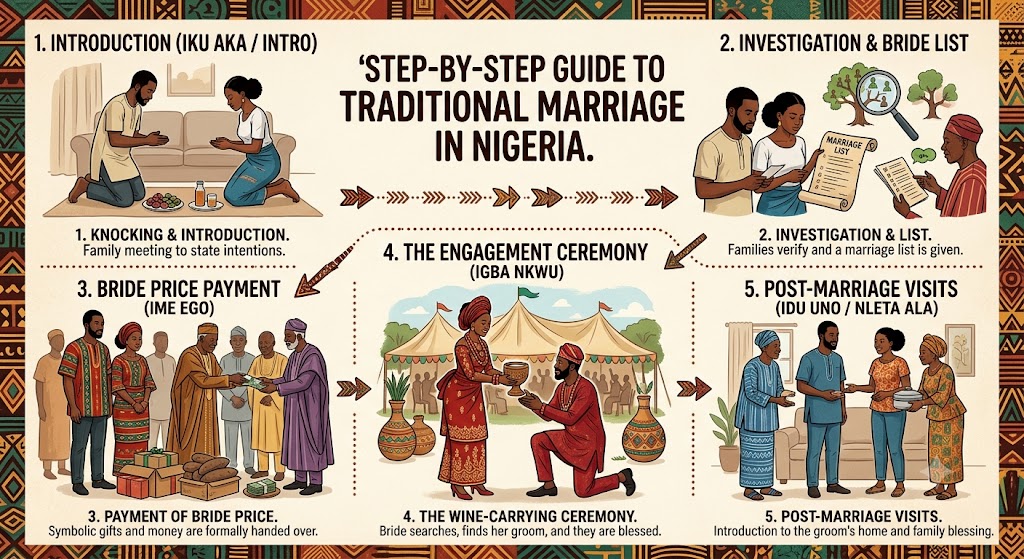
Among the Igbo people of southeastern Nigeria, the traditional marriage process usually involves several stages before the bride price is presented. These include family introductions, the formal "iku aka" or knocking ceremony in many communities, investigation of both families, traditional negotiations, and finally the payment of the bride price.
Contrary to popular belief, the official bride price itself in many Igbo communities is surprisingly small and may range from a few hundred naira to a few thousand naira because it is considered symbolic. However, the complete traditional marriage list often contains numerous gifts requested by the bride's extended family.
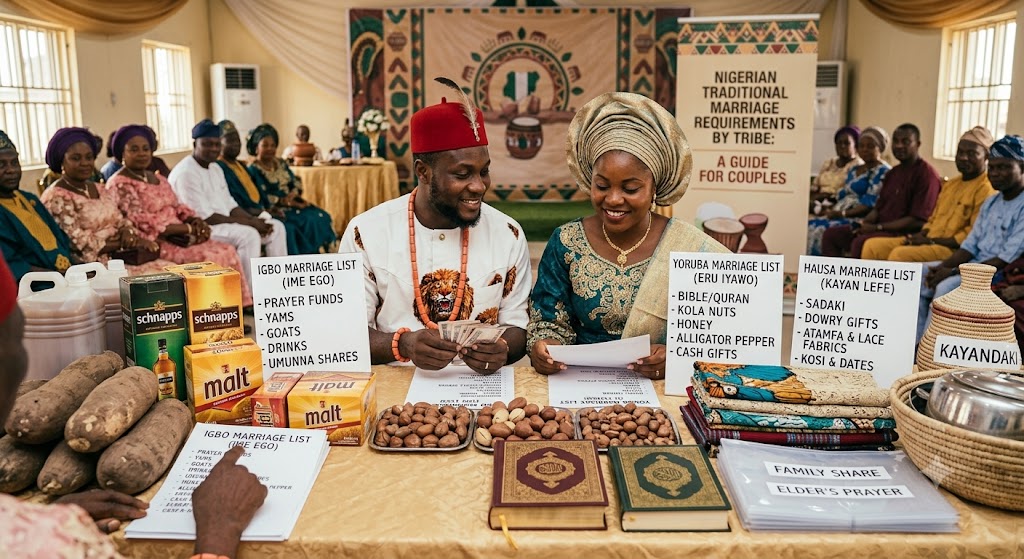
Typical items may include cartons of beer, malt drinks, bottles of wine, kola nuts, alligator pepper, tobacco in some traditional communities, wrappers for elderly women, clothing materials, bags of rice, salt, vegetable oil, palm wine, yams, goats, and gifts for parents, elders, and umuada (married daughters of the family).
Communities in Anambra, Imo, Abia, Ebonyi, and Enugu States often maintain different customs, meaning no single bride price list applies to all Igbo people.
Bride Price Among the Yoruba
The Yoruba traditional engagement ceremony, known for its elegance and colourful attire, also includes a bride price list that reflects deep cultural heritage.
Unlike some northern communities where the bride price may focus primarily on cash, Yoruba lists often emphasize symbolic gifts presented in beautifully decorated baskets or trays. These commonly include kola nuts, bitter kola, alligator pepper, honey, sugar cane, dried fish, assorted fruits, yams, bags of rice, salt, soft drinks, wine, Bible or Quran depending on the family's faith, matching fabrics for parents, jewellery, and an agreed cash presentation.
Many Yoruba families also include gifts specifically designated for the bride's mother, father, siblings, and family elders.
Bride Price Among the Hausa and Fulani
Islam significantly influences marriage traditions across much of northern Nigeria.
Among many Hausa and Fulani communities, the bride price is referred to as "Sadaki," which forms an important part of the Islamic marriage contract. Unlike many southern traditions that involve lengthy gift lists, Sadaki primarily consists of an agreed monetary amount or valuable asset presented directly to the bride rather than her family.
Islam encourages moderation in fixing the Sadaki to ensure that marriage remains accessible. Consequently, many northern families intentionally keep bride price requirements relatively affordable while emphasizing religious values over material demands.
Wedding celebrations may still involve gifts, clothing, perfumes, food, livestock, and household items presented by both families, but the formal bride price itself remains straightforward in many communities.
Bride Price Among the Efik and Ibibio
The Efik and Ibibio people of Cross River and Akwa Ibom States are renowned for elaborate traditional marriage ceremonies.
Bride price lists may include wrappers, lace fabrics, drinks, food items, cosmetics, jewellery, livestock, household items, and cash gifts allocated to various family groups. Certain ceremonial items hold special cultural significance and vary between communities.
Traditional marriage negotiations among the Efik and Ibibio often involve extended discussions between representatives of both families before final agreements are reached.
Bride Price Among the Urhobo, Isoko and Itsekiri
Among many communities in Delta State, bride price customs combine symbolic cash payments with traditional gifts.
Items frequently include kola nuts, drinks, wrappers, yams, bags of rice, palm oil, beverages, clothing, cosmetics, and gifts for parents and extended family members. Some communities also include ceremonial payments for specific cultural rites observed during traditional marriage.
Bride Price Among the Tiv
The Tiv people of Benue State maintain rich marriage traditions centred on family relationships and community approval.
Traditional bride price may involve symbolic cash payments together with food items, livestock, clothing, beverages, and gifts for parents. Family negotiations play an important role, and community elders often supervise the customary marriage process.
Bride Price Among the Ijaw
Ijaw communities across Bayelsa, Rivers, Delta, and Ondo States observe bride price customs that reflect their unique cultural heritage.
Traditional lists commonly include drinks, food items, wrappers, jewellery, livestock in some areas, ceremonial gifts, and symbolic cash payments. Riverine communities sometimes include locally significant items linked to fishing traditions and local customs.
Why Bride Price Lists Differ Across Communities
Even within the same ethnic group, bride price lists vary considerably from one town to another. Customs evolve over generations, and each community develops traditions based on local history, religious practices, economic conditions, and family values.
For example, two neighbouring Igbo communities may require different ceremonial items despite sharing the same language. Likewise, Yoruba families from different states often maintain slightly different engagement requirements.
Because of these differences, intending couples should always obtain the official bride price list directly from the bride's family rather than relying on lists shared online.
The Financial Reality of Traditional Marriages
While the symbolic bride price itself may be relatively small, the total cost of fulfilling traditional marriage requirements has increased significantly in recent years due to inflation.
Food items such as rice, vegetable oil, beverages, livestock, fabrics, and transportation now cost considerably more than they did a decade ago. Wedding planners estimate that many Nigerian couples spend anywhere between ₦500,000 and over ₦5 million on traditional marriage ceremonies, depending on location, family expectations, guest numbers, and event scale.
Fortunately, many families now review their traditional lists to remove unnecessary items and reduce financial pressure on intending couples.
Real-Life Case Study: Finding a Balance
Emeka from Enugu became engaged to Adebimpe from Ibadan after meeting during their National Youth Service Corps programme. Initially, both families worried about managing two different cultural traditions. Instead of insisting on rigid customs, the families met several times, discussed their expectations openly, and agreed to conduct both Yoruba and Igbo traditional rites respectfully. The bride price remained symbolic, while both families focused on celebrating the union rather than competing over material demands.
Their experience demonstrates that successful intercultural marriages are built on communication, understanding, and mutual respect rather than the size of the bride price.
Real-Life Case Study: Community Reforms
In several communities across southeastern Nigeria, traditional rulers have introduced reforms limiting excessive bride price demands after concerns that young people were postponing marriage because of financial difficulties. Some communities now prescribe maximum symbolic cash amounts while encouraging families to simplify gift lists.
These reforms have received positive responses from many young couples who believe cultural traditions can be preserved without creating unnecessary financial burdens.
Common Misconceptions About Bride Price
Many people mistakenly believe that paying bride price means purchasing a wife. This interpretation contradicts the values upheld by most Nigerian communities. Bride price is intended to honour the bride and recognize the role her family played in raising her.
Another misconception is that expensive bride price guarantees a successful marriage. In reality, research on marital stability consistently shows that communication, trust, financial responsibility, mutual respect, emotional intimacy, and conflict resolution contribute far more to long-term marital success than the amount spent during traditional ceremonies.
Practical Advice for Intending Couples
Couples planning traditional marriages should begin discussions with both families early enough to understand local customs and expectations. Preparing a realistic wedding budget, communicating openly about financial capabilities, and respecting cultural traditions while avoiding unnecessary extravagance can significantly reduce stress.
Where concerns arise regarding lengthy or expensive bride price lists, respectful dialogue with family elders often produces positive outcomes. Many parents value sincerity, responsibility, and good character far more than expensive gifts.
Above all, couples should remember that the traditional marriage ceremony marks the beginning of a lifelong relationship between two families. The success of that relationship depends less on ceremonial expenses and more on love, commitment, patience, integrity, and mutual respect.
Final Thoughts
Bride price remains one of Nigeria's most treasured cultural traditions. Whether among the Igbo, Yoruba, Hausa, Fulani, Efik, Ibibio, Tiv, Ijaw, Urhobo, Itsekiri, Isoko, or any of Nigeria's hundreds of ethnic groups, the underlying purpose remains remarkably similar: to celebrate family unity, demonstrate respect, and formally establish a marriage according to community customs.
While bride price lists differ across regions and continue to evolve with changing economic realities, many communities today recognize the importance of keeping marriage affordable for young couples. The true value of marriage has never been measured by the number of gifts exchanged but by the strength of the relationship that follows.
If you are preparing for marriage or planning your traditional wedding, MarriageHub.ng provides valuable tools and resources to guide you throughout your journey.
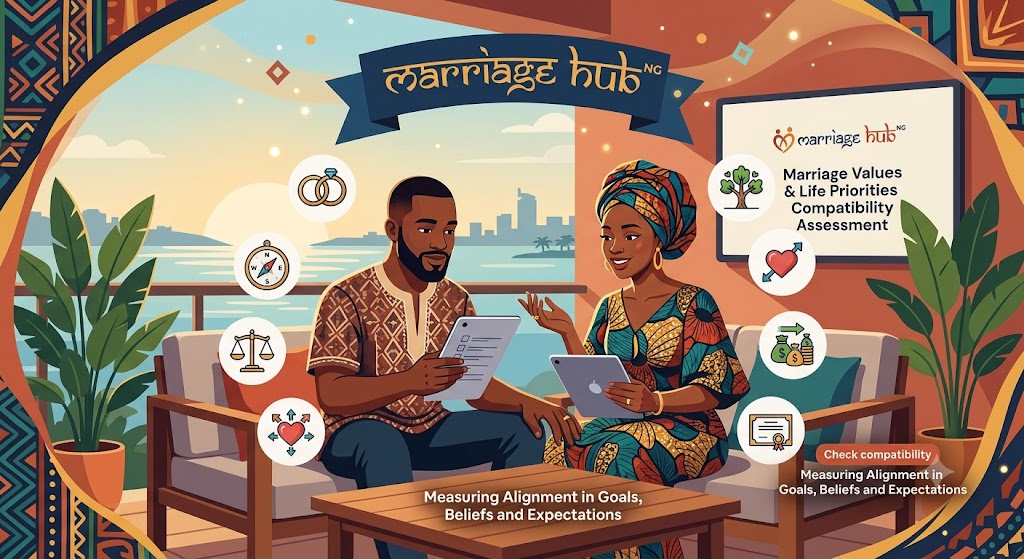
Take the Marriage Readiness Test to assess your preparedness for lifelong commitment by visiting https://www.marriagehub.ng/analyzer/index.php.
If you have relationship or marriage questions that you would prefer to ask privately, visit https://www.marriagehub.ng/questions-answers to ask anonymous questions and receive helpful guidance.
Planning your wedding? Create a beautiful digital invitation for your traditional wedding, church wedding, court marriage, engagement, or other special events at https://www.marriagehub.ng/annouce-my-event/.
If you are still searching for the right partner, explore the matchmaking platform at https://www.marriagehub.ng/match-making/frontend/discover.php.
You can also browse trusted wedding vendors for photographers, decorators, caterers, event planners, makeup artists, musicians, MCs, and more by visiting https://www.marriagehub.ng/vendors.
Join vibrant communities where singles, intending couples, and married couples discuss relationships, marriage, parenting, culture, and family life by joining existing groups and tribes at https://www.marriagehub.ng/all-groups. You can also create your own group or tribe at https://www.marriagehub.ng/create-tribes-group.
Visit the MarriageHub Marketplace at https://www.marriagehub.ng/marketplace to purchase relationship resources, wedding products, professional services, counselling packages, digital downloads, and much more.
Stay connected with MarriageHub Nigeria on WhatsApp at https://whatsapp.com/channel/0029VbCav9MCcW4pw3GSM72w, follow on X at https://x.com/MarriageHubNG, like the Facebook page at https://web.facebook.com/MarriageHubNigeria, and follow on Instagram at https://www.instagram.com/marriagehubng3.





.jpg)

Sign in to comment