 Nurturing Marriages, Enriching Families!
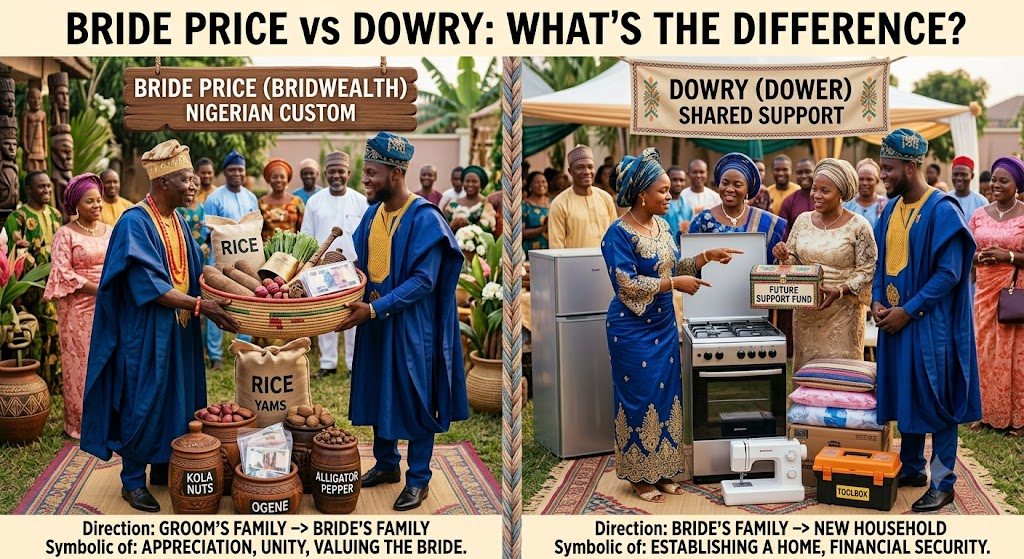
Bride Price vs Dowry: What's the Difference? A Complete Guide for Nigerian Couples
Marriage is one of the most celebrated institutions in Nigeria, bringing together not just two individuals but also two families, communities, and cultures. Before many traditional weddings take place, one important aspect of the marriage process often generates discussions, debates, and even misconceptions—bride price and dowry.
Many Nigerians use the terms bride price and dowry interchangeably, believing they refer to the same practice. However, they are fundamentally different traditions with different historical origins, cultural meanings, and financial implications. Understanding these differences is particularly important for couples preparing for marriage, parents, wedding planners, and anyone interested in Nigerian traditional marriage customs.
This comprehensive guide explains the difference between bride price and dowry, explores how these practices apply within the Nigerian context, examines common misconceptions, highlights legal and cultural perspectives, and provides practical advice for couples navigating traditional marriage ceremonies.
Understanding Bride Price
Bride price, sometimes called bride wealth or bride token, refers to the gifts, money, or symbolic items presented by the groom and his family to the bride's family before a traditional marriage is completed.
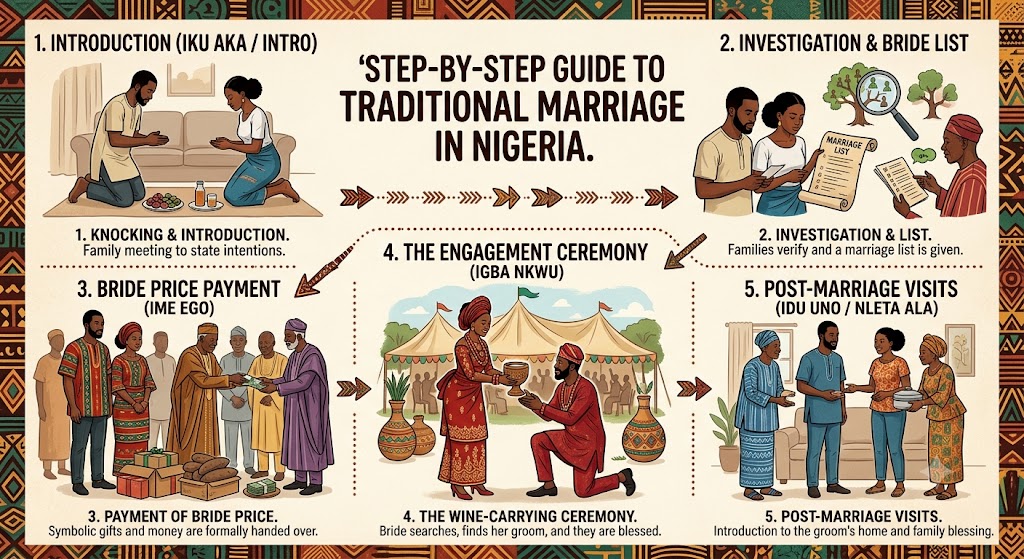
Contrary to popular misconceptions, bride price does not mean that a woman is being purchased. Across most Nigerian cultures, the payment symbolizes appreciation, gratitude, respect, and acceptance of responsibility by the groom's family. It acknowledges the effort the bride's parents invested in raising their daughter and formally unites the two families.
Bride price has existed for centuries across many African societies and remains an essential part of customary marriages in Nigeria today.
What is Dowry?
Dowry is an entirely different cultural practice.
A dowry consists of money, property, jewellery, household items, livestock, or other valuable assets provided by the bride's family to the bride or the groom's family at the time of marriage.
Historically, dowries became common in parts of Europe, the Middle East, Asia, and North Africa. In countries such as India, Pakistan, Bangladesh, Italy, and Greece, dowries have traditionally served as financial support for the newly married couple or as inheritance transferred to the bride.
Unlike bride price, the financial flow in a dowry system moves from the bride's family rather than from the groom's family.
Nigeria is generally regarded as a bride price society, not a dowry society.
The Fundamental Difference Between Bride Price and Dowry
The biggest distinction lies in who gives what to whom.
Under the bride price system, the groom and his family present gifts and symbolic payments to the bride's family. Under a dowry system, the bride's family provides wealth or property to the bride or, in some traditions, directly to the groom's family.
Another important difference is purpose. Bride price primarily symbolizes appreciation, family acceptance, and cultural recognition of marriage. Dowry traditionally serves as financial provision or inheritance for the bride, although in some societies it has evolved into a social expectation that places significant financial pressure on the bride's family.
Understanding this distinction helps avoid confusion when discussing marriage customs across different countries and cultures.
Bride Price Across Nigerian Cultures
Although the principle of bride price exists throughout Nigeria, every ethnic group has its own customs and requirements.
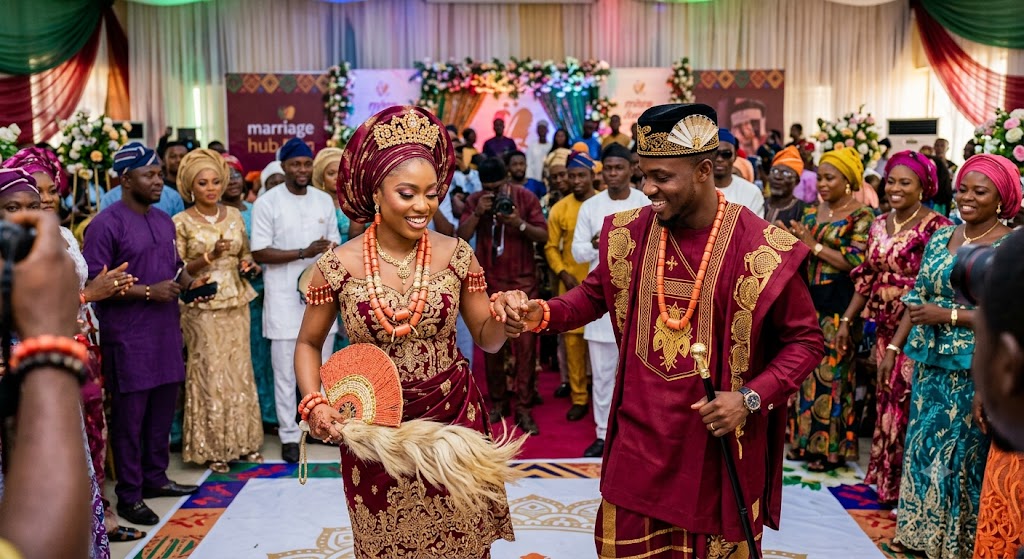
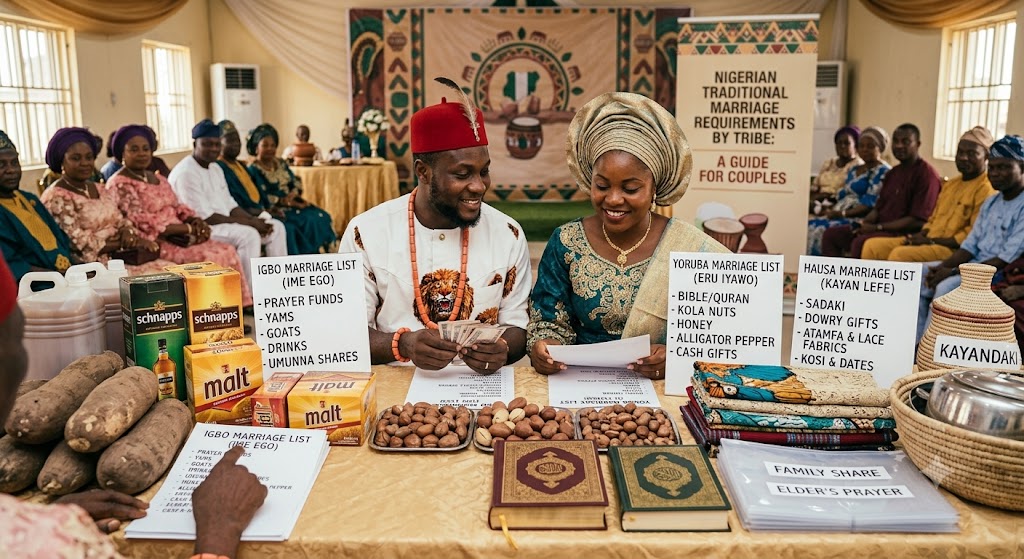
Among the Igbo people, the bride price ceremony forms one of the most significant stages of the traditional marriage process. Families exchange kola nuts, palm wine, drinks, clothing, symbolic gifts, and other customary items. The actual bride price itself is often modest, while the accompanying traditional requirements vary from community to community.
Among the Yoruba, the engagement ceremony includes the presentation of gifts requested by the bride's family. These often include food items, drinks, clothing materials, prayer items, fruits, and symbolic gifts alongside the agreed bride price.
In many Hausa and Fulani communities, Islamic marriage traditions influence customary practices. The Mahr, which is an obligatory marriage gift from the groom directly to the bride under Islamic law, should not be confused with either bride price or dowry. Mahr belongs exclusively to the bride and is a legal right recognised under Islamic marriage.
Across the Niger Delta, Middle Belt, and other ethnic communities, bride price customs differ considerably, reflecting Nigeria's remarkable cultural diversity.
Why Bride Price Exists
Bride price serves several important cultural and social purposes.
It publicly demonstrates the groom's commitment to marriage and his willingness to assume responsibility for his wife. It also represents gratitude towards the bride's parents for raising their daughter and strengthens relationships between both families.
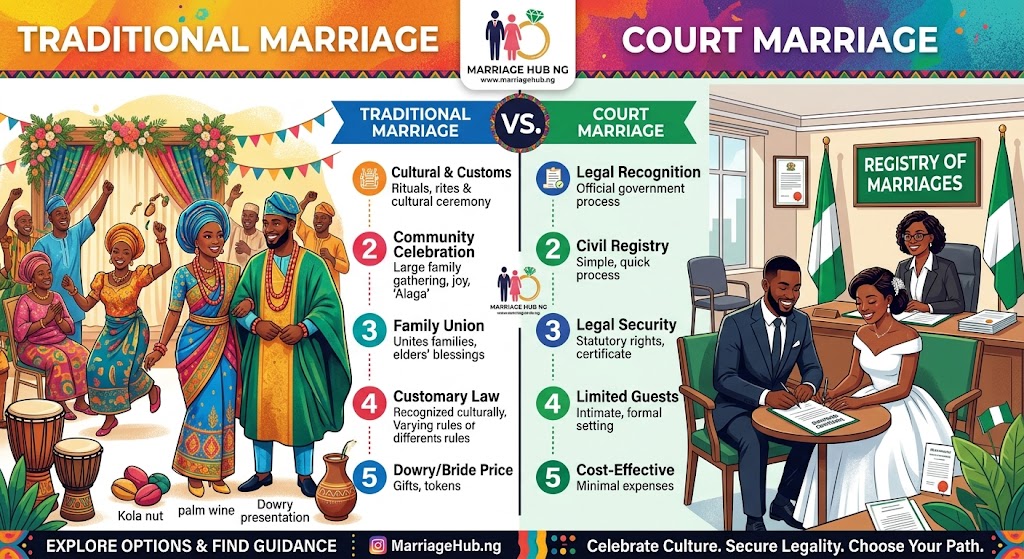
In many communities, the exchange of bride price officially validates the customary marriage. Without completing the required traditional rites, some communities may not recognise the marriage under customary law.
Equally important, bride price ceremonies encourage family participation, conflict resolution, and community involvement before marriage begins.
Common Misconceptions About Bride Price
One of the biggest misconceptions is that paying bride price means purchasing a wife. This belief is inaccurate and contradicts the values held by most Nigerian communities.
Marriage is a partnership between equals. Bride price is symbolic and cultural rather than commercial. Nigerian courts have repeatedly recognised customary marriage as a union based on mutual consent rather than ownership.
Another misconception is that expensive bride prices produce stronger marriages. In reality, research and counselling experience show no relationship between the amount paid and marital success. Communication, trust, financial responsibility, respect, and emotional maturity contribute far more to a lasting marriage than the value of traditional gifts.
Modern Challenges Surrounding Bride Price
Despite its cultural significance, bride price has become increasingly controversial in some parts of Nigeria.
Economic hardship has led to concerns that some families demand excessive amounts of money, expensive electronics, luxury drinks, vehicles, or long lists of traditional items. These financial demands can delay marriages, discourage young couples, or push intending grooms into debt.
Relationship counsellors increasingly advise families to preserve the symbolic meaning of bride price while avoiding practices that create unnecessary financial burdens.
Some communities have even introduced reforms by placing limits on bride price amounts or reducing traditional lists to make marriage more accessible.
Case Study: A Positive Traditional Marriage Experience
Chinedu and Ada, a young couple from Enugu State, planned their traditional marriage after several years of employment. Rather than insisting on expensive requirements, Ada's family focused on preserving cultural traditions while keeping costs reasonable. The bride price remained symbolic, and both families agreed to simplify the list of gifts.
The ceremony strengthened family relationships, reduced financial pressure, and allowed the couple to begin married life without overwhelming debt. Their experience demonstrates that preserving culture does not require excessive spending.
Case Study: When Bride Price Becomes a Financial Burden
A software engineer in Lagos postponed his wedding for almost three years because the combined traditional marriage requirements exceeded several million naira after including gifts, ceremonies, entertainment, and extended family expectations.
Although both families eventually negotiated a more reasonable arrangement, the delay created emotional stress and financial strain. Their experience highlights the importance of balancing cultural traditions with present-day economic realities.
The Legal Position of Bride Price in Nigeria
Bride price forms part of customary marriage under Nigerian customary law.
Different ethnic groups maintain different traditions regarding payment, negotiation, and ceremonial procedures. Courts generally recognise customary marriages where essential cultural requirements have been fulfilled according to the applicable customs of the parties involved.
However, modern Nigerian law also protects the rights and dignity of both spouses. Payment of bride price does not grant ownership or unlimited authority over a spouse, nor does it diminish constitutional protections relating to equality and personal liberty.
Bride Price and Divorce
Another frequently misunderstood issue concerns the return of bride price after divorce.
Among some Nigerian communities, part or all of the bride price may traditionally be returned if a customary marriage is dissolved. Other communities no longer enforce this practice, while some return only symbolic amounts.
The customs vary considerably across ethnic groups, making it impossible to apply one rule nationwide.
How Couples Should Handle Bride Price Discussions
Couples should discuss traditional marriage expectations long before wedding planning begins. Open communication regarding budgets, family expectations, cultural requirements, and financial realities helps prevent misunderstandings.
Where traditional lists appear excessive, respectful negotiation between both families often leads to mutually acceptable solutions. Most parents ultimately desire the happiness and stability of their children's marriage rather than financial gain.
Couples should also remember that the success of a marriage depends far more on shared values, mutual respect, emotional maturity, financial planning, and effective communication than on the amount spent during the wedding ceremony.
Preserving Culture While Embracing Modern Realities
Nigeria's cultural diversity remains one of its greatest strengths. Bride price continues to serve as an important symbol of appreciation, family unity, and cultural identity across many communities.
At the same time, changing economic conditions call for greater flexibility. Excessive financial demands may discourage marriage or place unnecessary burdens on young couples beginning their lives together.
Many community leaders, religious organisations, and marriage counsellors now encourage families to maintain the symbolic and cultural significance of bride price while reducing practices that create hardship.
The true purpose of marriage is not measured by the cost of ceremonies or the size of traditional gifts. A successful marriage is built on love, trust, communication, mutual respect, shared purpose, forgiveness, and lifelong commitment. When these qualities are present, cultural traditions become meaningful celebrations rather than financial obstacles.
Final Thoughts
Bride price and dowry are often confused, but they represent two entirely different traditions. Bride price involves gifts and symbolic payments from the groom's family to the bride's family as a sign of appreciation and commitment, while dowry refers to wealth or property provided by the bride's family to support the marriage.
In Nigeria, bride price remains an important part of customary marriage across virtually every ethnic group. While customs differ from one community to another, the underlying purpose remains the same: strengthening family relationships, honouring cultural traditions, and recognising the importance of marriage.
As Nigerian society continues to evolve, preserving the cultural value of bride price while ensuring that it remains fair, symbolic, and affordable will help future generations enjoy both their traditions and successful marriages.
Strengthen Your Marriage Journey with MarriageHub.ng
Whether you are preparing for marriage, planning your traditional wedding, or seeking relationship advice, MarriageHub.ng provides valuable resources designed specifically for Nigerian singles and couples.
Take the Marriage Readiness Test to evaluate your preparedness for marriage: https://www.marriagehub.ng/analyzer/index.php
Have confidential relationship concerns? Ask anonymous questions and receive helpful insights from the MarriageHub community: https://www.marriagehub.ng/questions-answers
Planning your wedding, engagement, introduction, or anniversary? Create a beautiful E-Invite for your event: https://www.marriagehub.ng/annouce-my-event/
Searching for a compatible spouse? Find a life partner through MarriageHub's matchmaking platform: https://www.marriagehub.ng/match-making/frontend/discover.php
Planning your big day? Browse trusted wedding vendors across Nigeria: https://www.marriagehub.ng/vendors
Join the MarriageHub Community
Become part of Nigeria's growing relationship community by joining existing groups and tribes at:
https://www.marriagehub.ng/all-groups
You can also create your own group or tribe to connect with people who share your interests:
https://www.marriagehub.ng/create-tribes-group
Visit the MarriageHub Marketplace
Purchase relationship resources, digital downloads, wedding products, professional services, counselling resources, and much more at:
https://www.marriagehub.ng/marketplace
Follow MarriageHub Nigeria
WhatsApp: https://whatsapp.com/channel/0029VbCav9MCcW4pw3GSM72w
X: https://x.com/MarriageHubNG
Facebook: https://web.facebook.com/MarriageHubNigeria
Instagram: https://www.instagram.com/marriagehubng3





.jpg)

Sign in to comment