 Nurturing Marriages, Enriching Families!
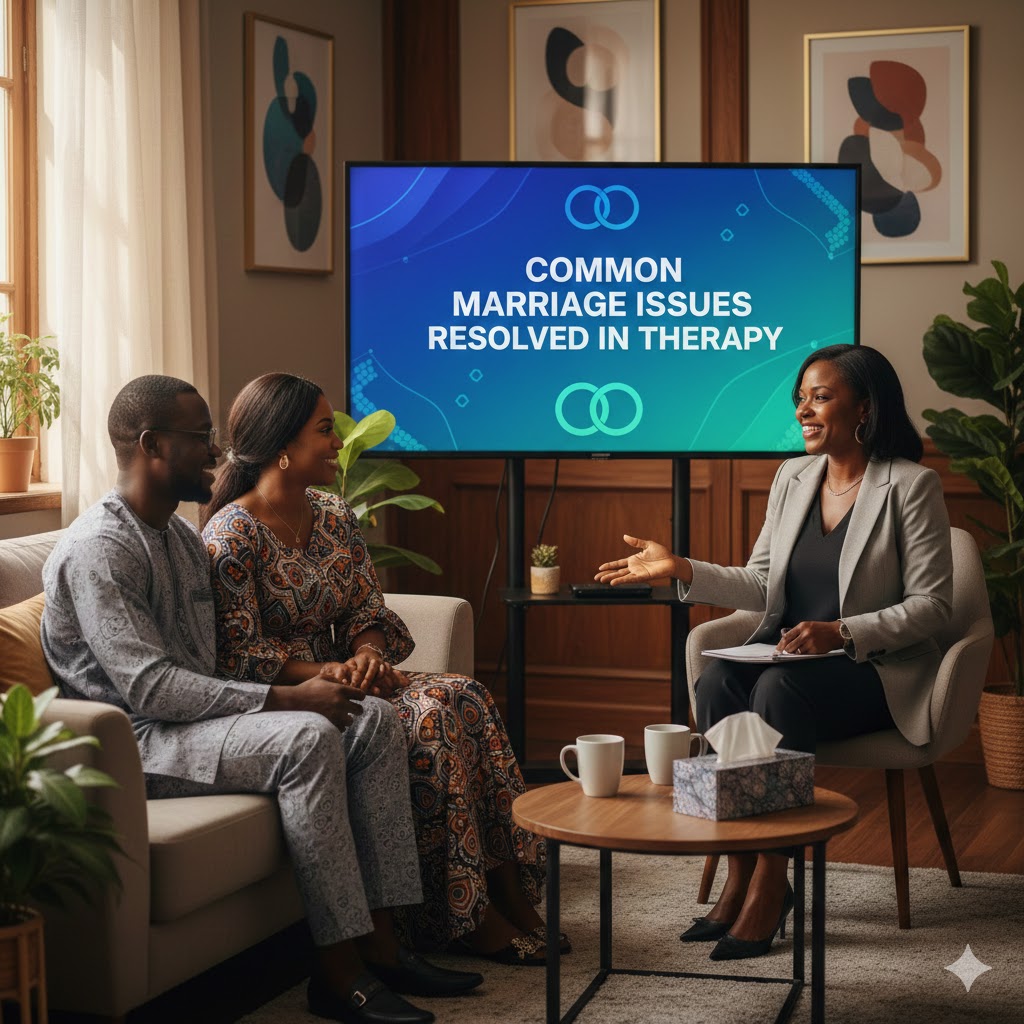
Common Marriage Issues Resolved in Therapy: A Nigerian Couples’ Guide
Marriage is a journey filled with joy, companionship, and shared experiences. However, even the strongest relationships face challenges. Nigerian couples often encounter unique pressures from extended families, cultural expectations, religious obligations, and economic stress, which can complicate marital dynamics.
Therapy provides a safe and structured environment for couples to address issues, improve communication, and rebuild emotional intimacy. This article explores common marriage issues resolved in therapy, illustrated with real-life Nigerian scenarios and practical strategies for lasting improvement.
Understanding Marriage Therapy
Marriage therapy, also called couples counseling, involves a trained therapist guiding couples to:
-
Communicate effectively
-
Resolve conflicts constructively
-
Strengthen emotional and physical intimacy
-
Align life goals and expectations
-
Manage stress and external pressures
Scenario:
In Lagos, Tobi and Sade sought therapy after noticing emotional distance and frequent arguments. Counseling provided tools to identify root causes, improve communication, and rebuild trust, demonstrating the transformative power of therapy.
Key Insight: Therapy does not only fix crises—it enhances relationship skills, preventing minor issues from escalating into major conflicts.
1. Communication Problems
Poor communication is one of the most common issues couples face. Misunderstandings, assumptions, and unresolved conflicts often result from ineffective communication.
Signs of Communication Problems:
-
Frequent misunderstandings
-
Arguing over minor issues
-
Avoiding difficult conversations
-
Feeling unheard or undervalued
Scenario:
In Abuja, Amaka felt her husband Chidi no longer shared his feelings. Chidi, on the other hand, felt overwhelmed by constant questioning. Therapy introduced structured communication techniques, including “I feel” statements and active listening exercises, improving understanding and reducing tension.
Therapy Solutions:
-
Structured communication exercises
-
Active listening and empathy training
-
Conflict de-escalation strategies
-
Regular emotional check-ins
2. Emotional Disconnection
Over time, couples may feel emotionally distant due to stress, routine, or unresolved conflicts. Emotional disconnection can manifest as reduced intimacy, lack of support, or feeling like roommates rather than partners.
Scenario:
In Port Harcourt, Chika and Emeka had drifted apart after having children. Counseling helped them reconnect through shared activities, gratitude exercises, and daily check-ins, gradually restoring emotional closeness.
Therapy Solutions:
-
Emotional awareness and expression exercises
-
Rebuilding trust and intimacy
-
Scheduled quality time and bonding activities
-
Empathy and validation training
3. Trust and Infidelity Issues
Trust breaches, including infidelity or secrecy, are significant sources of marital conflict. Therapy provides tools to rebuild trust, improve transparency, and restore emotional security.
Scenario:
In Lagos, Tobi discovered Sade had hidden a loan. Counseling allowed them to address the issue, establish transparency, and implement accountability measures. Over time, trust was rebuilt through consistent communication and shared decision-making.
Therapy Solutions:
-
Guided disclosure and accountability
-
Gradual trust-building exercises
-
Conflict resolution and emotional regulation training
-
Reestablishing shared boundaries
4. Financial Conflicts
Money is a major source of tension in Nigerian marriages. Disagreements may arise from differing spending habits, financial priorities, or extended family obligations.
Scenario:
In Abuja, Amaka and Chidi often argued over monthly household expenses. Therapy helped them create a joint budget, negotiate spending priorities, and establish financial transparency, reducing stress and conflict.
Therapy Solutions:
-
Budgeting and financial planning exercises
-
Transparent financial communication
-
Conflict resolution strategies for money disagreements
-
Negotiation and compromise skills
5. Sexual and Intimacy Issues
Reduced sexual satisfaction or mismatched intimacy needs can strain marriages. Counseling addresses emotional and physical intimacy challenges, fostering connection and mutual satisfaction.
Scenario:
In Lagos, Funke and Ade experienced reduced intimacy due to work stress. Counseling encouraged open discussion of needs and gradual physical reconnection, reigniting affection and closeness.
Therapy Solutions:
-
Communication about sexual needs and preferences
-
Gradual intimacy-building exercises
-
Emotional connection exercises to support physical intimacy
-
Addressing underlying stress or emotional blocks
6. Parenting and Family Conflicts
Differences in parenting styles or family expectations can create tension. Therapy helps couples align parenting strategies and navigate extended family pressures.
Scenario:
In Port Harcourt, Chika and Emeka disagreed on discipline methods for their children. Counseling introduced collaborative problem-solving, compromise, and consistent parenting plans, reducing friction and improving family harmony.
Therapy Solutions:
-
Joint parenting strategy development
-
Communication and compromise exercises
-
Managing extended family interference
-
Conflict resolution for child-related issues
7. Cultural and Religious Differences
Nigeria’s diverse cultures and religious beliefs can influence marital expectations. Differences in traditions, beliefs, or rituals may create misunderstandings.
Scenario:
In Lagos, Tobi and Sade navigated differing religious expectations for family rituals. Therapy facilitated respectful dialogue, mutual understanding, and compromises aligned with both partners’ values.
Therapy Solutions:
-
Cultural sensitivity and understanding exercises
-
Faith-based guidance integration
-
Conflict resolution around family traditions
-
Negotiating compromises without resentment
8. Managing Extended Family Influence
Extended family pressure is a unique challenge in Nigeria. Counseling helps couples set healthy boundaries and maintain autonomy in decision-making.
Scenario:
In Abuja, Amaka and Chidi faced repeated requests from relatives for financial support. Therapy guided them in respectfully establishing boundaries while preserving family relationships, reducing conflict and stress.
Therapy Solutions:
-
Boundary-setting strategies
-
Unified couple decision-making practices
-
Negotiation techniques with relatives
-
Balancing respect and autonomy
9. Work-Life Balance and Stress
Busy careers, long commutes, and financial pressures can lead to stress and neglect of the marital relationship. Therapy provides strategies for work-life balance, stress management, and prioritizing the relationship.
Scenario:
In Lagos, Tobi and Sade’s demanding jobs reduced quality time. Counseling encouraged scheduled date nights, shared household responsibilities, and stress-reduction techniques, improving connection and satisfaction.
Therapy Solutions:
-
Time management and priority-setting exercises
-
Stress-reduction and relaxation techniques
-
Quality time scheduling and planning
-
Delegation and collaboration strategies
10. Communication About Future Goals
Differences in life goals, such as career plans, investments, or family growth, can create tension. Counseling helps couples align visions and create joint plans.
Scenario:
In Port Harcourt, Chika wanted to pursue a business venture while Emeka preferred stability in his current job. Therapy facilitated compromise, aligning short-term and long-term goals collaboratively.
Therapy Solutions:
-
Goal-setting and planning exercises
-
Vision alignment discussions
-
Structured problem-solving for conflicting priorities
-
Shared action plans and accountability
Practical Exercises Couples Learn in Therapy
1. “I Feel” Statements
Purpose: Express emotions without blame.
Scenario:
In Abuja, Amaka expressed frustration about financial disagreements: “I feel stressed when we exceed the budget.” Chidi listened actively, reducing defensiveness and fostering understanding.
2. Active Listening Exercises
Purpose: Strengthen understanding and empathy.
Scenario:
In Lagos, Tobi and Sade practiced reflective listening during arguments, repeating back what was said to ensure understanding. This reduced miscommunication and emotional tension.
3. Joint Problem-Solving Sessions
Purpose: Resolve conflicts collaboratively.
Scenario:
In Port Harcourt, Chika and Emeka brainstormed solutions for household chores using structured problem-solving, ensuring fairness and cooperation.
4. Appreciation and Gratitude Practices
Purpose: Reinforce positive behaviors and emotional connection.
Scenario:
In Lagos, Tobi and Sade shared daily moments of appreciation, improving emotional intimacy and reducing minor conflicts.
5. Conflict Journals
Purpose: Track disagreements and identify patterns.
Scenario:
In Abuja, Amaka and Chidi documented conflicts, triggers, and resolutions. This allowed therapy to focus on recurring issues and strategies to prevent escalation.
Cultural Considerations in Nigerian Marital Therapy
-
Respect for Elders: Balancing extended family input with personal autonomy
-
Religious Integration: Incorporating faith-based guidance where appropriate
-
Gender Roles: Addressing traditional expectations while promoting equity
-
Community Influence: Handling societal scrutiny and advice constructively
Scenario:
In Lagos, Tobi and Sade learned to navigate family expectations about decision-making while maintaining a united marital front through therapy guidance.
When to Seek Marriage Therapy
-
Persistent communication problems
-
Emotional disconnection or withdrawal
-
Frequent conflicts over finances, intimacy, or parenting
-
Trust issues or infidelity
-
Desire to strengthen partnership before problems escalate
Scenario:
In Abuja, Amaka and Chidi sought therapy early when minor arguments about household responsibilities began escalating. Early intervention prevented resentment and improved marital satisfaction.
Long-Term Benefits of Therapy
-
Enhanced Communication Skills
-
Improved Conflict Resolution Abilities
-
Strengthened Emotional and Physical Intimacy
-
Aligned Goals and Shared Vision
-
Better Work-Life Balance and Stress Management
-
Healthy Boundaries with Extended Family
-
Increased Relationship Satisfaction and Resilience
Scenario:
In Lagos, Tobi and Sade experienced fewer conflicts, improved intimacy, and stronger partnership six months after starting therapy.
Tips for Sustaining Therapy Lessons
-
Integrate exercises into daily routines
-
Schedule regular check-ins
-
Use journals, reminders, or apps to reinforce progress
-
Reflect on successes and areas for improvement
-
Revisit therapy periodically if needed
Scenario:
In Port Harcourt, Chika and Emeka continued gratitude exercises, conflict journaling, and weekly reflections to maintain relationship gains from therapy.
Conclusion: Therapy as a Solution to Common Marriage Issues
Marriage therapy equips Nigerian couples with skills, strategies, and insights to overcome common marital challenges. From communication problems and financial conflict to intimacy issues and extended family pressure, therapy provides practical tools for lasting improvement.
Key Takeaways:
-
Therapy addresses both surface-level and deep-rooted marital issues
-
Nigerian cultural, economic, and societal factors must be considered
-
Practical exercises reinforce therapy lessons in daily life
-
Consistency, commitment, and reflection ensure long-term relationship growth
Final Thought: For Nigerian couples, marriage therapy is an investment in love, trust, and partnership. By addressing challenges proactively, couples can build stronger, more resilient marriages capable of thriving despite life’s complexities.






.jpg)

Sign in to comment