 Nurturing Marriages, Enriching Families!

Complete Guide to Marriage in Nigeria: Traditions, Legal Requirements, Costs, and Modern Realities
Everything You Need to Know About Culture, Law, Costs, Customs & Trends
Table of Contents
-
Introduction: The Beautiful Complexity of Nigerian Marriage
-
The Three Legal Frameworks for Marriage in Nigeria
-
Statutory Marriage (Civil Marriage)
-
Customary Marriage
-
Islamic Marriage
-
-
Understanding Traditional Marriage Customs Across Nigerian Ethnic Groups
-
Yoruba Marriage Traditions
-
Igbo Marriage Traditions
-
Hausa-Fulani Marriage Traditions
-
Tiv Marriage Customs and Recent Reforms
-
Minority Ethnic Groups and Their Unique Practices
-
-
The Bride Price System: Meaning, Amounts, and Legal Implications
-
What Bride Price Represents
-
Average Bride Prices Across Nigeria
-
Bride Price Refunds and Marriage Breakdown
-
-
Step-by-Step Guide to Getting Married in Nigeria
-
Stage 1: Introduction and Family Approval
-
Stage 2: Traditional Wedding Ceremony
-
Stage 3: Court Wedding (Optional but Legally Important)
-
Stage 4: Religious Wedding Ceremony
-
Stage 5: Reception and Celebration
-
-
Complete Wedding Budget Breakdown and Planning Guide
-
Average Wedding Costs in Nigeria (2026 Data)
-
Sample Budget for a ₦1 Million Wedding
-
How Couples Are Spending Under ₦500,000
-
Cost-Saving Strategies That Actually Work
-
-
Government and Community Marriage Support Programs
-
Kano State Mass Wedding Programme
-
State-by-State Bride Price Regulations
-
-
Legal Rights, Documentation, and International Recognition
-
Required Documents for Marriage Registration
-
The 21-Day Notice Period
-
International Recognition of Nigerian Marriages
-
-
Modern Challenges in Nigerian Marriage
-
Balancing Career and Marriage
-
Family Pressure to Marry
-
Financial Stress and Marriage
-
In-Law Conflicts and Resolution
-
-
Frequently Asked Questions About Marriage in Nigeria
-
Conclusion: Building a Strong Foundation for a Lifetime
-
Internal Links to Related MarriageHib.ng Resources
Introduction: The Beautiful Complexity of Nigerian Marriage
After months of immersing myself in Nigeria's rich tapestry of marriage customs, attending countless traditional ceremonies from Jos to Lagos, and spending years documenting how our diverse ethnic groups celebrate unions, I'm absolutely thrilled to share this comprehensive guide with you. Nigerian marriage traditions represent some of the most vibrant, complex, and meaningful cultural practices on the African continent, and understanding them offers a window into the soul of our nation .
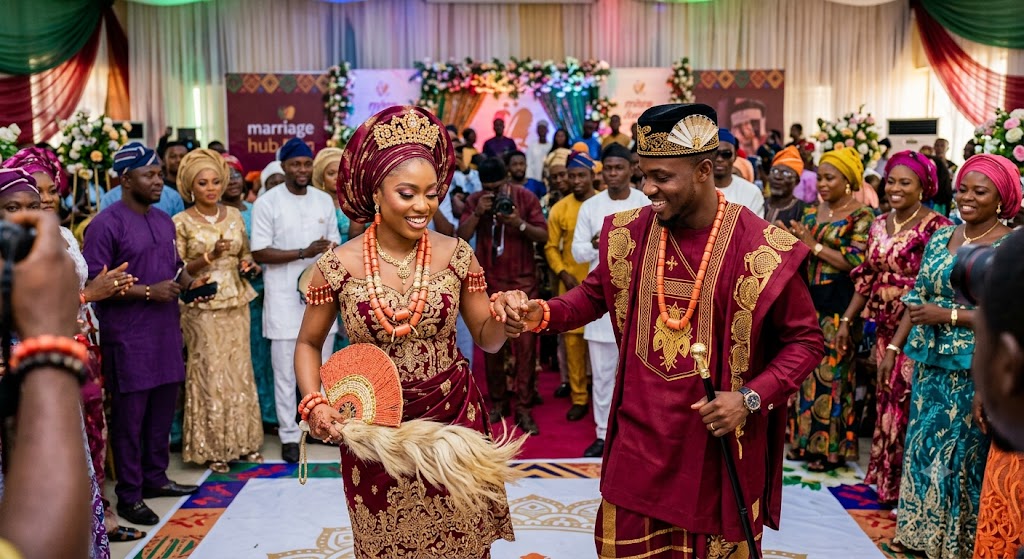
I still remember the first traditional Igbo marriage I attended in Owerri back in 2018. The sheer scale of it stunned me! There must have been 500 guests, three different ceremony locations, and celebrations that spanned an entire weekend. What struck me most, though, wasn't the spectacle (though the bride's outfit changes were magnificent). It was the profound sense that this marriage belonged not just to the couple but to everyone present, to their ancestors, and to generations yet unborn. That's the essence of Nigerian marriage customs—a communal investment in the future wrapped in celebration .
Nigerian marriage customs are elaborate, multi-layered celebrations that unite not just two individuals but entire families and communities through traditional ceremonies, religious observances, and statutory legal processes. These customs encompass bride price negotiations, engagement rites that vary dramatically across our 371 ethnic groups, multi-day celebration ceremonies, extensive gift exchanges between families, and the integration of traditional, religious, and legal marriage forms. The core purpose extends beyond romantic union to establish social bonds, honour ancestral traditions, ensure family continuity, and create networks of mutual support that define Nigerian community life .
The Ministry of Interior oversees statutory marriages under the Marriage Act, CAP M6, Laws of the Federation of Nigeria (2004), which recognises both ordinary marriages (between Nigerians) and special marriages (involving non-Nigerians). However, traditional marriages operate under customary law and don't require government registration to be considered valid within communities. This dual system creates interesting dynamics where couples often undergo multiple ceremonies to satisfy different legal and cultural requirements .
According to recent Guardian Nigeria reporting, approximately 60 per cent of Nigerian marriages still involve traditional customary ceremonies as either the primary or initial form of union, even when couples subsequently have church weddings or registry marriages. This demonstrates the enduring importance of customary practices in Nigerian society, regardless of education level, urban residence, or economic status .
In this comprehensive guide, we'll explore everything you need to know about marriage in Nigeria—from traditional customs across major ethnic groups to legal requirements, from realistic wedding budgets to modern challenges facing Nigerian couples today. Whether you're planning your own wedding, curious about Nigerian traditions, or researching for academic purposes, this guide aims to be your definitive resource.
The Three Legal Frameworks for Marriage in Nigeria
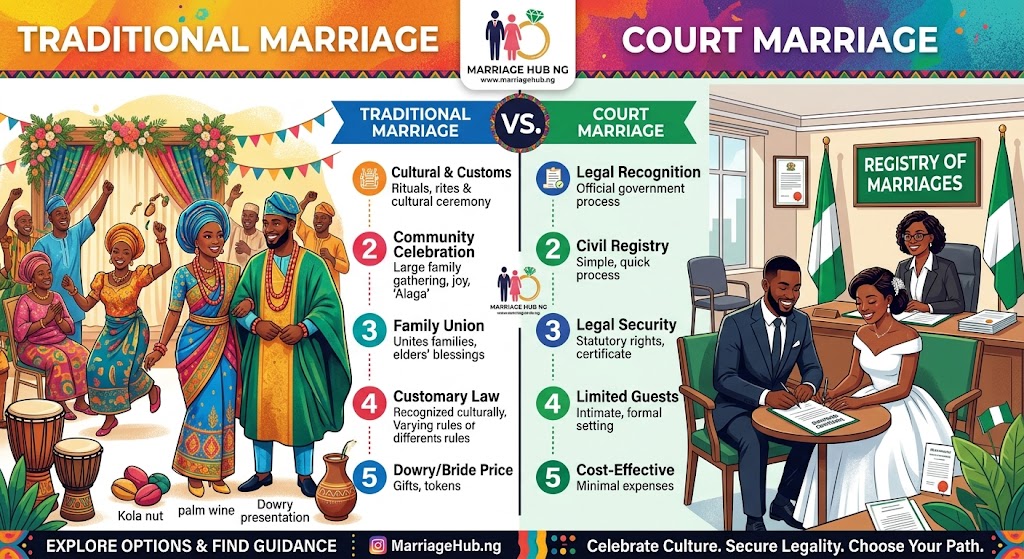
Marriage in Nigeria operates within a plural legal system that recognises three distinct types of marriage: statutory marriage (civil), customary marriage, and Islamic marriage. Each has its own legal framework, requirements, and implications for couples. Understanding these differences is crucial for ensuring your marriage is legally valid and properly recognised .
Statutory Marriage (Civil Marriage)
Statutory marriage is governed by the Marriage Act (Cap. M6, Laws of the Federation of Nigeria, 2004) and the Matrimonial Causes Act. This is the only form of marriage that is automatically monogamous—it legally prohibits either party from marrying another person during the subsistence of the marriage .
Key Features of Statutory Marriage:
-
It is conducted and registered at a Marriage Registry, typically under the authority of local government councils or federal marriage registries
-
It is strictly monogamous—polygamy is illegal for couples married under this Act
-
It provides the strongest legal protection and broadest international recognition
-
Divorce is governed by the Matrimonial Causes Act and requires a court decree based on irretrievable breakdown of marriage
-
Bride price is legally irrelevant under statutory marriage law
Eligibility Requirements: To legally marry under the Marriage Act, the following conditions must be met :
-
Both parties must be at least 18 years old
-
Both individuals must freely consent to the marriage
-
Neither party may be legally married to another person under statutory law
-
The marriage must not fall within prohibited degrees of relationship
-
Foreign nationals are permitted to marry in Nigeria, subject to compliance with civil and immigration requirements
Customary Marriage
A customary marriage in Nigeria is a union conducted according to the traditional practices and customs of a couple's ethnic group. It is recognised as valid under Nigerian law without requiring statutory registration or religious ceremony, provided it meets certain criteria .
Key Features of Customary Marriage:
-
It follows indigenous traditions that predate colonial influence
-
It involves bride price payment and family negotiations as central elements
-
It is validated by community recognition rather than government certificates
-
It establishes full marital rights including inheritance, custody, and social status within the traditional framework
-
It is potentially polygamous—a man married under customary law can legally marry another woman under the same system
Validation Requirements: For a customary marriage to be legally recognised, it must generally include :
-
The consent of both parties
-
Payment of bride price according to the applicable custom
-
Community recognition through proper ceremonies
-
Compliance with the specific traditions of the ethnic group
The National Population Commission has documented that customary marriages remain the dominant form of union across Nigeria, particularly in rural areas and among older generations. These marriages carry the same legal weight as statutory marriages in matters of inheritance, custody, and property rights .
Islamic Marriage
Islamic marriage is governed by Islamic personal law (Sharia) in applicable states, particularly in Northern Nigeria. It is recognised under the Nigerian legal system as a valid form of marriage.
Key Features of Islamic Marriage:
-
It is governed by Islamic law and traditions
-
It allows polygyny (a man may have up to four wives)
-
It requires payment of sadaki (bride price) as specified in Islamic law
-
It involves specific religious ceremonies and requirements
-
Divorce procedures follow Islamic legal principles
Understanding Traditional Marriage Customs Across Nigerian Ethnic Groups
Nigeria is home to over 371 ethnic groups, each with its own unique marriage traditions and customs. While certain principles unite them all, the specific practices vary dramatically. Understanding these differences is essential for anyone planning to marry into a different ethnic group or simply wishing to appreciate Nigeria's cultural diversity .
Yoruba Marriage Traditions
The Yoruba people, predominantly located in southwestern Nigeria (Lagos, Ogun, Oyo, Osun, Ondo, Ekiti, and Kwara states), have elaborate marriage ceremonies that blend traditional and modern elements .
Key Elements of Yoruba Marriage:
-
Mo mi i mo e (Introduction): The groom's family formally visits the bride's family to declare their son's interest. This is not a negotiation but a formal introduction and expression of intent .
-
Owo ori (Bride Price): The groom's family presents the bride price, which is largely symbolic among the Yoruba compared to some other ethnic groups. It typically ranges from ₦50,000 to ₦500,000, depending on the family's status and negotiation .
-
Engagement Ceremony (Igbeyawo): This is the main traditional ceremony, featuring:
-
Presentation of symbolic items including honey, bitter kola, salt, sugar, and alligator pepper
-
The groom searching for his bride among a group of veiled women
-
The couple sharing drinks and food as a symbol of their union
-
Extensive dancing and entertainment
-
Multiple outfit changes for the bride
-
-
Family Blessings: Elders from both families pray for the couple and offer advice for a successful marriage.
Igbo Marriage Traditions
The Igbo people of southeastern Nigeria (Abia, Anambra, Ebonyi, Enugu, and Imo states) have some of the most elaborate and dramatic marriage traditions in Nigeria .
Key Elements of Igbo Marriage:
-
Iku aka/Iju ese (Knocking/Inquiry): The first formal visit where the groom's family comes to "knock on the door" and express their intention. This involves presenting kola nuts, drinks, and sometimes tobacco .
-
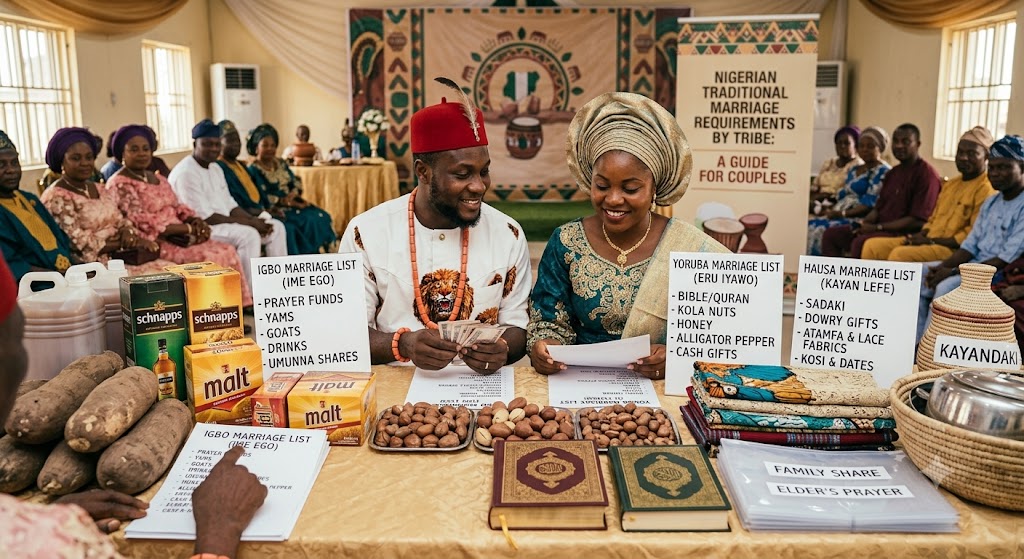
Ihe isi (Bride Price Negotiation): Unlike the Yoruba where bride price is largely symbolic, Igbo negotiations can be extensive. The bride's family presents a list of requirements, which may include:
-
Cash amounts ranging from ₦100,000 to over ₦3,000,000
-
Items such as goats, yams, palm wine, and drinks
-
Fabrics and clothing for the bride's family
Important Note: The Limitation of Dowry Law, 1956, applicable in parts of Igboland, caps bride price at a nominal amount (historically about ₦60, excluding incidental expenses), though this law is rarely enforced .
-
-
Igba Nkwu Nwanyi (Wine Carrying Ceremony): The highlight of the traditional wedding, featuring:
-
The bride carrying a cup of palm wine and searching for her groom among the crowd
-
She must find him and offer him the wine while kneeling
-
This act symbolises her ability to choose wisely and her willingness to serve her husband
-
The groom drinks and then presents gifts to the bride
-
-
Family Integration: After the ceremony, the bride is formally introduced to her new family and receives advice from both families.
Hausa-Fulani Marriage Traditions
The Hausa-Fulani people of northern Nigeria have marriage customs strongly influenced by Islamic traditions, with shorter courtship periods and more structured procedures .
Key Elements of Hausa-Fulani Marriage:
-
Short Courtship: Unlike southern traditions where courtship can be prolonged, Hausa-Fulani marriages typically involve shorter courtship periods before formal negotiations begin .
-
Sadaki (Bride Price): The groom pays sadaki according to Islamic requirements. These payments are generally lower than southern equivalents, typically ranging from ₦50,000 to ₦200,000 .
-
Islamic Nikah Ceremony: The religious marriage ceremony is conducted according to Islamic rites, often in a mosque with separate seating for men and women.
-
Modest Celebrations: Gender separation during celebrations is common, with emphasis on modesty in all proceedings .
-
Family Provision: The bride's family traditionally provides furniture and kitchenware, while the groom provides accommodation, boxes of clothing, cosmetics, jewellery, footwear and handbags .
Tiv Marriage Customs and Recent Reforms
The Tiv people of Benue State have recently undergone significant reforms to their marriage customs under the leadership of the Tor Tiv, James Iorzua Ayatse .
Key Reforms Announced in February 2026:
-
Bride Price Cap: The Tor Tiv has fixed a maximum of ₦100,000 for marriage-related items, addressing concerns about excessive spending during marriage ceremonies .
-
Prohibition of Cake-Cutting: The council further prohibited cake-cutting at traditional weddings, distinguishing traditional ceremonies from western-style celebrations .
-
Abolition of "Kwase Kuhan" Festivities: Traditional festivities previously held at the father-in-law's home have been abolished to reduce financial burden on families .
-
Women's Inheritance Rights: In a groundbreaking shift, Tiv women have now been accorded full rights to inheritance, with legal backing and court enforcement available .
-
Burial Ceremony Limits: All funeral activities must be completed within three days and restricted to immediate family members, with burial anniversaries and remembrance events completely outlawed due to unnecessary financial burden .
-
Domestic Violence Prohibition: The council declared zero tolerance for domestic violence, stressing that the ban applies to both men and women without exception .
These reforms demonstrate that Nigerian marriage customs are not static but evolve to address contemporary challenges and promote financial responsibility and gender fairness .
Minority Ethnic Groups and Their Unique Practices
Beyond the major ethnic groups, Nigeria's minority communities have equally rich marriage traditions. Space prevents a comprehensive treatment, but notable practices include:
-
Efik/Ibibio (Cross River/Akwa Ibom): Elaborate fattening rooms (mbobo) where brides are prepared for marriage through education in domestic skills, cultural values, and sometimes weight gain as a sign of beauty and prosperity.
-
Ijaw (Bayelsa, Delta, Rivers): Bride price typically ranges from ₦50,000 to ₦300,000, with traditional items including drinks, fish, and fabric .
-
Urhobo/Isoko (Delta): Bride price negotiations and traditional ceremonies that emphasise family involvement and community celebration.
The Bride Price System: Meaning, Amounts, and Legal Implications
The concept of bride price (sometimes called bridewealth or dowry in certain contexts) is central to customary marriages across many Nigerian ethnic groups, including Yoruba, Igbo, Hausa, and others. It is essential to understand what bride price truly represents in traditional culture .
What Bride Price Represents
Traditional Meaning: Bride price symbolises respect, commitment, family alliance, and the groom's readiness to assume responsibility—not the purchase of a woman. Nigerian courts have consistently affirmed that payment of bride price does not make a woman property .
Under customary law, key principles include :
-
Bride price is paid by the groom or his family
-
It is paid to the bride's family, not to the bride personally
-
It does not confer ownership or proprietary rights over the woman
The purpose extends beyond financial transaction to:
-
Demonstrating the groom's ability to provide for a family
-
Establishing formal family connections and obligations
-
Compensating the bride's family for losing a daughter's labour and future children
-
Creating community witness to the union's legitimacy
Average Bride Prices Across Nigeria
Bride price amounts vary dramatically across ethnic groups, locations, and individual family negotiations :
| Ethnic Group | Typical Range | Notes |
|---|---|---|
| Yoruba | ₦50,000 - ₦500,000 | Generally symbolic and negotiable |
| Igbo | ₦100,000 - ₦3,000,000+ | Widest variation; heavily negotiated |
| Hausa-Fulani | ₦50,000 - ₦200,000 | Islamic sadaki requirements |
| Tiv | Maximum ₦100,000 | Legally capped by traditional council |
| Efik/Ibibio | ₦100,000 - ₦500,000 | Varies by family status |
| Ijaw | ₦50,000 - ₦300,000 | Typically moderate |
Important Considerations:
-
Bride price demands often represent aspirations rather than fixed requirements; respectful negotiation is expected
-
Some states have laws discouraging excessive demands, though enforcement varies
-
The value includes both cash and material items (goats, yams, drinks, fabric)
Bride Price Refunds and Marriage Breakdown
The question of whether bride price must be refunded when a marriage breaks down is complex and depends on the type of marriage contracted .
Statutory Marriages: Under statutory marriage law :
-
Bride price is legally irrelevant
-
No refund is required or recognised
-
The Matrimonial Causes Act makes no reference to bride price
-
Refund demands have no legal effect
-
A statutory marriage ends only by court decree, not by customary processes
Customary Marriages: In many Nigerian customs—particularly among Igbo communities—refund of bride price is seen as symbolic confirmation that a marriage has ended. However :
-
Refunds are often partial rather than full
-
Negotiated based on length of marriage, birth of children, and contributions by the wife
-
Managed through families or customary intermediaries
-
Some customary court laws allow courts to order refunds where appropriate
Emerging Judicial Trends: Courts increasingly rely on the repugnancy doctrine and constitutional rights to scrutinise refund practices. Recent decisions from Upper Customary Courts in Kaduna State (2022–2024) suggest that :
-
Mandatory refund after very long marriages may be unjust
-
Refund demands may be rejected where the woman contributed decades of unpaid labour or children were raised
-
Courts may refuse full refunds, order symbolic refunds, or reject refund claims entirely
Key Takeaway: Bride price is a symbol of union, not ownership. Marriage may end—but human dignity remains protected .
Step-by-Step Guide to Getting Married in Nigeria
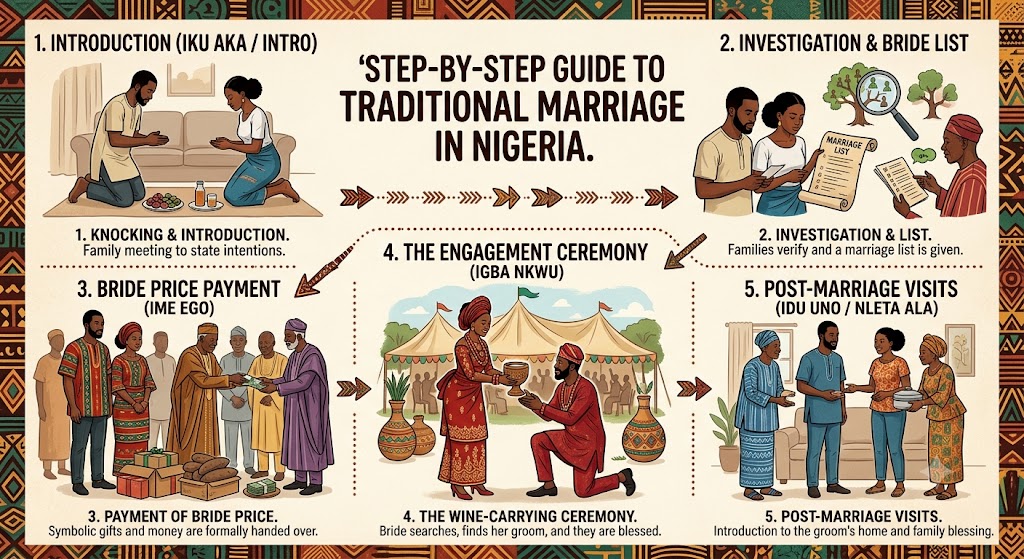
Marriage in Nigeria typically involves multiple stages, often combining traditional, legal, and religious ceremonies. Here's a comprehensive step-by-step guide:
Stage 1: Introduction and Family Approval
Before any formal ceremonies, the couple must secure family approval, particularly from elders.
Process:
-
Informal Introduction: The couple informs their immediate families of their intention to marry
-
Formal Family Visit: The groom's family visits the bride's family to formally declare their son's interest
-
Presentation of Gifts: Kola nuts, drinks, and other symbolic items are presented
-
Family Discussion: Elders discuss the proposal and give their consent
Tips:
-
Engage family elders early in the process; they serve as negotiators, protocol experts, and cultural gatekeepers
-
If you're from different ethnic groups, invest time understanding your partner's marriage traditions
Stage 2: Traditional Wedding Ceremony
The traditional ceremony formalises the marriage under customary law.
Process Varies by Ethnic Group (as detailed in previous sections), but generally includes:
-
Bride Price Negotiation and Payment: The families agree on and exchange bride price
-
Main Ceremony: The public celebration where the couple is formally joined according to tradition
-
Family Blessings: Elders pray for and advise the couple
Budget Considerations:
-
Traditional wedding costs average ₦3.3 million according to recent data
-
However, costs can be significantly lower with careful planning (see budgeting section)
Stage 3: Court Wedding (Optional but Legally Important)
For couples who want a statutory marriage with its legal protections and international recognition, a court wedding is essential.
Process:
-
Notice of Intended Marriage: Submit a notice to the marriage registry; this is publicly displayed for 21 days to allow for objections
-
Document Submission: Provide required documents (see Legal Rights section)
-
Ceremony: Conducted before a licensed marriage registrar with at least two witnesses
-
Registration: Marriage is officially registered, and a marriage certificate is issued
Fees: ₦50,000 to ₦200,000 depending on location and type of license
Stage 4: Religious Wedding Ceremony
Many couples choose to have a religious ceremony in a church or mosque.
Process (Church Wedding):
-
Pre-marital Counseling: Most churches require several months of counseling
-
Publication of Banns: Announcement in church for several weeks
-
Wedding Service: Conducted by a pastor/priest according to church traditions
Process (Islamic Nikah):
-
Islamic Counseling: Guidance on Islamic marriage requirements
-
Nikah Ceremony: Conducted in a mosque or home by an Islamic cleric
-
Walima (Reception): Celebration hosted by the groom after consummation
Stage 5: Reception and Celebration
The reception is often the most expensive part of the wedding, where families and friends celebrate together.
Typical Elements:
-
Venue hire and decoration
-
Food and drinks (often the largest expense)
-
Entertainment (DJ, band, or both)
-
Cake cutting
-
Souvenirs for guests
Complete Wedding Budget Breakdown and Planning Guide
Planning a wedding in Nigeria requires careful financial planning. Based on comprehensive data, here's what couples need to know about wedding costs.
Average Wedding Costs in Nigeria (2026 Data) {#average-costs}
According to recent Guardian Nigeria reporting, the average Nigerian wedding now costs ₦13 million, with the following breakdown :
| Component | Average Cost | Percentage |
|---|---|---|
| White Wedding (Church + Reception) | ₦8.9 million | 70% |
| Traditional Wedding | ₦3.3 million | 25% |
| Proposal/Engagement | ₦600,000 | 5% |
| TOTAL | ₦13 million | 100% |
These figures may seem daunting, but many couples spend significantly less through careful planning and prioritisation.
Sample Budget for a ₦1 Million Wedding {#sample-budget-1m}
Based on a detailed breakdown from a wedding planner, here's how ₦1 million can be allocated for a wedding with 150 guests :
| Category | Amount (₦) | Notes |
|---|---|---|
| Bride and Groom | 194,500 | |
| Wedding gown (purchase) | 55,000 | Renting could reduce this further |
| Bride's shoes | 7,500 | |
| Bridal accessories | 10,000 | Bouquet, veil, jewellery |
| Bridal beauty (hair, makeup, nails) | 15,000 | |
| Wedding rings (pair) | 50,000 | Gold-plated or simple gold |
| Groom's shoes | 25,000 | |
| Groom's suit | 15,000 | |
| Groom's accessories | 15,000 | Cuff links, belt, boutonniere |
| Groom's grooming | 2,000 | Haircut, shave |
| Stationery and Souvenirs | 60,000 | |
| Invitation cards and programs | 15,000 | Digital invites save this cost |
| Souvenirs for guests | 45,000 | 150 guests at ₦300 each |
| Venue and Decoration | 175,000 | |
| Venue hire (indoor hall) | 150,000 | Community halls are cheaper |
| Decoration | 25,000 | Simple DIY with minimal florals |
| Food and Drinks | 202,500 | |
| Wedding cake | 22,500 | ₦150 per guest for 150 guests |
| Food | 150,000 | ₦1,000 per head (buffet style) |
| Drinks/juice/water | 30,000 | ₦200 per head |
| Entertainment and Visuals | 135,000 | |
| Photography/videography | 100,000 | Young photographer building portfolio |
| Master of Ceremony (MC) | 10,000 | Friend or acquaintance |
| DJ (no live band) | 25,000 | Live bands cost significantly more |
| Miscellaneous | 153,400 | |
| Family members' outfits, transport, etc. | 153,400 | Parents, siblings, VIP guests |
| TOTAL | ₦920,400 |
This breakdown shows that a beautiful wedding is possible within ₦1 million with careful planning .
How Couples Are Spending Under ₦500,000
Inspiring stories of couples spending even less demonstrate that wedding cost is ultimately about priorities. One Nigerian man shared on X (formerly Twitter) how he and his wife spent less than ₦450,000 on their entire wedding :
Breakdown:
-
₦20,000 for pictures
-
About ₦100,000 for their outfits
-
₦40,000 for one night in a hotel
The next day, he moved into his wife's self-contained apartment. As he put it, "As a married man, I didn't even have a bed of my own. It was our wedding, not everyone's wedding, so there was no need to wear ourselves out. It was about knowing our limits and understanding what we could and couldn't afford" .
Similarly, BusinessDay NG has outlined how couples can plan a wedding on a ₦500,000 budget :
| Category | Budget (₦) | Tips |
|---|---|---|
| Venue | 200,000 | Church compound, gardens, or community centres |
| Food and drinks (100 guests) | 150,000 | Buffet style, family-style dinner |
| Entertainment | 30,000 | Local DJ, friend as MC |
| Wedding gown | 50,000 | Rent instead of buying |
| Wedding cake | 40,000 | Cupcakes or one-tier cake instead of large display cake |
| Souvenirs | 15,000 | Affordable items |
| Photography | Free/low cost | Creative friend with smartphone |
| TOTAL | ₦485,000 |
Cost-Saving Strategies That Actually Work
Based on expert advice from wedding planners and couples who've successfully planned budget weddings, here are proven strategies :
1. Be Ruthless with the Guest List: Every guest costs money—food, drinks, souvenirs, seating. At ₦2,500 per person for catering alone, adding 50 extra people blows your budget by ₦125,000. Invite only immediate family and close friends .
2. Choose the Right Venue: Venues can cost ₦200,000 to ₦2.5 million. Consider church compounds (often free for members), gardens, or community centres. If you must use a hall, choose one with neutral walls that don't require extensive decoration .
3. Be Strategic About Food: Buffet style costs less than plated service and reduces waste. Skip alcohol—it doubles catering costs. Provide soft drinks and water instead .
4. Get Smart About the Cake: Buy a small one-tier cake for display and cutting, then serve guests regular (un-iced) cake from a bakery. No one will know the difference, and you'll save significantly .
5. Rent, Don't Buy: Wedding gowns can be rented for ₦50,000 instead of purchased for ₦150,000+. Grooms can buy versatile outfits they'll wear again .
6. Find Rising Vendors: Top photographers charge ₦500,000 to ₦1.5 million. Young photographers building their portfolio often deliver excellent quality for ₦70,000-100,000 .
7. DIY What You Can: Ask talented friends and family to help with catering, baking, souvenirs, or MC duties. But draw the line at photography and makeup—you won't get a second chance if those go wrong .
8. Use Digital Invitations: Printed invitations for 100 guests cost at least ₦30,000. Digital invites via WhatsApp cost data only and are environmentally friendly .
9. Leverage Community: Nigerian community support is powerful. Accept help from family and friends—it's not cheap, it's smart .
10. Remember: Marriage Is Longer Than the Wedding: One day of celebration is not worth years of debt. Focus on building a strong foundation for your life together .
Government and Community Marriage Support Programs
Recognising the financial burden of weddings, some Nigerian governments have implemented programs to support couples.
Kano State Mass Wedding Programme
In February 2026, Kano State held mass weddings for 1,800 couples, demonstrating government commitment to helping citizens marry despite economic challenges .
Programme Details:
-
The state government took full responsibility for all wedding processes and requirements
-
Paid the ₦50,000 bride price for each groom
-
Provided customary furniture and food gifts
-
Gave each bride ₦20,000 grant "as seed money to start small businesses"
Eligibility Requirements:
-
Every groom had to have an occupation and means of income
-
Couples signed a document pledging not to refer irreconcilable disputes to Sharia police and not to divorce without mutual consent
Pre-Wedding Training: Brides participated in vocational training before the wedding, learning to make household products including bodycare products, room freshener, and insecticide. As trainer Na'isa Ahmad explained, "The wisdom behind teaching the brides some vocational skills is to make them self-reliant because life has become so expensive" .
One bride, Maimuna Yakubu Yakasai, shared: "We have learnt a lot. If you have a trade that fetches you some little money you can pay for little cash expenses (which) is a relief to your husband" .
State-by-State Bride Price Regulations
Several states have enacted laws to regulate bride price and marriage expenses:
-
Limitation of Dowry Law, 1956: Applicable in parts of Anambra, Imo, Abia, and Enugu States, caps bride price at a nominal amount (historically about ₦60, excluding incidental expenses)
-
Tiv Kingdom (Benue State): Traditional council has capped marriage rites at ₦100,000 maximum and prohibited cake-cutting at traditional weddings
These regulations reflect growing recognition that excessive wedding expenses create financial hardship for couples and families.
Legal Rights, Documentation, and International Recognition
Required Documents for Marriage Registration {#required-documents}
For couples planning a statutory marriage at the registry, the following documents are generally required :
| Document | Notes |
|---|---|
| Valid passports or national identity cards | For both parties |
| Birth certificates or declaration of age | Proof of age (minimum 18 years) |
| Certificate of No Impediment to Marriage | Or affidavit of single status |
| Proof of residence | Where required |
| Divorce decree or death certificate | If previously married (as applicable) |
| Passport-sized photographs | Usually 4-6 copies each |
Foreign-issued documents may need to be notarized and legalized depending on their country of origin .
The 21-Day Notice Period
Under Nigerian law, couples must submit a Notice of Intended Marriage to the marriage registry. This notice is publicly displayed for a statutory period of 21 days to allow for objections. In certain cases, a special license may be granted to shorten or waive the notice period .
International Recognition of Nigerian Marriages
Marriages legally performed and registered in Nigeria are generally recognized internationally. However, for use abroad, the marriage certificate may require authentication or legalization depending on the destination country .
Important: Statutory marriages provide the strongest legal protection and broadest international recognition, making them preferable for international couples .
Modern Challenges in Nigerian Marriage
Contemporary Nigerian couples face unique challenges that previous generations didn't navigate. Understanding these challenges helps couples prepare for married life.
Balancing Career and Marriage
In today's Nigeria, dual incomes are often a necessity rather than a choice. With inflation, high rent, and rising school fees, both spouses typically work . This creates challenges:
-
Limited quality time together
-
The "guilt economy"—feeling torn between work and family
-
Need for intentional scheduling of couple time
-
Importance of dividing household labor based on strength, not tradition
Successful couples learn to "schedule their marriage"—putting each other in the calendar, protecting date nights, and maintaining daily connection through phone calls and messages.
Family Pressure to Marry
Many unmarried Nigerians, particularly women over 25, face intense family pressure to marry. This can manifest as:
-
Constant questions about relationship status
-
Unsolicited introductions to potential partners
-
Comparisons to married peers
-
Cultural expectations about age-appropriate marriage
Coping strategies include setting boundaries with family, finding supportive communities, and remembering that worth is not determined by marital status.
Financial Stress and Marriage
Financial pressure is one of the leading causes of marital stress. With average weddings costing ₦13 million and economic conditions challenging, couples must:
-
Have honest conversations about money before marriage
-
Create realistic budgets that account for post-wedding life
-
Avoid wedding debt that will burden the marriage for years
-
Develop shared financial goals and saving habits
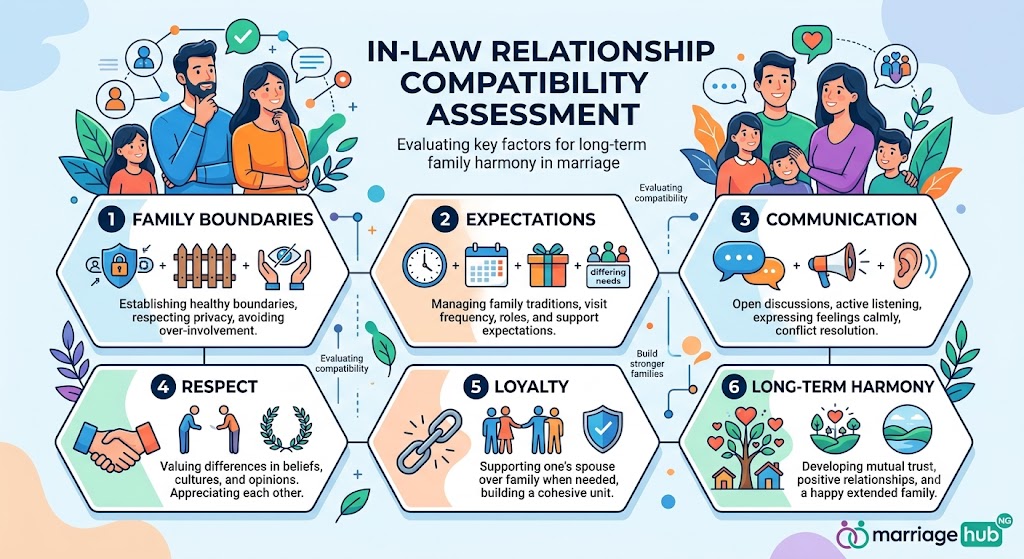
In-Law Conflicts and Resolution
Extended family involvement, while culturally important, can create tension. Common issues include:
-
Unsolicited advice about married life
-
Expectations about visits and involvement
-
Financial demands on the couple
-
Interference in decision-making
Biblical and practical principles for managing in-law relationships include honoring parents while cleaving to spouse, setting boundaries with love, and each spouse handling their own family.
Frequently Asked Questions About Marriage in Nigeria
Q1: How many types of marriage are legally recognized in Nigeria?
A: Nigeria recognizes three types of marriage: statutory marriage (civil), customary marriage (traditional), and Islamic marriage. Each has its own legal framework and requirements .
Q2: What is the minimum age for marriage in Nigeria?
A: The legal minimum age for marriage in Nigeria is 18 years for both parties .
Q3: Is bride price legally required for marriage?
A: Bride price is required for customary marriages to be valid under traditional law, but it has no legal relevance in statutory marriages .
Q4: Can a foreigner marry in Nigeria?
A: Yes, foreign nationals are permitted to marry in Nigeria, subject to compliance with civil and immigration requirements .
Q5: What's the difference between customary marriage and statutory marriage?
A: Customary marriage follows traditional practices and can be polygamous, while statutory marriage is governed by the Marriage Act, is strictly monogamous, and provides stronger legal protection .
Q6: How long does it take to get married at the registry?
A: After submitting a Notice of Intended Marriage, there is a mandatory 21-day waiting period before the ceremony can be conducted .
Q7: Is it possible to have both a customary and statutory marriage?
A: Yes, many couples have both. However, if you have a statutory marriage, it takes precedence legally. Each must be dissolved separately if the marriage ends .
Q8: Does bride price have to be refunded if the marriage ends?
A: This depends on the type of marriage. For statutory marriages, no refund is required. For customary marriages, practices vary by ethnic group, and courts increasingly scrutinize refund demands for fairness .
Q9: How much does a wedding cost in Nigeria?
A: The average Nigerian wedding costs ₦13 million, but many couples spend significantly less through careful planning. Weddings under ₦1 million are possible with prioritisation .
Q10: Can I marry someone from a different ethnic group?
A: Absolutely. However, you should invest time understanding your partner's marriage traditions and be prepared to incorporate elements from both cultures. Involve family elders early to guide you through proper protocols .
Q11: What documents do I need for registry marriage?
A: Typically: valid passports or national ID, birth certificates or age declaration, Certificate of No Impediment or affidavit of single status, proof of residence, and passport photographs .
Q12: Are traditional marriages recognized internationally?
A: Customary marriages may not be automatically recognized internationally. For international recognition, a statutory marriage with a registered certificate is recommended .
Q13: What happens if my family demands an excessively high bride price?
A: Bride price negotiations are expected—the initial list often represents aspirations rather than demands. Engage family elders to negotiate respectfully. Some states have laws against excessive demands .
Q14: Is pre-marital counseling required for church weddings?
A: Most churches require several months of pre-marital counseling before conducting a wedding ceremony. This is considered essential preparation for marriage.
Q15: How can I plan a wedding on a tight budget?
A: Be ruthless with your guest list, choose affordable venues (church compounds, community centres), rent attire instead of buying, use digital invitations, ask talented friends to help, and focus on what truly matters—your commitment to each other .
Conclusion: Building a Strong Foundation for a Lifetime
Marriage in Nigeria is a beautiful, complex institution that weaves together ancient traditions, legal requirements, religious observances, and modern realities. From the elaborate traditional ceremonies of the Igbo to the Islamic nikah of the Hausa, from the symbolic engagements of the Yoruba to the recent progressive reforms of the Tiv, Nigerian marriage customs reflect the rich diversity of our nation while maintaining core principles of family, community, and commitment.
As we've seen throughout this guide, the journey to marriage involves multiple stages: family introductions, bride price negotiations, traditional ceremonies, legal registration, and religious blessings. Each stage carries its own significance and requirements, and understanding them is essential for a smooth and successful marriage process.
The financial aspects of marriage cannot be overlooked. With average wedding costs at ₦13 million, careful planning and budgeting are essential. Yet inspiring stories of couples spending ₦450,000 or ₦500,000 demonstrate that a beautiful, meaningful wedding doesn't require debt. The key is knowing your limits, understanding what you can afford, and focusing on what truly matters—the commitment you're making to each other.
For those facing challenges—family pressure, financial stress, or the complexities of inter-ethnic unions—remember that you're not alone. Nigeria's plural legal system provides options and protections, community support is available, and courts increasingly protect individual rights and dignity.
Perhaps most importantly, remember that a wedding is one day, but marriage is a lifetime. The goal is not to impress everyone with an extravagant celebration, but to build a strong foundation for a life together. As the groom who spent under ₦450,000 wisely noted, "It was our wedding, not everyone's wedding" .
Whether you're planning your own wedding, supporting a family member, or simply learning about Nigerian culture, we hope this guide has been helpful. Marriage is a beautiful journey—may yours be blessed with love, understanding, and joy.
Internal Links to Related Marriage Hub NG Resources
To further support your marriage journey, explore these related resources on MarriageHub.ng:
- How to Plan a Wedding in Nigeria: Costs & Budgeting Tips (2026 Guide) - Marriage Hub NG
- Understanding Nigerian Marriage Laws: A Legal Checklist (2026 Complete Guide) - Marriage Hub NG
- Child Marriage in Nigeria: Causes, Laws, & Solutions (2026 In-Depth Guide) - Marriage Hub NG
- What Are the Legal Requirements to Be Married in Nigeria? - Marriage Hub NG
- Our Traditional Engagement in Igbo Land: A Cultural Journey - Marriage Hub NG
- Marriage Contract Rights in Nigeria: What Couples Should Know (2026 Legal Guide) - Marriage Hub NG
- Dealing with In-Law Conflicts in a Godly Way: Biblical Wisdom for Peaceful Family Relationships - Marriage Hub NG
- Balancing Career and Marriage in Modern Nigeria: A Practical Guide for Couples - Marriage Hub NG
- Coping with Family Pressure to Marry: A Guide for Young Nigerians - Marriage Hub NG
- Faith-Centered Approaches to Marriage Challenges: Strengthening Your Union in Nigeria - Marriage Hub NG
Last Updated: February 2026



.jpg)

Sign in to comment