 Nurturing Marriages, Enriching Families!
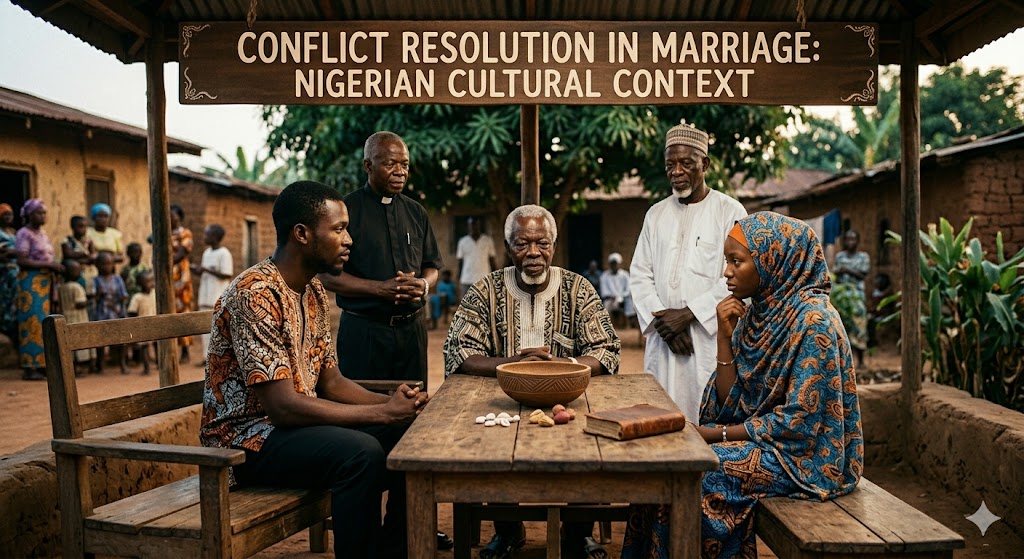
Conflict Resolution in Marriage: Nigerian Cultural Context
Conflict is a natural part of marriage, but how couples manage it determines whether their relationship grows stronger or breaks down. In Nigeria, conflict resolution in marriage is deeply influenced by culture, family systems, religion, and social expectations. Unlike in many Western contexts where couples are encouraged to resolve issues privately and independently, Nigerian marriages often involve extended families, community elders, and religious leaders in dispute resolution.
From Lagos to Enugu, Abuja to Kano, and across rural communities, conflict in marriage is not only a private matter—it is often a communal issue. Understanding how Nigerians navigate marital conflict requires looking at cultural values, communication styles, and evolving modern influences.
This article explores conflict resolution in Nigerian marriages, supported by data trends, real-life case studies, and cultural insights that reflect everyday Nigerian experiences.
Understanding Conflict in Nigerian Marriages
Conflict in marriage is not unusual. In fact, studies across family psychology consistently show that all marriages experience disagreements. What matters is not the presence of conflict, but how it is managed.
In Nigeria, common sources of marital conflict include financial stress, communication breakdown, extended family interference, infidelity concerns, and differences in expectations around gender roles. Economic pressure, especially in urban areas, has intensified these issues in recent years.
While precise national statistics vary, family counseling centers, religious institutions, and legal reports consistently identify communication problems and financial stress as leading causes of marital conflict in Nigeria. These issues are often worsened by cultural expectations that discourage open emotional expression.
Cultural Foundations of Conflict Resolution in Nigeria
Traditional Nigerian society places a strong emphasis on communal living. Marriage is not viewed as a strictly private relationship between two individuals but as a union between families and, in many cases, entire communities.
Because of this, conflict resolution often extends beyond the couple. Elders, parents, and community leaders are frequently involved in mediating disputes. This approach is rooted in the belief that marriage stability is a collective responsibility.
In many ethnic groups, elders are respected as neutral arbitrators. Their role is to listen, advise, and restore harmony between couples. This system has historically helped reduce divorce rates in some communities, as reconciliation is prioritized over separation.
However, as Nigerian society becomes more urbanized, this traditional model is evolving. Many couples now prefer private conflict resolution or professional counseling, especially in cities where family structures are less centralized.
Religion and Conflict Resolution in Marriage
Religion plays a significant role in how Nigerian couples handle conflict. In Christian and Muslim communities, religious leaders often act as mediators when marital disputes arise.
Churches frequently organize counseling sessions where couples are encouraged to forgive, communicate, and maintain their marriage vows. Similarly, Islamic teachings emphasize patience, respect, and reconciliation within marriage, with religious leaders guiding couples through disputes.
Religious institutions often serve as the first point of intervention before conflicts escalate. In many cases, couples are encouraged to avoid divorce and instead seek spiritual guidance and counseling.
This religious framework reinforces the idea that marriage should be preserved, even during difficult times. While this approach promotes stability, it can sometimes discourage couples from addressing deeper emotional or psychological issues.
Modern Influences on Conflict Resolution
Urbanization, education, and globalization are changing how Nigerian couples handle conflict. Younger generations are more likely to seek direct communication and professional counseling rather than relying solely on family intervention.
In cities like Lagos and Abuja, couples increasingly turn to relationship therapists, online resources, and structured communication techniques. Social media has also played a role in raising awareness about healthy relationship practices.
However, modern approaches often coexist with traditional expectations. Many couples still balance advice from family members with modern conflict resolution strategies.
Case Study 1: Financial Stress in Lagos Marriage
A young couple in Lagos shared how financial pressure created repeated conflict in their marriage. The husband worked in a private company while the wife ran a small business. Rising rent and cost of living created tension over financial responsibilities.
Initially, disagreements escalated into frequent arguments. The husband felt overwhelmed by expectations, while the wife felt unsupported. After seeking counseling through their church, they adopted a structured budgeting system and improved communication around finances.
This case highlights how financial stress, combined with poor communication, is a major driver of marital conflict in urban Nigeria.
Case Study 2: Extended Family Interference in Enugu
In Enugu, a couple experienced ongoing conflict due to interference from extended family members. Decisions about finances, housing, and even parenting were frequently influenced by relatives.
The wife felt her privacy was being violated, while the husband struggled to balance loyalty to his family with his marriage. Conflicts escalated until both families were involved in mediation sessions led by community elders.
Eventually, boundaries were established, allowing the couple to make independent decisions while still respecting family ties. This case reflects a common cultural challenge in Nigerian marriages, where extended family involvement can both support and strain relationships.
Case Study 3: Communication Breakdown in Kano
A couple in Kano reported that most of their conflicts were caused by poor communication rather than major disagreements. The wife preferred open discussion, while the husband was raised in a household where emotions were rarely expressed.
This mismatch led to misunderstandings and emotional distance. With guidance from a religious counselor, they learned to adjust their communication styles and develop regular check-in conversations.
Their experience shows how upbringing and cultural expectations shape conflict patterns in marriage.
Common Conflict Resolution Methods in Nigeria
Across Nigeria, several methods are commonly used to resolve marital conflict.
One of the most traditional approaches is mediation by elders. This involves family members or respected community leaders stepping in to resolve disputes. The goal is reconciliation and preservation of the marriage.
Religious counseling is another widely used method. Churches and mosques often provide structured counseling sessions aimed at restoring harmony and encouraging forgiveness.
In urban areas, professional counseling is becoming more common. Couples seek help from therapists or relationship coaches who provide neutral and structured guidance.
Informal communication between couples also plays a major role. Many marriages rely on private discussions to resolve issues before they escalate.
Challenges in Conflict Resolution
Despite these systems, conflict resolution in Nigerian marriages faces several challenges.
One major issue is emotional suppression. In many cultural settings, individuals are not encouraged to openly express negative emotions. This can lead to unresolved issues building up over time.
Another challenge is the influence of extended family members. While family involvement can be helpful, it can also complicate matters if advice is biased or if privacy is not respected.
Gender expectations also play a role. In some cases, men are expected to remain dominant and less emotionally expressive, while women are expected to be more accommodating. These expectations can hinder balanced communication.
In addition, there is often a stigma around seeking professional help. Many couples still prefer informal or religious mediation over counseling services.
Data Insights on Marital Conflict in Nigeria
While national statistics vary, several studies and institutional reports provide insight into marital conflict trends.
Family courts and counseling centers in Nigeria report that communication breakdown and financial stress are among the most common reasons for marital disputes. Religious institutions also report high volumes of counseling cases related to misunderstandings and family interference.
Urban areas tend to report higher levels of marital stress due to economic pressure and fast-paced lifestyles, while rural areas often rely more heavily on traditional mediation systems.
These patterns suggest that while the causes of conflict may be similar, the methods of resolution vary significantly across regions.
The Role of Gender in Conflict Resolution
Gender dynamics play a significant role in how conflict is managed in Nigerian marriages.
In many traditional settings, men are expected to take the lead in decision-making, while women are expected to maintain harmony. This can sometimes discourage open disagreement or emotional expression.
However, modern Nigerian marriages are increasingly moving toward more balanced roles. Couples are learning to share responsibilities and communicate more openly, although this transition is still ongoing.
The Future of Conflict Resolution in Nigerian Marriages
As Nigeria continues to modernize, conflict resolution methods are likely to evolve. Younger couples are more open to counseling, communication training, and emotional intelligence development.
At the same time, traditional systems such as family mediation and religious counseling will remain important, especially in rural areas.
The future will likely involve a hybrid model where modern and traditional approaches coexist, giving couples multiple pathways to resolve conflict.
Conflict in marriage is inevitable, but how it is managed determines the strength of the relationship. In Nigeria, conflict resolution is shaped by a unique blend of cultural traditions, religious values, and modern influences.
From elder mediation to professional counseling, Nigerian couples have access to multiple systems of conflict resolution. However, success depends on communication, emotional awareness, and willingness to compromise.
As society evolves, the way Nigerians handle marital conflict is also changing. The balance between tradition and modernity continues to shape how couples navigate challenges and build lasting relationships.
Join the MarriageHub Community
Looking to connect, learn, or grow in your relationship journey?
👉 Join groups/tribes: https://www.marriagehub.ng/all-groups
👉 Create your own group: https://www.marriagehub.ng/create-tribes-group
👉 Explore products, services & downloads: https://www.marriagehub.ng/marketplace
Follow Us
📱 WhatsApp: https://whatsapp.com/channel/0029VbCav9MCcW4pw3GSM72w
🐦 X (Twitter): https://x.com/MarriageHubNG
📘 Facebook: https://web.facebook.com/MarriageHubNigeria
📸 Instagram: https://www.instagram.com/marriagehubng3










.jpg)



Sign in to comment