 Nurturing Marriages, Enriching Families!
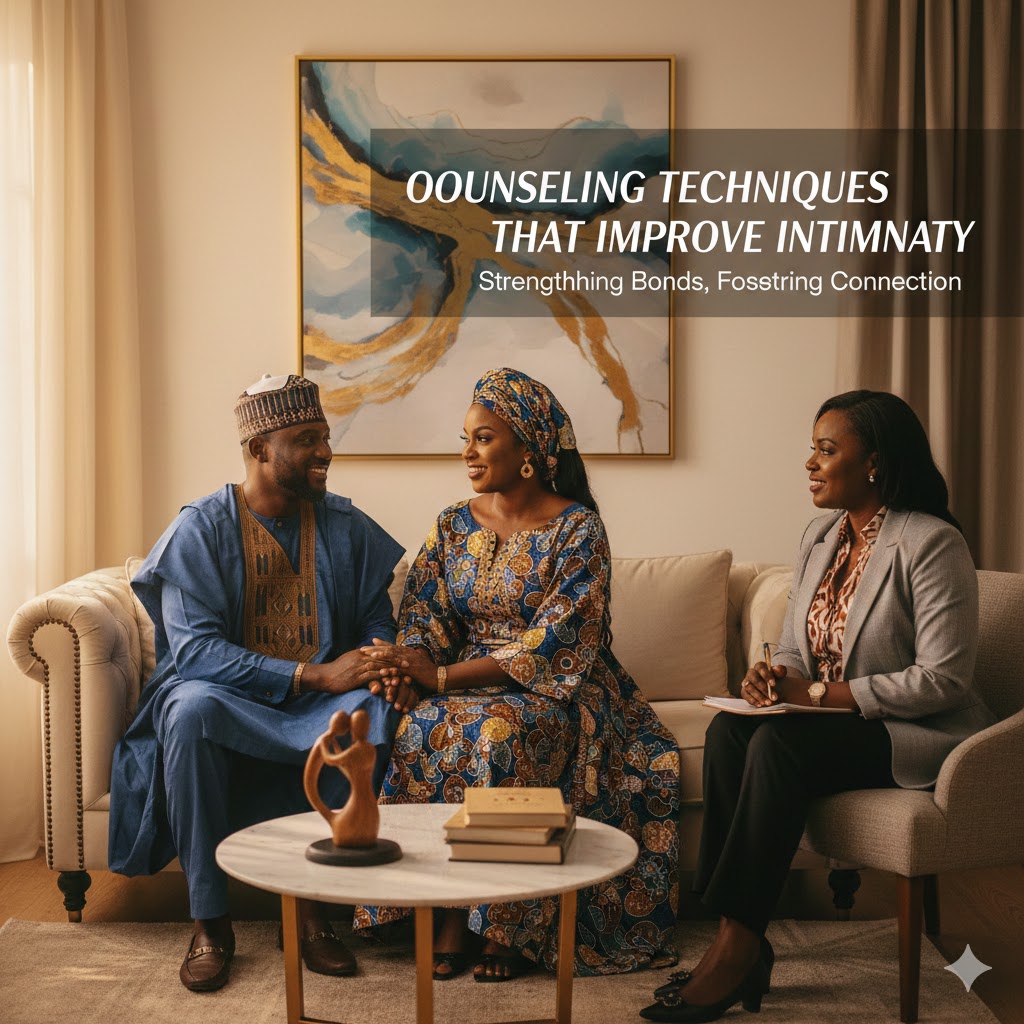
Counseling Techniques That Improve Intimacy: A Nigerian Couples’ Guide
Intimacy is the cornerstone of a healthy marriage. It encompasses emotional closeness, trust, vulnerability, and physical connection, all of which strengthen the bond between partners. In Nigeria, where cultural expectations, societal pressures, and extended family influences play a significant role in marital dynamics, maintaining intimacy can be challenging.
Marriage counseling offers structured techniques to nurture and restore intimacy, helping couples communicate more effectively, rebuild trust, and deepen their emotional and physical connection. This article explores counseling techniques that improve intimacy, featuring real-life Nigerian scenarios to illustrate practical application.
Understanding Intimacy in Marriage
Intimacy is more than physical closeness; it includes:
-
Emotional Intimacy – Sharing thoughts, feelings, and vulnerabilities.
-
Physical Intimacy – Sexual connection, touch, and affection.
-
Intellectual Intimacy – Sharing ideas, goals, and interests.
-
Spiritual Intimacy – Shared beliefs, values, and faith practices.
Scenario:
In Lagos, Tobi and Sade struggled with emotional distance after having children. Counseling helped them reconnect emotionally through shared conversations, date nights, and exercises that encouraged vulnerability.
Why Nigerian Couples Seek Counseling to Improve Intimacy
-
Emotional Disconnection – Feeling distant or unsupported.
-
Physical Disinterest – Reduced sexual desire or frequency.
-
Trust Issues – Past infidelity or secrecy causing emotional barriers.
-
Communication Challenges – Difficulty expressing needs or desires.
-
Life Stressors – Work, finances, parenting, or extended family pressure.
Scenario:
In Abuja, Amaka and Chidi experienced a decline in sexual intimacy after financial stress escalated. Counseling helped them identify emotional barriers and create strategies to rebuild closeness.
Counseling Techniques That Improve Intimacy
1. Communication Exercises
Effective communication is the foundation of intimacy. Counseling provides structured exercises that help couples express needs, feelings, and desires without judgment.
Techniques Include:
-
“I” Statements: Focus on personal feelings rather than blaming the partner.
-
Active Listening: Partner repeats what they heard to ensure understanding.
-
Daily Check-ins: Sharing thoughts, feelings, or gratitude for a few minutes each day.
Scenario:
In Lagos, Sade used “I feel” statements to express feeling neglected by Tobi due to his long work hours. Tobi responded with active listening, which led to scheduling weekly quality time.
2. Emotional Disclosure Exercises
Sharing vulnerabilities strengthens emotional intimacy. Counseling encourages partners to share fears, regrets, hopes, and dreams in a safe environment.
Exercises Include:
-
Feelings Journals: Each partner writes emotions and shares during sessions.
-
Vulnerability Sharing: Discussing past experiences and personal insecurities.
Scenario:
In Port Harcourt, Chika shared her fear of being judged by her husband, Emeka. This openness encouraged Emeka to discuss his own insecurities, fostering trust and empathy.
3. Physical Connection Techniques
Physical intimacy is more than sexual activity; it includes touch, affection, and non-verbal connection. Counselors guide couples to increase physical closeness gradually.
Techniques Include:
-
Scheduled Affection: Holding hands, hugging, or cuddling daily.
-
Sensate Focus Exercises: Non-sexual touch to enhance comfort and connection.
-
Date Nights: Consistent romantic activities to rekindle attraction.
Scenario:
In Lagos, Tobi and Sade scheduled weekly date nights and daily physical touch, helping them rebuild their sexual and emotional connection.
4. Conflict Resolution Skills
Unresolved conflicts erode intimacy. Counseling teaches couples to manage disagreements without damaging emotional closeness.
Techniques Include:
-
Time-Out Method: Pausing arguments before escalation.
-
Problem-Solving Together: Focusing on solutions, not blame.
-
Emotional Validation: Acknowledging the partner’s feelings, even when disagreeing.
Scenario:
In Abuja, Amaka and Chidi learned to pause arguments about finances, validate each other’s feelings, and brainstorm solutions, reducing emotional distance.
5. Building Trust Through Transparency
Trust is essential for emotional and sexual intimacy. Counseling emphasizes honest communication, accountability, and consistency.
Techniques Include:
-
Sharing Schedules and Decisions: Reducing secrecy and promoting collaboration.
-
Apology and Forgiveness Exercises: Learning to forgive past hurts and rebuild confidence.
-
Boundary Setting: Clarifying expectations in the relationship.
Scenario:
In Port Harcourt, Chika’s past resentment over financial secrecy diminished after Chika and Emeka practiced transparency exercises guided by their counselor.
6. Strengthening Shared Goals
Couples feel closer when working toward common objectives. Counseling helps partners define shared goals and align their efforts.
Techniques Include:
-
Vision Boards: Visual representation of relationship aspirations.
-
Weekly Planning Sessions: Coordinating schedules, finances, and personal growth goals.
-
Celebrating Achievements: Acknowledging milestones to reinforce connection.
Scenario:
In Lagos, Tobi and Sade created a marriage vision board, which included travel goals and parenting objectives, fostering teamwork and intimacy.
7. Cognitive-Behavioral Techniques
Counselors often use cognitive-behavioral strategies to change negative thought patterns that affect intimacy.
Techniques Include:
-
Identifying Cognitive Distortions: Recognizing and reframing assumptions about the partner.
-
Positive Reinforcement: Encouraging behaviors that enhance closeness.
-
Gratitude Exercises: Daily acknowledgment of each other’s efforts and qualities.
Scenario:
In Abuja, Amaka used gratitude journaling to appreciate Chidi’s support, shifting her mindset from criticism to appreciation, which improved emotional closeness.
8. Mindfulness and Stress Reduction
Stress from work, finances, or family can reduce intimacy. Counseling teaches mindfulness techniques to manage stress and enhance connection.
Techniques Include:
-
Mindful Breathing: Practicing together to calm the mind before discussing sensitive topics.
-
Meditative Exercises: Focusing on presence and connection during shared activities.
-
Stress Journals: Identifying stress triggers to prevent them from affecting intimacy.
Scenario:
In Lagos, Tobi and Sade practiced mindful breathing before discussing work-related stress, preventing arguments and preserving emotional closeness.
9. Sexual Intimacy Guidance
Counseling may address sexual concerns that affect marital intimacy. Techniques focus on communication, mutual consent, and comfort.
Techniques Include:
-
Desire Mapping: Discussing preferences, boundaries, and comfort zones.
-
Gradual Physical Reconnection: Starting with touch and affection before sexual activity.
-
Education and Awareness: Addressing misconceptions about sexual expectations.
Scenario:
In Port Harcourt, Chika and Emeka attended counseling for sexual intimacy challenges. Exercises improved communication about desires, enhancing both physical and emotional closeness.
10. Rituals and Shared Experiences
Creating consistent rituals of connection strengthens emotional intimacy. Counseling encourages routines that reinforce bonding.
Techniques Include:
-
Daily Check-ins: Short conversations about feelings or experiences.
-
Weekly Bonding Activities: Cooking together, walking, or shared hobbies.
-
Annual Relationship Retreats: Dedicated time for reflection and reconnection.
Scenario:
In Lagos, Tobi and Sade instituted a weekly cooking night, which became a cherished ritual enhancing both fun and emotional closeness.
Common Misconceptions About Counseling and Intimacy
-
Counseling Is Only for Couples in Crisis – Counseling enhances intimacy even in healthy marriages.
-
Intimacy Problems Are Always Sexual – Emotional, intellectual, and spiritual intimacy are equally important.
-
Counseling Provides Quick Fixes – Techniques require practice and patience.
-
Counseling Blames One Partner – The process is collaborative and solution-focused.
Scenario:
In Abuja, Amaka initially thought counseling would only address sexual issues. After sessions, she realized emotional disclosure exercises had a greater impact on reconnecting with Chidi.
How to Maximize Intimacy Improvement Through Counseling
-
Commit Fully – Attend sessions and practice exercises consistently.
-
Communicate Openly – Share desires, fears, and feelings without judgment.
-
Follow the Counselor’s Guidance – Apply techniques and homework exercises.
-
Maintain Patience – Rebuilding intimacy takes time and consistent effort.
-
Celebrate Milestones – Recognize small improvements to reinforce positive change.
-
Stay Emotionally Vulnerable – Willingness to open up strengthens connection.
Scenario:
In Lagos, Sade and Tobi committed to weekly exercises, open communication, and emotional vulnerability, gradually improving both emotional and physical intimacy.
Real-Life Nigerian Success Story
Case Study: Chika and Emeka, Port Harcourt
-
Challenge: Emotional disconnection, lack of physical affection, and communication breakdown.
-
Approach: Attended couples counseling focused on emotional disclosure, conflict resolution, and physical reconnection techniques.
-
Process: Practiced daily “I feel” statements, scheduled date nights, and mindfulness exercises.
-
Outcome: Rebuilt emotional closeness, improved sexual intimacy, and strengthened overall relationship satisfaction. Counseling proved transformative by providing structured guidance and practical exercises.
Conclusion: Counseling as a Tool for Intimacy
Marriage counseling offers structured, culturally sensitive techniques to enhance intimacy in Nigerian marriages. By focusing on communication, trust, emotional vulnerability, and physical closeness, counseling helps couples overcome challenges and build a deeper, more fulfilling relationship.
Key Takeaways:
-
Intimacy is multidimensional: emotional, physical, intellectual, and spiritual.
-
Counseling provides exercises and strategies to rebuild or strengthen intimacy.
-
Patience, commitment, and consistent practice are essential for results.
-
Recognizing and addressing barriers early maximizes effectiveness.
-
Real-life Nigerian couples demonstrate that counseling transforms relationships when applied thoughtfully.
Final Thought: For Nigerian couples, counseling is not just a solution for crisis—it is a proactive investment in love, trust, and emotional closeness that ensures a fulfilling, resilient marriage.










.jpg)



Sign in to comment