 Nurturing Marriages, Enriching Families!

Dealing with In-Law Conflicts in a Godly Way
Marriage is not just the union of two individuals; it is the joining of two families. From the very beginning in the Bible, we see that a man leaves his father and mother and cleaves to his wife (Genesis 2:24). Yet in real life, even after “leaving and cleaving,” in-laws remain an active part of a couple’s story. When expectations clash, boundaries blur, or misunderstandings grow, in-law conflicts can threaten the peace of a home.
For Christian couples, the question is not merely how to win arguments or prove a point. The real question is: How do we handle in-law conflicts in a way that honors God, protects our marriage, and promotes peace? This article explores biblical principles, practical strategies, and godly attitudes that can help couples navigate in-law tensions with wisdom and grace.
Why In-Law Conflicts Happen
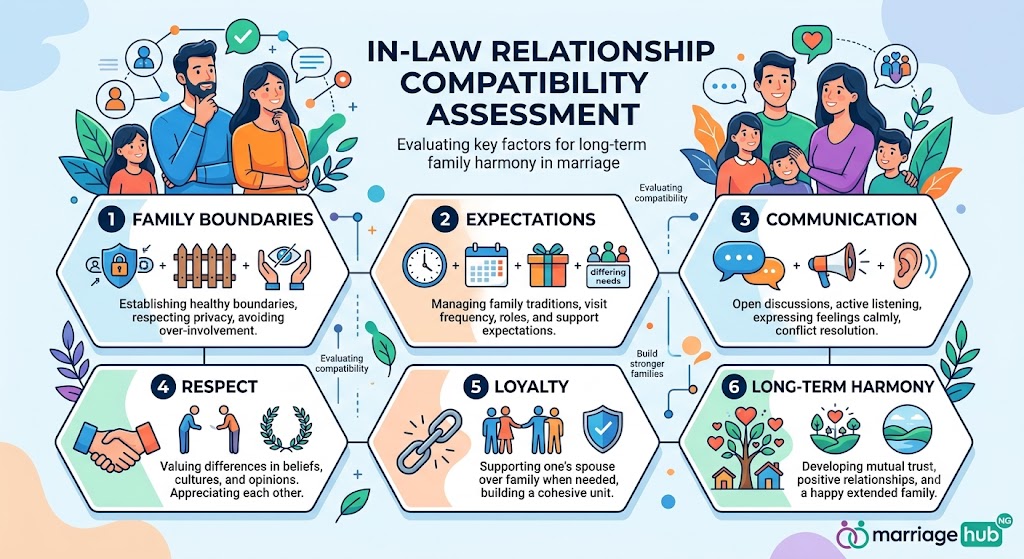
In-law conflicts are common across cultures, especially in societies like Nigeria where extended family systems are strong. Understanding the root causes can help you address issues wisely instead of emotionally.
Common causes include:
-
Differences in upbringing and family values
-
Financial expectations or obligations
-
Parenting disagreements
-
Over-involvement or interference
-
Loyalty conflicts (spouse vs. parents)
-
Communication misunderstandings
Many parents struggle with “letting go.” They may feel replaced, disrespected, or ignored. On the other hand, couples may feel controlled, criticized, or unsupported. Without biblical wisdom, these tensions can escalate into resentment and division.
God’s Design: Leave, Cleave, and Become One
A key principle from the Bible is found in Genesis 2:24: “Therefore a man shall leave his father and mother and be joined to his wife, and they shall become one flesh.”
“Leaving” does not mean abandoning or dishonoring parents. It means shifting primary loyalty. After marriage, your spouse becomes your closest earthly relationship.
When in-law conflicts arise, remember:
-
Your spouse comes first.
-
Decisions should be made as a united couple.
-
Parents should not control your marriage.
If a husband always sides with his mother against his wife, or a wife consistently prioritizes her family over her husband, unity is broken. A divided marriage creates room for deeper conflict.
God’s design protects the marriage first.
Honor Without Enabling
The Bible commands believers to honor father and mother (Exodus 20:12). However, honoring does not mean tolerating abuse, manipulation, or disrespect.
You can honor your in-laws by:
-
Speaking respectfully
-
Avoiding public criticism
-
Showing gratitude where appropriate
-
Helping when genuinely needed
But honoring does not require:
-
Allowing constant interference
-
Accepting insults toward your spouse
-
Submitting to ungodly demands
Jesus Himself modeled balance. He honored relationships but did not allow anyone to derail His purpose (Luke 2:49; Mark 3:33–35). Likewise, couples must honor in-laws without sacrificing marital peace.
Put Your Marriage First
One of the most godly responses to in-law conflict is strengthening your marriage. When a couple is emotionally and spiritually united, external pressures have less power.
Practical steps:
-
Pray together regularly.
-
Discuss in-law concerns privately.
-
Agree on boundaries before communicating them.
-
Never argue about in-laws in front of them.
If your spouse complains about your parents, resist the urge to become defensive. Listen calmly. Remember, your first ministry after God is your marriage.
Unity sends a strong message: “We are one.”
Set Clear and Loving Boundaries
Boundaries are not signs of rebellion; they are tools for peace. Even the Bible shows examples of boundaries in relationships. Proverbs repeatedly encourages wisdom and discretion.
Healthy boundaries may include:
-
Deciding how often visits occur
-
Clarifying financial expectations
-
Limiting unsolicited advice
-
Establishing parenting authority
When setting boundaries:
-
Speak calmly and respectfully.
-
Use “we” language (“We have decided…”).
-
Avoid blame or accusation.
-
Be firm but gentle.
For example:
“We appreciate your concern, but we have decided to handle this matter ourselves.”
Consistency is key. If you constantly bend boundaries to avoid conflict, confusion and resentment will grow.
Avoid Gossip and Third-Party Involvement
When hurt by in-laws, it is tempting to complain to friends, church members, or relatives. However, spreading the issue can deepen division.
The Bible warns that gossip separates close friends (Proverbs 16:28). Instead of publicizing the issue:
-
Speak directly to the person involved when appropriate.
-
Seek godly counsel from a mature Christian leader if necessary.
-
Pray before reacting emotionally.
Involving too many voices often complicates simple misunderstandings.
Respond, Don’t React
In-law conflicts can trigger strong emotions—anger, hurt, frustration, or jealousy. Acting in the heat of emotion often leads to words that cannot be taken back.
James 1:19 in the Bible advises believers to be “quick to hear, slow to speak, slow to anger.”
Before responding:
-
Pause and pray.
-
Ask God for wisdom.
-
Consider whether the issue truly requires confrontation.
Not every comment deserves a reaction. Sometimes silence is maturity, not weakness.
When There Is Favoritism or Comparison
Some in-laws compare spouses to others—an ex, a sibling’s spouse, or cultural expectations. This can wound deeply.
If you are experiencing this:
-
Do not compete for approval.
-
Avoid criticizing yourself or your spouse.
-
Communicate how the comparison makes you feel.
Your worth is not defined by your in-laws’ approval but by God’s view of you. Psalm 139 reminds believers that they are fearfully and wonderfully made.
Encourage your spouse to defend and affirm you when comparisons occur. Silence can feel like agreement.
Handling Financial Pressure from In-Laws
In many African homes, financial expectations are a common source of tension. Extended family members may expect regular support or large contributions.
While generosity is biblical, wisdom is also biblical. The Bible teaches stewardship and responsibility.
Couples should:
-
Create a clear family budget.
-
Decide together how much support is sustainable.
-
Avoid secret financial giving that undermines unity.
If necessary, say:
“We would love to help more, but this is what we can responsibly afford.”
Financial strain can damage marriages faster than external criticism. Protect your home first.
Forgiveness Is Non-Negotiable
Conflict is inevitable; bitterness is optional.
Ephesians 4:32 in the Bible encourages believers to forgive as Christ forgave them. Forgiveness does not mean pretending nothing happened. It means releasing the desire for revenge.
Unforgiveness can:
-
Affect your health
-
Damage intimacy
-
Create tension during family gatherings
-
Influence how you treat your spouse
Choose forgiveness daily. It is a process, not a one-time event.
When There Is Serious Toxicity
Some in-law situations go beyond misunderstanding into manipulation, control, emotional abuse, or constant disrespect.
In such cases:
-
Strengthen marital unity.
-
Seek pastoral or professional counseling.
-
Consider limiting exposure if necessary.
God values peace in your home. Romans 12:18 teaches believers to live peaceably “as much as depends on you.” If someone refuses peace, you may need stronger boundaries.
Distancing does not mean hatred; it may mean protection.
Pray for Your In-Laws
One of the most powerful spiritual weapons in conflict is prayer. It is difficult to hate someone you consistently pray for.
Pray for:
-
Their health and well-being
-
Their relationship with God
-
Wisdom in their decisions
-
Healing where there has been hurt
Prayer softens hearts—both theirs and yours.
Instead of saying, “God, change them,” try praying, “God, change me and give me wisdom.”
Model the Behavior You Desire
If you want respect, show respect. If you want understanding, show understanding.
The Bible teaches the principle of sowing and reaping (Galatians 6:7). While you cannot control others, you can control your character.
Ask yourself:
-
Am I contributing to the tension?
-
Have I spoken harshly?
-
Have I been dismissive or proud?
Humility often diffuses tension faster than arguments.
Teach Your Children Balanced Respect
If you have children, be careful not to poison their minds against grandparents. Even if conflict exists, children should not be used as emotional weapons.
Speak respectfully about in-laws in front of your children. Let them see maturity and grace. This models healthy conflict resolution and prevents generational bitterness.
Seek Peace, Not Victory
Many in-law conflicts escalate because someone wants to win. But in marriage, winning arguments at the cost of peace is losing.
Matthew 5:9 in the Bible says, “Blessed are the peacemakers.”
Peacemaking requires:
-
Patience
-
Emotional control
-
Wisdom
-
Courage
Sometimes peace means apologizing first—even if you were only partially wrong.
A Christ-Centered Perspective
Ultimately, dealing with in-law conflicts in a godly way requires spiritual maturity. The more Christ shapes your heart, the less reactive you become.
Jesus endured misunderstanding, rejection, and criticism—yet He responded with love and truth. As believers, our goal is not perfect family relationships but Christlike character within imperfect relationships.
When both spouses commit to honoring God above pleasing parents, peace becomes possible.
Final Thoughts
In-law conflicts are common, but they do not have to destroy marriages. With biblical wisdom, clear boundaries, humility, forgiveness, and prayer, couples can handle family tensions in a way that strengthens rather than weakens their union.
Remember:
-
Protect your marriage first.
-
Honor without enabling.
-
Communicate as a united front.
-
Forgive quickly.
-
Pray consistently.
God cares deeply about your home. When you choose obedience over pride, peace over revenge, and unity over division, you reflect His heart.
Conflict may come, but with God at the center, your marriage can stand strong—even in the face of in-law challenges.








.jpg)


Sign in to comment