 Nurturing Marriages, Enriching Families!
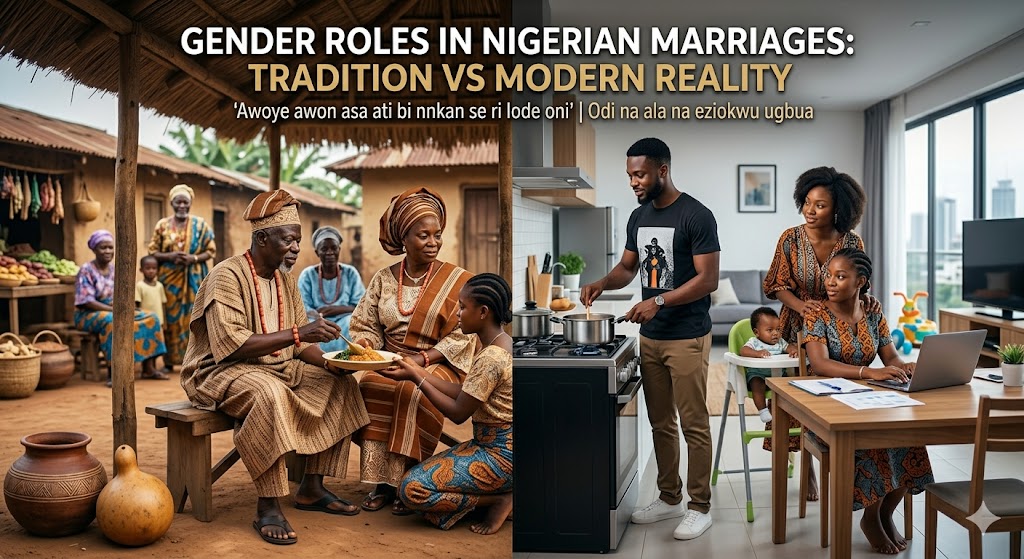
Gender Roles in Nigerian Marriages: Tradition vs Modern Reality
Marriage in Nigeria has always been shaped by clearly defined gender roles. For generations, expectations about what a husband and wife should do were rooted in culture, religion, and community values. Men were seen as providers and heads of the household, while women were expected to manage the home, raise children, and support their husbands.
Today, however, these traditional roles are being redefined. Urbanization, education, economic pressure, and global exposure are reshaping how Nigerian couples approach marriage. The result is a dynamic tension between tradition and modern reality, where many couples are trying to balance inherited expectations with contemporary lifestyles.
This article explores gender roles in Nigerian marriages, examining how they have evolved, what is changing, what remains the same, and how couples are navigating these shifts in real-life situations across Nigeria.
Traditional Gender Roles in Nigerian Marriages
Historically, Nigerian marriages were structured around a clear division of responsibilities. The man was regarded as the head of the household, responsible for providing financially and making major decisions. Authority and leadership were central to his role, and this was reinforced by cultural norms and religious teachings.
The woman, on the other hand, was expected to manage the home. Her responsibilities included cooking, cleaning, raising children, and supporting her husband’s success. In many communities, a woman’s value was closely tied to her ability to maintain a stable home and raise well-behaved children.
These roles were not arbitrary; they were shaped by the economic and social realities of traditional Nigerian society. In agrarian communities, men often handled physically demanding work such as farming, while women managed domestic tasks and small-scale trading.
Family structures also reinforced these roles. Extended families often lived together or maintained close ties, creating a system where responsibilities were shared but still clearly defined along gender lines.
Religion and Cultural Reinforcement of Gender Roles
Religion has played a major role in reinforcing traditional gender roles in Nigerian marriages. Both Christianity and Islam emphasize family structure and assign specific responsibilities to husbands and wives.
In many Christian teachings, the husband is seen as the spiritual leader of the home, while the wife is encouraged to be supportive and respectful. Similarly, Islamic teachings emphasize leadership roles for men and nurturing roles for women, while also stressing mutual respect and responsibility.
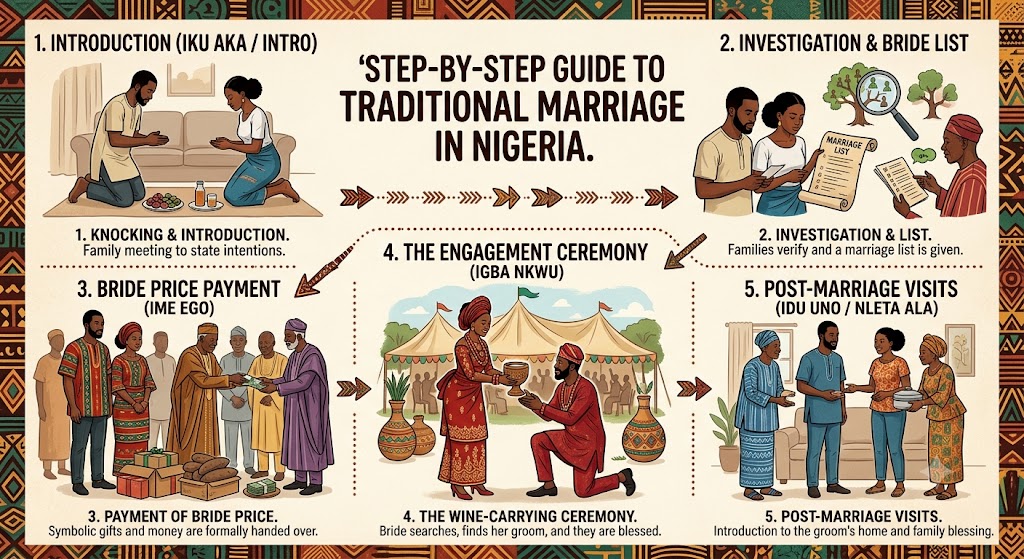
Traditional beliefs also reinforce these roles through customs and marriage rites. Cultural expectations around respect, obedience, and family hierarchy often shape how couples interact within marriage.
The Shift Toward Modern Gender Roles
Over the past few decades, Nigerian society has undergone significant transformation. Education has expanded, more women are entering the workforce, and urban lifestyles have introduced new economic realities.
These changes have had a direct impact on gender roles in marriage. Today, many Nigerian women are not only contributing financially but, in some cases, becoming primary breadwinners. This shift challenges the traditional expectation that men must be the sole providers.
At the same time, men are increasingly participating in domestic responsibilities, especially in urban areas. While this change is gradual, it reflects a growing recognition that marriage requires partnership rather than rigid role division.
Studies and labor data indicate that female labor force participation in Nigeria continues to grow, contributing significantly to household income and economic stability. This economic shift is one of the strongest drivers of changing gender roles in marriage.
Economic Pressure and Role Redefinition
One of the most important factors driving change in gender roles is economic pressure. The cost of living in cities like Lagos, Abuja, and Port Harcourt has made it difficult for a single income to sustain a household.
As a result, dual-income households are becoming more common. Couples are increasingly sharing financial responsibilities, which naturally leads to a re-evaluation of domestic roles.
In many modern Nigerian marriages, responsibilities are negotiated rather than assumed. Cooking, childcare, and financial planning are often shared, depending on each partner’s schedule and capacity.
However, this shift is not always smooth. Some couples struggle to reconcile traditional expectations with modern realities, leading to conflict and misunderstanding.
Case Study 1: Dual-Income Marriage in Lagos
A couple in Lagos illustrates how gender roles are evolving. Both partners work full-time jobs and contribute equally to household income. Initially, the wife was still expected to handle all domestic responsibilities despite her demanding career.
Over time, this imbalance led to tension and burnout. Through open communication, the couple agreed to share household duties, including cooking and childcare. They also hired occasional domestic help to reduce pressure.
Their experience reflects a common urban reality where traditional expectations must be adjusted to fit modern lifestyles.
Case Study 2: Traditional Expectations in Rural Setting
In a rural community in Benue State, gender roles remain largely traditional. The husband works on the farm, while the wife manages the home and supports small-scale trading activities.
In this setting, these roles are not seen as restrictive but as complementary. The couple views their arrangement as practical and culturally appropriate.
This example highlights that traditional gender roles still function effectively in certain contexts, particularly where economic and social structures have not changed significantly.
Case Study 3: Female Breadwinner in Abuja
In Abuja, a woman working in the banking sector earns significantly more than her husband, who runs a small business. This reversal of traditional roles initially created tension, particularly around decision-making and societal expectations.
The husband struggled with feelings of inadequacy, while the wife felt pressure to balance financial responsibility with traditional expectations of submission.
Through counseling and mutual understanding, they redefined their roles based on partnership rather than hierarchy. Their experience reflects a growing but still sensitive shift in Nigerian marriages.
Challenges of Transitioning Gender Roles
The transition from traditional to modern gender roles is not without challenges. Many couples experience conflict as they try to balance cultural expectations with practical realities.
One common challenge is societal pressure. Even when couples adopt modern roles, they may face criticism from family members or community members who believe in traditional structures.
Another issue is internal conflict. Individuals who were raised with strong traditional values may struggle to adapt to new roles, leading to confusion and tension within the marriage.
Communication breakdown is also a major challenge. When expectations are not clearly discussed, assumptions can lead to misunderstandings and resentment.
Urban vs Rural Differences in Gender Roles
The contrast between urban and rural Nigeria is particularly evident in gender roles.
In urban areas, there is greater flexibility and openness to change. Education, exposure, and economic necessity encourage more balanced roles between spouses.
In rural areas, traditional roles remain more dominant. Cultural expectations are stronger, and there is less pressure to change established patterns.
However, even in rural communities, gradual change is occurring as younger generations adopt new perspectives influenced by education and media.
The Role of Education in Shaping Gender Roles
Education has been one of the most powerful drivers of change in Nigerian marriages. Educated individuals are more likely to question traditional norms and adopt more flexible roles.
Women with higher education levels are more likely to pursue careers and contribute financially to the household. This naturally shifts the balance of responsibilities within marriage.
Education also promotes awareness of gender equality, communication, and partnership, which are essential for modern marriages.
Balancing Tradition and Modern Reality
For many Nigerian couples, the goal is not to completely abandon tradition but to find a balance between tradition and modern reality.
Some couples choose to maintain cultural values such as respect and family unity while adapting roles to suit their lifestyle. Others create entirely new systems that reflect their personal beliefs and circumstances.
The key is flexibility. Successful marriages often involve negotiation, compromise, and a willingness to adapt.
The Future of Gender Roles in Nigerian Marriages
As Nigeria continues to develop, gender roles in marriage will likely continue to evolve. Younger generations are more open to shared responsibilities and partnership-based relationships.
At the same time, cultural and religious values will remain influential, ensuring that tradition continues to play a role in shaping marriage.
The future will likely see a hybrid model where traditional values coexist with modern practices, allowing couples to define their roles in ways that work best for them.
Gender roles in Nigerian marriages are undergoing a significant transformation. While traditional expectations still hold strong in many communities, modern realities are reshaping how couples approach responsibility, leadership, and partnership.
Economic pressure, education, and urbanization are driving this change, creating new opportunities and challenges for Nigerian couples.
Ultimately, the success of any marriage depends not on rigid roles but on mutual understanding, respect, and adaptability. As Nigerian society continues to evolve, so too will the roles that define marriage, creating a more dynamic and inclusive future.
Join the MarriageHub Community
Looking to connect, learn, or grow in your relationship journey?
👉 Join groups/tribes: https://www.marriagehub.ng/all-groups
👉 Create your own group: https://www.marriagehub.ng/create-tribes-group
👉 Explore products, services & downloads: https://www.marriagehub.ng/marketplace
Follow Us
📱 WhatsApp: https://whatsapp.com/channel/0029VbCav9MCcW4pw3GSM72w
🐦 X (Twitter): https://x.com/MarriageHubNG
📘 Facebook: https://web.facebook.com/MarriageHubNigeria
📸 Instagram: https://www.instagram.com/marriagehubng3




.jpg)

Sign in to comment