 Nurturing Marriages, Enriching Families!
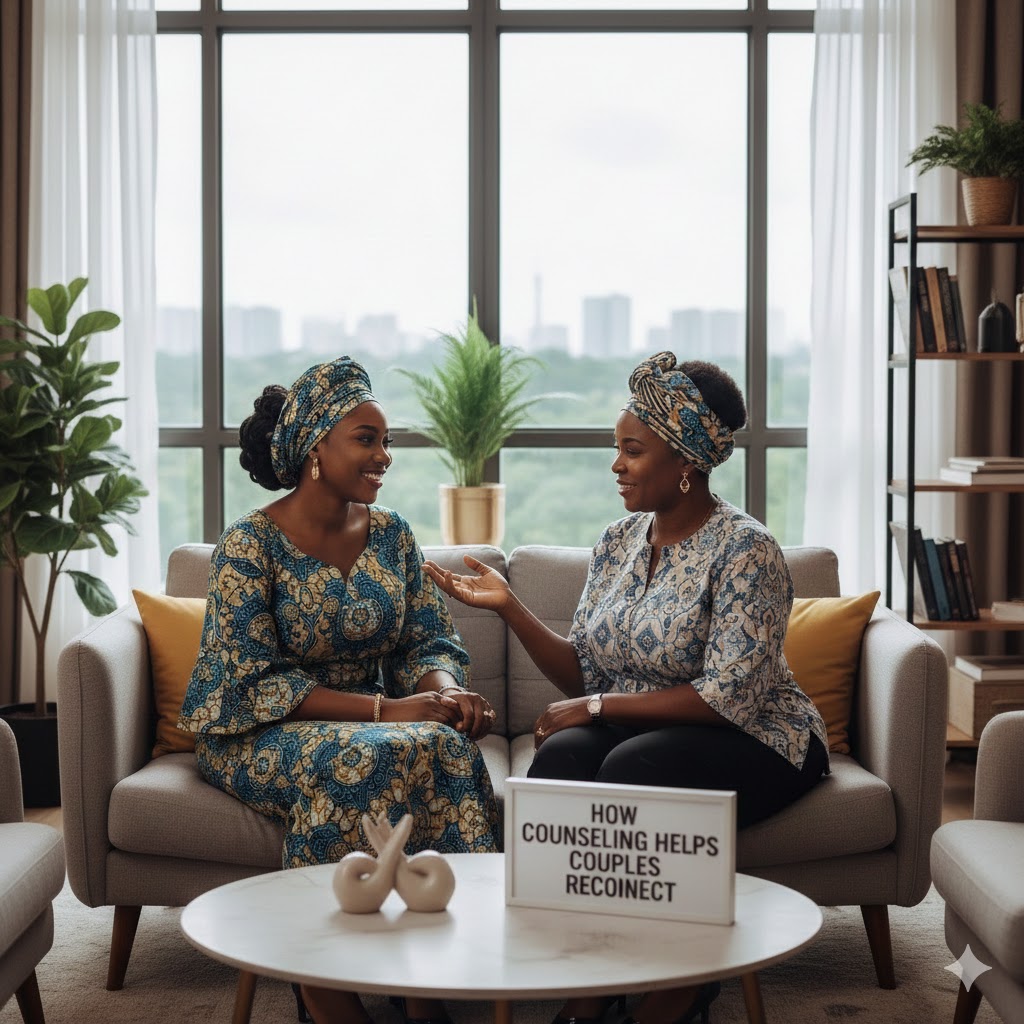
How Counseling Helps Couples Reconnect: A Nigerian Couples’ Guide
Marriage is a journey of love, trust, and shared experiences, but even the strongest unions can face periods of distance. Emotional disconnection, unresolved conflicts, stress, or life changes can strain intimacy between partners. In Nigeria, couples often face additional pressures from extended family expectations, societal norms, and economic stress, which can amplify relational distance.
Marriage counseling provides a structured and supportive environment where couples can reconnect, rebuild trust, and restore intimacy. This article explores how counseling helps couples reconnect, offering practical strategies and real-life Nigerian examples.
Understanding Emotional Disconnection in Nigerian Couples
Emotional disconnection occurs when partners feel distant, unheard, or unsupported. Signs include:
-
Reduced communication and meaningful conversation
-
Loss of physical intimacy
-
Frequent misunderstandings or arguments
-
Emotional withdrawal or avoidance
-
Feeling unappreciated or undervalued
Scenario:
In Lagos, Tobi and Sade had been married for eight years. Work demands, child care, and family obligations led to reduced communication and emotional distance. Despite loving each other, they felt like roommates rather than partners. Counseling helped them identify the causes of disconnection and begin the journey toward reconnection.
Key Insight: Emotional disconnection is normal but reversible with intentional effort, especially when guided by counseling.
Why Couples Lose Connection
1. Stress and Work Pressure
Nigerian couples often juggle demanding jobs and household responsibilities, leaving little time for emotional connection.
Scenario:
In Abuja, Amaka and Chidi were both working full-time jobs. Long hours and commuting caused them to miss daily conversations and date nights. Counseling helped them prioritize quality time and set boundaries to reduce stress impact on their relationship.
2. Unresolved Conflicts
Unaddressed arguments or resentments can accumulate, creating emotional distance.
Scenario:
In Port Harcourt, Chika and Emeka had recurring disputes about financial management. They avoided discussing these issues, leading to tension and withdrawal. Counseling provided tools to address conflicts constructively and rebuild trust.
3. Lack of Communication
Poor communication reduces intimacy and understanding, creating feelings of loneliness within a marriage.
Scenario:
In Lagos, Funke felt her husband Ade no longer shared personal experiences. Counseling introduced daily check-ins, allowing both partners to express thoughts and feelings openly, restoring closeness.
4. Life Transitions
Major life changes—moving homes, having children, or career shifts—can strain relationships.
Scenario:
In Abuja, Amaka and Chidi struggled after relocating to a new city for work. Counseling helped them navigate change together, maintaining connection and emotional support.
5. Emotional and Physical Neglect
Neglecting emotional needs or physical intimacy can lead to detachment.
Scenario:
In Lagos, Tobi and Sade had stopped regular date nights after children arrived. Counseling encouraged planned couple time and emotional check-ins, reigniting closeness.
How Counseling Helps Couples Reconnect
Marriage counseling provides tools, guidance, and a safe space for couples to identify disconnection, communicate effectively, and rebuild intimacy.
1. Facilitating Honest Communication
Counselors help partners express feelings openly and listen empathetically.
Scenario:
In Abuja, Amaka learned to articulate her needs for emotional support, while Chidi practiced active listening. This restored understanding and emotional closeness.
Tip: Use “I feel…” statements to express emotions without blaming your partner.
2. Addressing Unresolved Conflicts
Counseling provides strategies to resolve long-standing disagreements constructively.
Scenario:
In Port Harcourt, Chika and Emeka learned conflict-resolution techniques, including compromise and structured discussions, reducing tension and enhancing connection.
3. Rebuilding Trust
Trust issues often accompany disconnection. Counseling guides couples to:
-
Identify trust breaches
-
Establish accountability and transparency
-
Implement gradual trust-building exercises
Scenario:
In Lagos, Tobi felt hurt by past dishonesty from Sade. Counseling helped Sade demonstrate consistency, rebuild trust, and strengthen their emotional bond.
4. Enhancing Emotional Intimacy
Counselors teach couples to nurture vulnerability, empathy, and emotional support.
Scenario:
In Abuja, Amaka and Chidi practiced sharing fears and dreams during counseling. Regular emotional check-ins improved closeness and understanding.
5. Rekindling Physical Intimacy
Counseling can address barriers to physical intimacy, such as stress, fatigue, or emotional distance.
Scenario:
In Lagos, Funke and Ade discussed emotional blocks affecting intimacy. Guided exercises encouraged gradual physical reconnection, improving affection and closeness.
6. Setting Relationship Goals
Counseling helps couples define shared visions and priorities, strengthening partnership.
Scenario:
In Port Harcourt, Chika and Emeka created a five-year plan covering finances, family, and personal development. This united them with shared purpose, deepening connection.
Practical Counseling Exercises to Reconnect Couples
Counselors often assign exercises to reinforce reconnection:
1. Daily Emotional Check-Ins
Purpose: Maintain regular communication and emotional awareness.
Method:
-
Spend 10-15 minutes daily discussing emotions, challenges, and highlights
-
Listen actively without judgment
Scenario:
In Abuja, Amaka and Chidi’s nightly check-ins reduced misunderstandings and strengthened emotional intimacy.
2. Appreciation Journals
Purpose: Foster gratitude and positivity in marriage.
Method:
-
Write daily entries highlighting appreciation for your partner
-
Share weekly to reinforce recognition
Scenario:
In Lagos, Tobi and Sade documented small gestures, like helping with chores, which increased feelings of value and closeness.
3. Date Night Planning
Purpose: Reignite romance and quality time.
Method:
-
Schedule regular date nights or activities without distractions
-
Focus on connection rather than daily tasks
Scenario:
In Port Harcourt, Chika and Emeka resumed weekly date nights, restoring physical and emotional intimacy.
4. Conflict Resolution Scripts
Purpose: Address disagreements constructively.
Method:
-
Take turns expressing feelings using “I feel…” statements
-
Reflect and validate partner’s emotions
-
Brainstorm solutions collaboratively
Scenario:
In Lagos, Funke and Ade resolved financial disagreements using structured discussion scripts, reducing emotional distance.
5. Shared Goals and Vision Boards
Purpose: Align relationship priorities and future plans.
Method:
-
List shared personal, financial, and family goals
-
Create a visual board for clarity and motivation
-
Review progress regularly
Scenario:
In Abuja, Amaka and Chidi created a vision board outlining family planning, career ambitions, and travel goals, strengthening unity and partnership.
The Role of Cultural Context in Nigeria
Counseling for reconnection must consider Nigerian cultural factors:
-
Extended Family Influence: Counselors guide couples in setting boundaries with relatives.
-
Religious Values: Faith-based guidance can reinforce counseling lessons.
-
Gender Roles: Address expectations around responsibilities, communication, and intimacy.
-
Societal Pressures: Couples learn to navigate societal scrutiny and expectations.
Scenario:
In Lagos, Tobi and Sade worked with their counselor to manage parental expectations without compromising their emotional reconnection.
When to Seek Counseling to Reconnect
-
Emotional distance or withdrawal
-
Frequent arguments or unresolved conflicts
-
Reduced physical or emotional intimacy
-
Trust issues or betrayal
-
Desire to strengthen the relationship before problems escalate
Scenario:
In Abuja, Amaka and Chidi sought counseling after noticing emotional withdrawal following a job promotion and relocation stress. Early intervention prevented disconnection from worsening.
Long-Term Benefits of Counseling for Reconnection
-
Improved Communication: Couples express needs and concerns effectively
-
Enhanced Trust and Security: Emotional safety and reliability are restored
-
Strengthened Emotional Intimacy: Increased empathy and support
-
Rekindled Physical Intimacy: Restoration of affectionate connection
-
Conflict Resolution Skills: Couples address disagreements constructively
-
Shared Life Goals: Alignment of vision and priorities strengthens partnership
Scenario:
In Lagos, Tobi and Sade reported renewed closeness, improved communication, and stronger trust six months after starting counseling.
Tips for Maintaining Reconnection Outside Counseling
-
Schedule weekly quality time or date nights
-
Practice daily appreciation and gratitude
-
Engage in open emotional check-ins
-
Resolve conflicts promptly using learned strategies
-
Celebrate milestones and successes together
Scenario:
In Port Harcourt, Chika and Emeka maintained connection through weekly reflection sessions, appreciation exercises, and regular date nights, reinforcing counseling gains.
Challenges Couples May Face During Counseling
| Challenge | How Counseling Helps | Nigerian Scenario |
|---|---|---|
| Emotional resistance | Creates safe space to express vulnerability | Abuja couple hesitant to share feelings became more open over time |
| Busy schedules | Helps schedule convenient session times | Lagos couple used evening online sessions to avoid traffic |
| Cultural norms | Integrates Nigerian family and societal expectations | Yoruba couple balanced parental influence with personal needs |
| Past betrayals | Structured trust-building exercises | Lagos couple addressed prior infidelity and restored intimacy |
| Sustaining progress | Assigns practical exercises for daily practice | Port Harcourt couple reinforced lessons through weekly check-ins |
Conclusion: Counseling as a Tool to Reconnect
Marriage counseling is a powerful tool for Nigerian couples seeking to restore emotional and physical connection. By addressing communication gaps, resolving conflicts, rebuilding trust, and fostering intimacy, counseling helps couples reignite the spark in their marriage.
Key Takeaways:
-
Emotional disconnection is common but reversible
-
Counseling provides safe space, guidance, and practical tools
-
Exercises like daily check-ins, appreciation journals, date nights, conflict scripts, and vision boards enhance connection
-
Nigerian cultural, religious, and societal factors should be considered for effective reconnection
-
Commitment, consistency, and openness ensure long-term marital growth
Final Thought: For Nigerian couples, reconnecting through counseling is an investment in love, trust, and partnership. Whether facing stress, distance, or emotional withdrawal, counseling equips couples with the skills and strategies to rebuild intimacy, strengthen their bond, and create a marriage that thrives through life’s challenges.






.jpg)

Sign in to comment