 Nurturing Marriages, Enriching Families!
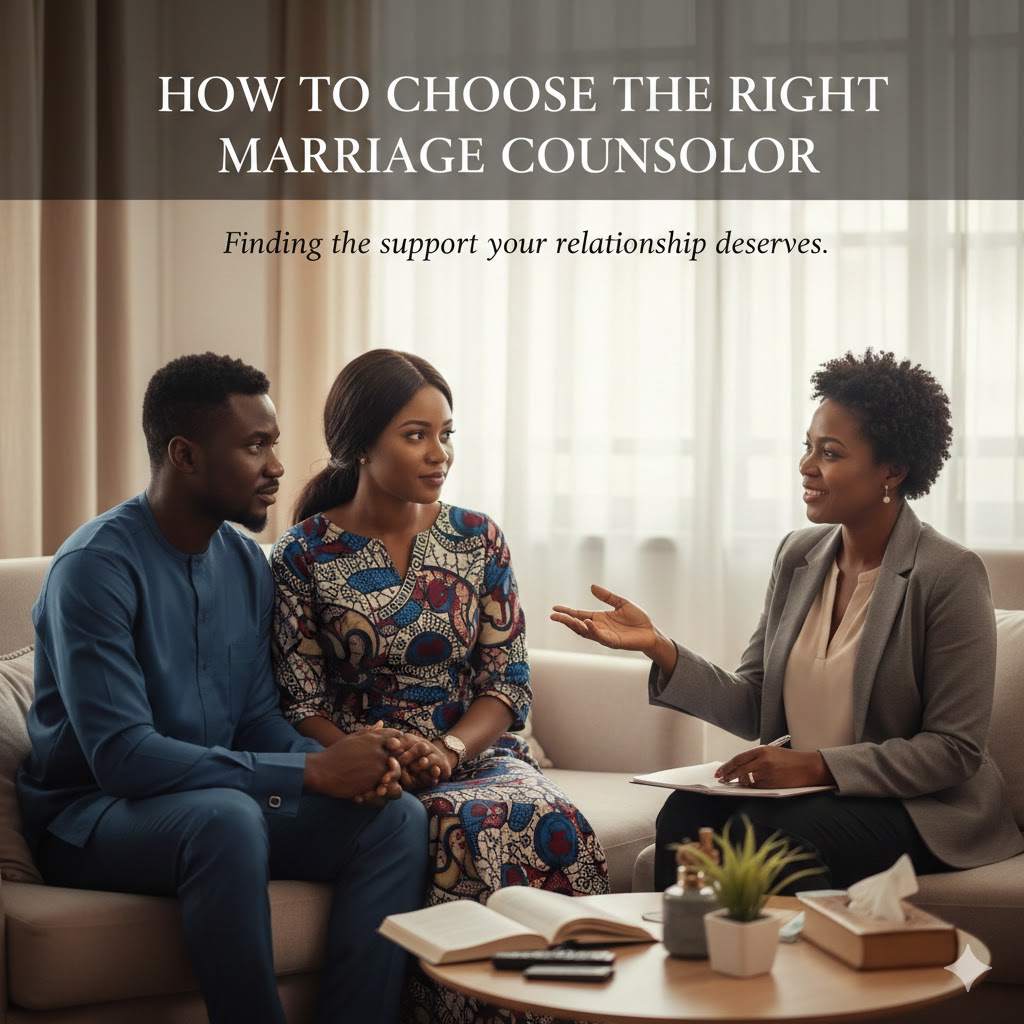
How to Choose the Right Marriage Counselor: A Guide for Nigerian Couples
Marriage is one of life’s most rewarding yet challenging journeys. Conflicts, misunderstandings, and unmet expectations are natural in any union. However, when challenges escalate or persist, seeking the guidance of a marriage counselor can provide couples with the tools and strategies to navigate their issues effectively.
For Nigerian couples, where cultural expectations, extended family pressures, and societal norms heavily influence marital dynamics, selecting the right marriage counselor is crucial. The right counselor can guide couples through communication barriers, trust issues, and intimacy challenges, while the wrong choice can exacerbate problems.
This article explores how to choose the right marriage counselor, providing practical advice, red flags, and real-life Nigerian scenarios to help couples make informed decisions.
Understanding the Role of a Marriage Counselor
A marriage counselor, also known as a couples therapist, specializes in helping couples:
-
Improve communication and conflict resolution
-
Rebuild trust after infidelity
-
Navigate cultural or family pressures
-
Address intimacy and emotional disconnect
-
Develop shared goals and strategies for a healthy marriage
Example:
In Lagos, a couple, Tobi and Sade, sought counseling to address recurring arguments about financial management. Their counselor helped them develop strategies for budgeting, communication, and shared decision-making.
Key Insight: Choosing a counselor is not just about credentials but also about approach, compatibility, and understanding of your marital context.
Step 1: Identify Your Needs
Before searching for a counselor, clarify the issues you want to address.
Common Reasons Nigerian Couples Seek Counseling:
-
Infidelity or trust issues
-
Communication breakdowns
-
Family interference or extended family pressure
-
Financial disputes
-
Emotional disconnect or intimacy issues
-
Pre-marital counseling
Scenario:
In Abuja, Chidi and Amaka were considering separation due to persistent emotional neglect. They identified their primary need as rebuilding emotional intimacy and choosing a counselor who specialized in emotional affairs and trust restoration.
Tip: Clearly identifying needs helps narrow down counselors who have relevant experience.
Step 2: Seek Recommendations and Referrals
Personal recommendations are a reliable way to find trusted marriage counselors.
Sources in Nigeria:
-
Friends or family who have attended counseling
-
Religious or spiritual leaders who offer referrals
-
Professional organizations like the Psychological Association of Nigeria (PAN)
-
Online platforms or counseling directories
Example:
In Lagos, Funke sought referrals from her church’s counseling center. The counselor she chose had experience mediating issues involving extended family pressures, which was vital in her marriage.
Caution: Ensure referrals are based on experience, not just popularity or reputation.
Step 3: Verify Credentials and Experience
Not all counselors are equally qualified. Credentials, experience, and specialization matter.
Key Considerations:
-
Educational Background: Degrees in psychology, counseling, or social work
-
Professional Certification: Membership in recognized bodies such as PAN or Nigerian Association for Marriage and Family Therapy
-
Experience with Nigerian Couples: Cultural sensitivity is crucial for navigating family and societal pressures
Scenario:
In Enugu, Mariam wanted a counselor familiar with Igbo marital customs. She confirmed that the recommended counselor had worked with couples facing extended family interference and cultural expectations.
Step 4: Assess Their Counseling Approach
Marriage counselors may adopt different approaches, and compatibility matters.
Common Approaches:
-
Cognitive Behavioral Therapy (CBT): Focuses on identifying and changing negative thought patterns
-
Emotionally Focused Therapy (EFT): Rebuilds emotional attachment and intimacy
-
Solution-Focused Therapy: Concentrates on actionable strategies rather than dwelling on problems
-
Narrative Therapy: Explores personal stories and perspectives to foster understanding
Example:
In Lagos, Tunde and Bimpe preferred a counselor who practiced emotionally focused therapy because their main challenge was emotional distance after infidelity.
Tip: Ask potential counselors about their approach and whether it aligns with your marital needs.
Step 5: Evaluate Compatibility and Comfort
The effectiveness of counseling often depends on the couple’s comfort with the counselor.
Questions to Consider:
-
Do you feel safe and understood?
-
Are they non-judgmental and professional?
-
Can they handle cultural and religious nuances in your marriage?
-
Do you feel the counselor genuinely cares about your relationship’s success?
Scenario:
In Port Harcourt, Ade and Funke switched counselors after the first session because the counselor dismissed their cultural concerns, leaving them frustrated. Finding a counselor who respected their values made a significant difference in progress.
Step 6: Check Logistics and Availability
Practical considerations can affect commitment and consistency in counseling.
Factors to Consider:
-
Location: Accessible to both partners
-
Session Format: In-person, virtual, or hybrid options
-
Scheduling: Flexible appointments that fit both partners’ work schedules
-
Cost: Affordable within your budget
Example:
In Lagos, a couple opted for weekend sessions via Zoom due to busy work schedules, ensuring regular attendance without added stress.
Step 7: Ask the Right Questions
Before committing, ask questions to assess professionalism, experience, and fit.
Essential Questions:
-
How long have you been counseling couples?
-
What types of marital issues do you specialize in?
-
Are you experienced in handling cultural or religious influences on marriage?
-
How do you measure progress in counseling?
-
What is your approach to confidentiality and privacy?
Scenario:
In Abuja, Amaka asked the counselor about experience with Nigerian couples facing infidelity. The counselor’s experience and clear explanation of the process convinced them to proceed.
Step 8: Consider Gender Preferences
Some Nigerian couples feel more comfortable with counselors of a particular gender due to cultural or personal reasons.
Scenario:
In Kaduna, a husband preferred a male counselor due to comfort discussing personal issues, while the wife preferred a female counselor. They eventually chose a couple-friendly setting with joint sessions and individual check-ins to accommodate both preferences.
Step 9: Red Flags to Watch Out For
Not all counselors are ideal for your needs. Be cautious of:
-
Lack of formal training or certification
-
Dismissing cultural, religious, or familial concerns
-
Promising quick fixes or unrealistic results
-
Being judgmental or biased
-
Breaching confidentiality
Scenario:
In Lagos, a couple stopped attending a counselor who blamed the wife entirely for marital conflicts. They found a certified professional who provided balanced guidance and improved outcomes.
Step 10: Commit to the Process
Finding the right counselor is only the first step. Consistency, commitment, and willingness to engage in the process determine success.
Tips for Nigerian Couples:
-
Attend sessions regularly
-
Be honest and transparent during discussions
-
Implement strategies suggested by the counselor
-
Maintain open communication outside sessions
Example:
In Enugu, a couple committed to weekly sessions and daily check-ins, which helped rebuild trust and emotional intimacy after prolonged marital strain.
Benefits of Choosing the Right Marriage Counselor
Selecting the right counselor offers significant advantages:
-
Improved Communication: Learn to express feelings and listen effectively
-
Conflict Resolution: Gain tools to manage disagreements constructively
-
Restored Trust: Rebuild trust after infidelity or deception
-
Emotional Intimacy: Strengthen emotional and physical connection
-
Cultural Sensitivity: Navigate extended family and societal pressures effectively
Real-Life Insight:
In Lagos, Tobi and Sade credited their counselor for helping them navigate family expectations, resolve recurring financial disputes, and rebuild emotional connection after years of conflict.
When to Seek a Marriage Counselor in Nigeria
Not every disagreement requires counseling, but these situations often signal a need:
-
Persistent arguments that don’t resolve
-
Emotional disconnection or withdrawal
-
Infidelity or suspicion of betrayal
-
Interference from extended family causing tension
-
Pre-marital preparation to strengthen relationship foundation
Scenario:
In Abuja, Chidi and Amaka attended counseling before marriage to address differences in financial expectations and extended family involvement, preventing future conflicts.
Conclusion: Choosing the Right Counselor is Key
Selecting the right marriage counselor can transform a struggling marriage into a thriving partnership. For Nigerian couples, the counselor’s cultural understanding, experience, communication style, and professional integrity are crucial.
Key Takeaways:
-
Identify your specific marital needs
-
Seek referrals and verify credentials
-
Assess compatibility, approach, and ethical standards
-
Ask questions and watch for red flags
-
Commit fully to the counseling process
Final Thought: Marriage counseling is not a sign of weakness; it is a proactive step toward growth, harmony, and lasting connection. Choosing the right counselor ensures Nigerian couples receive guidance that is culturally aware, emotionally sensitive, and effective in strengthening the bond.









.jpg)




Sign in to comment