 Nurturing Marriages, Enriching Families!
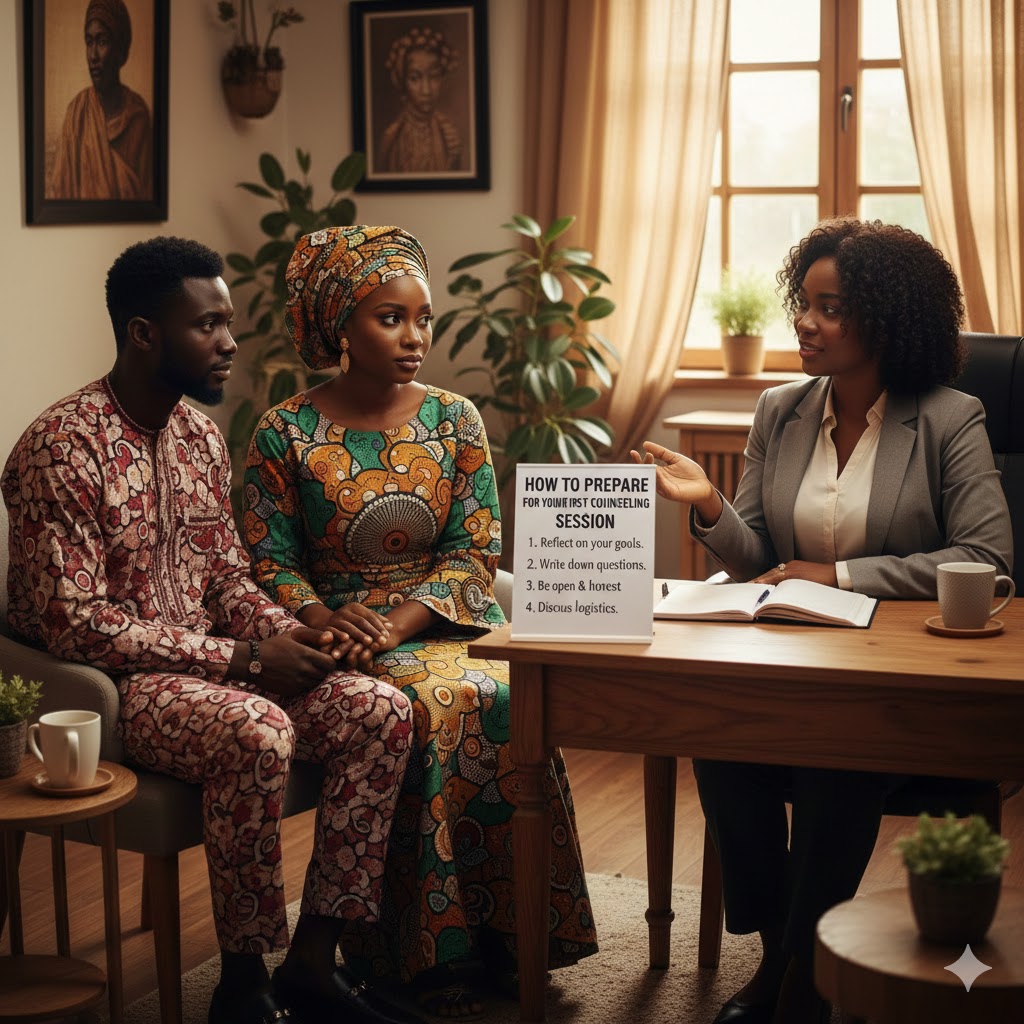
How To Prepare for Your First Counseling Session: A Nigerian Couples’ Guide
Marriage counseling can be one of the most impactful steps a couple can take toward building a stronger, healthier relationship. Yet, many Nigerian couples feel anxious, uncertain, or unprepared before their first counseling session. Knowing what to expect, how to prepare, and how to approach the session can significantly enhance the benefits of counseling.
This article provides a detailed guide for Nigerian couples on preparing for their first counseling session, with practical strategies, real-life scenarios, and insights to ensure a productive experience.
Understanding the Purpose of Your First Counseling Session
The first counseling session sets the foundation for the entire therapeutic process. Its purpose is to:
-
Introduce the counselor and establish rapport
-
Outline your relationship challenges and goals
-
Discuss counseling approaches and expectations
-
Set boundaries, confidentiality rules, and session frequency
Scenario:
In Lagos, Tobi and Sade attended their first session with a counselor to address recurring financial disputes. The counselor spent the first session understanding their communication patterns and cultural expectations, setting a roadmap for future sessions.
Key Insight: Viewing the first session as an orientation rather than a problem-solving session can reduce anxiety and improve engagement.
Step 1: Reflect on Your Relationship
Before attending counseling, take time individually and as a couple to reflect on your relationship.
Reflection Questions:
-
What are the main challenges in our relationship?
-
How do we handle conflicts?
-
What are our communication strengths and weaknesses?
-
What do we hope to achieve through counseling?
Scenario:
In Abuja, Amaka and Chidi each wrote down their concerns—Amaka focused on emotional neglect, while Chidi was concerned about communication breakdown. Bringing these reflections to the first session helped the counselor tailor strategies effectively.
Tip: Honest self-reflection prepares you emotionally and mentally for productive counseling.
Step 2: Set Clear Goals
Having clear goals provides direction and purpose. Couples who attend counseling without goals often struggle to stay focused.
Examples of Goals:
-
Improve communication and conflict resolution
-
Rebuild trust after infidelity
-
Strengthen emotional and physical intimacy
-
Manage family and societal pressures
-
Resolve financial disagreements
Scenario:
In Lagos, a couple set a goal to learn effective strategies for resolving arguments without escalating conflicts. This goal guided their counselor in designing targeted exercises during sessions.
Step 3: Choose the Right Counselor
The first session’s effectiveness depends heavily on the counselor’s expertise and compatibility with both partners.
Tips for Nigerian Couples:
-
Verify credentials, certifications, and experience
-
Ensure the counselor understands Nigerian cultural, religious, and family dynamics
-
Consider counseling style: solution-focused, emotionally focused, or cognitive-behavioral
-
Schedule an initial consultation to assess comfort and rapport
Scenario:
In Port Harcourt, Funke and Ade switched counselors after their first session because the counselor did not consider cultural factors affecting their marriage. The new counselor’s approach helped them feel understood and motivated to engage.
Step 4: Prepare to Share Honestly
Counseling requires emotional honesty. Preparing to share feelings, concerns, and experiences openly can maximize the first session’s impact.
Tips:
-
Focus on personal feelings using “I” statements
-
Avoid blaming language
-
Prepare examples of recurring conflicts or patterns
-
Consider writing notes to organize thoughts
Scenario:
In Enugu, Mariam prepared a list of specific instances when she felt emotionally neglected. This helped her articulate concerns clearly without triggering defensive reactions from her husband.
Step 5: Manage Expectations
The first session is not for immediate problem-solving. It is primarily an assessment and orientation session.
Scenario:
In Lagos, Tobi expected his counselor to provide instant solutions to trust issues. The counselor explained that the first session’s goal was understanding their challenges and setting a roadmap, helping Tobi adjust expectations and engage productively.
Tip: Approach the first session with openness and patience, focusing on understanding rather than quick fixes.
Step 6: Prepare Questions for the Counselor
Having questions ready helps clarify the process and ensures both partners feel comfortable.
Example Questions:
-
What is your counseling approach for Nigerian couples?
-
How long do sessions usually last, and how frequently should we attend?
-
How is confidentiality maintained?
-
What strategies do you recommend for practicing at home?
-
How do we measure progress in counseling?
Scenario:
In Abuja, Amaka asked questions about integrating counseling exercises into daily life. This allowed the counselor to provide practical, culturally relevant strategies.
Step 7: Agree on Joint Participation
Both partners must commit to attending sessions for counseling to be effective.
Tips:
-
Discuss schedules and availability in advance
-
Commit to being present, on time, and engaged
-
Avoid skipping sessions unless necessary, and reschedule promptly
Scenario:
In Lagos, a couple agreed on Saturday afternoon sessions after balancing work schedules, ensuring both partners could attend consistently.
Step 8: Discuss Privacy and Confidentiality
Understanding confidentiality helps partners feel safe sharing personal information.
Topics to Clarify:
-
How information shared in sessions is protected
-
What will and won’t be shared outside the session
-
Handling of notes, records, and follow-ups
Scenario:
In Port Harcourt, Funke asked the counselor about confidentiality, especially concerning family interference. Clear guidelines allowed the couple to speak openly without fear of judgment or gossip.
Step 9: Prepare Emotionally
Counseling can evoke strong emotions, particularly during the first session. Being emotionally prepared helps manage anxiety and defensiveness.
Tips:
-
Practice deep breathing or mindfulness exercises
-
Agree on “pause” strategies if emotions escalate
-
Support each other emotionally throughout the session
Scenario:
In Enugu, Joseph prepared himself for potentially emotional discussions about his wife’s feelings of neglect. He reminded himself to listen actively rather than react defensively, leading to a productive first session.
Step 10: Gather Relevant Information
Bringing information or examples can make discussions more concrete.
Useful Information:
-
Examples of recurring conflicts
-
Financial records if money management is a concern
-
Messages or patterns that reflect communication issues
-
Any prior counseling notes or experiences
Scenario:
In Lagos, Tunde brought examples of text message misunderstandings with his wife. The counselor used these to illustrate communication gaps and recommend practical solutions.
Step 11: Agree on Open Communication After the Session
Counseling extends beyond the session room. Discussing takeaways afterward helps integrate lessons and maintain progress.
Tips:
-
Schedule a follow-up discussion after each session
-
Share reflections without judgment
-
Identify actionable steps to implement before the next session
Scenario:
In Abuja, Amaka and Chidi discussed insights from the first session during their commute home. This reinforced learning and increased commitment to applying strategies in daily life.
Step 12: Prepare for Follow-Up Assignments
Counselors often assign exercises, homework, or discussion topics between sessions. Being prepared to complete these strengthens the counseling process.
Examples:
-
Communication exercises
-
Journaling emotions and thoughts
-
Practicing conflict resolution strategies
-
Scheduling quality time together
Scenario:
In Lagos, Sade and Tobi practiced daily check-ins suggested by the counselor. This habit improved emotional connection and reinforced the counseling process.
Step 13: Manage Family Expectations
In Nigerian marriages, extended family influence is significant. Preparing for counseling may involve managing expectations from relatives.
Tips:
-
Decide what details to share with family
-
Set boundaries regarding interference
-
Emphasize that counseling is a private, constructive process
Scenario:
In Port Harcourt, Ade and Funke’s families initially questioned counseling. They explained that the sessions were private and aimed at strengthening their marriage, which reduced external pressure and allowed focused engagement.
Step 14: Prepare for Emotional Surprises
Counseling can uncover unexpected feelings, past resentments, or hidden concerns. Being mentally prepared helps handle surprises without derailing the session.
Scenario:
In Enugu, Mariam realized during the first session that some frustrations she had attributed to her husband were linked to past family experiences. Recognizing this helped her approach counseling with clarity and openness.
Step 15: Cultivate Patience and Persistence
Counseling is a journey, and results take time. Preparing mentally for a gradual process ensures commitment.
Tips:
-
Focus on small, consistent progress
-
Celebrate improvements, not just final outcomes
-
Understand that setbacks are part of the journey
Scenario:
In Lagos, a couple remained patient despite initial slow progress. Over months, their communication improved, demonstrating the importance of persistence.
Conclusion: First Steps Lay the Foundation
Preparing for your first counseling session is critical for success. Nigerian couples who approach counseling with clarity, openness, and commitment are more likely to benefit from the process.
Key Takeaways:
-
Reflect on your relationship and set clear goals
-
Choose a counselor experienced with Nigerian cultural and marital dynamics
-
Prepare emotionally and mentally for honest discussions
-
Understand the counseling process and manage expectations
-
Commit to active participation, follow-up exercises, and consistent application
Final Thought: The first counseling session is more than an introduction; it is a foundation for rebuilding trust, improving communication, and strengthening marital bonds. With thoughtful preparation, Nigerian couples can maximize the benefits of counseling and lay the groundwork for a healthier, happier marriage.








.jpg)
Sign in to comment