 Nurturing Marriages, Enriching Families!
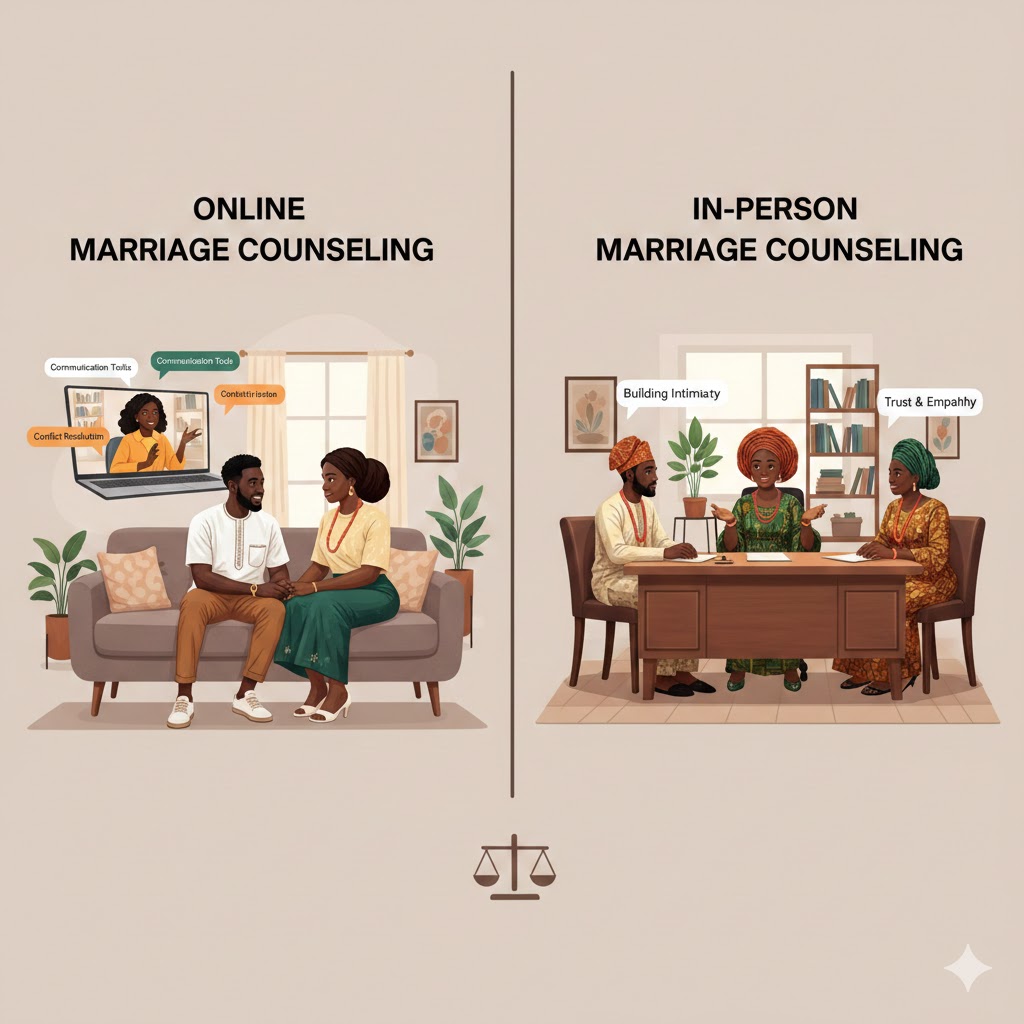
Online vs In‑Person Marriage Counseling: What Nigerian Couples Should Know
Marriage counseling is an essential tool for couples who want to strengthen their relationship, navigate conflicts, or rebuild trust. In Nigeria, couples are increasingly exploring counseling options due to rising awareness of mental health and marital well-being. One critical decision couples face is choosing between online (virtual) and in-person counseling.
Both methods have advantages and limitations, and understanding these can help Nigerian couples make informed choices for their marriage. This article explores the differences between online and in-person counseling, practical tips, and real-life Nigerian scenarios to guide couples.
Understanding Marriage Counseling
Marriage counseling involves a trained professional helping couples:
-
Communicate more effectively
-
Resolve conflicts
-
Rebuild trust after betrayal
-
Strengthen emotional and physical intimacy
-
Navigate family and societal pressures
Scenario:
In Lagos, Tobi and Sade sought counseling after experiencing frequent arguments due to financial stress. Their counselor guided them through communication exercises, trust-building strategies, and shared goal-setting, demonstrating how counseling can positively transform relationships.
The Rise of Online Counseling in Nigeria
Online counseling, also called virtual or teletherapy, uses digital platforms like Zoom, Google Meet, or dedicated therapy apps to provide counseling sessions remotely.
Factors Driving Online Counseling in Nigeria:
-
Busy schedules and traffic challenges
-
Privacy and discretion concerns
-
Access to experienced counselors outside the immediate locality
-
Comfort and convenience of home-based sessions
Scenario:
In Abuja, Amaka and Chidi lived in different cities due to work commitments. Online counseling allowed them to attend weekly sessions together without traveling, maintaining consistency in their marital growth.
The Role of In-Person Counseling
In-person counseling involves attending face-to-face sessions at a counselor’s office or therapy center.
Advantages in Nigeria:
-
Direct interpersonal interaction
-
Ability to pick up on non-verbal cues
-
Stronger sense of accountability
-
Structured environment free from household distractions
Scenario:
In Port Harcourt, Funke and Ade chose in-person counseling because they felt a structured office environment helped them focus better on discussions about trust and emotional intimacy.
Comparing Online and In-Person Counseling
Let’s explore the differences across key factors for Nigerian couples.
1. Accessibility
-
Online Counseling: Highly accessible regardless of location; ideal for couples in different cities or rural areas with limited counselor options.
-
In-Person Counseling: Limited to the counselor’s physical location; travel may be required.
Scenario:
In Lagos, Tunde and Bimpe chose online counseling due to distance from experienced marriage counselors in their suburb.
2. Convenience and Flexibility
-
Online Counseling: Flexible scheduling; sessions can be conducted from home or office; reduces travel and traffic stress.
-
In-Person Counseling: Less flexible; requires commuting; may conflict with work schedules.
Scenario:
In Abuja, Amaka and Chidi scheduled online sessions late evenings after work, avoiding disruption to their busy routines.
3. Privacy and Confidentiality
-
Online Counseling: Offers privacy from neighbors, extended family, or workplace. However, secure platforms are critical to maintain confidentiality.
-
In-Person Counseling: Sessions are private in a controlled environment; risk of overhearing is minimal.
Scenario:
In Lagos, Sade preferred online counseling because she felt more comfortable discussing sensitive issues without the risk of relatives noticing her visits to a counselor’s office.
4. Emotional Connection and Non-Verbal Cues
-
Online Counseling: Can limit the counselor’s ability to observe body language, subtle cues, and emotional reactions.
-
In-Person Counseling: Richer emotional engagement; counselor can interpret non-verbal communication effectively.
Scenario:
In Port Harcourt, Chika and Emeka noticed their counselor better understood their tension and unspoken emotions in face-to-face sessions, allowing more precise guidance.
5. Technical Considerations
-
Online Counseling: Requires reliable internet, devices, and tech literacy; technical glitches can disrupt sessions.
-
In-Person Counseling: No technology required; fewer interruptions.
Scenario:
In Lagos, Tunde and Bimpe had to reschedule an online session due to unstable internet, highlighting the importance of technical preparedness.
6. Cost Considerations
-
Online Counseling: Often slightly cheaper due to reduced overheads; eliminates transport costs.
-
In-Person Counseling: Costs may include travel, parking, and slightly higher session fees.
Scenario:
In Abuja, Amaka found online counseling more affordable, enabling consistent weekly sessions without stretching their budget.
7. Accountability and Commitment
-
Online Counseling: Requires self-discipline to attend sessions; easy to postpone due to home distractions.
-
In-Person Counseling: Structured environment enhances commitment and accountability.
Scenario:
In Port Harcourt, Funke and Ade were more consistent with in-person sessions because leaving home for appointments reinforced dedication to counseling.
Real-Life Nigerian Considerations
-
Cultural and Religious Contexts
-
Counseling approaches should align with cultural and religious values.
-
In-person sessions may allow better integration of culturally sensitive guidance.
-
-
Extended Family Influence
-
Online counseling offers discretion from relatives, minimizing interference.
-
-
Urban vs Rural Access
-
Urban areas like Lagos or Abuja have more in-person options.
-
Rural couples may benefit more from online counseling due to limited access.
-
Scenario:
In a Yoruba household in Lagos, Tobi and Sade used online counseling to prevent intrusive family opinions from affecting their sessions, preserving emotional connection.
Which Approach is Better for Nigerian Couples?
There is no one-size-fits-all answer. The choice depends on:
-
Lifestyle and schedules: Busy or geographically separated couples may prefer online.
-
Desire for emotional depth: Couples seeking richer interpersonal engagement may favor in-person.
-
Privacy needs: Couples wanting discretion may lean toward online counseling.
-
Budget constraints: Online sessions may reduce costs.
Scenario:
In Abuja, Amaka and Chidi started with online counseling due to distance. After relocating to the same city, they switched to in-person sessions for deeper emotional engagement.
Combining Online and In-Person Counseling
Hybrid models can offer the best of both worlds:
-
Alternate online and in-person sessions based on convenience and emotional needs
-
Use online sessions for maintenance and check-ins, in-person for deep work
-
Adapt to changes in work, travel, or family responsibilities
Scenario:
In Lagos, Sade and Tobi scheduled monthly in-person sessions and weekly online check-ins, balancing convenience with emotional depth.
Tips for Maximizing the Effectiveness of Either Method
-
Set Clear Goals – Identify what you hope to achieve from counseling
-
Commit to Consistency – Attend sessions regularly, regardless of the format
-
Create a Distraction-Free Environment – Quiet space for online or in-person sessions
-
Engage Actively – Be open, honest, and participative
-
Practice Counseling Exercises – Implement daily or weekly exercises suggested by the counselor
Scenario:
In Port Harcourt, Chika and Emeka enhanced the benefits of in-person counseling by completing assigned exercises at home, improving their emotional connection and conflict management.
Common Challenges and Solutions
| Challenge | Online Counseling | In-Person Counseling | Nigerian Scenario |
|---|---|---|---|
| Technical issues | Ensure stable internet; test platform beforehand | N/A | Lagos couple rescheduled due to Wi-Fi disruption |
| Privacy at home | Use private rooms, headphones | Controlled office environment | Abuja couple used spare room for online sessions |
| Distractions | Minimize interruptions | Focused environment | Lagos couple turned off phones during sessions |
| Engagement | Schedule routine and reminders | Session structure promotes focus | Abuja couple committed to fixed weekly times |
| Emotional depth | Use video, active listening | Richer due to body language cues | Port Harcourt couple felt more understood in-person |
Conclusion: Making the Right Choice
Both online and in-person counseling offer unique advantages for Nigerian couples. The key is choosing a format that aligns with your relationship needs, lifestyle, and goals.
Key Takeaways:
-
Online counseling offers flexibility, privacy, and accessibility.
-
In-person counseling provides richer emotional engagement and accountability.
-
Hybrid approaches can balance convenience with depth.
-
Commitment, active participation, and cultural awareness are critical for success.
-
Couples can start with one format and switch or combine based on experience and evolving needs.
Final Thought: Marriage counseling is an investment in emotional health and relationship resilience. Nigerian couples who carefully consider their needs, preferences, and circumstances—whether choosing online, in-person, or hybrid counseling—can strengthen emotional bonds, improve communication, and build lasting marital satisfaction.










.jpg)



Sign in to comment