 Nurturing Marriages, Enriching Families!
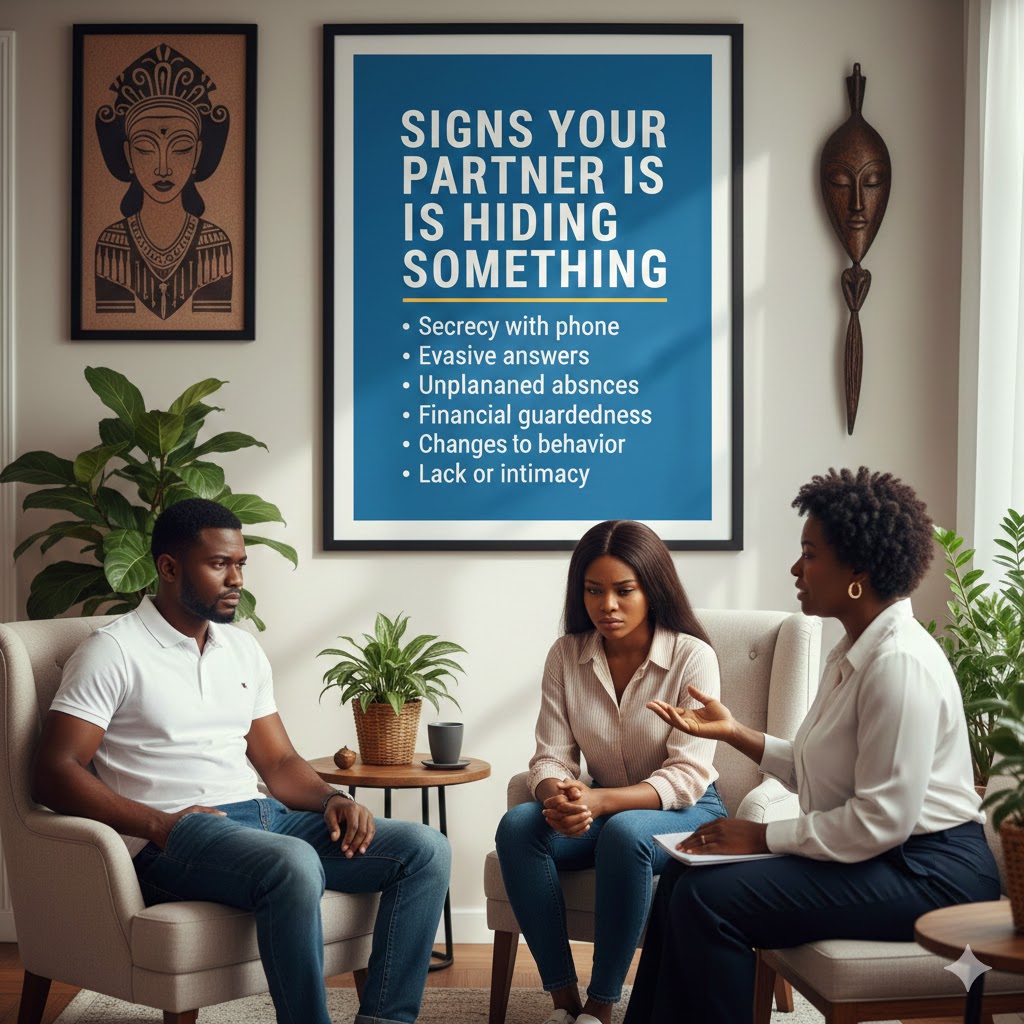
Signs Your Partner Is Hiding Something: A Nigerian Couples’ Guide
Discovering that your partner might be hiding something can create stress, suspicion, and anxiety in a marriage. In Nigeria, where family, culture, and societal expectations strongly influence relationships, secrecy can be particularly damaging. Knowing the warning signs and how to address them thoughtfully is essential for maintaining trust, emotional intimacy, and marital stability.
This article explores the common signs your partner may be hiding something, illustrated with real-life Nigerian scenarios, psychological insights, and practical advice for addressing secrecy in your relationship.
Understanding Secrecy in Relationships
Secrecy can take many forms in a marriage:
-
Emotional Secrets: Withholding feelings, thoughts, or concerns from your partner.
-
Financial Secrets: Hiding debts, expenditures, or income details.
-
Social or Relational Secrets: Concealing friendships, interactions, or past relationships.
-
Infidelity: Emotional, physical, or digital cheating.
Scenario:
In Lagos, Tobi noticed his wife, Sade, acting unusually secretive with her phone and social media. Although nothing physical had occurred, the secrecy suggested she was hiding personal struggles and new friendships from him.
Common Signs Your Partner Is Hiding Something
Recognizing these signs early allows couples to address issues before they escalate.
1. Increased Secrecy Around Devices
-
Frequent password changes or hiding phone screens.
-
Avoiding calls or messages when you are nearby.
Scenario:
Amaka noticed her husband, Chidi, always took his phone to another room before opening messages. This sudden behavior prompted her to pay attention to potential secrets.
2. Inconsistent Stories
-
Contradictions in explanations about their whereabouts, activities, or interactions.
-
Frequent excuses for unexplained absences.
Scenario:
In Abuja, Chika realized Emeka’s stories about work trips didn’t align with receipts and timestamps, signaling potential concealment.
3. Emotional Distance or Withdrawal
-
Reduced intimacy, communication, and emotional engagement.
-
Avoiding meaningful conversations or deflecting questions.
Scenario:
Tobi noticed Sade became quieter and less emotionally available during calls while he worked abroad. This withdrawal indicated something was on her mind.
4. Defensive Behavior
-
Overreacting to simple questions about activities or relationships.
-
Becoming suspicious or hostile when asked for clarification.
Scenario:
Amaka confronted Chidi about a delayed reply to her messages, and he reacted defensively, suggesting he was hiding something significant.
5. Secretive Financial Behavior
-
Unexplained withdrawals, hidden accounts, or undisclosed expenses.
-
Refusal to discuss finances openly.
Scenario:
In Port Harcourt, Chika discovered Emeka made significant bank transfers without discussion, raising suspicions of secrecy.
6. Sudden Changes in Routine or Appearance
-
New habits, wardrobe changes, or grooming behaviors inconsistent with prior patterns.
-
Sudden attention to appearance without a clear reason.
Scenario:
Tobi observed that Sade started dressing differently for work and spending extra time on her phone, hinting at undisclosed interactions.
7. Avoiding Eye Contact or Physical Intimacy
-
Physical and emotional avoidance can signal hidden concerns or guilt.
-
Hesitation in conversations or intimacy may indicate secretive behavior.
Scenario:
Amaka noticed Chidi became physically distant and avoided emotional conversations after receiving multiple late-night calls.
8. Overcompensation or Guilt Signals
-
Excessive kindness, gifts, or apologies can sometimes mask hidden actions.
-
Attempting to distract you from probing questions.
Scenario:
In Lagos, Tobi noticed Sade suddenly became overly affectionate and generous, possibly compensating for secrecy.
9. Social Media and Online Behavior Changes
-
Private social media accounts, deleted messages, or unusual online activity.
-
Avoiding shared devices or accounts.
Scenario:
Chika observed Emeka frequently cleared chat histories and avoided group calls where he might be asked questions.
10. Unexplained Stress or Anxiety
-
Increased nervousness, irritability, or distraction.
-
Overreaction to inquiries or minor disagreements.
Scenario:
Amaka noticed Chidi became unusually anxious about small questions regarding his day, signaling he was hiding important information.
Psychological Reasons People Hide Things
Understanding why partners hide things helps address the root cause of secrecy:
1. Fear of Judgment
-
Partners may conceal mistakes, failures, or vulnerabilities to avoid criticism or shame.
Scenario:
In Abuja, Chika avoided telling Emeka about work stress and mistakes, fearing judgment, which caused emotional distance.
2. Desire for Control or Autonomy
-
Some individuals hide actions to maintain personal space or independence.
Scenario:
Tobi noticed Sade kept certain friendships secret, seeking autonomy without disrupting marital trust.
3. Avoiding Conflict
-
Hiding issues may seem easier than facing confrontation or potential arguments.
Scenario:
Amaka avoided sharing financial stress with Chidi to prevent arguments, inadvertently creating secrecy.
4. Guilt or Fear of Consequences
-
Secretive behavior often arises from guilt about mistakes, misjudgments, or infidelity.
Scenario:
In Lagos, Sade hid emotional interactions with a colleague, feeling guilty about the emotional closeness.
5. Emotional Immaturity or Poor Communication Skills
-
Difficulty expressing feelings or handling tough conversations can lead to hiding issues.
Scenario:
Chika struggled to share insecurities about parenting challenges with Emeka, leading to secretive coping behaviors.
Steps to Address Partner Secrecy
1. Observe Without Jumping to Conclusions
-
Look for consistent patterns rather than isolated incidents.
-
Avoid accusatory behavior that may escalate defensiveness.
Scenario:
Tobi carefully observed Sade’s behavior before addressing it, ensuring he had a full understanding of patterns rather than assumptions.
2. Communicate Openly and Calmly
-
Use “I” statements to express concerns:
-
“I feel worried when you seem distant.”
-
“I notice certain behaviors that make me feel uneasy; can we talk?”
-
Scenario:
Amaka calmly told Chidi, “I feel concerned when I notice inconsistencies in your stories. Can we discuss them?”
3. Ask Direct Questions
-
Be honest about your suspicions without being aggressive.
-
Encourage transparency while maintaining a safe environment for discussion.
Scenario:
In Port Harcourt, Chika asked Emeka directly about unusual financial transactions, opening the door for honest explanation.
4. Create a Safe Environment for Disclosure
-
Avoid blame or judgment during discussions.
-
Encourage honesty by responding empathetically and constructively.
Scenario:
Tobi reassured Sade that she could share her challenges without fear of anger, which led her to open up about her emotional struggles.
5. Seek Professional Guidance
-
Counseling provides a neutral space to explore secrecy and underlying issues.
-
Therapists can help rebuild trust, improve communication, and address hidden challenges.
Scenario:
Amaka and Chidi sought marriage counseling after repeated secrecy issues, learning strategies to improve transparency and emotional connection.
6. Rebuild Trust
-
Establish boundaries and accountability measures to prevent ongoing secrecy.
-
Consistency, honesty, and openness are key to repairing trust.
Scenario:
Tobi and Sade implemented daily check-ins and shared schedules to ensure transparency and reinforce trust.
7. Evaluate Relationship Health
-
Determine whether secrecy is symptomatic of deeper relationship problems.
-
Address underlying dissatisfaction, emotional neglect, or personal challenges.
Scenario:
Chika and Emeka realized secrecy stemmed from stress, emotional fatigue, and communication gaps, which counseling helped resolve.
Common Mistakes to Avoid
-
Accusing Without Evidence – Hasty accusations can damage trust.
-
Invading Privacy Excessively – Snooping or spying may worsen the relationship.
-
Suppressing Concerns – Ignoring gut feelings can allow secrecy to escalate.
-
Assuming Worst Intentions – Not all secrecy is malicious; some may stem from fear, stress, or immaturity.
Scenario:
Amaka nearly snooped through Chidi’s phone but refrained and instead used direct communication to address her concerns, strengthening trust.
Real-Life Nigerian Scenario: Addressing Hidden Secrets
Case Study: Tobi and Sade, Lagos
-
Challenge: Sade became secretive with her phone and social interactions while Tobi worked abroad.
-
Action: Tobi observed patterns, asked calm questions, and encouraged open communication.
-
Process: Counseling helped Sade express fears and emotional struggles that she had hidden.
-
Outcome: Transparency improved, trust was rebuilt, and emotional intimacy strengthened.
Case Study: Amaka and Chidi, Abuja
-
Challenge: Chidi hid financial stress and late-night calls, creating suspicion.
-
Action: Amaka addressed concerns through calm discussion and counseling.
-
Outcome: Financial transparency was established, and emotional closeness improved.
Conclusion: Navigating Secrecy in Nigerian Marriages
Hiding things in a relationship is common, but unresolved secrecy can erode trust, intimacy, and emotional stability. Nigerian couples face additional pressures from family, culture, and societal expectations, making transparency and communication crucial.
Key Takeaways:
-
Watch for consistent patterns of secrecy, withdrawal, and defensive behavior.
-
Communicate openly, ask direct questions, and create a safe environment for disclosure.
-
Seek professional counseling to rebuild trust and improve emotional intimacy.
-
Address underlying issues, including stress, dissatisfaction, or poor communication skills.
-
Avoid accusatory or invasive approaches that may worsen the situation.
Final Thought: Identifying signs your partner is hiding something is the first step toward strengthening your marriage. With awareness, communication, and professional guidance, Nigerian couples can navigate secrecy, rebuild trust, and foster long-term relationship stability.









.jpg)




Sign in to comment