 Nurturing Marriages, Enriching Families!
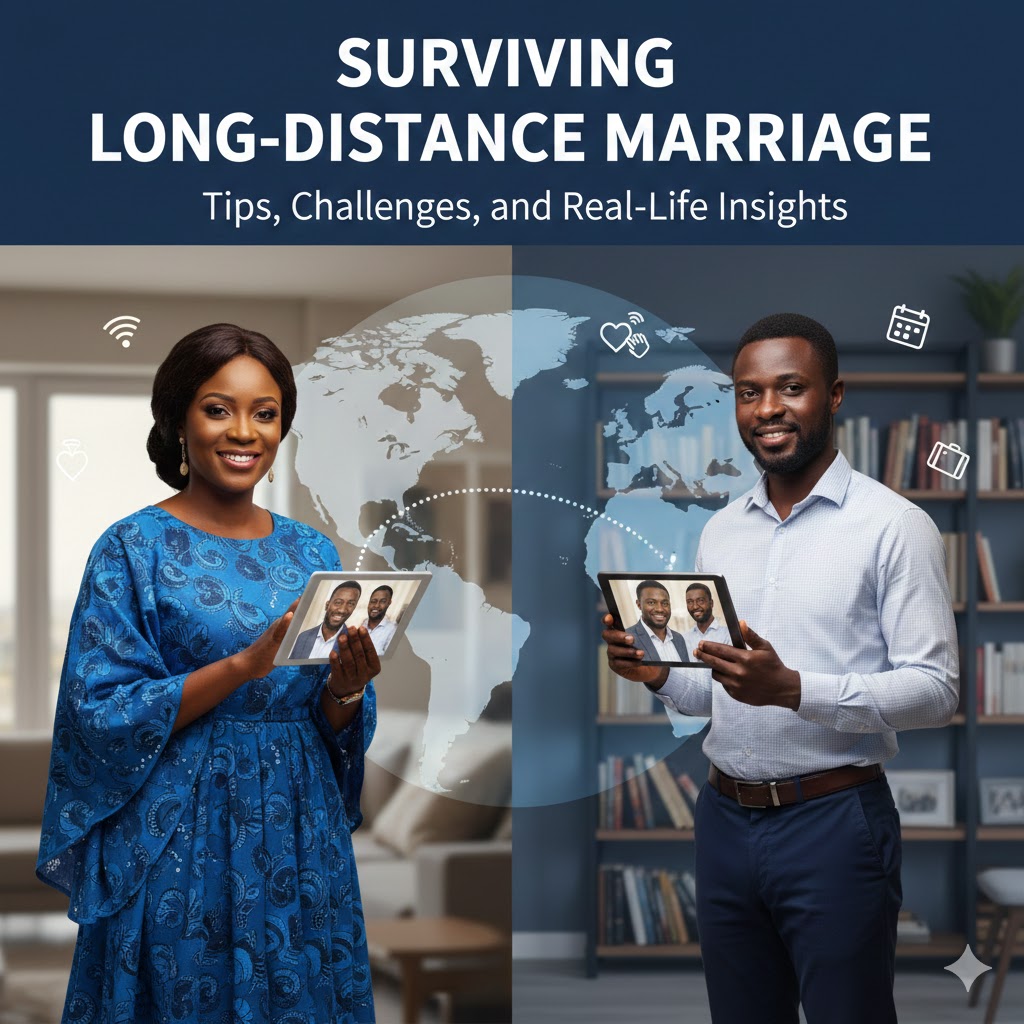
Surviving Long‑Distance Marriage: Tips, Challenges, and Real-Life Insights
Marriage is challenging enough when couples live together, but long-distance marriages take patience, trust, and intentional effort to survive.
In Nigeria, long-distance marriages are increasingly common due to work, education, business opportunities, or relocation abroad. While technology helps, the physical distance can create emotional gaps if not managed carefully.
A long-distance marriage is not a sign of weakness. Many couples successfully maintain deep intimacy, emotional connection, and marital satisfaction despite being miles apart. The key lies in communication, trust, consistency, and emotional resilience.
Common Challenges in Long-Distance Nigerian Marriages
Long-distance marriages face unique challenges that can test the strength of the relationship. Understanding these hurdles is the first step to overcoming them:
-
Communication barriers: Time differences, work schedules, and lack of consistent availability can create misunderstandings or feelings of neglect.
-
Emotional loneliness: Physical separation may lead to loneliness, insecurity, or doubts about the partner’s commitment.
-
Trust issues: Distance can exacerbate fears of infidelity or dishonesty, especially when couples rely heavily on social media or messaging for connection.
-
Family and societal pressure: Nigerian families often expect couples to live together soon after marriage. Extended separation may invite unsolicited advice, judgment, or pressure from relatives and community members.
-
Financial stress: Frequent travel, phone bills, and logistical expenses for visits can strain finances.
-
Temptation and external influence: Being apart may expose couples to distractions, peer pressure, or new relationships, which can threaten fidelity.
Practical Tips for Surviving a Long-Distance Marriage
While long-distance marriages can be difficult, many Nigerian couples thrive by following these strategies:
1. Establish Clear Communication Routines - Decide on when and how often you will communicate. This could be daily calls, video chats, or morning and evening check-ins. Consistency builds emotional security and reduces misunderstandings.
2. Build Trust Through Transparency - Honesty is crucial. Share your schedules, plans, and challenges openly. Trust grows when both partners feel informed and included despite the distance.
3. Use Technology Wisely - Leverage video calls, messaging apps, and social media to maintain intimacy. Fun gestures like sending voice notes, pictures, or short videos can create closeness even across thousands of miles.
4. Plan Visits and Special Moments - Nothing replaces physical presence. Schedule visits, even if infrequent, and make them meaningful. Nigerian couples often coordinate holidays, birthdays, or cultural celebrations to strengthen connection.
5. Manage Family Expectations - Set boundaries with relatives who may unintentionally add pressure or judgment. Explain your situation calmly and enlist their support rather than letting criticism cause stress.
6. Keep the Romance Alive - Small gestures matter. Surprise messages, gifts, or letters can reinforce emotional intimacy. Celebrating milestones digitally, like anniversaries or achievements, shows that the relationship is still a priority.
7. Maintain Individual Growth - Long-distance marriages work best when both partners continue to grow personally. Pursue hobbies, careers, and spiritual growth independently, so the relationship is strengthened rather than strained by dependency.
8. Seek Counseling if Needed - Professional guidance can help navigate trust issues, jealousy, or communication gaps. Marriage counselors or therapists in Nigeria often offer virtual sessions suitable for couples separated by distance.
Real-Life Nigerian Examples
-
A couple separated by work: A husband working in Lagos while his wife is in Abuja due to her teaching job schedules weekly video calls and shares daily updates via WhatsApp voice notes. They plan quarterly visits and celebrate anniversaries with coordinated Zoom dinners.
-
A couple studying abroad: A wife pursuing a master’s degree in the UK maintains her marriage by sending weekly letters, sharing her academic progress, and scheduling monthly video calls to stay emotionally connected.
-
Business-driven separation: A couple running businesses in different cities in Nigeria shares financial updates transparently, consults each other on major decisions, and schedules family gatherings during weekends to reinforce their bond.
These examples highlight that long-distance marriages can survive—and even thrive—when intentionality, trust, and communication are prioritized.
Long-distance marriages are not for the faint-hearted, but they are not doomed either. With deliberate effort, couples can maintain intimacy, emotional connection, and trust despite separation. In Nigeria, where family and societal expectations are high, managing long-distance marriage successfully requires resilience, patience, and creativity.
Ultimately, distance tests the strength of love, but it also provides an opportunity for personal growth, deeper communication, and renewed appreciation for one another. When handled well, long-distance marriages can emerge stronger and more resilient than many traditional arrangements.










.jpg)



Sign in to comment