 Nurturing Marriages, Enriching Families!
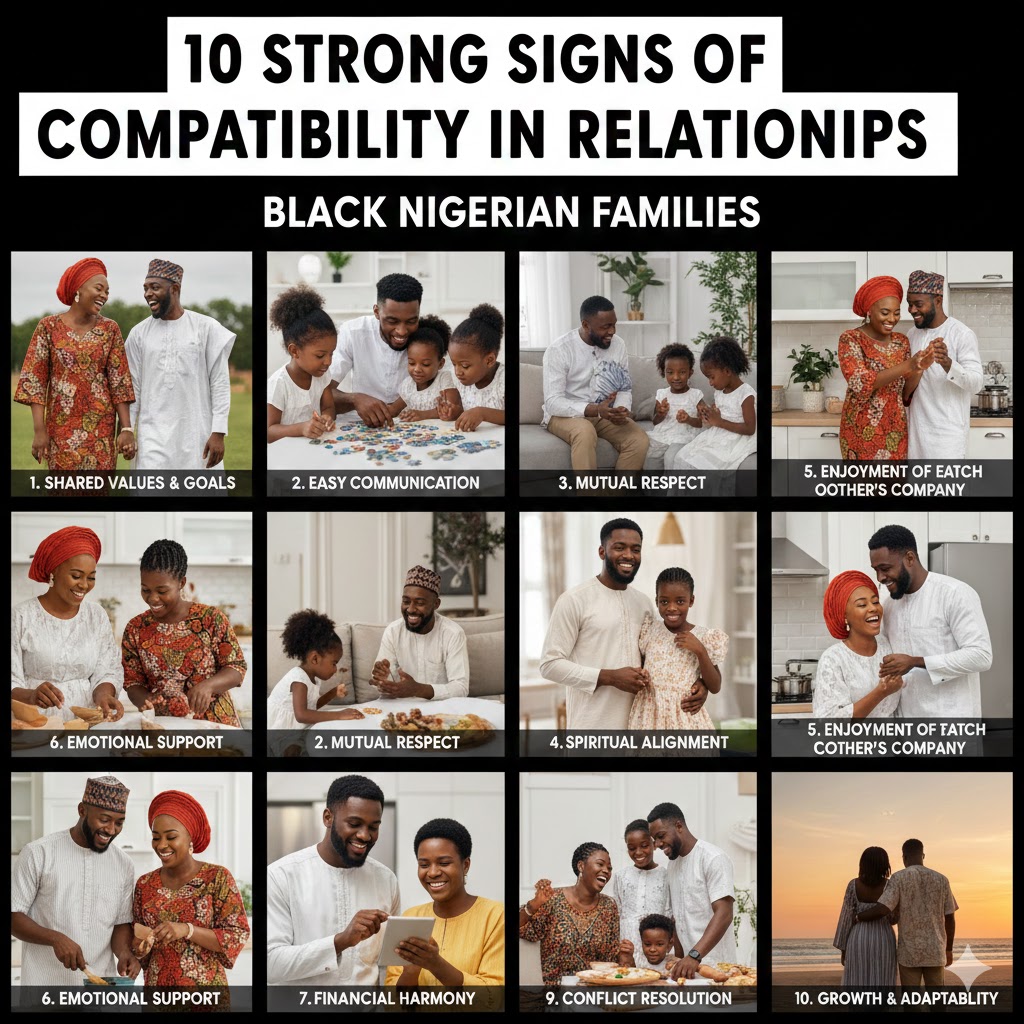
Ten (10) Strong Signs of Compatibility in Relationships
Compatibility is one of the most important factors in building a lasting and fulfilling relationship. While love and attraction often bring couples together initially, long-term success depends on how well partners align in values, lifestyle, goals, and emotional connection.
In Nigeria, cultural expectations, family involvement, and societal pressures can influence how compatibility manifests, making it essential for couples to understand the signs that indicate a strong match.
This article explores the strongest indicators of compatibility in relationships, real-life Nigerian examples, practical exercises for couples, and reflection prompts to help you assess and nurture your partnership.
Understanding Compatibility in Relationships
Compatibility goes beyond shared hobbies or attraction. It encompasses emotional, intellectual, and lifestyle alignment, including the ability to navigate challenges together. Couples who are compatible can communicate effectively, resolve conflicts constructively, and support each other’s growth.
In Nigeria, compatibility also involves navigating cultural and family expectations. Couples may need to balance personal preferences with extended family pressures, religious beliefs, and societal norms. A compatible partnership allows both individuals to thrive within these contexts without sacrificing personal or relational well-being.
Real-Life Nigerian Scenarios
Scenario 1: Lagos Couple and Lifestyle Compatibility
Chinwe and Emeka shared a love for social activities and community involvement. Both enjoyed attending events, volunteering, and traveling. This alignment made planning leisure time harmonious and reduced friction. Their shared lifestyle allowed them to bond over common experiences, enhancing intimacy and satisfaction in the relationship.
Scenario 2: Abuja Couple and Value Alignment
Ngozi and Chinedu differed slightly in personality but shared core values regarding honesty, financial responsibility, and family priorities. This alignment helped them navigate disagreements effectively, as both prioritized ethical behavior, long-term goals, and mutual respect, demonstrating that compatibility goes beyond surface-level similarities.
Scenario 3: Port Harcourt Couple and Conflict Handling
Funke and Emeka had strong emotional compatibility, particularly in conflict resolution. While they disagreed on parenting styles, they approached disagreements with patience, empathy, and active listening. Their ability to navigate conflicts constructively reinforced trust and strengthened their bond, illustrating emotional compatibility as a critical factor.
Strong Signs of Compatibility in Relationships
1. Shared Core Values
Couples with aligned values experience fewer fundamental disagreements. Core values might include religion, ethics, family priorities, and lifestyle choices. Shared values help couples make joint decisions and handle challenges without constant conflict.
2. Mutual Respect
Respect involves honoring each other’s opinions, boundaries, and individuality. Couples who respect each other can disagree without demeaning or belittling their partner, fostering a safe and nurturing environment.
3. Effective Communication
Compatibility is reflected in how well partners communicate. Compatible couples listen actively, express emotions clearly, and resolve disagreements constructively, reducing misunderstandings and emotional tension.
4. Emotional Connection
A strong emotional bond enables partners to empathize, support, and respond sensitively to each other’s feelings. Nigerian couples who maintain emotional intimacy often navigate cultural and familial pressures with greater resilience.
5. Shared Life Goals
Alignment in career ambitions, financial planning, family planning, and long-term objectives ensures that partners are moving in the same direction, minimizing friction and fostering teamwork.
6. Conflict Resolution Ability
How couples handle disagreements indicates compatibility. Partners who can resolve conflicts without resentment, blame, or aggression demonstrate emotional maturity and relational harmony.
7. Physical and Sexual Compatibility
A healthy sexual and physical connection enhances intimacy and satisfaction. Compatibility includes aligned needs, desires, and comfort levels, contributing to overall relational harmony.
8. Sense of Humor and Joy
Shared laughter, playfulness, and enjoyment of each other’s company strengthen bonds. Couples who can have fun together and not take everything seriously are more resilient in facing challenges.
9. Complementary Strengths
Compatibility is not about being identical. Partners who complement each other’s strengths and weaknesses create balance, leveraging differences for mutual growth and support.
10. Trust and Reliability
Mutual trust and consistent reliability are crucial. Couples who can depend on each other for honesty, follow-through, and emotional support are better equipped to navigate life’s uncertainties.
Practical Exercises for Couples
Values Discussion: List core values individually, then compare and discuss alignment. Explore areas of difference and strategies to reconcile them.
Conflict Simulation: Role-play challenging scenarios to observe each other’s conflict response styles and practice constructive resolution.
Shared Goal Planning: Create a roadmap for the next 1, 5, and 10 years, including career, finances, children, and lifestyle. Evaluate alignment and negotiate differences.
Emotional Check-Ins: Dedicate weekly time to express feelings, share experiences, and reflect on emotional connection.
Strengths Mapping: Identify individual strengths and weaknesses, then discuss how to complement each other in decision-making, household responsibilities, and problem-solving.
Reflection Prompts for Nigerian Couples
-
Which values are most important to each of us, and how aligned are we?
-
How do we handle disagreements and conflicts?
-
Are our long-term goals compatible?
-
Do we respect and support each other’s individuality?
-
How strong is our emotional and physical connection, and what can we do to strengthen it?
Challenges in Nigerian Relationships
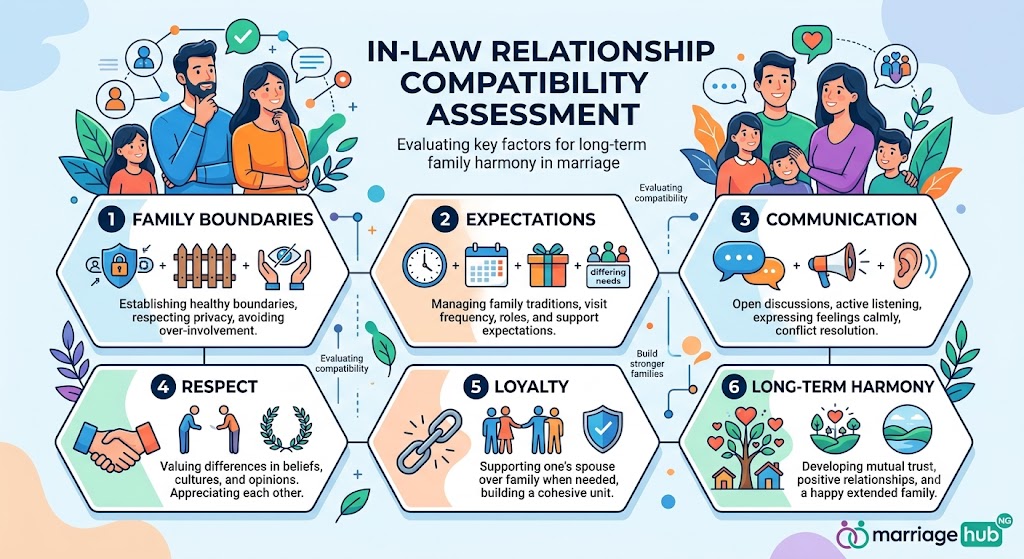
Cultural, family, and societal pressures can influence compatibility. Family expectations may conflict with personal preferences, while religious or ethnic differences may pose challenges. Financial disparities, gender role expectations, and social norms can also test alignment. Couples who actively communicate, establish boundaries, and maintain shared goals are better equipped to manage these challenges.
Benefits of Compatibility
Couples who are compatible experience:
-
Fewer recurring conflicts
-
Stronger emotional and physical intimacy
-
Improved decision-making and problem-solving
-
Greater satisfaction and stability in the relationship
-
Resilience against external pressures from family, society, or cultural norms
Compatibility allows Nigerian couples to navigate life together with shared purpose, mutual respect, and emotional security.
Conclusion
Compatibility is a key determinant of long-term relationship success. While attraction and chemistry may initiate relationships, long-term fulfillment depends on shared values, emotional connection, mutual respect, aligned goals, and complementary strengths.
Nigerian couples face unique challenges, including cultural expectations, extended family involvement, and societal pressures. Understanding and identifying strong signs of compatibility—such as trust, effective communication, conflict resolution, emotional intimacy, and shared life goals—can help couples build a strong foundation for a lasting partnership.
Practical exercises like values discussions, goal planning, conflict simulations, and emotional check-ins allow couples to assess and strengthen compatibility actively. By investing time, reflection, and effort into understanding each other, Nigerian couples can cultivate relationships that thrive despite external pressures, fostering love, respect, and enduring commitment.




.jpg)
Sign in to comment