 Nurturing Marriages, Enriching Families!

Ultimate Guide to Conflict Resolution in Marriage: A Nigerian Perspective
Conflict is a natural part of marriage. When two people with different backgrounds, personalities, and life experiences commit to sharing a life together, disagreements are bound to arise. What determines whether a marriage thrives or struggles is how couples manage and resolve conflict. Over time, unresolved conflicts can erode trust, intimacy, and stability in a relationship, while healthy conflict resolution strengthens emotional bonds and mutual respect.
This comprehensive guide explores conflict resolution in marriage from every angle — social and emotional causes, practical strategies backed by research, real-world statistics, faith-inclusive approaches, communication tools, expert insights, and actionable steps couples can implement today.
Whether you’re newly married or have decades together, this resource will empower you to address conflict with clarity, compassion, and confidence.
Table of Contents
-
Introduction: The State of Marriage in Contemporary Nigeria
-
The Landscape of Marital Conflict in Nigeria: Facts and Figures
-
Alarming Statistics: Domestic Violence and Dispute Caseloads
-
Expert Insights: Why Marriages Are Under Strain
-
The Role of Marital Residence and Family Support
-
-
Common Causes of Conflict in Nigerian Marriages
-
Incompatibility of Values and Goals
-
Economic Hardship and Financial Stress
-
Sexual Frustration and Intimacy Issues
-
External Family Interference
-
The Erosion of "Small Behaviors"
-
-
Conflict Resolution Styles and Their Effectiveness
-
The "Atomic Habits" of Marital Erosion
-
The Role of Alternative Dispute Resolution (ADR)
-
-
Practical and Faith-Centered Strategies for Resolution
-
Strategy 1: Master Active Listening
-
Strategy 2: Adopt "I-Statements" Over "You-Accusations"
-
Strategy 3: The Intentional Time-Out
-
Strategy 4: Harness Humility and Let Go of Pride
-
Strategy 5: Practice Patience as a Spiritual Discipline
-
Strategy 6: Develop Discernment to See the Real Problem
-
Strategy 7: Embrace Empathy by Centering Your Spouse
-
Strategy 8: Hand Over Your Anger to God
-
-
When and Where to Seek Help
-
Professional Counseling and Social Case Management
-
Alternative Dispute Resolution (ADR) and Family Courts
-
Community and Religious Interventions
-
-
Frequently Asked Questions About Conflict Resolution in Nigeria
-
Conclusion: Building a Legacy of Peace
-
Internal Links to Related MarriageHib.ng Resources
Introduction: The State of Marriage in Contemporary Nigeria
The institution of marriage in Nigeria, long revered as the bedrock of society, is facing unprecedented pressure . Modern realities—economic hardship, shifting gender roles, digital distraction, and the clash between traditional values and contemporary aspirations—have placed immense strain on marital relationships . The result is a landscape where conflict is not just common, but often poorly managed, leading to consequences that ripple through families and communities.
The Federal Government itself has acknowledged this growing crisis, noting that marital and family disputes are "increasingly becoming prevalent due to various social, economic, and cultural factors" . If left unresolved, these disputes can lead to the "disintegration of the family unit, with far-reaching consequences for individuals and society at large" .
But here's the essential truth: conflict itself is not the enemy of a healthy marriage. As conflict mediator Chad Ford notes, conflict is a natural and even necessary part of intimate relationships where two distinct individuals are blending their lives. The real challenge lies not in avoiding disagreements, but in navigating them constructively. When handled with wisdom, grace, and the right tools, conflict can become a tunnel to deeper intimacy rather than a barrier that drives couples apart.
This guide is written specifically for Nigerian couples. It draws on local research, statistics, and expert insights to provide a comprehensive, culturally relevant roadmap for transforming marital conflict into connection. Whether you are navigating the pressures of urban Lagos, managing extended family dynamics in a traditional setting, or simply seeking to strengthen your marriage, the principles and strategies within these pages are designed to help you build a relationship that endures.
The Landscape of Marital Conflict in Nigeria: Facts and Figures
Alarming Statistics: Domestic Violence and Dispute Caseloads
The most stark indicator of marital distress in Nigeria is the prevalence of domestic violence. In Lagos State alone, between August 2024 and July 2025, a staggering 8,692 cases of domestic and sexual violence were recorded . Of these, domestic violence accounted for 3,685 cases, making it the most prevalent issue reported . This data from Nigeria's commercial capital offers a sobering glimpse into the scale of the problem, highlighting how unresolved conflicts can escalate into physical and emotional abuse.
Beyond violence, the sheer volume of marital disputes requiring intervention is enormous. In Kano State, the Hisbah Board, which handles moral and family disputes, reported receiving 16,939 complaints in 2024 . Impressively, they were able to amicably resolve 7,884 of these cases, demonstrating that with structured intervention, resolution is possible . This indicates a massive, often unmet, need for conflict resolution services across the nation.
Research from Enugu State further quantifies the prevalence of marital instability. A study in the Igbo-Etiti Local Government Area found that more than half (52.9%) of married couples reported high marital instability . This statistic from Southeast Nigeria confirms that a significant portion of marriages are struggling, making the need for effective conflict resolution strategies more urgent than ever.
Expert Insights: Why Marriages Are Under Strain
Mental health and relationship experts have identified key drivers behind these troubling statistics. Prof. Nkwam Uwaoma, a clinical psychologist, points to incompatibility as a primary factor . He notes that "many couples are incompatible in terms of interest, in terms of knowledge, in terms of education, and in terms of religion," often entering unions based on selfish motives rather than shared values .
Economic hardship is another major catalyst. Prof. Uwaoma explains that financial poverty, unemployment, and a lack of ideas create immense frustration, which can boil over into conflict and violence . When bills pile up and love struggles to pay them, the resulting tension tests the foundations of any marriage .
The Role of Marital Residence and Family Support
Fascinating research from Kogi State, published in the Social Science & Medicine journal, reveals how living arrangements impact conflict. The study found that couples living in neolocal residences (living independently, away from both families) had higher odds of experiencing spousal violence compared to those living in patrilocal residences (with or near the husband's family) or near the wife's family .
Crucially, social support from family members was found to be a protective factor, with those who had it experiencing a lower risk of spousal violence . This suggests that the village, when it provides healthy support rather than interference, can be a buffer against marital breakdown.
Common Causes of Conflict in Nigerian Marriages
Understanding the root causes of conflict is the first step toward resolving it. Nigerian counselors and researchers have identified several recurring themes.
Incompatibility of Values and Goals
As noted by Prof. Uwaoma, incompatibility is a silent marriage killer . When couples have zero compatibility in core values, life goals, or even educational backgrounds, every major decision becomes a potential battleground. A husband who values traditional hierarchy may clash with a wife who values egalitarian partnership. This fundamental mismatch fuels constant quarrels .
Economic Hardship and Financial Stress
Financial difficulties are a universal stressor, but in Nigeria's current economic climate, they are particularly acute . Joblessness, inflation, and the inability to meet family needs create a pressure-cooker environment. Prof. Uwaoma poignantly states, "Love does not pay bills" . When financial poverty sets in, it breeds frustration, which can easily manifest as verbal or physical aggression . The habit of financial secrecy—hiding expenses or failing to disclose debts—fractures trust, compounding the problem .
Sexual Frustration and Intimacy Issues
Sexual denial and dissatisfaction are significant, though often understated, drivers of conflict . Experts explain that when partners feel deprived of sexual satisfaction, it can be "physiologically and mentally frustrating," potentially leading to conflict . Issues like childlessness or a preference for a specific gender of children can also create deep-seated sexual and emotional frustration . While experts caution that denial of sex is often a trigger rather than the root cause (with underlying issues like insecurity or poor emotional control being the real problem), its role in marital strife cannot be ignored .
External Family Interference
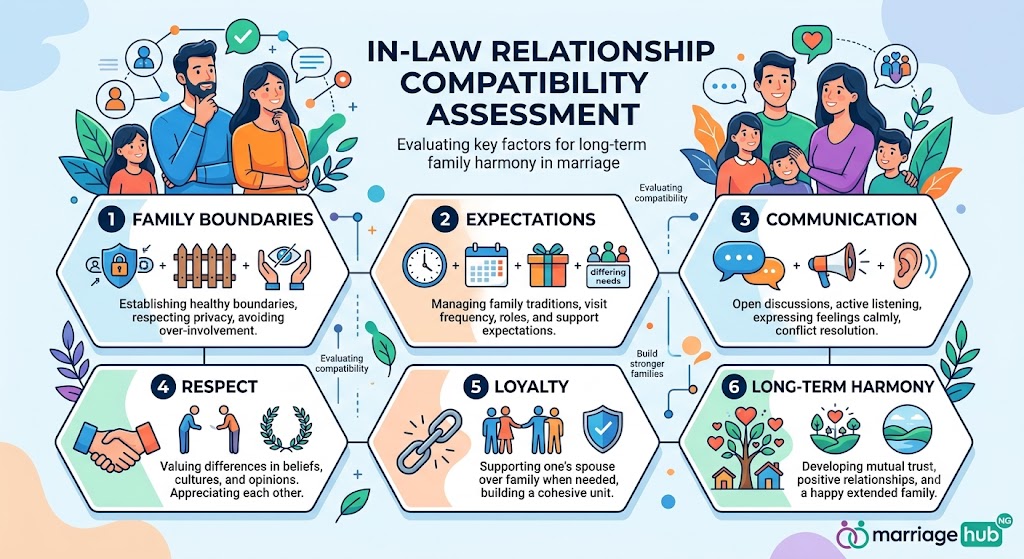
The extended family, while a source of support, can also be a source of immense pressure . Prof. Uwaoma describes this as "third-party" pressure, where families impose expectations or interfere in the affairs of newly married couples . In-law interference over finances, child-rearing, or even daily routines can create conflict, forcing a spouse to choose between their partner and their blood relatives. As one expert noted, failing to properly "leave and cleave" from one's family of origin is a recipe for disaster .
The Erosion of "Small Behaviors"
Perhaps the most insidious cause of modern marital breakdown is not a single dramatic event, but the accumulation of negative "atomic habits" . These are the small, repeated behaviors that erode intimacy over time:
-
A husband who habitually scrolls through his phone during conversations.
-
A wife who routinely mocks her husband in public.
-
The daily habit of sarcasm, which builds into contempt—the single strongest predictor of marital breakdown according to psychologists .
-
The routine of withholding appreciation or giving the silent treatment.
These micro-disconnections, repeated daily, create an emotional climate of distance and disrespect, weakening the marriage from the inside until it collapses, much like a tree hollowed out by termites .
Conflict Resolution Styles and Their Effectiveness
How couples typically handle disagreements—their conflict resolution style—has a profound impact on marital satisfaction.
The "Atomic Habits" of Marital Erosion
In the Nigerian context, certain negative patterns are particularly destructive:
-
Contempt: Psychologists consistently identify contempt as the strongest predictor of marital breakdown. In Nigerian homes where respect is culturally prized, the erosion of respect through sarcasm, mockery, or public shaming is especially damaging .
-
Withdrawal: More and more, couples are not fighting loudly; they are withdrawing gradually. This emotional disconnection, where partners habitually refuse to engage or give the silent treatment, is often more corrosive than confrontation .
-
Defensiveness and Stonewalling: The refusal to accept responsibility or to shut down completely during an argument prevents any chance of resolution, allowing grievances to fester.
These patterns are not resolved by grand gestures. They require the intentional replacement of negative habits with positive ones—the habit of greeting warmly, apologizing quickly, and checking in emotionally .
The Role of Alternative Dispute Resolution (ADR)
Formal mechanisms for resolving conflict are gaining recognition. Research by legal scholar Solomon O. Afolabi evaluated the use of Alternative Dispute Resolution (ADR) methods for marital conflicts in Nigeria . The study found that there is an "overwhelming use of ADR mechanisms," although most people lean towards non-institutional methods (like family elders or religious leaders) rather than formal, institutional ADR .
Crucially, the research confirmed that a "cause and effect" relationship exists between ADR and healthy marriages . This suggests that structured, third-party intervention, when done correctly, can be highly effective. The study recommends giving more importance to ADR and establishing family courts that use collaborative approaches .
Practical and Faith-Centered Strategies for Resolution
For many Nigerian couples, faith is not just a part of life; it is the lens through which life is viewed. Integrating spiritual principles with practical communication tools can be a powerful pathway to reconciliation.
Strategy 1: Master Active Listening
"The most important tool is active listening, as your spouse needs to know that he or she is being heard" . Active listening involves:
-
Rephrasing and reflecting what you've heard to confirm understanding.
-
Asking clarifying questions to go deeper.
-
Resisting the urge to formulate your response while your spouse is still speaking.
Proverbs 18:13 reminds us, "To answer before listening—that is folly and shame." When we seek first to understand our spouse, we are acting like Christ.
Strategy 2: Adopt "I-Statements" Over "You-Accusations"
Shifting from blaming "you" statements to vulnerable "I" statements can de-escalate a heated argument.
-
Instead of: "You never listen to me!"
-
Try: "I feel unheard and unimportant when we talk and I don't feel like you're hearing my side."
This simple shift reduces defensiveness and opens the door to empathy.
Strategy 3: The Intentional Time-Out
When emotions run too high for productive conversation, it's wise to call a "time-out" . This is different from withdrawing or giving the silent treatment. It's an agreed-upon pause.
-
Agree on a signal or a word that means, "I need to step away and calm down, but I am committed to returning to this conversation."
-
Set a time to return, perhaps in 30 minutes or an hour.
-
Use the time to cool down and pray, not to rehearse your spouse's faults.
Strategy 4: Harness Humility and Let Go of Pride
Marriage will test your humility. Pride constantly beckons us, especially in conflict. We want to be right, to have things our way. Yet Jesus "gave up his divine privileges; he took the humble position of a slave" (Philippians 2:7-8). The question every spouse must ask is: Is it more important to be right or to be righteous? Choosing humility—admitting you were wrong, or simply letting go of the need to "win"—is a profound act of love.
Strategy 5: Practice Patience as a Spiritual Discipline
Patience is a fruit of the Spirit, and it is cultivated in the soil of conflict. When you don't get your way, you have an opportunity to exercise patience instead of succumbing to frustration. Colossians 3:12 encourages us to "clothe yourselves with compassion, kindness, humility, gentleness, and patience." Patience is a gift you give your spouse that maintains unity and peace.
Strategy 6: Develop Discernment to See the Real Problem
It's easy to fight about the surface issue—the dishes, the money, the time spent with friends. But discernment helps you see the deeper issue. Marriage coach Dana Che advises, "Your spouse is not the problem; the problem is the problem." When conflict arises, ask God for discernment to see the real issue. Is the argument about money, or about feeling secure? Is it about time, or about feeling valued? Praying together when conflict arises is one of the best ways to develop this discernment and foster unity.
Strategy 7: Embrace Empathy by Centering Your Spouse
Empathy is putting yourself in your spouse's shoes. But genuine empathy isn't asking, "What would I do if I were my spouse?" Rather, ask, "What would my spouse do if they were in that situation?" This requires setting aside your own perspective and truly seeking to understand theirs. It is the gateway to compassion, connection, and care.
Strategy 8: Hand Over Your Anger to God
Anger is a powerful emotion that can distort our perceptions, making us feel separate from our spouse even though we vowed to be one. Rudy Hagood offers powerful counsel: "Let us intentionally hand over anger in our marriages—first to God in prayer, and then to each other through vulnerability." Remember, Christ is in your marriage vows too. He does not step away when you are angry with one another. Thoughtfully and prayerfully approaching anger leads to deeper understanding, trust, and connection.
When and Where to Seek Help
Sometimes, couples need outside help to navigate their conflicts. Recognizing this and seeking help is a sign of wisdom, not weakness.
Professional Counseling and Social Case Management
The Federal Government has recognized the urgent need for professional intervention, organizing workshops to equip social welfare practitioners with skills for settling marital and family disputes . Professional counselors and social workers can provide a safe, neutral space and evidence-based tools to help couples improve communication and resolve deep-seated issues. Experts advise that access to professional counseling can assist couples in resolving conflicts and improving communication, potentially preventing separation and divorce .
Alternative Dispute Resolution (ADR) and Family Courts
As the research by Dr. Afolabi shows, ADR methods like mediation and arbitration can be very effective. In these settings, a neutral third party helps the couple reach their own agreement, focusing on collaboration rather than litigation . There is a growing call for the establishment of specialized family courts in Nigeria that would use these collaborative approaches, as the traditional court system is often seen as too adversarial for the sensitive nature of marital conflicts .
Community and Religious Interventions
For many, the first port of call is the church, mosque, or family elders. Religious leaders are often the primary counselors for couples in distress. The Kano State Hisbah Board's success in resolving thousands of marital cases demonstrates the powerful role community-based institutions can play . They provide a framework grounded in shared values and cultural norms. Professional counselors also recommend that community education, group counseling, seminars, and workshops be intensified in religious institutions and other community settings to create awareness on how to manage marital conflicts .
Frequently Asked Questions About Conflict Resolution in Nigeria
Q1: Is it normal to have so much conflict in my marriage?
A: Some level of conflict is normal, as two unique individuals blend their lives. However, research from Enugu State shows that over half of married couples report "high marital instability," indicating that while conflict is common, it shouldn't be the dominant state of your relationship . If conflict is constant and destructive, it's a sign that you need to develop better resolution tools.
Q2: My in-laws are causing problems in my marriage. What can I do?
A: External family interference is a major cause of conflict in Nigeria . The solution involves a united front. The biblical principle of "leaving and cleaving" is essential—your primary loyalty must now be to your spouse . Each spouse should ideally handle their own family, setting kind but firm boundaries. The study from Kogi State also suggests that while family support is beneficial, it must be the right kind of support, not interference .
Q3: We can't afford a counselor. Where else can we get help?
A: There are several free or low-cost options. You can seek counsel from a respected pastor, imam, or mature Christian/Muslim couple in your local religious community. Community elders can also play a mediating role. The Kano Hisbah example shows that community-based institutions can effectively resolve marital cases . Additionally, consider attending marriage seminars and workshops organized by churches, NGOs, or community groups .
Q4: How do we stop having the same fight over and over again?
A: Recurring fights often point to an unresolved underlying issue. It's not really about the dishes or the money; it's about feeling unappreciated or insecure. You need to develop discernment to see the real problem . Try using "I-statements" to express the deeper feeling, and practice active listening to truly understand your spouse's perspective.
Q5: What is the best way to resolve a serious marital dispute?
A: Research suggests that Alternative Dispute Resolution (ADR) methods, such as mediation, are very effective . This involves a neutral third party (like a trained mediator, counselor, or respected elder) helping you talk through the issues and find your own solutions, rather than going to court. The collaborative nature of ADR is better suited to preserving the relationship than the adversarial nature of litigation.
Q6: My spouse refuses to talk about our problems. What should I do?
A: This is a form of withdrawal, which can be very damaging . You cannot force someone to talk, but you can create a safe environment. Choose a calm moment, not during a fight, and gently express how their withdrawal makes you feel using "I-statements." For example, "I feel lonely and disconnected when we don't talk about what's bothering us." You can also suggest a "time-out" strategy where they agree to take a break but commit to coming back to talk later .
Conclusion: Building a Legacy of Peace
The statistics on marital conflict in Nigeria are sobering. Thousands of cases of domestic violence, tens of thousands of disputes flooding intervention boards, and over half of couples in some areas reporting high instability paint a picture of a national institution under immense strain . The pressures are real: economic hardship, cultural transitions, digital distraction, and the complexities of modern life .
Yet, within this challenging landscape lies a profound opportunity. The very conflicts that threaten to tear marriages apart can, when navigated with wisdom and grace, become the tunnels to a deeper, more resilient intimacy. The small, negative habits that erode love can be replaced with positive "atomic habits" that build it up, day by day . The incompatibilities that cause friction can be managed through empathy and discernment.
For the Nigerian couple, the path to resolution is multi-faceted. It involves practical communication tools like active listening and "I-statements." It requires a willingness to seek help from professional counselors, trusted community leaders, or through effective ADR mechanisms . And for those of faith, it is deeply spiritual—a call to harness humility, practice patience, and hand over anger to God, trusting that He is at work in the midst of the struggle.
Ultimately, marriage is not sustained by dramatic declarations of love, but by consistent demonstrations of regard . It is the daily choice to listen, to apologize, to forgive, and to prioritize the one you vowed to love. By embracing these principles, Nigerian couples can not only weather the storms of conflict but can build a legacy of peace that strengthens their families, their communities, and the nation itself.
"If it is possible, as far as it depends on you, live at peace with everyone." (Romans 12:18)
Internal Links to Related Marriage Hub NG Resources
- Resolving Conflicts Through Faith and Understanding - Marriage Hub NG
- The 4 Biggest Arguments that Are Tearing Your Marriage Apart - Marriage Hub NG
- How to Apply the 3 Days Rule After an Argument in a Relationship - Marriage Hub NG
- How to Take a Step Back Without Breaking Up: A Guide for Couples - Marriage Hub NG
- How to React When a Woman Goes Silent on You: A Calm and Confident Approach - Marriage Hub NG
- How Is Politics Ruining Relationships? Understanding the Strain of Political Differences - Marriage Hub NG
- Overcoming Marital Challenges Through Faith in God - Marriage Hub NG
- How to Talk to Your Spouse About a Sexless Marriage Without Causing Conflict - Marriage Hub NG
- Dealing with In-Law Conflicts in a Godly Way - Marriage Hub NG
Last Updated: February 2026





.jpg)
Sign in to comment