 Nurturing Marriages, Enriching Families!
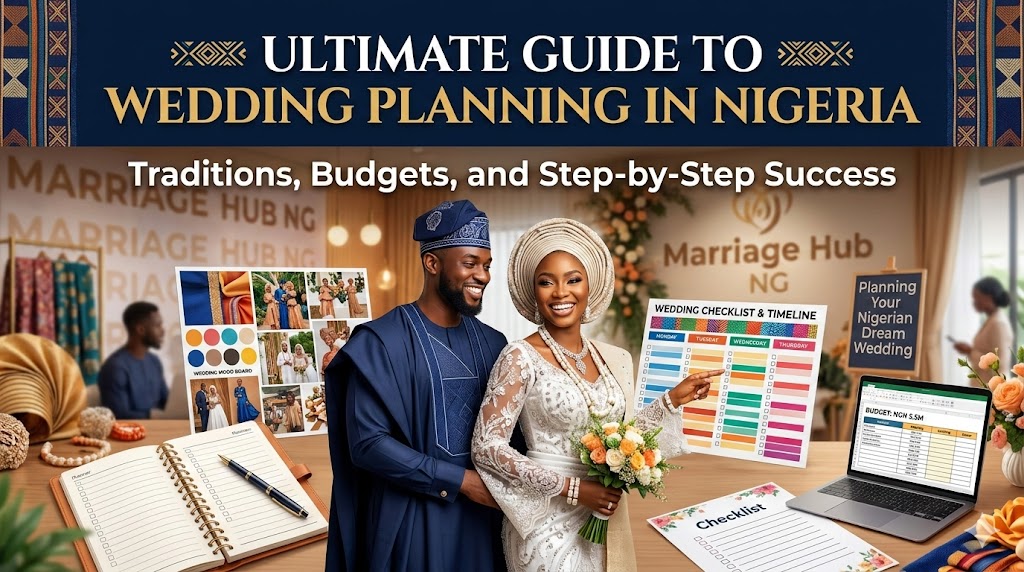
Ultimate Guide to Wedding Planning in Nigeria: Traditions, Costs, Timeline, and Trends
Planning a wedding in Nigeria is an exhilarating journey, a blend of deep-rooted cultural heritage and modern-day glamour. It is the ultimate "Owambe"—a celebration that goes beyond two individuals to unite families, communities, and even "streets."
However, in 2026, the landscape of Nigerian weddings has shifted. With rising costs, evolving fashion trends like luxury minimalist lace, and the digital transformation of registries, staying organized is no longer optional—it's a survival skill. Whether you are planning a 500-guest Lagos extravaganza or an intimate ceremony in Abuja, this guide provides the data, timelines, and expert secrets to pull off your dream day without breaking the bank.
Table of Contents
-
Introduction: The Beautiful Complexity of Nigerian Weddings
-
Understanding the Structure of Nigerian Weddings
-
The Traditional Wedding (Engagement)
-
The Court Wedding (Civil Ceremony)
-
The White Wedding (Church or Mosque)
-
The Reception
-
-
Nigerian Wedding Costs: Facts, Figures, and Budgeting
-
The High Cost of Love: Average Spending in Nigeria
-
How to Plan a Wedding on a ₦500,000 Budget
-
Government Support: Mass Wedding Programmes
-
-
A Complete 12-Month Wedding Planning Timeline
-
12–11 Months Before: The Foundation
-
10–9 Months Before: Securing Dates and Vendors
-
8–7 Months Before: Attire, Bridal Party, and Legalities
-
6–5 Months Before: Guest Management and Experience
-
4–3 Months Before: Logistics and Personal Touches
-
2 Months Before: Invitations and Final Confirmations
-
1 Month Before: The Final Stretch
-
The Wedding Week: Countdown to "I Do"
-
-
Creating a Foolproof Event Timeline
-
Building Buffer Time for Nigerian Realities
-
Sample Wedding Day Timeline
-
Assigning a Timekeeper
-
-
Traditional Wedding Customs Across Major Ethnic Groups
-
Igbo Traditional Wedding (Igba Nkwu)
-
Yoruba Traditional Wedding (Igbeyawo)
-
Hausa-Fulani Traditional Wedding
-
Gbagyi (Gbari) Cultural Wedding
-
Inter-Tribal Weddings
-
-
The Asoebi Phenomenon: Trends and Colours for 2026
-
What is Asoebi?
-
Top Trending Asoebi Colours in 2026
-
How to Choose Your Wedding Colours
-
-
Nigerian Wedding Attire: A Complete Guide
-
The Bride's Many Looks
-
The Groom's Ensemble
-
The Bridal Party
-
-
Frequently Asked Questions About Nigerian Wedding Planning
-
Conclusion: Planning with Peace and Purpose
-
Internal Links to Related MarriageHib.ng Resources
Introduction: The Beautiful Complexity of Nigerian Weddings
Planning a wedding anywhere in the world is a significant undertaking, but planning a wedding in Nigeria is a unique and beautiful experience that blends deep cultural traditions, elaborate celebrations, modern trends, and complex logistics. It is rarely just one event. For most couples, it involves navigating a traditional ceremony that varies dramatically across ethnic groups, a legal court wedding, and a white wedding ceremony, all capped with a lavish reception .
This comprehensive guide is designed to be your go-to resource for navigating every step of this exciting journey. Whether you are planning from Lagos, Abuja, Port Harcourt, or from the diaspora, this guide provides a clear roadmap filled with practical advice, current facts and figures, and culturally relevant insights. From setting a realistic budget and understanding the latest asoebi colours to mastering the intricate details of your specific traditional rites, we've got you covered.
Let's embark on this journey to plan a wedding that is not only beautiful and memorable but also deeply meaningful and, most importantly, stress-free.
Understanding the Structure of Nigerian Weddings
Before diving into the planning logistics, it's crucial to understand the multi-faceted nature of a Nigerian wedding. Most couples don't have just one ceremony; they often have three .
The Traditional Wedding (Engagement)
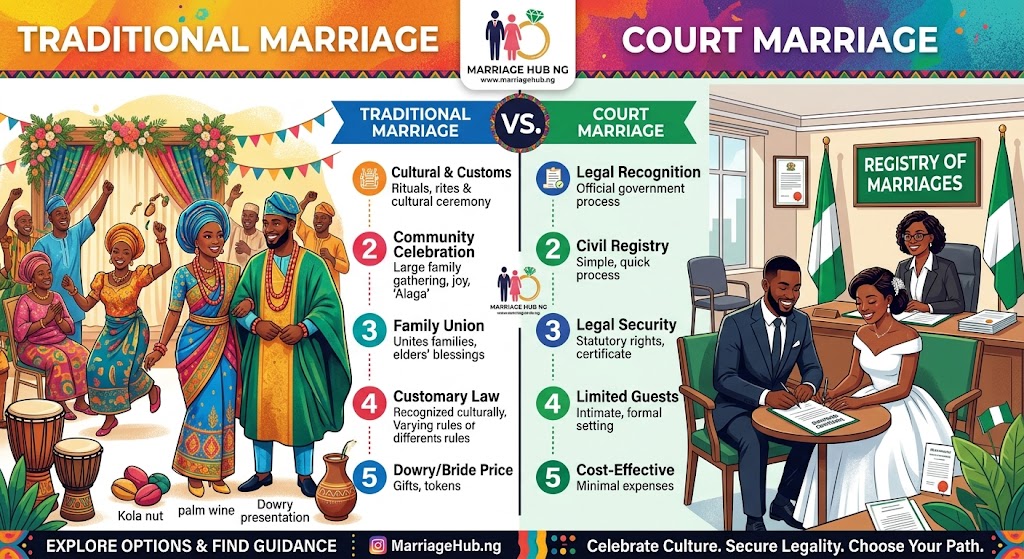
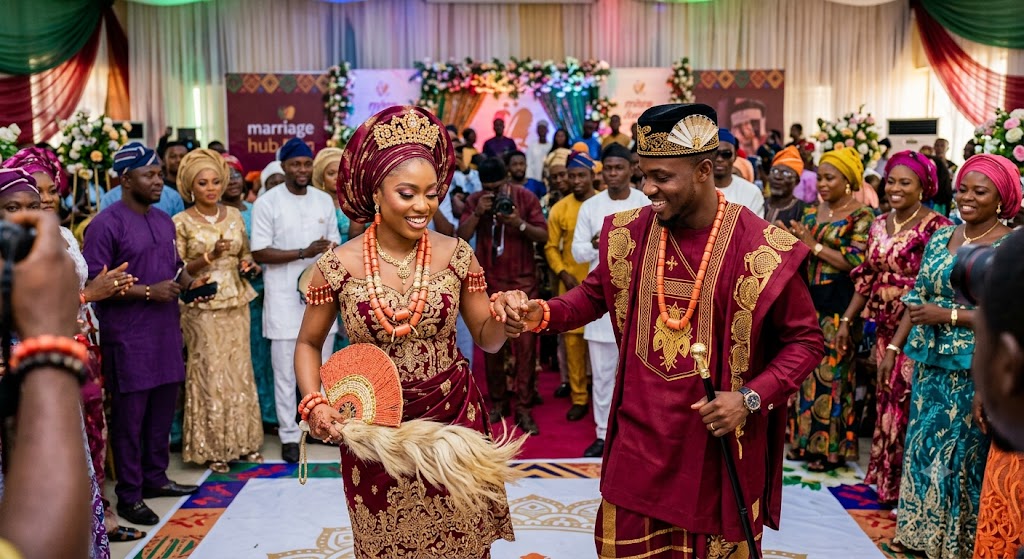
This is often the most culturally significant part of the union. It is the ceremony where the couple's families officially meet, and the groom's family presents the bride price and other gifts as required by their specific customs . This ceremony goes by different names across ethnic groups—Igba Nkwu for the Igbo, Igbeyawo for the Yoruba—and is a vibrant, colourful affair filled with music, dance, and symbolic rituals . It is the public validation of the marriage in the eyes of the community .
The Court Wedding (Civil Ceremony)
This is the legally binding part of the marriage under Nigerian statutory law. It is conducted at a Marriage Registry and results in a government-issued marriage certificate. While some couples choose to have this as a standalone event, many incorporate it as a brief ceremony either before or after the traditional and white weddings .
The White Wedding (Church or Mosque)
This is the religious ceremony, modelled after Western traditions, where the couple exchanges vows in a church or mosque. It often involves a white gown for the bride, a suit for the groom, bridesmaids, groomsmen, and a religious officiant. For many, this ceremony is a deeply spiritual affirmation of their union before God .
The Reception
Following the white wedding (or sometimes combined with the traditional wedding), the reception is a grand party to celebrate with all family and friends. It typically includes a lavish meal, the cutting of the wedding cake, speeches, and hours of dancing, all masterfully coordinated by a Master of Ceremonies (MC) .
Nigerian Wedding Costs: Facts, Figures, and Budgeting
Money is often the biggest source of stress in wedding planning. Understanding the financial landscape and planning carefully can save you from post-wedding debt.
The High Cost of Love: Average Spending in Nigeria
While a comprehensive breakdown of the "average" Nigerian wedding cost can be difficult to pinpoint due to the wide range of incomes and expectations, there is no doubt that weddings are a significant financial undertaking. The pressure to host a large, lavish event often leads to high expenditure, with some reports suggesting that the average cost can run into the tens of millions of naira for a large-scale celebration .
A significant portion of this cost is often attributed to the dowry or bride price. While this is a symbolic and essential part of the traditional ceremony, the associated expenses, including gifts and cash, can be substantial. In some northern states, government-sponsored mass weddings have highlighted that the basic bride price can be around ₦50,000 per groom . In Kebbi State, the government recently approved ₦180,000 per bride for dowry, in addition to providing furniture and foodstuffs, showing the typical scale of these expenses .
How to Plan a Wedding on a ₦500,000 Budget
Despite the high costs often associated with Nigerian weddings, it is entirely possible to have a beautiful and memorable wedding on a modest budget. With careful planning and a focus on priorities, you can celebrate without breaking the bank. BusinessDay NG outlines a practical plan for a ₦500,000 budget .
Here's a realistic breakdown of how that budget could be allocated:
| Budget Category | Estimated Cost (₦) | Money-Saving Tips |
|---|---|---|
| Venue & Décor | 200,000 | Consider accessible locations like a church compound, garden, or community centre. Use simple, DIY décor or hire an affordable decorator . |
| Food & Drinks | 150,000 | Keep the guest list to about 100 close friends and family. Opt for a family-style dinner or buffet, which is more cost-effective than a plated service . |
| Entertainment | 30,000 | A friend can serve as the MC. Hire a local DJ instead of a live band . |
| Wedding Gown | 50,000 | Look for reasonably priced gowns or consider renting a beautiful dress . |
| Wedding Cake | 40,000 | Instead of a large, expensive cake, choose cupcakes or a simple one-tier cake . |
| Souvenirs | 15,000 | There are many affordable souvenir options. Avoid overly pricey items . |
| Photography | - | Ask a creatively gifted friend to help with a good smartphone, or find a budding, low-cost photographer . |
| TOTAL | ~485,000 |
Key takeaways from this approach: prioritise your guest list, be willing to compromise, and embrace flexibility and creativity. There is life and a marriage to fund after the wedding .
Government Support: Mass Wedding Programmes
In response to economic hardship and the high cost of traditional marriage rites, some state governments in Northern Nigeria have instituted mass wedding programmes. These initiatives are designed to assist couples, particularly the less privileged, in starting their married lives.
-
Kano State: In early 2026, the Kano State government sponsored the weddings of 1,800 couples. They paid the ₦50,000 bride price for each groom and provided customary furniture and food gifts. Each bride also received a ₦20,000 grant as seed money for a small business . The programme also required grooms to have a means of income and couples to pledge not to divorce without mutual consent .
-
Kebbi State: Similarly, the Kebbi State government approved ₦54 million to sponsor the dowry of 300 couples in February 2026, providing ₦180,000 per bride along with furniture and foodstuffs .
These programmes highlight the significant financial barrier that weddings can pose and the community-level efforts to address it.
A Complete 12-Month Wedding Planning Checklist
A year might seem like a long time, but for a Nigerian wedding, it's the ideal runway to ensure everything is perfect and stress-free. Here is a month-by-month checklist adapted from expert sources .
12–11 Months Before: The Foundation
-
Decide on the type of wedding: Will you have a traditional ceremony only, or combine it with a court and white wedding?
-
Set your overall budget: Be realistic and include a contingency buffer for unexpected expenses .
-
Have initial family discussions: Talk to both families about cultural expectations, preferred timelines, and traditions, especially for inter-tribal marriages .
-
Draft an initial guest list: This will guide all your subsequent planning, especially venue selection.
-
Research peak wedding seasons: In Nigeria, the peak season is typically from August to December. Be prepared for higher demand and prices during this period .
10–9 Months Before: Securing Dates and Vendors
-
Fix your wedding dates with the agreement of both families.
-
Book your venues: Secure the location for your traditional ceremony, church/mosque or court, and the reception hall. Good venues book out far in advance .
-
Hire your core vendor team: This includes your photographer, videographer, caterer, decorator, DJ or band, MC, and Alaga (for Yoruba weddings) .
-
Decide on your wedding theme and colour palette .
8–7 Months Before: Attire, Bridal Party, and Legalities
-
Start planning your outfits: Nigerian weddings are outfit-heavy. Begin designing or shopping for the bridal gown, traditional attire, and reception looks .
-
Select your bridal party: Choose and notify your bridesmaids, groomsmen, and other special attendants .
-
Choose Asoebi fabrics for family and close friends .
-
Begin legal and religious preparations: Book church/mosque officiants and start any required pre-marital counselling. If having a court wedding, review the documentation needs .
-
Plan and schedule your pre-wedding photoshoot .
6–5 Months Before: Guest Management and Experience
-
Finalise your guest list .
-
Send out "save-the-date" notifications, especially for guests travelling from abroad .
-
Schedule catering tastings and finalise your menu direction.
-
Finalise décor concepts with your decorator.
-
Book a florist .
-
Continue honeymoon planning and confirm travel documents .
4–3 Months Before: Logistics and Personal Touches
-
Book hotel rooms for yourselves and out-of-town guests .
-
Arrange transportation for the wedding party and guests for all events .
-
Schedule hair and makeup trials .
-
Finalise your wedding rings and accessories .
-
Confirm all traditional wedding requirements with parents and elders to avoid last-minute surprises .
2 Months Before: Invitations and Final Confirmations
-
Send out formal wedding invitations .
-
Track RSVPs and follow up with guests.
-
Finalise and print wedding stationery (programs, order of service).
-
Confirm all vendor timelines, payments, and responsibilities in writing.
-
Lock in the final reception menu and seating plan drafts .
1 Month Before: The Final Stretch
-
Have your final dress fittings.
-
Confirm all final payments to vendors.
-
Create a detailed wedding day timeline and share it with all vendors, the MC, and the bridal party .
-
Pack your "wedding day emergency kit" (safety pins, tissues, makeup for touch-ups, snacks, water, etc.).
-
Get your marriage license from the registry if having a court wedding.
-
Pamper yourself: Schedule your final beauty treatments.
The Wedding Week: Countdown to "I Do"
-
Confirm all details with every vendor one last time.
-
Delegate responsibilities: Assign tasks to trusted family and friends so you can relax.
-
Prepare your wedding emergency kit and give it to your maid of honour.
-
Rest, hydrate, and eat well. The goal is to be a glowing, happy bride or groom, not an exhausted one.
Creating a Foolproof Event Timeline
A detailed timeline is the backbone of a smooth-running event. In Nigeria, where "African time" and logistical surprises are common, a well-planned timeline is your best friend .
Building Buffer Time for Nigerian Realities
When creating your timeline, you must factor in unique Nigerian challenges :
-
Traffic: Lagos, Abuja, and Port Harcourt traffic can derail even the best-laid plans. Build in significant travel time.
-
Vendor Delays: A vendor might say they are "5 minutes away" when they are still in another part of town. Plan for it.
-
Power Supply: Uninterrupted Power Supply (UPS) or generators are non-negotiable for any event.
-
Guest Arrival Patterns: Guests may arrive fashionably late. Plan your program so that the most important moments (like the couple's entrance) happen after most guests have arrived.
Pro Tip: Tell your caterer food is needed an hour before you actually plan to serve it. Tell your makeup artist to arrive even earlier than you need them. These buffers will protect your sanity .
Sample Wedding Day Timeline
Here is a sample timeline for a combined church wedding and reception :
| Time | Activity |
|---|---|
| 9:00 AM | Setup begins at the church and reception venue. |
| 12:00 PM | Photography team arrives at bride's and groom's locations for "getting ready" shots. |
| 1:00 PM | Bridal party arrives at church. |
| 2:00 PM | Guests start arriving. |
| 2:30 PM | Church Ceremony Begins |
| 3:30 PM | Church ceremony concludes. Group photos at the church. |
| 4:00 PM | Couple and bridal party depart for reception venue. |
| 4:30 PM | Guests arrive at reception venue. Cocktail/Canapés served. |
| 5:00 PM | Couple's Grand Entrance |
| 5:15 PM | Opening prayer and toast. |
| 5:30 PM | Meal service begins (Buffet style). |
| 6:30 PM | Cake cutting and couple's first dance. |
| 7:00 PM | Party time! Dancing and celebrations. |
| 9:00 PM | Closing prayer and final announcements. |
Assigning a Timekeeper
As the couple, you should not be responsible for keeping things on schedule on your wedding day. Assign a trusted person—a professional coordinator or a detail-oriented friend or family member—to be the "time police" . Their job is to:
-
Cue the DJ and MC for the next activity.
-
Gently remind speakers to wrap up their speeches.
-
Ensure the caterer knows when to start serving .
Traditional Wedding Customs Across Major Ethnic Groups
The heart of any Nigerian wedding lies in its traditional ceremony. While modern influences are everywhere, these core rituals remain deeply important.
Igbo Traditional Wedding (Igba Nkwu)
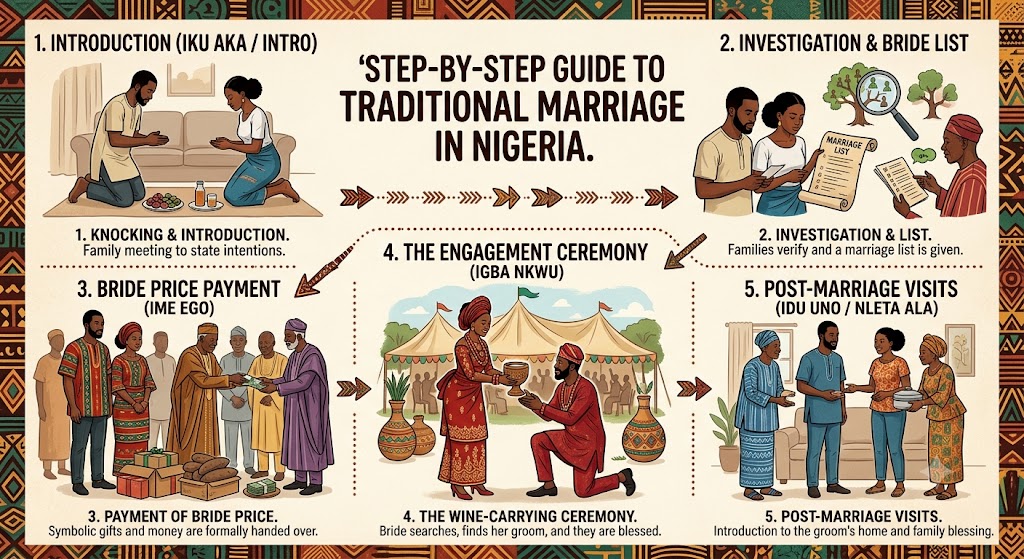
The Igba Nkwu, or "Wine-Carrying" ceremony, is the pinnacle of Igbo traditional marriage. It is a public, legally binding, and deeply symbolic event .
-
Pre-Ceremony Rites: Before the Igba Nkwu, the groom's family would have completed the Iku Aka (knocking on the door), family consultations, and the Ime Ego (negotiation and payment of the bride price) .
-
The Main Ceremony: The highlight is when the bride, holding a cup of fresh palm wine, kneels before her father. After his blessings, she must search through the crowd to find her groom, who is often hidden among his friends and family. This playful search is filled with music and good-natured distractions .
-
Sealing the Union: When the bride finds her groom, she kneels and offers him the wine. He drinks it, signifying his acceptance of her as his wife. He then places money in the empty cup as a token of appreciation. The couple then dances to their families to receive final blessings .
Yoruba Traditional Wedding (Igbeyawo)
The Yoruba traditional wedding is a vibrant affair, rich with symbolism and orchestrated by two key women: the Alaga Ijoko (for the bride's family) and the Alaga Iduro (for the groom's family), who add a layer of playful banter to the proceedings .
-
Groom's Arrival: The groom's family must arrive early or be prepared to pay a fine. The groom and his friends prostrate before the bride's family as a sign of respect .
-
The Letter Presentation: An elaborate proposal letter is read, and an acceptance letter is given by the bride's family .
-
The Bride's Dance: The bride, initially veiled, dances into the hall with her friends. She kneels for prayers from both families. A key moment is when she puts the groom's hat (Fila) on his head, demonstrating her acceptance .
Hausa-Fulani Traditional Wedding
Hausa and Northern Nigerian weddings are deeply rooted in Islamic traditions and are often more private and structured. The process involves a series of steps focusing on family consent, religious rites, and the payment of sadaki (the Islamic bride price) . Celebrations are often separate for men and women, with a strong emphasis on modesty.
Gbagyi (Gbari) Cultural Wedding
Among the Gbagyi people of Central Nigeria, marriage is a thorough and lengthy process. A unique feature is the seven-year courtship .
-
Courtship: During this period, the groom is required to work on the bride's family farm for seven years, helping with planting and harvesting to demonstrate his ability to provide.
-
The Wedding Rites: The wedding begins with animal sacrifices to seek blessings. The bride is accompanied to the groom's house, and a "bridal bath" ceremony is held the next morning to determine her chastity. Celebrations can continue for seven days .
Inter-Tribal Weddings
When couples come from different ethnic backgrounds, careful planning is essential. The key is early and open communication with both families to agree on which customs will take priority and how to respectfully blend both traditions. This requires extra time and diplomacy .
The Asoebi Phenomenon: Trends and Colours for 2026
For many Nigerian brides, choosing the wedding colour palette is one of the first and most exciting decisions. This colour dictates the aso-ebi (the uniform fabric worn by family and friends) and heavily influences the décor .
What is Asoebi?
Asoebi is a socio-cultural practice where a group of people, usually family and close friends of the couple, wear the same fabric to a wedding to show solidarity, love, and support. The colour and style of the asoebi are a major part of the wedding's visual identity .
Top Trending Asoebi Colours in 2026
According to wedding trend reports for 2026, Nigerian brides are choosing colour palettes that are intentional, memorable, and stunning .
| Colour | Vibe & Description |
|---|---|
| Burgundy | Timelessly Regal. A firm favourite that never fails. It exudes a "this wedding was planned properly" energy and looks classy when paired with gold touches . |
| Royal Blue & Midnight Blue | Calm & Composed. These deep, expensive-looking blues pull everyone together instantly and photograph beautifully . |
| Purple | Rich & Balanced. Brides are mixing deep purple with lilac for a rich yet balanced and beautiful look . |
| Pink (Blush & Dusty Rose) | Soft & Romantic. This colour creates a light and romantic feel, perfect for daytime ceremonies . |
| Emerald Green | Confident & Bold. It creates a moment when guests walk in. It works beautifully with gold accents and heavy fabrics like velvet . |
| Coffee Brown | Warm & Grounded. A fresh, mature, and cultural choice for 2026 that feels elevated . |
| Mint Green | Fresh & Calm. Perfect for outdoor or daytime weddings, brightening the space without overpowering it . |
| Olive Green | Natural & Refined. A modern, balanced shade that pairs well with champagne, mustard, or burnt orange . |
| Mustard Yellow | Warm & Lively. It adds life without making the space feel busy, showing personality and taste . |
| Burnt Orange | Deeply Cultural. A warm, expressive, and vibrant colour deeply rooted in Nigerian tradition . |
How to Choose Your Wedding Colours
-
Consider your fabric: Thicker fabrics like lace and velvet carry deep colours well, while lighter fabrics like chiffon look better with softer shades .
-
Think about your venue: Bold colours can hold their own in a large hall, while softer tones work better in smaller spaces .
-
Don't use one colour everywhere: Mix your main colour with neutrals to keep the decor balanced and classy .
-
See it in real life: Colours on a screen can be deceiving. Look at fabric samples before you decide .
Nigerian Wedding Attire: A Complete Guide
For those used to the simplicity of a single white dress, the number of outfit changes in a Nigerian wedding can be surprising. Each outfit is carefully chosen for a specific part of the celebration .
The Bride's Many Looks
-
The White Wedding Gown: This is the dress for the church ceremony, typically a grand, elaborate gown .
-
The Traditional Wedding Outfit: This varies by ethnic group. For a Yoruba bride, it consists of the Iro (wrapper), Buba (blouse), and Gele (headtie), often made from luxurious fabrics like aso-oke or lace. An Igbo bride might wear a beautiful George wrapper and a matching blouse, adorned with coral beads .
-
The Reception Dress: After the formal ceremonies, the bride often changes into a second (or third) stunning dress, which is typically more comfortable for dancing the night away .
The Groom's Ensemble
The groom also has multiple looks. For the traditional ceremony, he will wear his cultural attire—an Agbada for a Yoruba groom or an Isi Agu (lion head) top for an Igbo groom. For the white wedding, he will don a classic suit .
The Bridal Party
The bridesmaids and groomsmen coordinate their outfits with the wedding's asoebi colour scheme, adding to the visual harmony and celebratory spirit of the event .
Frequently Asked Questions About Nigerian Wedding Planning
Q1: How far in advance should I start planning a Nigerian wedding?
A: A 12-month timeline is highly recommended. Nigerian weddings involve multiple events and heavy family involvement. Starting early gives you time to manage expectations, secure the best vendors, understand complex traditions, and spread out your expenses .
Q2: What is the most expensive part of a Nigerian wedding?
A: The two biggest expenses are typically the catering and the venue. The guest list size directly drives these costs, so being strategic about who you invite is key .
Q3: Is it possible to have a nice wedding on a small budget?
A: Absolutely. A beautiful and memorable wedding is possible on a budget of ₦500,000 or less. The key is to have a small, carefully curated guest list, choose affordable venues like church halls, rent your gown, and ask talented friends to help .
Q4: What is the difference between "Introduction" and "Traditional Wedding"?
A: The Introduction (e.g., Mo mi i mo e for Yorubas, Iku Aka for Igbos) is a smaller, private family event where the groom's family formally asks for the bride's hand in marriage. The Traditional Wedding (e.g., Igba Nkwu, Igbeyawo) is the large, public, and celebratory ceremony where the marriage is formally blessed and witnessed by the community .
Q5: I'm from the diaspora. Can I still have a traditional wedding in Nigeria?
A: Yes, many couples successfully plan weddings from abroad. It requires extra diligence. You can delegate a trusted family member to act on your behalf for some negotiations, and hire a reputable wedding planner in Nigeria to manage logistics, site visits, and vendor communication. Some families even conduct ceremonies virtually .
Q6: How do I choose my asoebi colour?
A: Start by considering the overall mood you want for your wedding. Then, think about your venue's size and lighting. It's also wise to look at fabric samples in person to see the true colour and how it works with your chosen fabric type .
Conclusion: Planning with Peace and Purpose
Planning a Nigerian wedding is undoubtedly a complex and demanding endeavour, but it is also an incredibly rewarding journey. It is a process that weaves together the rich threads of culture, family, faith, and personal love into a beautiful tapestry that celebrates not just a couple, but an entire community.
From the moment you choose your colour palette to the final dance at your reception, every step is an opportunity to create lasting memories. By arming yourself with knowledge—understanding the traditions, creating a realistic budget, and following a structured timeline—you can transform what could be a source of stress into a joyful and intentional process.
Remember the core principles: communicate openly with your partner and families, be flexible and creative in your planning, and never lose sight of the true purpose of the celebration—the beginning of your lifelong journey together. Whether you spend ₦500,000 or ₦5 million, the success of your wedding will not be measured by its grandeur, but by the love, unity, and joy that it celebrates.
We hope this guide helps you navigate your planning with confidence and peace. Here's to a beautiful wedding and a blessed marriage!
Internal Links to Related Marriage Hub NG Resources
- 2026 Nigerian Wedding Budget Breakdown: Real Costs for Every Scale - Marriage Hub NG
- How to Navigate the Federal Marriage Registry: A Step-by-Step 2026 Guide - Marriage Hub NG
- The Aso-Ebi Survival Guide: From Fabric Sourcing to Seamless Distribution - Marriage Hub NG
- Managing “Nigerian Time”: How to Create a Wedding Day Timeline That Actually Works - Marriage Hub NG
- Catering for 500: The Essential Nigerian Wedding Menu Checklist - Marriage Hub NG
- Top 20 Wedding Venues in Nigeria for 2026: Lagos, Abuja, and Beyond - Marriage Hub NG
- The 10 Best Nigerian Wedding Photographers & Videographers to Book Right Now - Marriage Hub NG
- Small & Intimate: How to Plan a ‘Micro-Wedding’ in Nigeria Without Offending Family - Marriage Hub NG
- Post-Wedding Bliss: Top 5 Honeymoon Destinations Within Nigeria for 2026 - Marriage Hub NG
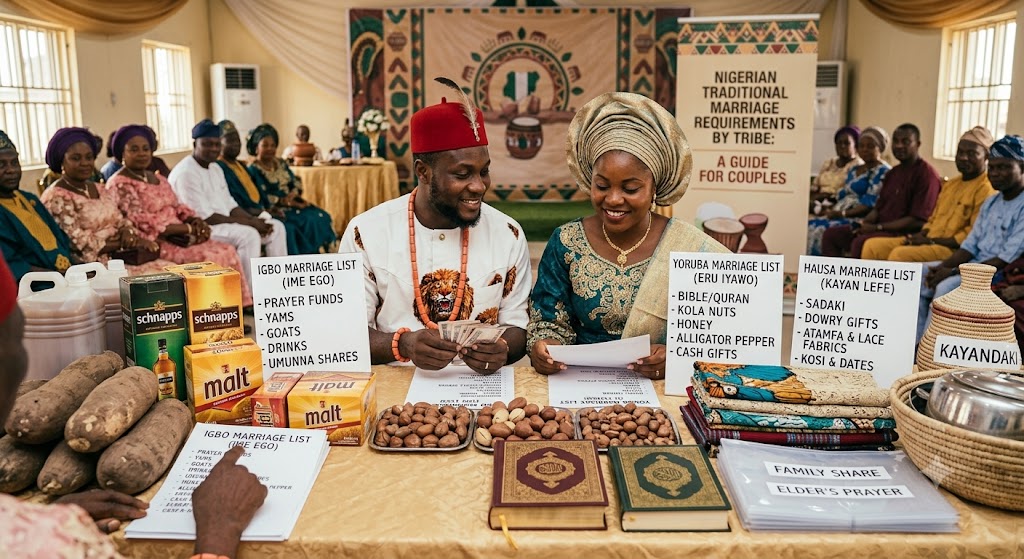
- Traditional Wedding Rites: Understanding the “Marriage List” Across Cultures - Marriage Hub NG




.jpg)

Sign in to comment